Advertisement

Minnesota lawmakers want increased protections for themselves after Hortman assassination

State legislators are also seeking tougher penalties for people who impersonate police.

The Minnesota Star Tribune
February 24, 2026 at 11:00AM
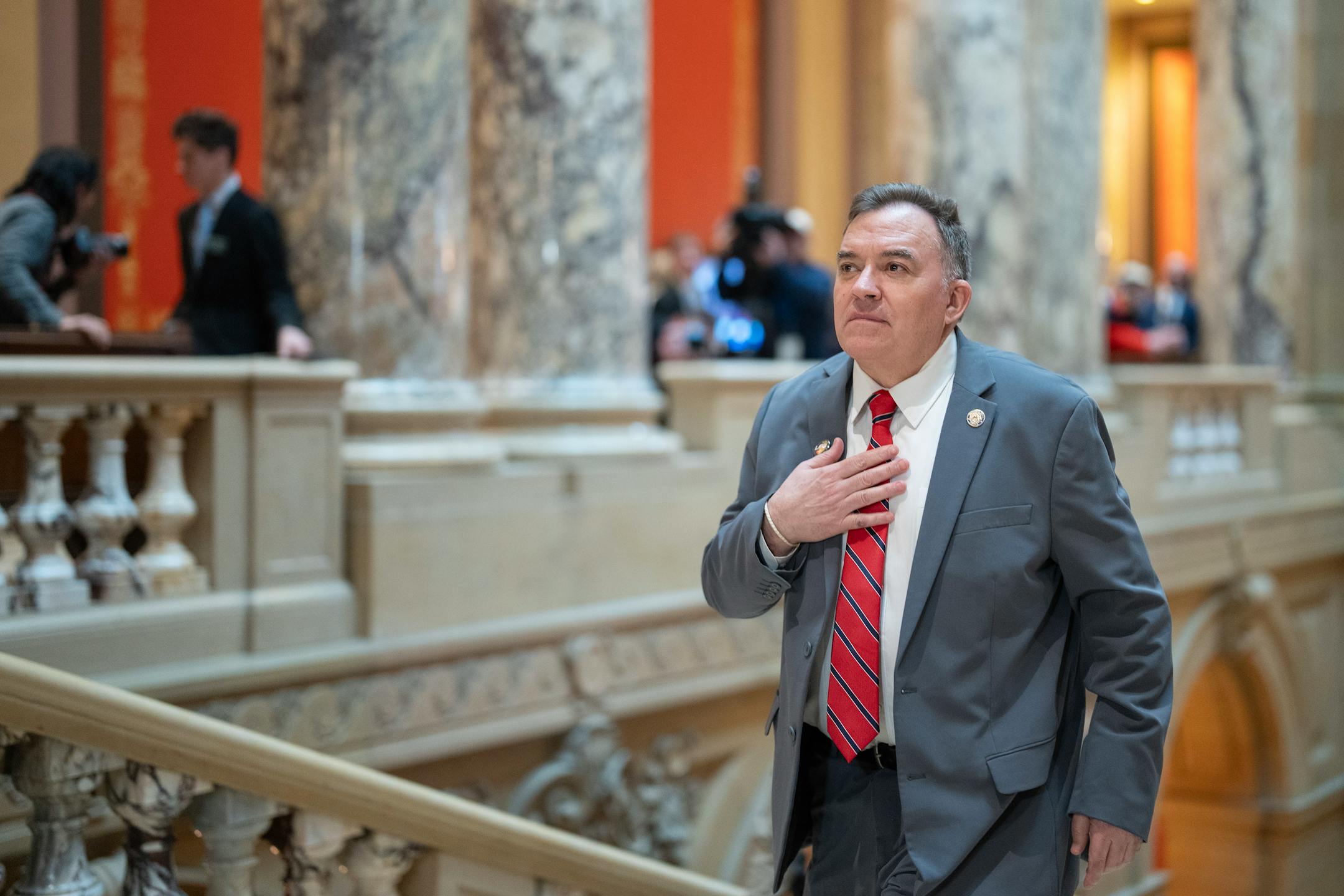
Minnesota State Senator John Hoffman walks up the steps towards the Minnesota State Senate chambers for the start of the 2026 legislative session at the Minnesota State Capitol in St. Paul on Feb. 17. This was Hoffman’s first return to the Senate since recovering from injuries he sustained after being shot in his home on June 14, 2025. (Alex Kormann/The Minnesota Star Tribune)
Advertisement

Alarmed by last summer’s attacks on their colleagues, Minnesota lawmakers are seeking to protect themselves and future legislators as the country faces a surge of political violence.

In their first week back in St. Paul, DFL legislators proposed measures that are in direct response to the June assassination of former House Leader Melissa Hortman and the attempted slaying of state Sen. John Hoffman.

The proposals could present a rare opportunity for bipartisanship in the narrowly divided Legislature, with bills seeking to make legislators’ home addresses, personal phone numbers and children’s names private data and to require law enforcement agencies to develop safety protocols for elected officials.

DFLers are also proposing tougher criminal penalties for people who impersonate police officers, and rules requiring the removal of equipment and decals from decommissioned emergency vehicles that are sold to the public.

The suspect in the June attacks disguised himself as a police officer and attacked the two lawmakers and their families at their homes in the middle of the night, authorities say. He also is accused of driving a black SUV that resembled a police squad car, equipped with flashing lights.

“When somebody comes to your home, you want to know who it is. When somebody pulls you over in greater Minnesota on a dark street, you want to know,” said Rep. Ginny Klevorn, DFL-Plymouth. “We live in a different world.”
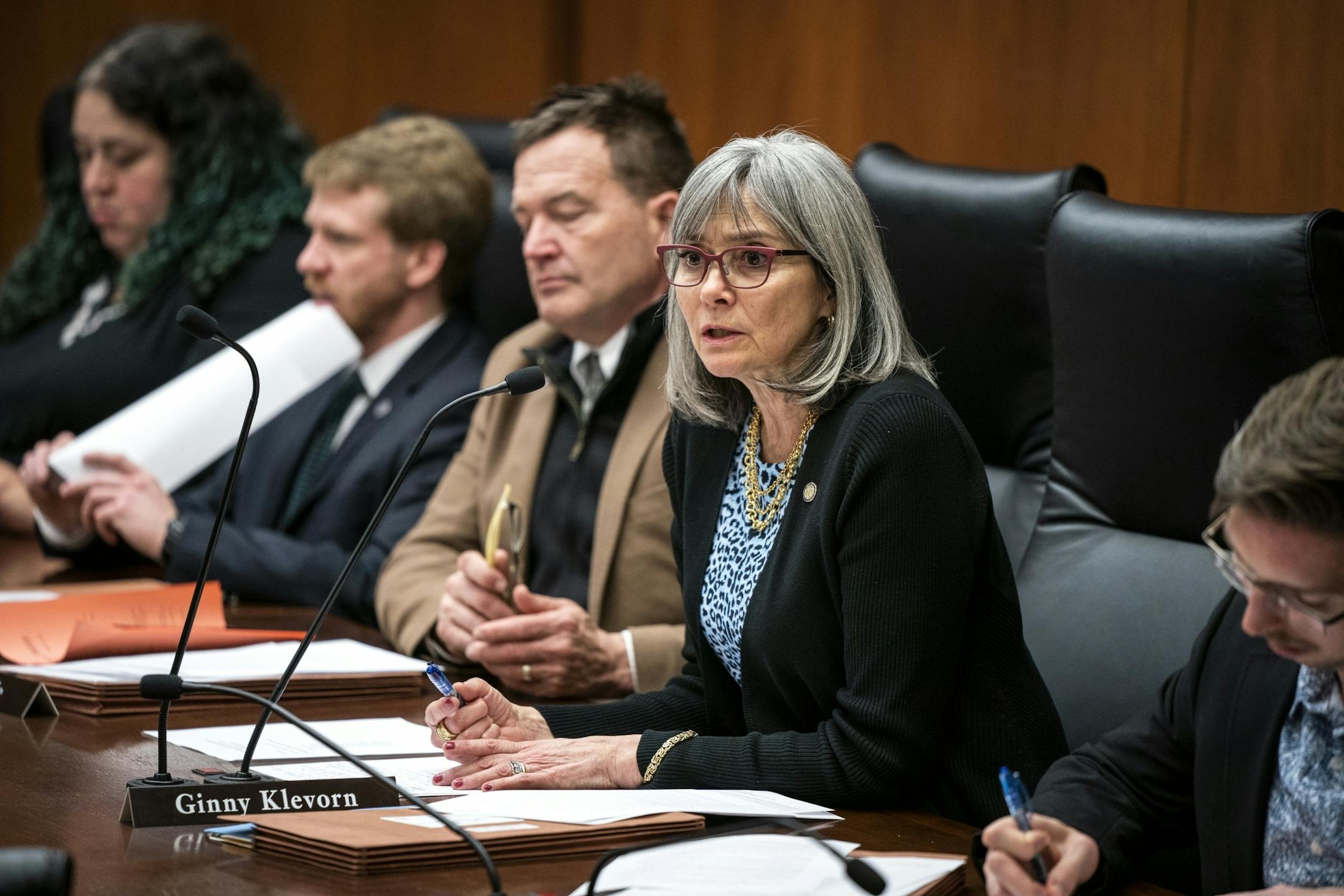
Committee member Rep. Ginny Klevorn (DFL-Plymouth) asks a question during the public testimony.
Committee member Rep. Ginny Klevorn, DFL-Plymouth, asks a question during a House hearing. (Star Tribune/The Minnesota Star Tribune)

Klevorn is leading the effort in the House to toughen penalties for impersonating a cop. She is co-sponsoring the measure related to emergency vehicles.

Hoffman, who was shot nine times in the attack at his home, is sponsoring the police impersonation bill in the Senate.

Advertisement

“When I finally saw that he was not a cop,” Hoffman said of his attacker in a recent interview, “that’s when he turned a Beretta 9-millimeter on me and my wife and almost my daughter.”

The bill would increase the penalty for impersonating a police officer from a misdemeanor to a felony punishable by up to two years in prison. The sentence would be up to five years if someone impersonating a police officer gained access to a facility that isn’t open to the public, gave orders to another person or operated a vehicle marked with law enforcement decals.

It also imposes stricter penalties on people who carry a firearm or commit a crime while passing themselves off as a police officer.

Senate Minority Leader Mark Johnson, R-East Grand Forks, said last week he hadn’t reviewed the police impersonation bill’s language yet but predicted it would garner bipartisan support.

Rep. Paul Novotny, the GOP co-chair of the House public safety committee, said his caucus is prepared to support the bill if Democrats agree to remove a section of language that appears to be directed at federal immigration agents.

The language in question would require police officers to wear identifying badges or name plates and seemingly prohibit federal immigration officers from identifying themselves as “police.”

Advertisement
Rep. Paul Novotny, R-Elk River, stood on the House floor with his wife before being sworn in at the start of the legislative session Tuesday. ] ANTHONY SOUFFLE • anthony.souffle@startribune.com The Minnesota State House and Senate both met for the first day of the legislative session Tuesday, Feb. 11, 2020 at the State Capitol in St. Paul, Minn.
Rep. Paul Novotny, R-Elk River, stood on the House floor with his wife. (Anthony Soufflé/The Minnesota Star Tribune)

Democrats are “trying to say that the feds aren’t licensed peace officers and that they can’t wear that,” Novotny said.

“If they can agree to eliminate [that language], we’ll fully endorse it. We’d like to ... get that to be law,” he said.

As for the decommissioned emergency vehicle bill, Novotny said he is supportive of requiring the removal of police decals but not of all the attached equipment, which he says would be costly to do.

“Do I want to make sure that all the details are removed? Yes, that seems like a good idea,” he said.

A balancing act

There also could be bipartisan support for proposals to shield legislators’ personal data and require law enforcement agencies to have a safety protocol for elected officials.

Rep. Mike Freiberg, DFL-Golden Valley, said many of his House colleagues are concerned about their personal information being public after last year’s attacks. The alleged assassin, Vance Boelter, carried a list with some lawmakers’ names and home addresses on it, including Hortman’s.

Advertisement

Freiberg said the assailant was also in his area that morning.

“He didn’t have my address, fortunately,” said Freiberg, who is sponsoring the bill to shield legislators’ home addresses, phone numbers and kids’ names.

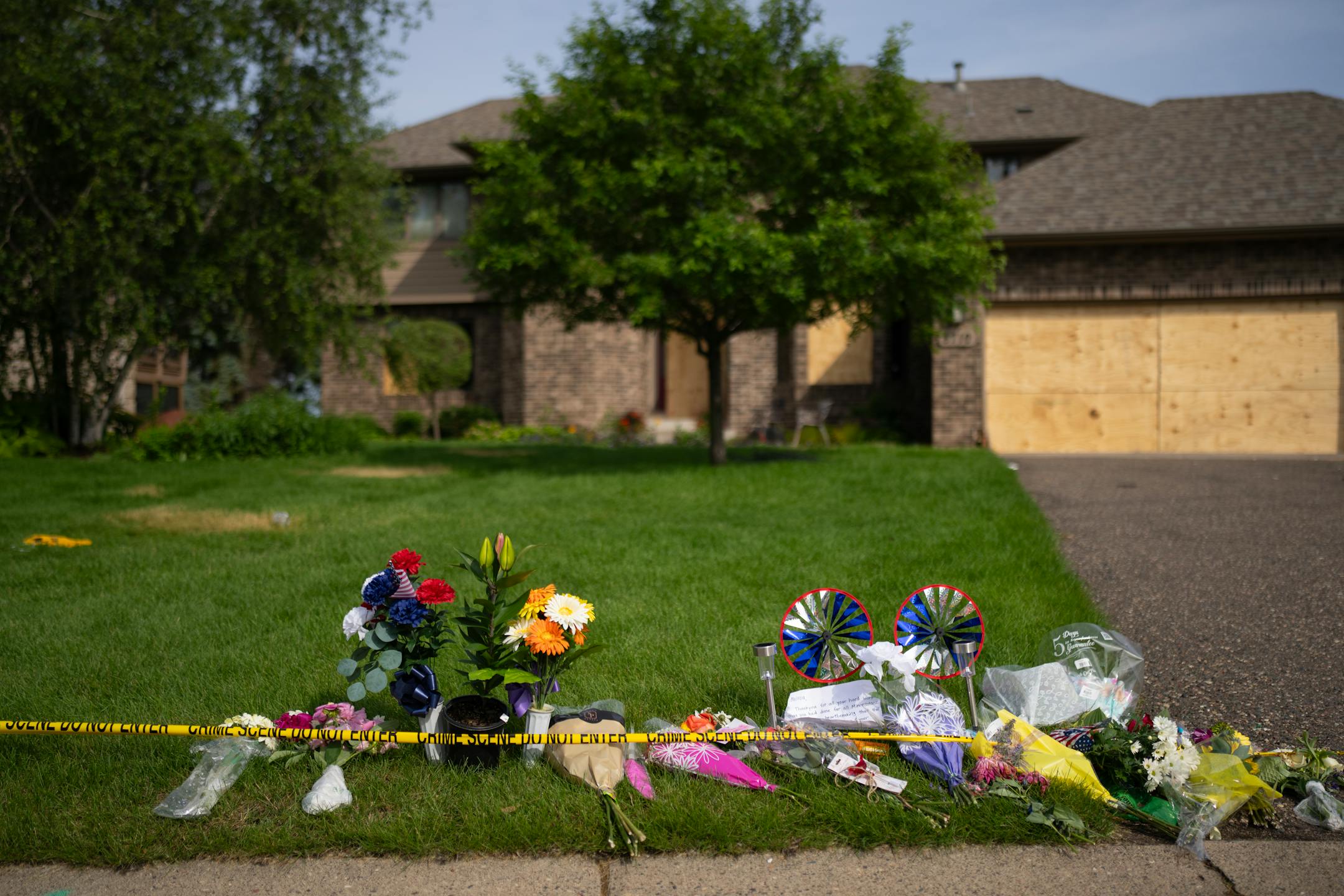
Flowers in front of the home of Melissa and Mark Hortman in Brooklyn Park on June 16.
Flowers left at the home of Melissa and Mark Hortman in Brooklyn Park on Monday, June 16, 2025. (Jeff Wheeler/The Minnesota Star Tribune)

Freiberg’s proposal would additionally create a legislative task force to consider further privacy protections for government officials. He is also sponsoring a bill to remove legislators’ addresses from state Campaign Finance Board listings.

Freiberg said he knows data bills can be controversial, pitting advocates for open government against those more concerned about privacy. But he’s hopeful about its prospects.

Johnson, the Senate GOP leader, nodded to the delicate balance of privacy versus accessibility when asked about Freiberg’s bill: “That’s gonna be a balance on that one.”

Don Gemberling, vice chair for Minnesotans for Open Government, said he doesn’t support making it more difficult for people to contact their lawmakers. He said it’s often easier to send a letter to his legislator’s home than to schedule an appointment with them or send mail to their Capitol inbox, which may be screened.

Advertisement

Gemberling said he also is concerned that Freiberg’s bill could make it harder to verify whether a legislator lives in the district they represent.

“I’ve been watching the Legislature for … 40 years,” he said. “Every once in a while, they make emotional decisions and they don’t think through the implications.”

Novotny said House Republicans are open to Freiberg’s proposal. The public safety committee just heard a GOP bill last week that would similarly shield the personal data of police officers.

“It’s not a bad precaution,” Novotny said. After last summer’s attacks, he said, he paid for a service to scrub his personal information off some public websites.

Novotny said House Republicans could also be supportive of a bill sponsored by Sen. Bonnie Westlin, DFL-Plymouth, to require local law enforcement agencies to have policies addressing the safety of elected officials.

Westlin’s bill would require agencies to maintain records on the addresses of elected officials in their jurisdictions, have a way to communicate with those officials and to provide security to them as needed.

In the early hours after the June 14 attacks, some legislators weren’t made fully aware of the threat for several hours, while others received swift police protection.

Westlin declined an interview request through a Senate DFL spokesperson.

Novotny said he thinks Westlin’s bill is a good idea and that he plans to reach out to her about it.

“This is the kind of thing that could happen once in a career,” he said of threats to the safety of elected officials. “Having a policy that will help you get jump-started and not be scrambling is a good idea.”

Allison Kite of the Minnesota Star Tribune contributed to this report.

about the writer

about the writer

Ryan Faircloth

Politics and government reporter

Ryan Faircloth covers Minnesota politics and government for the Star Tribune.

See Moreicon

More from News & Politics

See More
card image
Provided by the Gallatin National Forest Avalanche Center

The incident occurred over the weekend in the Centennial Mountains, officials said.

Sun Country announced its biggest route expansion ever, with 19 new flights from six airports starting in April. The routes are seasonal and have one-way fares that start as low as $49.
card image
Advertisement