
Minneapolis has 950 surveillance cameras. Some want their footage saved longer amid ICE operation.

A City Council member says attorneys are overwhelmed with cases of immigration agents and wants video footage saved longer as evidence.

The Minnesota Star Tribune
February 14, 2026 at 12:00PM
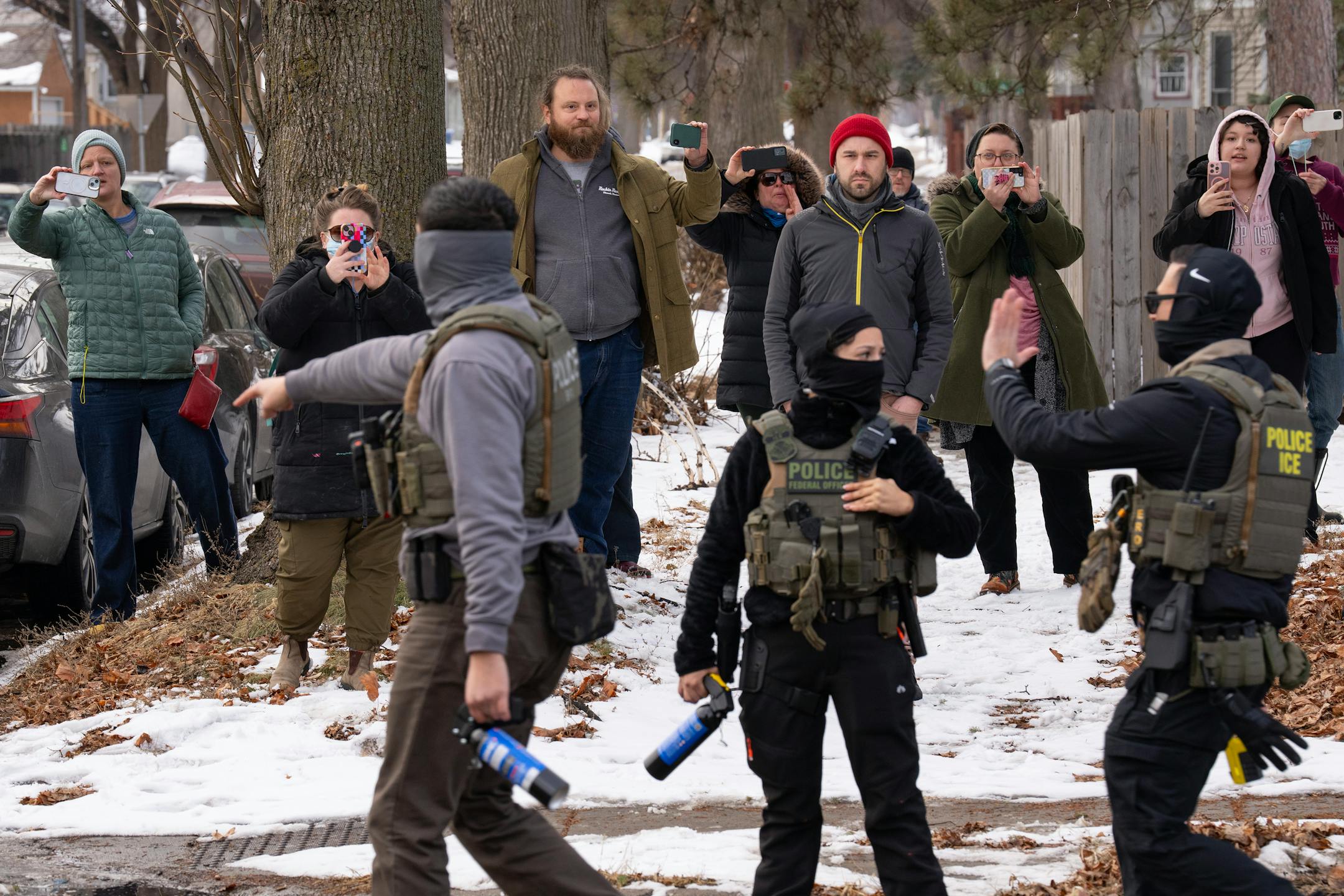
Dozens of bystanders record and blow whistles as federal immigration agents work to change a flat tire on one of their vehicles on Penn Avenue N. near 40th Avenue N. in Minneapolis on Feb. 5. (Alex Kormann/The Minnesota Star Tribune)

The city of Minneapolis has 950 cameras recording everything happening on the streets and near city buildings, and some immigration activists and City Council members want that footage saved longer than usual before it’s automatically deleted.

While federal immigration agents remain in the city, the footage can document what those masked agents are doing — including illegal conduct, they say.

Even groups and council members normally opposed to government surveillance support the idea. But Mayor Jacob Frey’s administration is resisting the move, saying increasing access to the footage could make it more likely to be used by federal immigration officials against residents — protesters and immigrants.

Bystander video from citizens has proven invaluable in documenting behavior of federal immigration agents, but in cases where such footage isn’t available, proponents say police surveillance cameras, often stationed in busy areas, could offer an objective glimpse of what transpired.

No city cameras captured the killings of Minneapolis residents Renee Good and Alex Pretti by federal agents, although there were cameras nearby, according to Brian Feintech, spokesman for the city’s Office of Community Safety. But bystander videos helped counter federal narratives.

On the other hand, when a Venezuelan man was shot by agents in north Minneapolis — a moment not recorded by observers — Minneapolis cameras did capture an “altercation,” according to an FBI affidavit. Federal authorities have dropped charges against two Venezuelan men involved, and announced the officers have been placed on leave for providing “untruthful” accounts.

Police sometimes use the city’s surveillance footage to help solve crimes, while public defenders often use it to challenge the police version of events. Though the most widely viewed footage of George Floyd’s police killing was taken by a teenage bystander, city camera footage was also played during the trial of former Minneapolis police officer Derek Chauvin. In that case, a 911 dispatcher saw what was happening on the street via the city camera, and alerted police.

Right now city policy dictates that footage be deleted about 14 days after it’s recorded. Some council members and advocates want to temporarily extend that window.

The footage is automatically saved when there are “critical incidents.” The public can request video of incidents, unless there’s an active criminal investigation, according to Feintech. However, requests must be made within seven days to give the city time to pull the video before it’s deleted.

Minneapolis City Council Member Robin Wonsley said attorneys have contacted her saying they’ve been overwhelmed with cases involving federal agents, and they’re concerned some video evidence will be gone before they can get to all the cases. Wonsley said extending the retention period could help people sue for injuries or property damage at the hands of federal agents.

Abigail Cerra, former chair of the city’s Police Conduct Oversight Commission and now deputy director of Mid-Minnesota Legal Aid, said it would be helpful to keep the video longer, given reports of agents smashing car windows, ramming vehicles and entering homes without warrants.

Cerra, who’s generally skeptical of police surveilling the public, said of the city’s voluminous videos: “I don’t like it, but it’s there. And we pay for it … so I think we should have a say in how it’s used."

Wonsley said she is talking to local experts and plans to propose changes to the retention schedule so that people can “hold violent, problematic ICE agents responsible.” She is normally skeptical of city surveillance, saying, “We want to be super cognizant of how surveillance is used by the city.”

Frey said he understands the reasoning, but extending the retention period “has the potential to hurt our neighbors more than it helps them” because federal agencies could use it against protesters and immigrants.

“Camera footage is generally public data, meaning anyone can request it. The longer footage is retained, the more people are captured on camera — and the greater the risk it can be misused,“ he said in a statement. ”We’re not a surveillance state.”

Deputy Commissioner of Community Safety Jared Jeffries said in a Feb. 4 email to Wonsley that the city will not amend its retention schedule based on advice from the city attorney’s office and feedback from ACLU Minnesota policy counsel John Boehler.

But Boehler told the Minnesota Star Tribune he was referring to red-light cameras and automatic license plate readers. He later clarified to city officials that while the ACLU generally encourages short retention schedules for police and traffic cameras due to concern that the federal government will misuse the data, the group supports preserving footage to document “constitutional abuses and violence of federal agents.”

Boehler said the ACLU encourages the city to protect video evidence because the video will be key to “future accountability.” The group doesn’t support a “uniform extension” of all the video footage, however.

Liz Sawyer of the Minnesota Star Tribune contributed to this report.

about the writer

about the writer

Deena Winter

Reporter

Deena Winter is Minneapolis City Hall reporter for the Star Tribune.

See Moreicon