

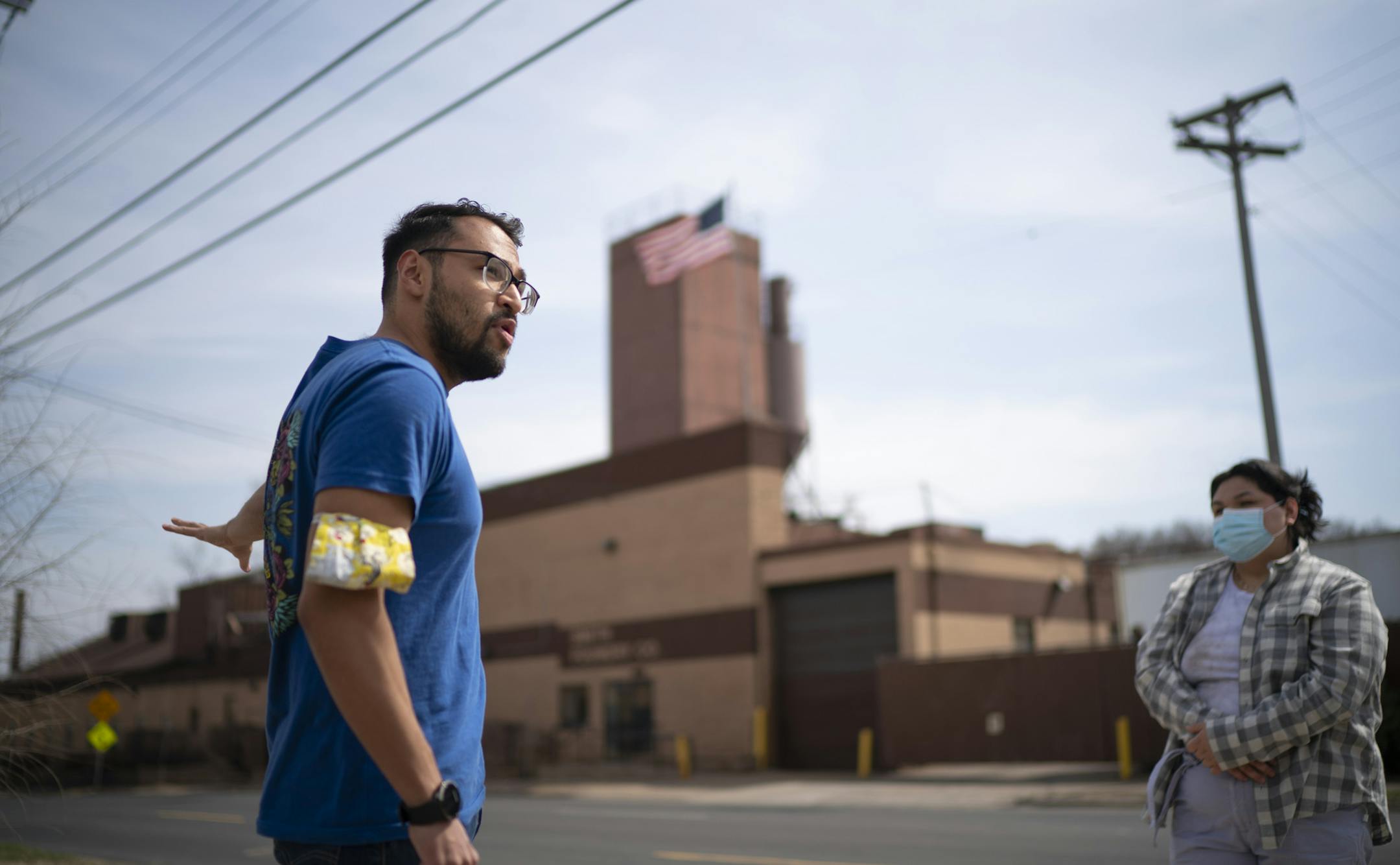
Environmental activists from the East Phillips neighborhood of Minneapolis had until Monday to close on a vacant warehouse they’ve been fighting, for years, to take off the city’s hands for redevelopment as a community-owned indoor urban farm.
That deadline has come and gone. Short $5.7 million from the agreed-upon $11.4 million price tag, the hard-fought deal is all but off.
The East Phillips Neighborhood Institute now has a final 60-day window to meet the city’s asking price for the 7.5-acre former roofing supply warehouse commonly known as Roof Depot. If it fails to muster the money, the city will put the site up for sale through a public bidding process.
“We recognize the importance of this site to the East Phillips community, and we respect the efforts that EPNI has made to pursue their vision, but we also must honor our responsibilities to the Minneapolis residents as a whole, and safeguard public funds, and follow the terms of the agreement and recover costs that we have already incurred,” said Erik Hansen, Minneapolis director of Community Planning and Economic Development.
The East Phillips urban farm is an environmental justice cause that has been playing out for a decade. Activists from the poor and heavily industrialized central Minneapolis community have long dreamed of reusing the Roof Depot warehouse as a mixed-use development incorporating housing, aquaponics and small businesses — a vision of neighborhood self-determination that captured the imaginations of politically progressive people across the state.
After the city acquired the Roof Depot property with plans to raze the warehouse and construct a Public Works water yard in its place, East Phillips activists fought back through protests and lawsuits. At the core of the controversy was that the city’s water yard would have concentrated diesel service trucks in East Phillips, where residents suffer higher-than-average asthma hospitalizations.
After years of sustained opposition, the city scrapped its water yard plans and agreed to sell Roof Depot to EPNI. Their multipart purchase agreement was contingent on private fundraising as well as legislative appropriations to reimburse the city for the millions it had spent on the property over the years.
To date, EPNI has raised $3.7 million in private donations and another $1 million investment from Little Earth Protectors, a group that patrols the Little Earth of United Tribes housing complex with the goal of preventing violence. The state has appropriated $2 million for the down payment and another $4.5 million for the city to plan a new water maintenance facility in an alternative location. But when the Legislature snubbed the urban farm cause in 2024 and 2025, it left a $5.7 million gap.


