Minneapolis police blows budget by $19.6 million; council leaders call it ‘mismanagement’

Police Chief Brian O’Hara says it’s costly to replenish the ranks, since new hires need training while existing officers still rack up OT.

The Minnesota Star Tribune
December 5, 2025 at 7:58PM
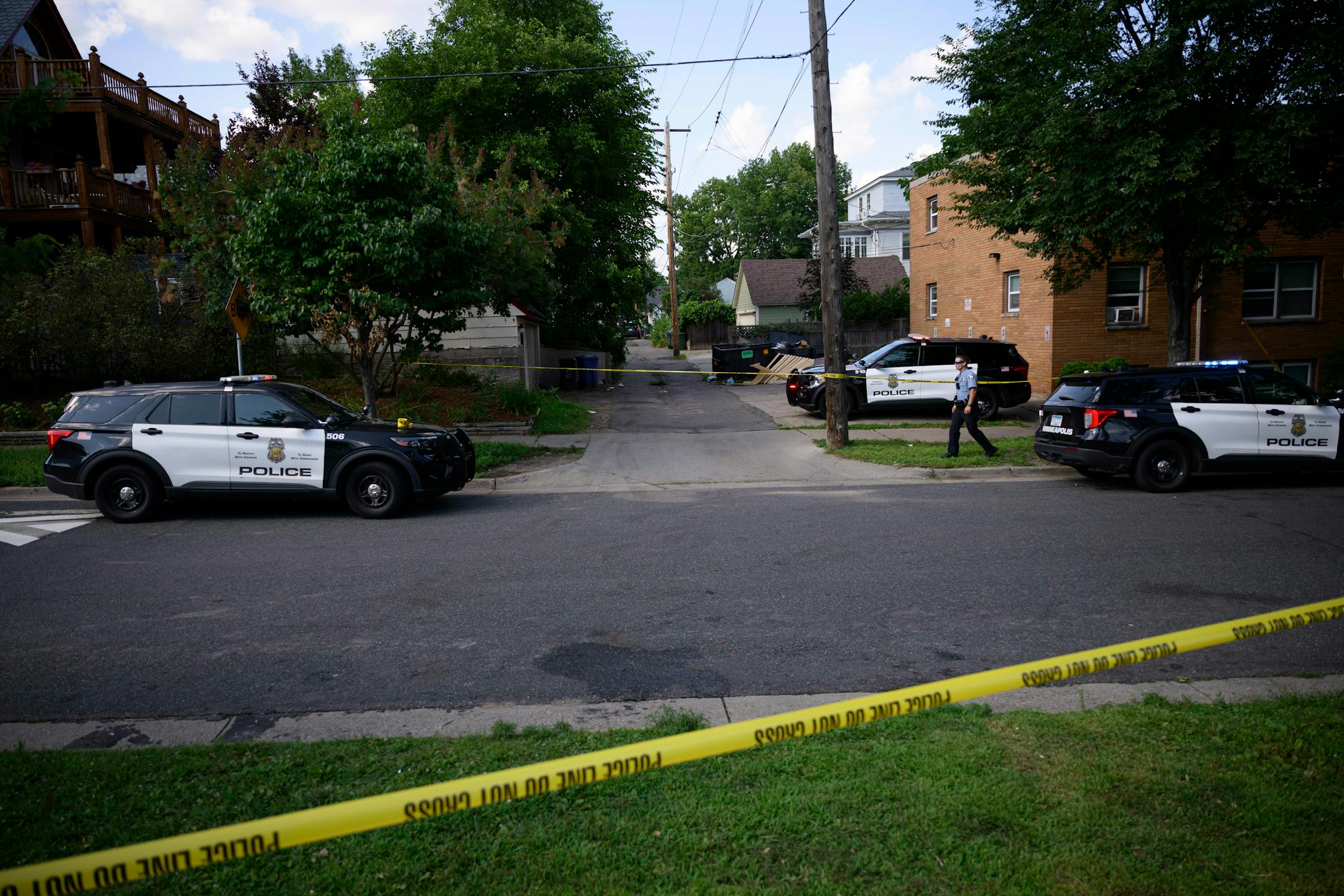
A Minneapolis Police Officer guards an alley off West 25th Street between Colfax and Bryant Avenues South, where a Minneapolis Parks Police officer was injured earlier in the afternoon while confronting a suspect, according to police on Aug. 12. (Aaron Lavinsky/The Minnesota Star Tribune)

The Minneapolis Police Department is expected to end the year $19.6 million over budget, which Police Chief Brian O’Hara largely attributes to the hiring of 162 aspiring police officers.

The agency’s overspending of its $230 million budget is expected to be a hot topic during a Monday budget committee meeting. Council Vice President Aisha Chughtai said she invited Police Chief Brian O’Hara to attend to explain why he’s so far over budget.

In an interview, O’Hara largely attributed the overspending to the costly process of replenishing the ranks: The department has hired 162 people. That’s expensive — and most aren’t on the street yet; they’re community service officers, and cadets and recruits in the police academy, still in training. In the meantime, the city continues paying heavy overtime to its sworn police force.

“Essentially, there was no financial plan to deal with how rapidly we would experience this growth,” O’Hara said.

Chughtai said the city will have to spend down its fund balance to the point where it threatens the city’s financial health and bond ratings. Chughtai, who chairs the council’s budget committee, called MPD’s overspending mismanagement.

“This is negligent,” she said. “It’s the responsibility of every single department head to manage their budget.”
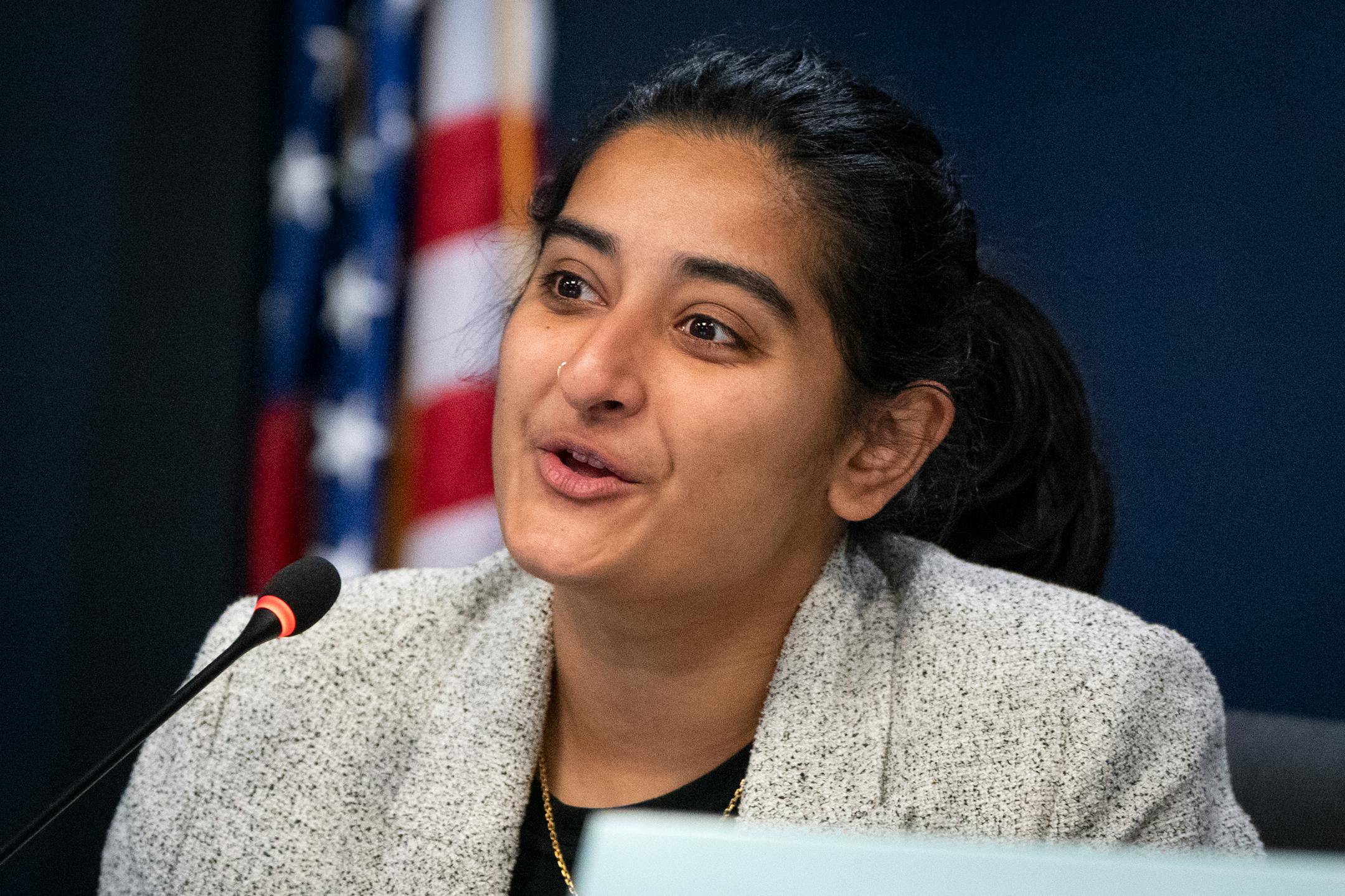
Council Vice-President Aisha Chughtai speaks during a Minneapolis City Council meeting in Minneapolis on Dec. 5, 2024. (Leila Navidi/The Minnesota Star Tribune)

Sixth year of record overtime

The biggest driver of the budget busting is $31 million in overtime — $3 million more than last year’s record-breaking total and $11.4 million over what was planned.

This marks the sixth straight year of record overtime costs after a flood of officers left following the 2020 police killing of George Floyd. MPD shrank from about 900 officers to 560 by the spring of 2024, the lowest in at least four decades.

During most of O’Hara’s three-year tenure, the department shrunk, and he wasn’t able to hire enough officers to offset the attrition. Now, the ranks are beginning to be replenished, but young recruits must complete college courses to get licensed and attend the police academy for four months before they can get on the streets to start field training.

In the past, O’Hara was able to offset overtime costs with savings from vacant police positions. But with so many officers coming online, that pool is shrinking.

The city charter requires the city to employ 1.7 officers per 1,000 residents, or about 730 officers, so that’s how much is budgeted. Yet, even after tapping those savings, MPD will still be $19.6 million over budget.

O’Hara said he expects to meet the charter minimum within two years, but said it’s going to be a costly process.

To help stanch the hemorrhaging of officers, O’Hara won historic 22% raises for the rank-and-file, including retroactive back pay, boosting starting salaries for rookies above $90,000 annually. Those raises went into effect last year, pushing 35 employees’ total earnings above $300,000, including back pay.

This year, supervisors — assistant and deputy chiefs, commanders and inspectors — formed a long-sought union of their own and got raises, too, including $2.5 million in back pay.

“That’s a pretty dramatic impact on the budget when you consider 70% of the budget is just those personnel expenditures,” O’Hara said.

Minneapolis Police Chief Brian O'Hara speaks during an interview in Minneapolis on Aug. 25. (Elizabeth Flores/The Minnesota Star Tribune)

‘Double overtime’ ending

Overtime costs have ballooned since the fall of 2022, when MPD began paying officers “double time,” or what it calls “critical staffing overtime” — twice their hourly rate for overtime rather than the traditional time and a half — to cover staffing gaps and fill less desirable shifts, like when bars close. Every sworn member is required to work at least one additional patrol shift per month, and is paid double time for it.

An agreement with the police union allowing double time expires at the end of 2025. Mayor Jacob Frey wants to end double-time pay next year.

Officers also racked up overtime due to multiple mass shootings, increasing patrols around schools and churches, and the department paid for extra help from the Minnesota State Patrol after the Annunciation Church mass shooting. Officers are also paid double overtime to work on a juvenile curfew task force and buttress late-night policing downtown, in Dinkytown and in the Fifth Precinct covering the southwest portion of the city.

Another cost: Mandatory training to adhere to the provisions of a court-approved agreement with the state Department of Human Rights to reform the department. For example, all sworn officers underwent three days of use-of-force training, O’Hara said.

Frey said the city is recruiting more officers than thought possible a few years ago, and having more cops on the street will mean less dependency on overtime. Ending double overtime will help improve the budget outlook, he said, but council proposals to reduce MPD funding would make it more likely there’s another large MPD budget deficit next year.

City savings dropping

The city’s general fund balance grew during the COVID-19 pandemic, but as the city has staffed up since then, the balance has dropped from $209 million to a projected $142 million by year’s end.

City financial policies require the general fund balance be equal to at least 17% of the overall budget, although the city usually shoots for more to boost its bond ratings. The city is still above that threshold, but the drop in the fund balance could give bond rating agencies pause, according to City Budget Director Jayne Discenza.

“We are watching very cautiously these kinds of things,” Discenza said. “We’ve been really clear with all of the city’s elected officials that we don’t want to be spending fund balance, if we can avoid it.”

Council President Elliott Payne said MPD has cost overruns because of a lack of financial controls, which is why he’s proposing to restore a couple of positions to the city auditor’s office that the mayor proposed to cut.

“In an institution that has really strong controls, you maybe don’t need as big of an audit function,” Payne said. “If you’re not seeing $19 million cost overruns in a department; when departments are never running over budget.”

Chughtai questioned why, given the budget situation, MPD bought four Harley-Davidsons for a new motorcycle unit earlier this year.

The motorcycles cost about $136,500 to purchase and outfit, department spokesman Sgt. Garrett Parten said, which he called an “unbudgeted expense using federal forfeiture funds.”

O’Hara, a former motorcycle cop in Newark, relaunched the long-defunct unit with four officers, promoting the move, in part, as a community engagement tool.

“This department has one of the larger budgets within the enterprise. Why is a department head who is running over their budget spending money on Harleys?“ Chughtai said.

Chughtai plans to propose that departments that overspend their budget come before the council every month to check in.

“We need to see a culture change here at the city,” she said, “... to make sure that people are taking seriously that their budget is not a suggestion.”

Liz Sawyer of the Minnesota Star Tribune contributed to this story.

about the writer

about the writer

Deena Winter

Reporter

Deena Winter is Minneapolis City Hall reporter for the Star Tribune.

See Moreicon

More from Minneapolis

See More
card image
Aaron Lavinsky/The Minnesota Star Tribune

Police Chief Brian O’Hara says it’s costly to replenish the ranks, since new hires need training while existing officers still rack up OT.