
Opinion | This is our first Christmas without our daughter, Harper Moyski

She was one of two children killed in the Annunciation shooting in August. In the darkness of this winter, here’s what gives me hope.

December 22, 2025 at 7:30PM
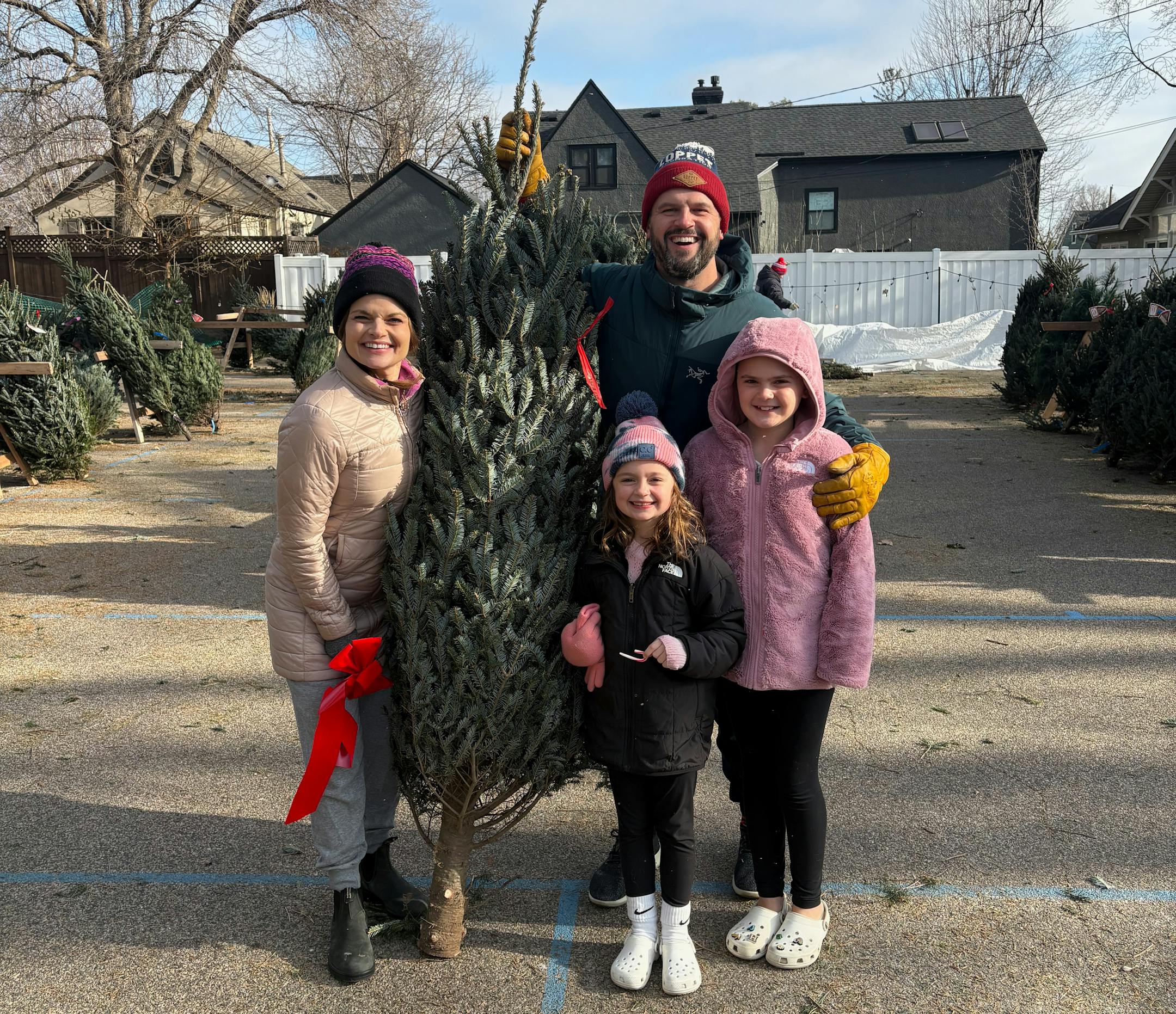
The family of Harper Moyski, far right, poses with their Christmas tree at the Annunciation tree lot in December 2024.
Jackie Flavin with her husband, Mike Moyski, and daughters Harper, right, and Quinn at the Annunciation Christmas tree lot last December. Harper Moyski is one of two children who were killed in the Annunciation shooting in August. (Provided by Jackie Flavin)

Opinion editor’s note: Strib Voices publishes a mix of guest commentaries online and in print each day. To contribute, click here.

•••

The winter solstice arrives quietly each year as the longest night with the least light.

For as long as humans have lived through harsh winters, we’ve learned the same things.

Turn inward.

Gather close.

Share warmth.

Tell stories.

Make merry.

Hang lights.

Winter was never about pretending everything was fine.

It was about surviving together.

This year, the darkness feels heavier than most. For my family, it’s our first Christmas without our daughter, Harper.

And still, I find myself drawn to this season more than ever. Not because it asks us to be cheerful, but because it asks us to be honest.

I’ve always loved Christmas. Not because it’s perfect or polished, and not really because of the religious significance either.

I love it because it’s deeply human. Because it centers generosity and warmth. Because it invites us to gather. Because it reminds us that light is something we make, especially when the nights are long.

One line from an old carol has always undone me:

“Where the soul felt its worth.”

That line means everything to me and gets me every year.

Every soul. Feeling its worth.

This year, it lands so differently.

Living with extremes

We are learning, whether we want to or not, to live with extremes.

Love and loss.

Grief and gratitude.

Remembering and still choosing to keep living.

We are holding things that don’t resolve neatly. We are making decisions without clean answers. We are learning how to carry big, conflicting feelings at the same time.

This tension isn’t new. It’s the essential sacred reality of being human.

What is new is how out of practice we are at holding it.

Over time, we have become disconnected from nature, from one another, from ourselves.

We have lost many of the rituals that once helped us process grief and pain together. We have replaced stillness with noise. Listening with certainty. Belonging with sides. Identity with politics.

So when real darkness arrives, it feels unbearable.

But winter tells a different story.

The dark is not a failure.

It’s an invitation.

What the dark has taught us

Since August, we haven’t slept in our home.

The moment I ran out the door that morning toward Annunciation, time stopped.

Less than an hour after I waved goodbye to Harper, our familiar ritual of hearts and silly faces, she was gone.

The worst has already happened to us. We are living a real-life nightmare. The fear that keeps me awake now is that this will happen to others.

I move through the world carrying panic for everyone else now. I see strangers and feel jolts of fear for them, knowing how easily their sense of safety could be shattered.

None of us know when that moment might come.

We’re told this is normal. That this is the cost of freedom. That this is too complicated to change.

But winter wisdom pushes back on that lie.

Every culture that survived long winters understood this: the measure of a society is how well it protects its children.

So I ask, honestly, how are we doing, Minnesota?

I overhear kids talking now, asking questions no child should have to ask.

Why would someone want to hurt us?

Why do people even have guns like that?

I don’t have good answers for them.

And I don’t think any of us really do.

How we got here

Violence like this doesn’t come out of nowhere.

It grows where pain goes unhealed.

Where loneliness replaces belonging.

Where people lose connection, meaning, hope and carry wounds they never learned how to face.

We live in a culture that doesn’t know how to sit with pain, but knows how to numb it.

We are good at distraction. Less good at care. And when isolation deepens, some people implode and some explode.

Add easy access to weapons designed for war, and unprocessed pain can become catastrophic in seconds.

We tell ourselves stories to avoid this truth. But winter doesn’t let us look away forever.

We cannot pretend this is normal.

How we begin again

Here’s what gives me hope.

When people sit down, really sit down, something shifts.

I’ve seen this firsthand in the months since Harper died.

We’ve sat down with lawmakers from across the political spectrum. Different parties. Different backgrounds. Different starting points.

And when we slow down and talk as people, not positions, the temperature changes.

Fear softens into curiosity. Common ground appears. The edges blur.

Grace isn’t weakness. It’s a survival skill.

Violence prevention doesn’t begin with fear. It begins with connection, with people being seen, held, supported, and protected long before harm feels inevitable.

Love, practiced collectively, is the highest form of protection.

Choosing who we want to be

Winter is a reckoning.

But it’s also a turning.

After the longest night, the light returns. Not all at once. Not loudly. But steadily.

This is where we are.

Every choice matters. How we speak. How we listen. What we normalize. Who we protect.

What kind of world we are building, and who we are becoming in the process.

We can do better.

We must do better.

And we can only do it together.

Light doesn’t erase the dark.

It stays with us inside it.

This season, may we remember what winter has always known. We survive by gathering close. By holding each other. By making light for each other. By protecting what is most precious.

Where the soul feels its worth.

That’s the world I want to live in.

And I still believe we can choose it.

Jackie Flavin is the mother of Harper Moyski, who was killed in the shooting at Annunciation Church in August. She lives in Minneapolis.

about the writer

about the writer

Jackie Flavin

More from Commentaries

See More
The family of Harper Moyski, far right, poses with their Christmas tree at the Annunciation tree lot in December 2024.
Provided by Jackie Flavin

She was one of two children killed in the Annunciation shooting in August. In the darkness of this winter, here’s what gives me hope.

card image
card image