
Rash: After 75 years, Korean War sergeant finally rests at home

On Monday, in Hill City, the Korean conflict was not the ”Forgotten War.” Hundreds turned out to honor Sgt. Rosslyn Edward Gresens, whose remains were found in Korea earlier this year.

Columnist Icon
The Minnesota Star Tribune
September 24, 2025 at 10:59AM
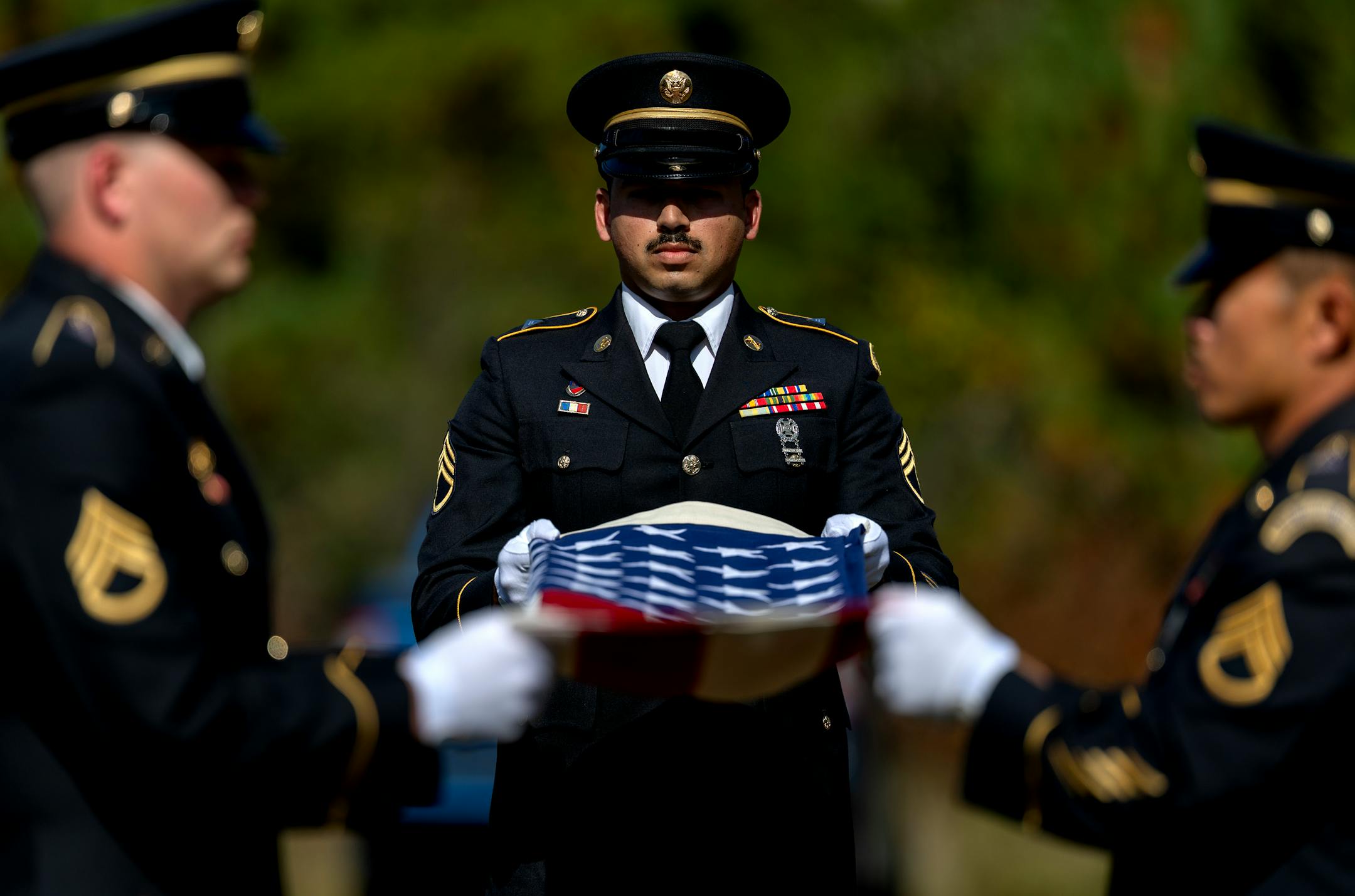
The honor guard folds a flag for Rosslyn Gresens during a graveside service with military honors at Macville Cemetery in Swatara, Minn., on Sept. 22. Gresens died during the Korean War and his remains were only recently identified. (Carlos Gonzalez/The Minnesota Star Tribune)

Opinion editor’s note: Strib Voices publishes a mix of commentary online and in print each day. To contribute, click here.

•••

HILL CITY, MINN. – “What Price War?”

That elemental, even existential question could be asked anytime in history. And indeed, it was the query on the cover of a May 25, 1952, Minneapolis Tribune Sunday “Picture” magazine story examining the cost of conflict on one small Minnesota town: Hill City, which is south of Grand Rapids near the Iron Range.

Small, perhaps in population, with 613 residents. But big in wartime sacrifice, including the ultimate one, as evidenced by a list of Hill City’s war dead: nine from the Civil War, three from the Spanish-American War, two from World War I, 10 from World War II and one from the then-raging Korean War.

A second name was mentioned for that conflict: Rosslyn Gresens (or “Rossi,” as he was known), listed as missing in action since Aug. 11, 1950.

His image appeared too, in a separate picture of his dad, Ed, a World War I veteran, and mom, Hattie, holding on to a photograph of their missing son. The parents, the story stated, “are still hoping, as they always will, that Rosslyn may be alive.”
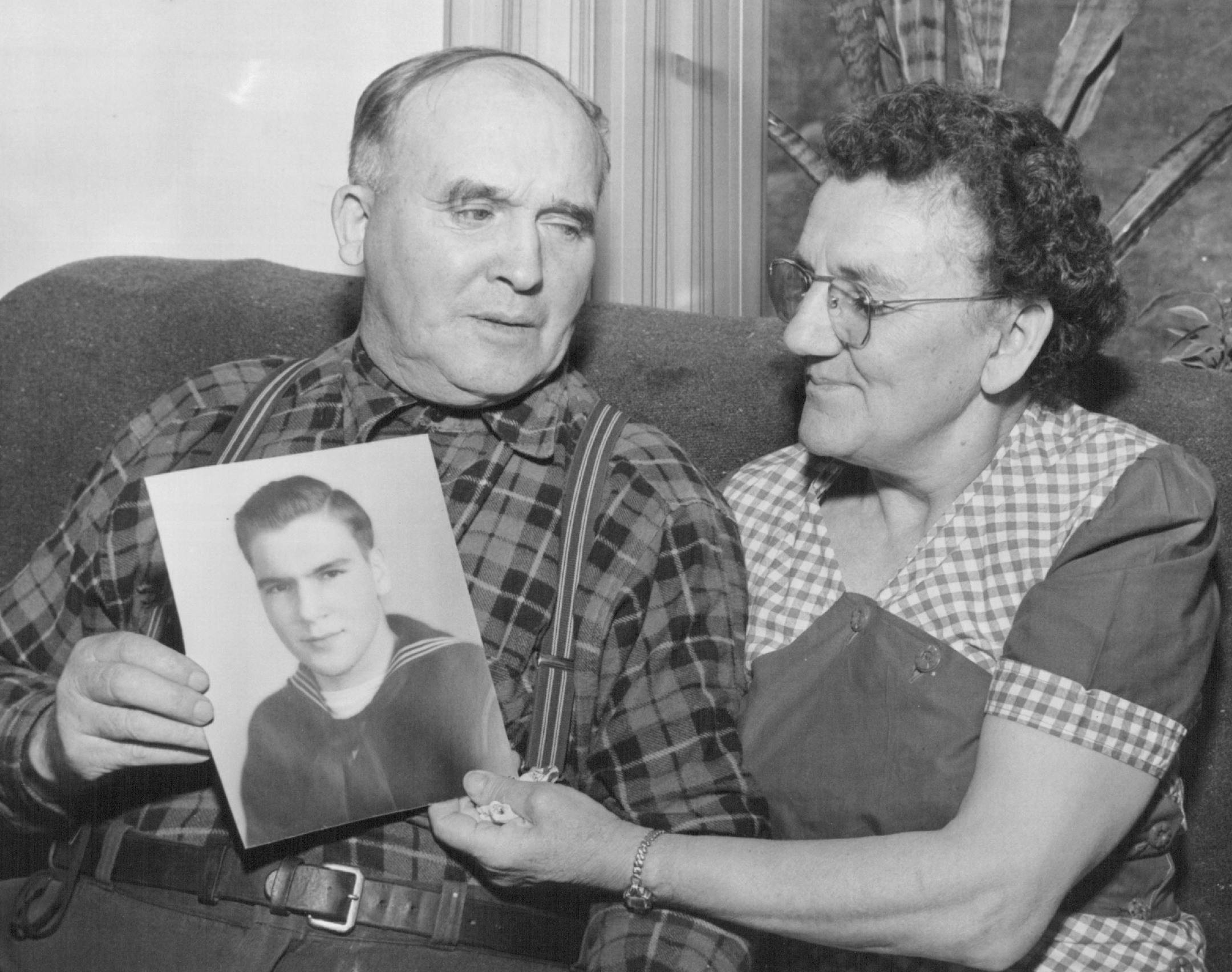
Ed and Hattie Gresens hold a picture of their son, Rosslyn, in May 1952. At the time, he had been listed as missing in action in Korea for almost two years. (The Minnesota Star Tribune)

A photo of Gresens was seen again on Monday, next to a small coffin with his cremated remains, when after 75 years he was buried on top of his mother’s grave after a funeral with full military honors at Macville Cemetery just south of Hill City.

Gresens’ remains were accounted for on Feb. 28, according to the Defense POW/MIA Accounting Agency, which reported that the sergeant “was a member of Company B, 3rd Engineer Combat Battalion, 24th Infantry Division. On Aug. 11, Gresens was part of a patrol on the west side of the Naktong River. After a fire fight with enemy soldiers, the patrol broke contact ... and began moving east to the river, incurring heavy losses along the way. After crossing the river, survivors reported that Gresens was last seen providing fire in a rice paddy, but did not rejoin the withdrawing soldiers.”

Gresens, a corporal at the time, was posthumously promoted to sergeant, awarded the Silver Star, Purple Heart, Combat Infantry Badge, Korean Service Medal, National Defense Service Medal, Republic of Korea Presidential Citation, Republic of Korea War Service Medal, United Nations Service Medal and other honors.

John Knaack, who himself was awarded a Bronze Star and Purple Heart for his combat in Korea, was one of hundreds at the funeral. He said that he “just did what the government wanted me to do” and that serving was “an honor.”

Like Gresens, he said that there were times, including more than a 20-day stretch, when no one back home knew his whereabouts. Looking out at the red, white and blue contrasting with the hues of fall’s first day, Knaack said that “it’s great to see the flags are flying because they represent our country and our freedoms and all the things that we respect.”

Hill City is a “very patriotic town,” said its mayor, David Lange, whose voice showed emotion as he described the whole event as “overwhelming.”

The emotion most felt by Judith Pierce, one of Gresens’ three living nieces, was for Gresens’ mother, who Pierce said died “thinking he would come home; she never gave up hope.”

Pierce, who received the American flag from the U.S. Army Funeral Honors Squad after the funeral, said that she was “proud of our town, our small little town — they have just gone all out for this.”

And beyond her small town, everyday people — especially veterans from near and far — came to pay their respects. Including John Pearson, whose St. Cloud-based organization Freedom Flight flies four hot-air balloons emblazoned with “POW/MIA.”

Pearson said that the funeral was a reminder of “somebody who has given their time and has given their life for your and my freedom, and we can never, ever let that be forgotten.”

But because it was fought after the epic, epoch-defining World War II, the conflict in Korea was often called “the Forgotten War.” Which may be true as a broader national narrative, especially after the divisive Vietnam War followed it.

But as I experienced on a 2019 reporting trip to South Korea, there’s still readily apparent appreciation in that country for the sacrifice Americans made. And there’s remembrance from families and friends of the more than 700 Minnesotans killed in Korea, including those gathering Monday at Macville Cemetery, where the war — and Sgt. Rosslyn Gresens — were not forgotten. Just as all conflicts and combatants never should be.

Especially since the question “What Price War?” tragically needs to keep being asked.

about the writer

about the writer

John Rash

Editorial Columnist

John Rash is an editorial writer and columnist. His Rash Report column analyzes media and politics, and his focus on foreign policy has taken him on international reporting trips to China, Japan, Rwanda, Kazakhstan, Turkey, Lithuania, Kuwait and Canada.

See Moreicon

More from Columnists

See More
card image
Alex Kormann/The Minnesota Star Tribune

The response to a woman’s fatal encounter with ICE in Minneapolis will require discipline as well as resolve.

card image
card image