
Yuen: Why everyone’s finally talking about menopause — and why it’s about time

A new conference in Minneapolis invites speaker Dr. Sharon Malone, who says menopause can be the best time of a woman’s life.

Columnist Icon
The Minnesota Star Tribune
November 3, 2025 at 12:00PM
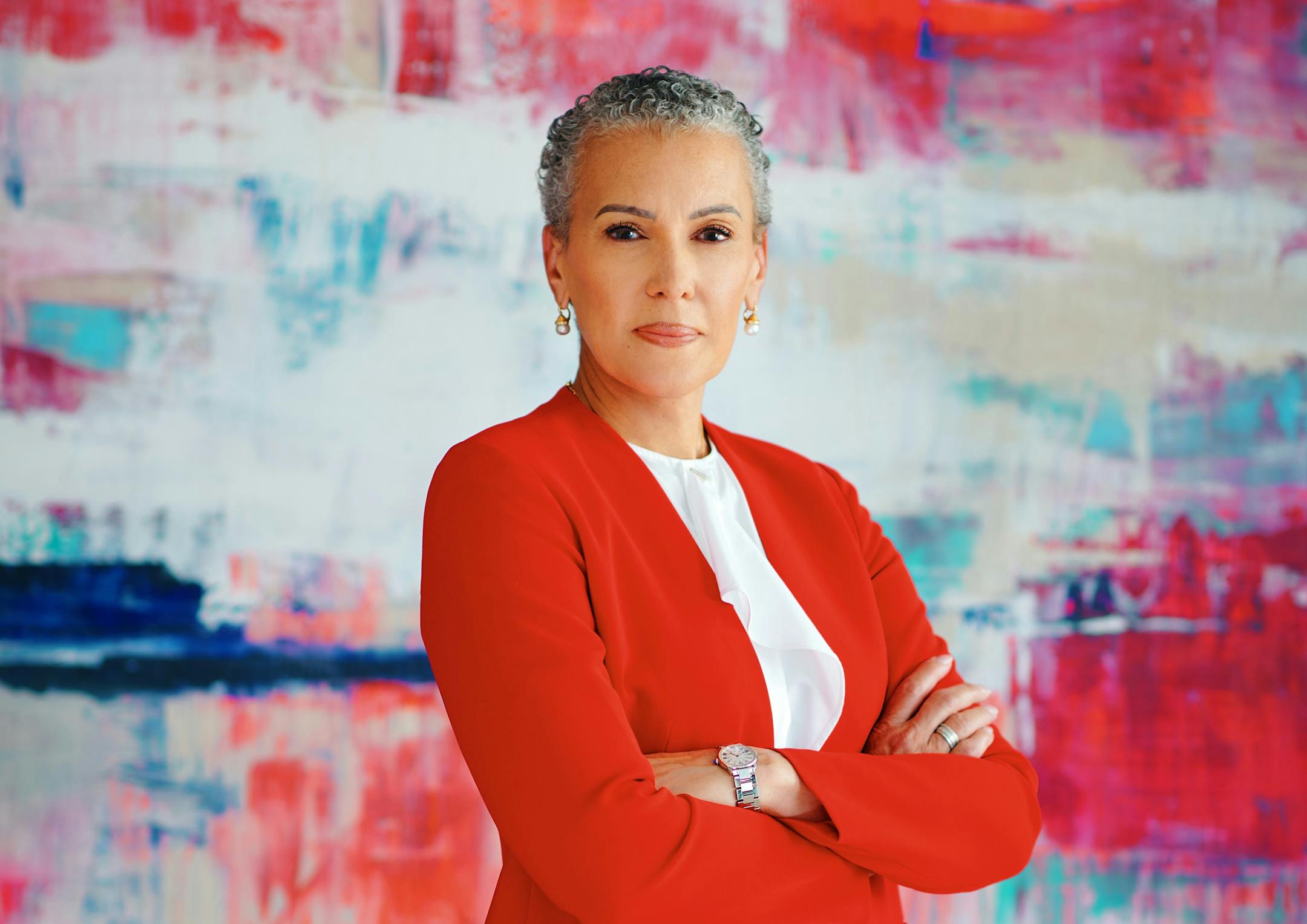
A woman in a red blazer is photographed in front of a modern art canvas.
Dr. Sharon Malone will speak at the Change Summit, a conference about menopause care, on Nov. 6 in Minneapolis. (Eli Turner/Provided)

Menopause is no joke, even if our society has treated it as such.

The cliché of a woman furiously fanning herself in the middle of a hot flash has long been the standard image that comes to mind of a person struggling with menopause.

But these days, the floodgates to information about menopause have swung open. Women have taken to TikTok and Instagram to detail their various symptoms, ranging from weight gain to sleep disruptions. Hormone replacement therapy, while not for everyone, is shedding some of its stigma from a previous generation. Hollywood stars from Naomi Watts to Halle Berry are speaking up about their experiences with menopause, signaling that a growing number of women are refusing to suffer in silence.

And now, Minnesotans have a chance to hear more about menopause and perimenopause — the years leading up to a woman’s final period — at a conference Thursday. The Change Summit is convening nationally renowned voices, including Dr. Sharon Malone, to educate health care providers, insurance companies and everyday women about this historically overlooked stage of life.

Malone is an OB/GYN, chief medical adviser at Alloy Health, host of the new podcast The Second Opinion and author of the New York Times best-selling book "Grown Woman Talk." (She’s also a close friend of Michelle Obama and is the wife of former U.S. Attorney General Eric Holder.)

Here’s a snippet of my conversation with Malone, edited for clarity and length.

Q: Why is menopause having a moment now?

A: The explosion of social media is what has changed things for us. I have been having this same conversation in my office for 30-plus years. There’s not a lot of brand new information; this is just getting the information out to the general public. Millennials are the first generation that hasn’t heard all the negativity [about hormone replacement therapy]. They’re demanding different answers.

Q: What caused previous generations to be skeptical of hormones?

A: The Women’s Health Initiative study is was what changed everything. It landed like a bombshell. Prior to 2002, we prescribed hormones freely. We knew it was the most effective thing for the treatment of menopausal symptoms, and we were encouraging women to take because we had at least observational data that said that it improved cardiovascular outcomes. But imagine this: They held a news conference at the National Press Club and said hormone replacement did not decrease the risk of heart disease. But the real killer was that it said it increased the risk of breast cancer. That was what put the nail in the coffin for most women about hormone therapy.

Q: How should the findings be viewed today?

A: The additional risk of breast cancer is small, it’s considered rare and there’s no increased risk of dying from breast cancer.

We also learned that timing matters when you start hormone therapy. The average age of women included in the study was 63, which is 12 years beyond the time of when we normally would start hormone therapy. The data is the data. It was the misinterpretation of the data and then overgeneralizing those results to everyone that was the problem.

Q: What was the effect of that study?

A: One, it scared women. Two, it disadvantaged an entire generation of doctors. Three, the most pernicious effect was that research into hormones and women’s health in midlife shut down immediately because this one study was taken as the definitive word. And so for 23 years, we’ve been living with the underinvestment in women’s health in midlife, particularly as it relates to menopause and hormone therapy.

Q: Women in midlife talk about experiencing brain fog, issues with sex or sleep, joint pain as well as mood changes such as depression and anxiety. Do most women know that these symptoms may be related to menopause or perimenopause?

A: They don’t. There’s a generation of women that didn’t really get educated about menopause, and there’s a generation of doctors who don’t recognize that these are signs of perimenopause. The symptoms can start as early as 10 years before you’ve had your last period. That’s where the confusion comes in. You’re missing all of those women.

Q: In a new study from Mayo Clinic, 87% of women it surveyed from ages 45 to 60 did not seek medical care for menopause symptoms, with some saying they were too busy or weren’t aware of treatment options. What is causing women to refrain from getting the help they need?

A: We as women are socialized to accept suffering. It starts with our first period, goes through PMS, pregnancy, postpartum depression, and anxiety. So when we get to perimenopause and menopause, this is just the last of a long string of things that we have tolerated over the course of our lifetime.

Q: As the pendulum swings in the opposite direction, are you worried that menopause care has become so en vogue that influencers could be spreading misinformation?

A: The good news about social media is that it has raised awareness, and women know there is another path forward (other than gritting your teeth and hoping it will be over in 10 years). But there’s also the problem that not everybody on social media who is talking about menopause is qualified to talk about it. The marketplace has awakened to the fact that perimenopausal and menopausal women have money, and they’re looking for solutions. So when you market something that says, “This is natural” or “This is non-hormonal,” women will try it because they are grasping for help. You have to be cautious on social media. A little due diligence is in order that the person who is talking has the credentials and the training to give that advice.

Q: Is there anything hopeful or surprising about this phase of life that you can share?

A: I’m a menopausal woman. I have been on hormone therapy for 16 years and have no intention of stopping. The thing that gets in the way of not being able to enjoy your life post-menopausal is not feeling well. I tell young women this all the time: If you can be healthy and vibrant and have your brain working, don’t fear this. It can be the best, most productive time of your life. When you get to be in your 60s, this is the first real decade when it’s all about you.

If you go

What: The Change Summit

Hosted by: Let’s Talk Women, a Minneapolis-based event planner aimed at advancing women’s health

When: Thursday, Nov. 6, 8 a.m.-5 p.m.

Where: Northstar 8, 625 Marquette Av. S., Minneapolis

Cost: $295 for an individual ticket

Sign up here to follow Laura’s columns by email.

about the writer

about the writer

Laura Yuen

Columnist

Laura Yuen writes opinion and reported pieces exploring culture, communities, who we are, and how we live.

See Moreicon