Moments after Andrea Lee was catapulted from her motorcycle, she lay on the ground alone like a crumpled bird. Pain seared through her right leg. Lee assumed it would be obvious to anyone, let alone the driver of the SUV that struck her, that she was badly hurt. She wondered, why is no one coming?
Then it dawned on her. The person who struck her with his SUV outside the Sam’s Club in Maple Grove would never come. Lee was the latest victim of a hit-and-run.
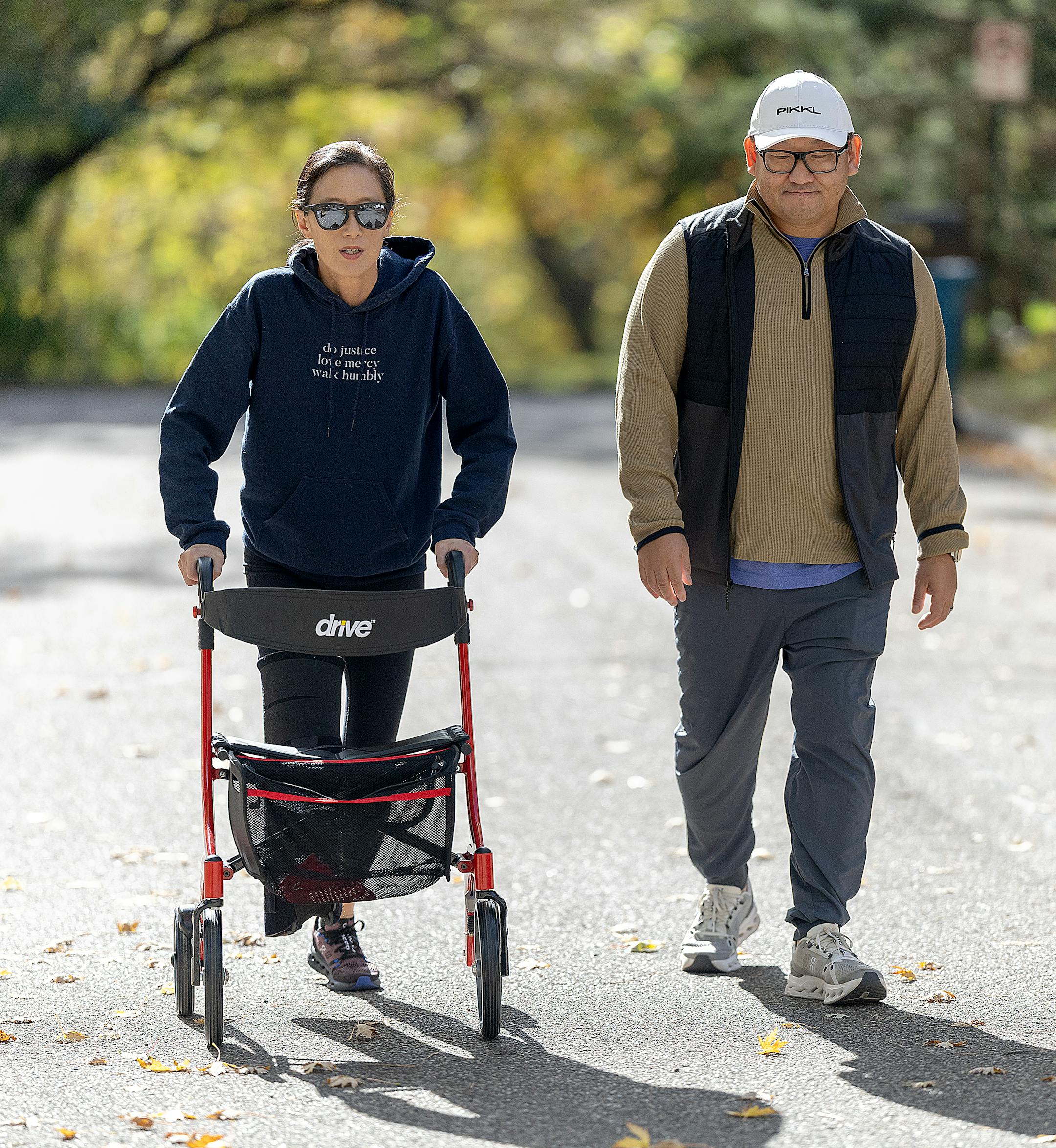
Weeks have passed, and Lee’s leg is amputated. And the driver is still nowhere to be found.
Hit-and-run collisions are not rare. About 3,600 resulted in injury from 2020 to 2024 in Minnesota, and in 53 incidents, someone was killed. We rarely hear about the hit-and-run crashes that don’t result in death, and yet they can permanently alter a person’s life.
What is unusual about this case is Lee’s matter-of-fact response to her injuries and her concern for her perpetrator. After doctors severed her leg, she wrote a letter to the driver, whom she addressed as “Dear Neighbor,” imploring him to come forward — not for her sake but for his own.
The man behind the wheel of the black Dodge Durango couldn’t have known that the 52-year-old woman he hit was a veteran marathon runner capable of radical empathy. Out of all the people he could have turned into a statistic that day, Lee is known in her community as a persistent advocate for those in need. She is the director of operations and “neighboring” at her north Minneapolis church, where she oversees a food pantry and other community resources.
“If you hadn’t left that morning, I could have told you that we’d get through this,” Lee wrote in her letter, which her husband shared and others reshared on Facebook. “I would have let you hold my hand.”
That detail astounded me. How could Lee choose connection with the driver over bitterness?