Perry: The pro-Hitler problem with the American right

Antisemitism exists across the political spectrum, but the Nazi sentiment seeping into mainstream conservatism is especially troubling.

Columnist Icon
The Minnesota Star Tribune
November 29, 2025 at 10:59AM
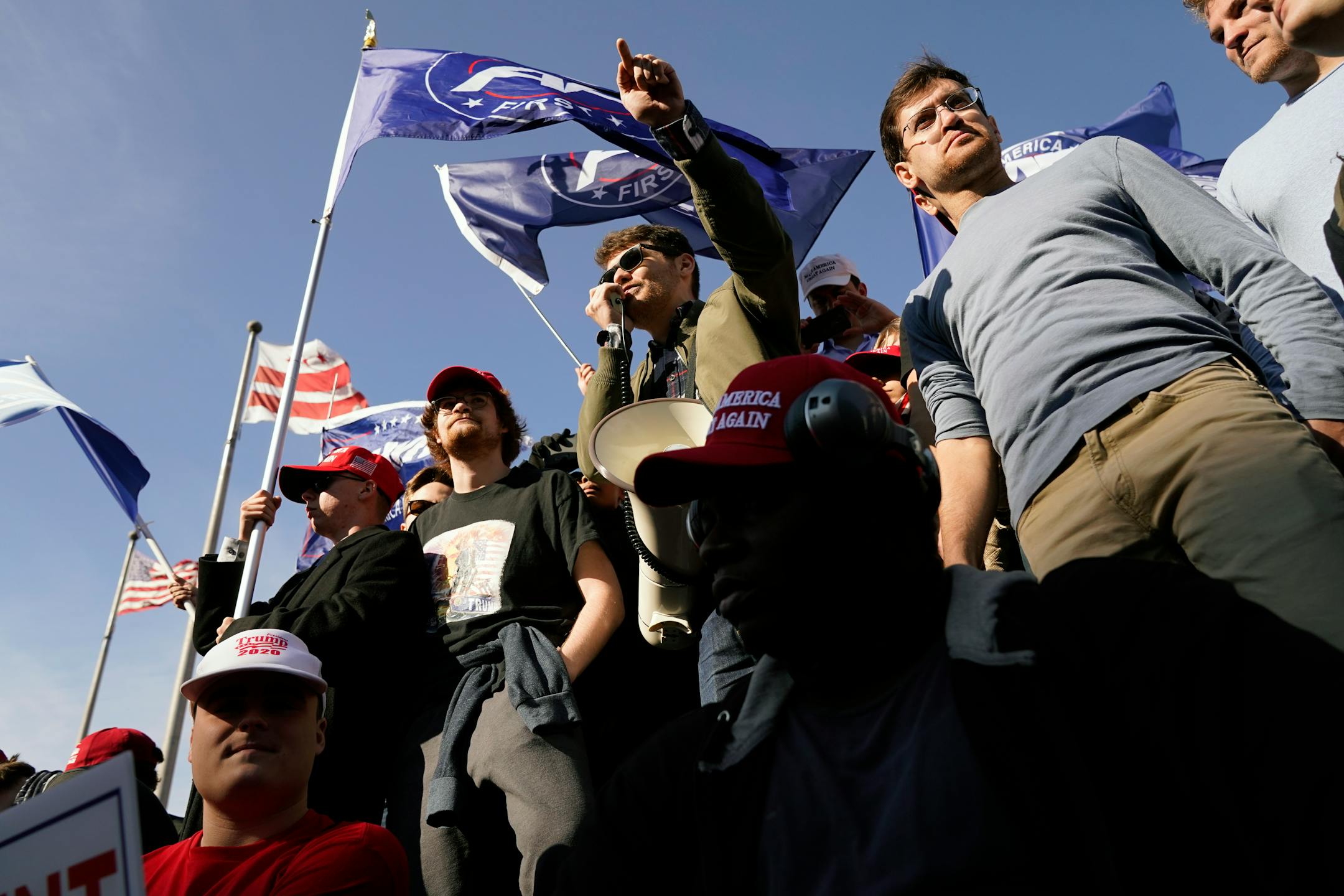
Nick Fuentes, a well-known antisemite and Holocaust denier, center, speaks to supporters of President Donald Trump during a pro-Trump march, Nov. 14, 2020, in Washington. (Jacquelyn Martin/The Associated Press)

Opinion editor’s note: Strib Voices publishes a mix of material from 8 contributing columnists, along with other commentary online and in print each day. To contribute, click here.

•••

I know we’re a divided country in so many ways, but I really thought that as Americans we agreed that Hitler was bad, the Holocaust happened, and that the swastika was a symbol of hate. Maybe that was naive of me.

I’ve been Jewish my whole life and while growing up I encountered plenty of antisemitism, but the worst kinds of pro-Nazi sentiments seemed confined to a tiny reviled fringe. Now, it feels like every day there’s another example of this type of antisemitism seeping into mainstream American culture. Here are a few recent stories.

Recently, the Washington Post broke the news that the Coast Guard had decided to reclassify swastikas, along with nooses and confederate flags, from symbols of “hatred and prejudice” to merely “potentially divisive.” This change meant that public display could only be penalized as misconduct if they could be shown to harm a specific individual, and fully removed penalties for displaying hate symbols in private settings.

Let me just say that there should be zero swastikas in the armed services, and if you want to display one in your home, you should be kicked out of the military. Zero. That’s the only acceptable number. Fortunately, thanks to the media coverage, the Coast Guard seems to be reversing course. Still, one wonders who made the decision to permit swastikas and why. What other decisions are they making that aren’t being leaked?

The Coast Guard story is part of an ongoing contest over just how antisemitic the modern Republican Party gets to be. And to their credit, there are plenty of conservatives fighting against their movement’s worst impulses. When Tucker Carlson interviewed Nick Fuentes, a well-known antisemite and Holocaust denier, President Donald Trump defended Carlson’s right to do so and claimed he didn’t know much about Fuentes (he had dinner with Fuentes in the past, but may have forgotten).

But the issue exploded into a broad schismatic conflict within elite Republican circles. Former Vice President Mike Pence wrote for Fox News that “there is no place in the conservative movement for antisemitism.” Now he did so by talking about American support for Israel (and by distorting history, because in fact the founders did not really champion the return of Jewish people to Israel), rather than talking about American Jews who are American and want to live in America — like me. Still, at least he’s drawing a line in the sand. But there’s a reason he’s no longer vice president.

I’d like to see Republicans in Congress investigate not only why the Coast Guard tried to de-stigmatize the swastika but just how many Coast Guardsmen — not to mention other members of the Armed Services, police, ICE agents, and so forth — like to display hate symbols, but I’m not optimistic.

The pro-Hitler problem among the American right is bad enough, but unfortunately, it’s only a small piece of a bigger story. Fortune recently reported on the explosive growth of monetized antisemitic Instagram reels that rack up millions of views for praising Hitler, questioning the truth of the Holocaust, and promoting antisemitic conspiracies about Jewish control of the media and politics. The problem is not just that Meta is failing to address the problem satisfactorily (Fortune reports that Meta took down flagged videos and defended its policies, but “did not address Fortune‘s questions about how the posts Fortune flagged had been able to generate millions of views, or how they had been able to stay up for so long”), but that the audience for this seems insatiable.

Pro-Hitler videos and the like are, according to the report, a fast way to start making money on the internet. That speaks to lax corporate oversight, yes, but also to a shift in norms that I find very scary. It’s also hard to say what the fix is or who precisely is to blame when the problem is that this kind of content is so appealing to so many.

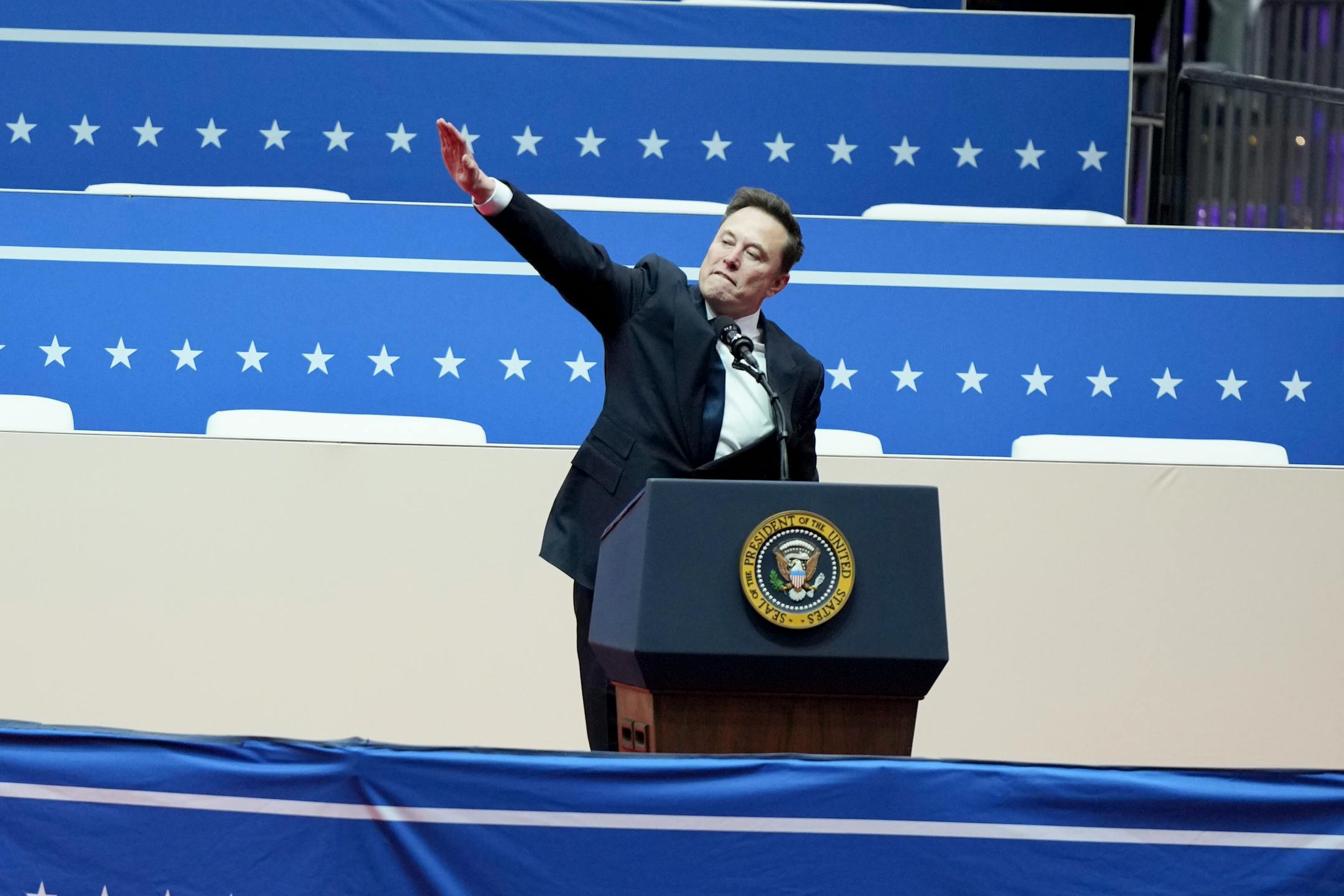
Elon Musk gestures as he speaks during the inaugural parade inside Capitol One Arena following President Donald Trump’s inauguration as the 47th president in Washington, Jan. 20. (ERIC LEE/The New York Times)

But in some cases, the culprit is very clear. Elon Musk, who began the second Trump administration by performing a sieg heil on stage, and then denied he did it, is being investigated in France because his chatbot Grok — which he designed to have a strong conservative bias — made comments denying the Holocaust. Grok claimed the gas chambers were designed for disinfection from typhus rather than for mass executions, and that people only believe in the Holocaust because of “laws suppressing reassessment, a one-sided education and a cultural taboo that discourages the critical examination of evidence.”

Note: The Holocaust happened. We’ve examined the evidence. People saying otherwise are lying. But here’s Musk’s program, promoting these hateful lies, and yet Musk’s vast wealth seems to inure him from any consequences.

We’re now many years into the current cycle of a renewed focus on fighting antisemitism in American society. It hasn’t worked, and at least in part it hasn’t worked because the Trump administration and even far too many Democrats are keen to focus on left-wing pro-Palestinian protesters, rather than Nazis and their friends. There is antisemitism across the political spectrum, including among college students, but we aren’t going to find the big threats on college campuses (like the University of Minnesota, which was investigated by the Trump administration for antisemitism). The big threats are when billionaires, giant corporations, and people running the military decide that maybe Nazis aren’t so bad.

Here’s where I’d like to come up with some kind of snappy proposal for how to fix this, but I’m still furious that we even have to talk about Nazis in 2025. A few thoughts, though. There are complicated discussions to have about antisemitism, the way it’s both weaponized and ignored across American society, that I’d really like to have.

But we can’t do that right now because first we need to get back to the basics: Hitler was bad. The people who suggest otherwise are also bad. The people who tolerate, promote and permit the pro-Hitler camp to thrive within their political movements or their social media platforms are also bad. Let’s get back to the basics, then figure out what comes next.

about the writer

about the writer

David M. Perry

Contributing columnist

David M. Perry is a contributing columnist for the Minnesota Star Tribune focusing on disabilities, history, higher education and other issues. He is a historian and author.

See Moreicon