Big rig truck driver embraces freedom, endures loneliness on the road

Lual Akoon, a refugee from South Sudan, drives an 18-wheeler across the country and into Canada but calls Minnesota home.

For the Minnesota Star Tribune
December 31, 2025 at 12:01PM
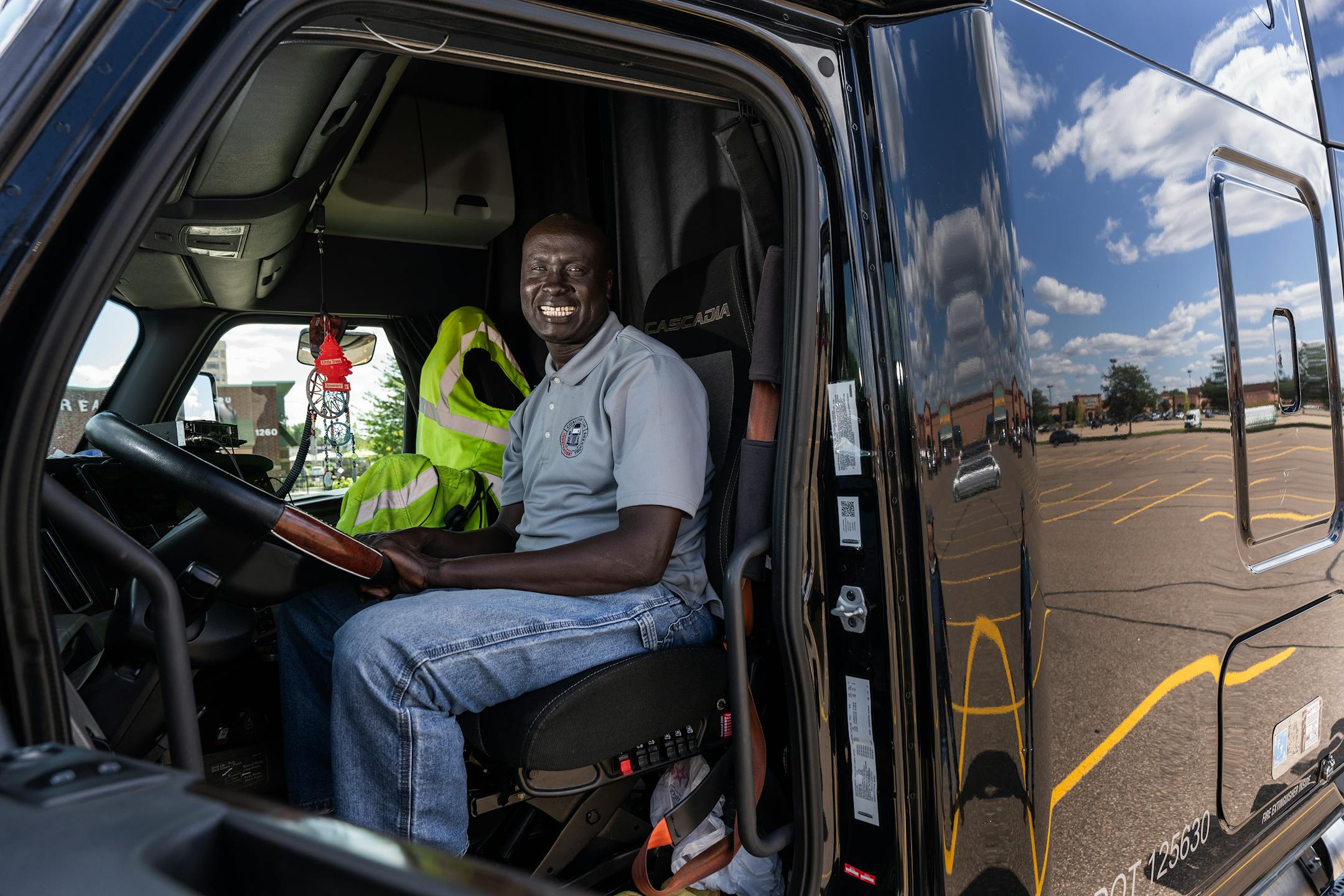
Lual Akoon sits inside his Freightliner Cascadia semi-trailer truck, which he is leasing and paying off, on Aug. 25 in Eagan. (Richard Tsong-Taatarii/The Minnesota Star Tribune)

After civil war displaced Lual Akoon from his native South Sudan, he eventually found a home in the Twin Cities.

But he never stopped moving.

As a long-haul truck driver, Akoon typically spends months traveling throughout the country in a big rig and estimates he will have driven 100,000 miles by the end of the year. He plans to cut back after he pays off the $250,000 Freightliner Cascadia semi-trailer truck he’s been leasing, primarily hauling for Eagan-based Bay and Bay Transportation.

Akoon, who keeps his U.S. passport and naturalization certificate with him as he drives, was resettled in Iowa in 1999. He moved to Kansas, where he got married and drove a forklift.

He went back to South Sudan in 2011 when it gained independence and then moved his family there. But he returned to this country in 2016 and stayed with a relative in the Twin Cities, working in a produce warehouse and later Amazon’s distribution center in Eagan.

Then a friend who is a truck driver suggested he look into long-haul driving.

Akoon began trucking in 2017 after completing a training course, passing a month-long road test alongside a driver-trainer and obtaining his commercial driver’s license. In 2023, he traveled to Washington, D.C., with Minnesota Trucking Association President John Hausladen to advocate for independent truckers.

Akoon has driven in every state except Alaska and Hawaii and has crossed the border into Canada. After eight or nine hours of driving each day, he bunks down most nights in the sleeping berth of his truck. His cellphone keeps him connected with his wife and their five kids back in Minnesota.
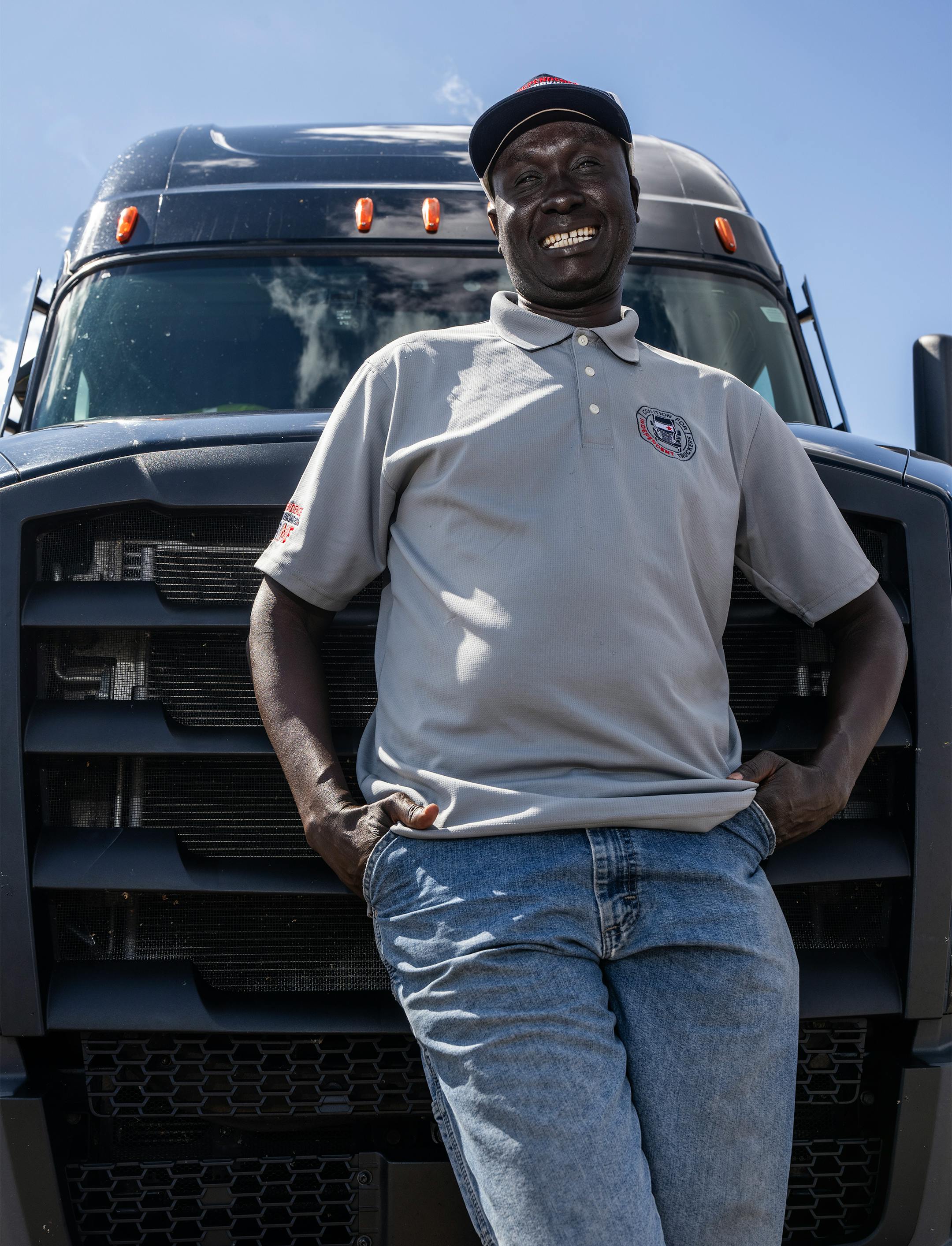
Lual Akoon is a Minnesota-based driver with Sudanese roots who loves his rig and enjoys hauling freight. (Richard Tsong-Taatarii/The Minnesota Star Tribune)

He is 48 years old, according to the birthdate that refugee camp officials assigned him because he came from a remote area with no hospital or formal recordkeeping. Akoon was among 20,000 “Lost Boys of Sudan,” as aid workers called them. He lived in Ethiopian and Kenyan camps before his resettlement to Iowa in 1999.

Akoon said he maintains “unbreakable relationships” with other “lost boys.”

“It is very much part of who I am, because it was from a really unfortunate situation to the fortunate situation that I’m in right now,” he said.

In an interview edited for length and clarity, Akoon shared what it’s like to be in his shoes.

What do you like about truck driving?

The freedom, as opposed to a 12- or eight-hour job where you constantly have somebody watching over your shoulder. If you are driving, you are getting paid. When you are driving, especially when you are going to a place like Nebraska, all the way to Wyoming, you relax a little and see the beautiful countryside, beautiful weather.

What kinds of goods do you haul?

I usually pick up refrigerated food items. Candies. Potatoes. Tyson Foods products, such as raw or processed meat. Hamburgers. Breads. All kinds of food items.

What is sleeping in your rig like?

Very comfortable. Behind the seats, there are two beds, one upper and one lower. I usually use the lower one. There’s a curtain to pull down at the windshield and another that divides the drivers’ seats and the sleeping bunk.

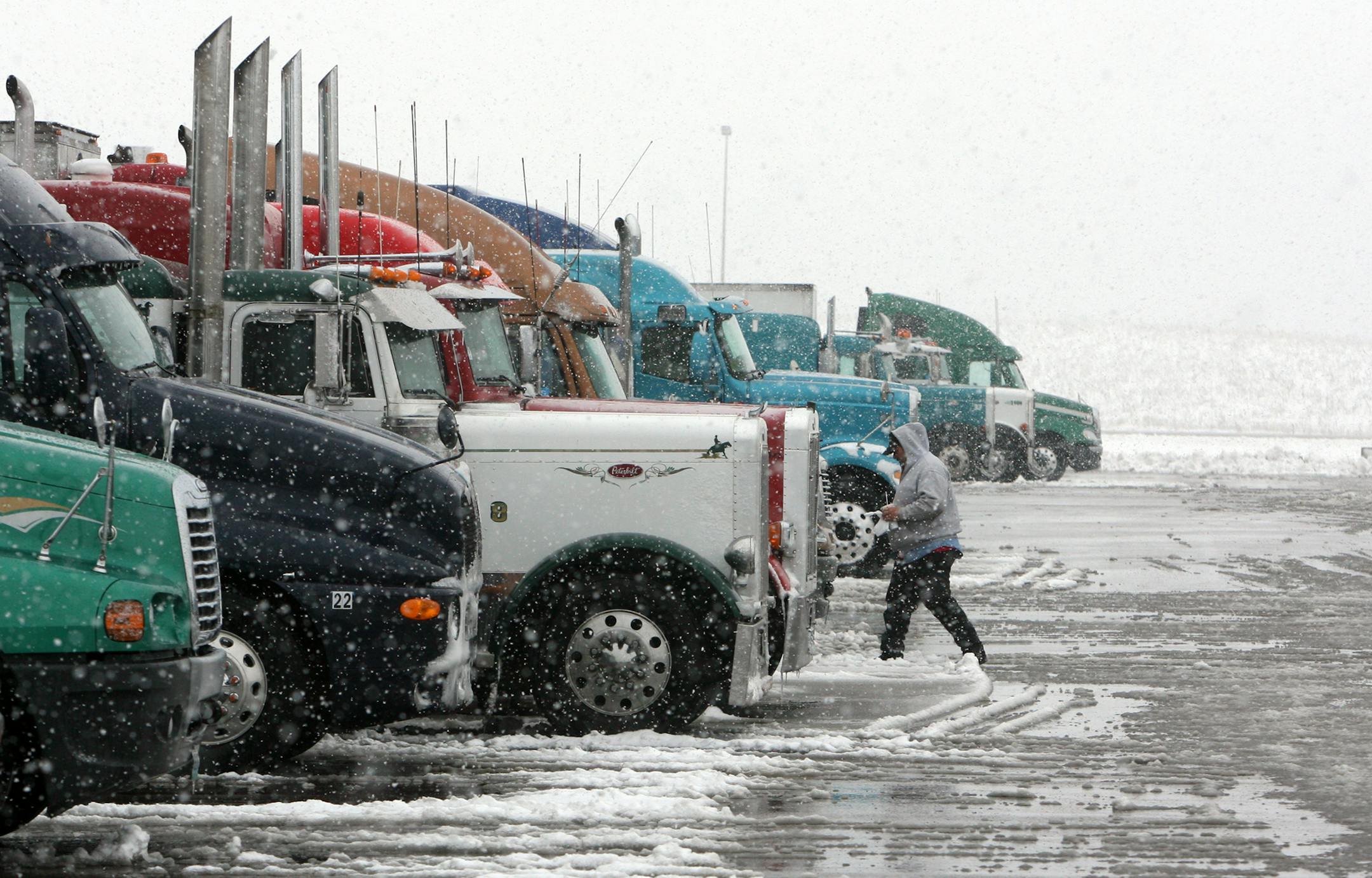
Semi-trailer trucks sit in the parking lot of a truck stop in Albert Lea, Minn., after a spring snowstorm in April 2007. (David Joles/The Minnesota Star Tribune)

How do you stay warm or cool overnight?

I idle my truck to run the climate control in the bunker. Idling the truck takes so much diesel, though. Some people buy an auxiliary power unit to warm up or cool down the truck temperature when you’re shut down. But it costs so much money, I think, $8,000 to $10,000.

Where do you stop to sleep?

I usually park at busy truck stops — Flying J, Pilot Petro — for security, my own and the cargo that I’m hauling. If needed, I can sleep at a rest area or a Walmart parking lot. At a truck stop, we can purchase a shower and get food.

You can wake up and find that your truck is not starting. If you are not at a truck stop, you’re going to have problems getting somebody there to fix it.

Is the money worth spending so much time on the road?

No. Uber drivers are making more money than some of us on the road. And they get to go home and sleep. Once I own the truck, I will be open to a larger market. I can negotiate the rate and do my own business as a fully independent contractor. But with Bay and Bay, I love it there. It’s an accommodating environment.

How does your job affect your home life?

So, I choose to give up a family time to stay over on the road so that I can make money and pay for the truck.

It’s not easy for me as a father. It’s not easy for my kids. It’s not easy for family. It’s not easy for my health. Loneliness is a problem.

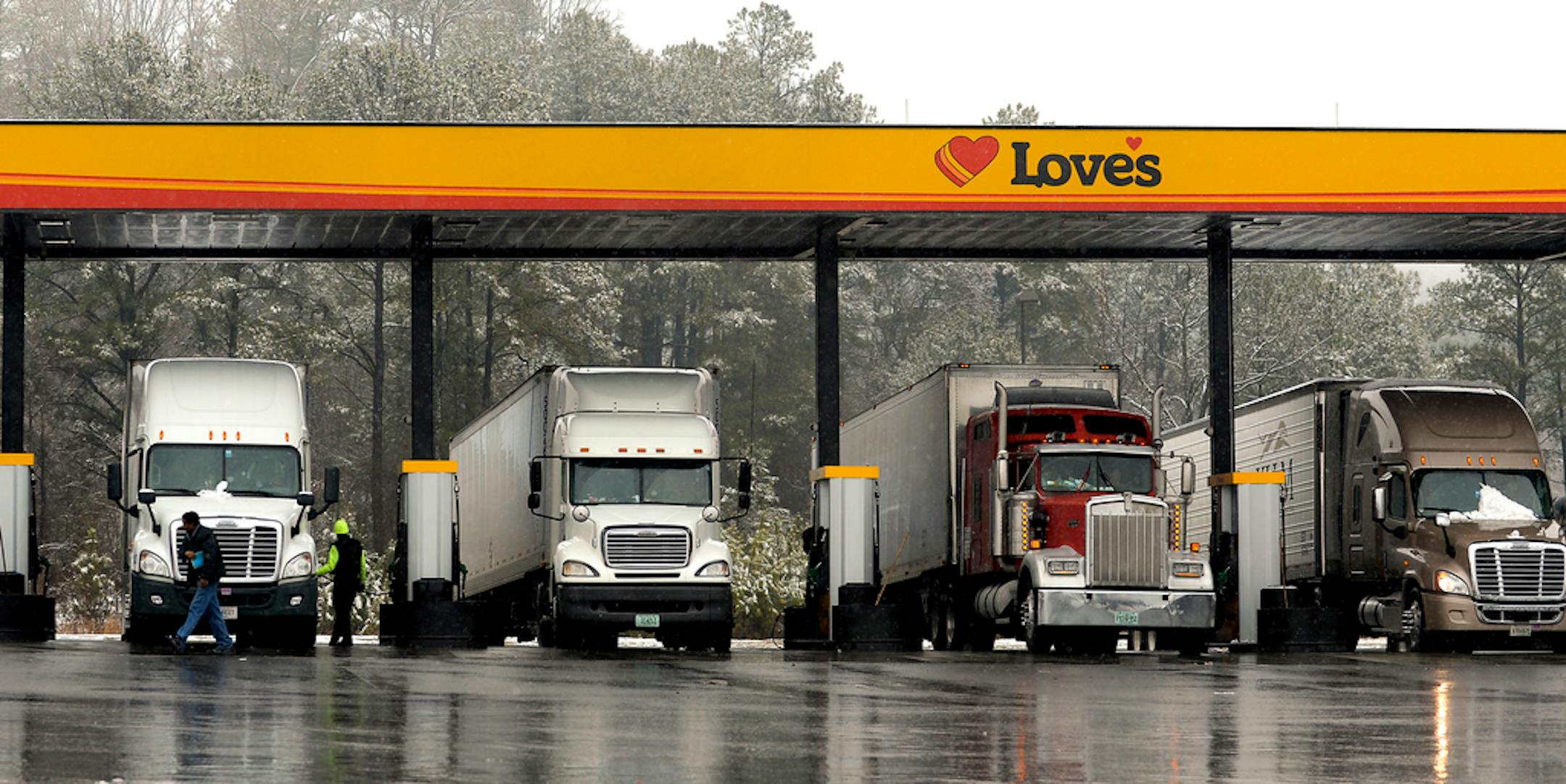
FILE - In this Feb. 11, 2014, file photo, truck drivers stop at a gas station in Emerson, Ga., north of metro Atlanta, to fill up their tractor trailer rigs. The Biden administration is proposing stronger pollution regulations for new tractor-trailer rigs that would clean up smoky diesel engines and encourage new technologies during the next two decades. The proposal released Monday by the Environmental Protection Agency would require the industry to cut smog-and-soot-forming nitrogen oxide emissions by up to 90% per truck over current standards by 2031. (AP Photo/David Tulis, File)
Truck drivers stop at a gas station in Emerson, Ga., north of metro Atlanta, to fill up their tractor-trailer rigs in February 2014. (David Tulis/The Associated Press)

What’s the hardest part of driving an 18-wheeler?

Sitting behind the wheel is probably the most stressful time because that’s the most demanding time. Not only do you have to drive your own truck, you also have to drive for others, pedestrians and other four-wheeler drivers. You have to see who is on the phone, who is passing you, who is in a blind spot, who is not yielding. Safety supersedes everything.

What should other drivers know about driving safely around big rigs?

We need space. The gap that we leave in front of us, we leave it intentionally. It is not for you to just get in there. There are certain roads we can’t go through. Sometimes we cannot be in certain lanes. Sometimes we must go below the speed limit. DOT [Department of Transportation] wants us to do it that way, exactly.

Even though you think we are wrong, just give us the space. It’s important.

In Their Shoes is an occasional series highlighting Minnesotans at work. If there’s a type of job you want us to profile — or if you have someone who would be a good candidate — email us at InTheirShoes@startribune.com.

Todd Nelson is a freelance writer in Lake Elmo. His e-mail is todd_nelson@mac.com.

about the writer

about the writer

Todd Nelson

See Moreicon

More from In Their Shoes

See More
card image
Richard Tsong-Taatarii/The Minnesota Star Tribune

Lual Akoon, a refugee from South Sudan, drives an 18-wheeler across the country and into Canada but calls Minnesota home.

card image
card image