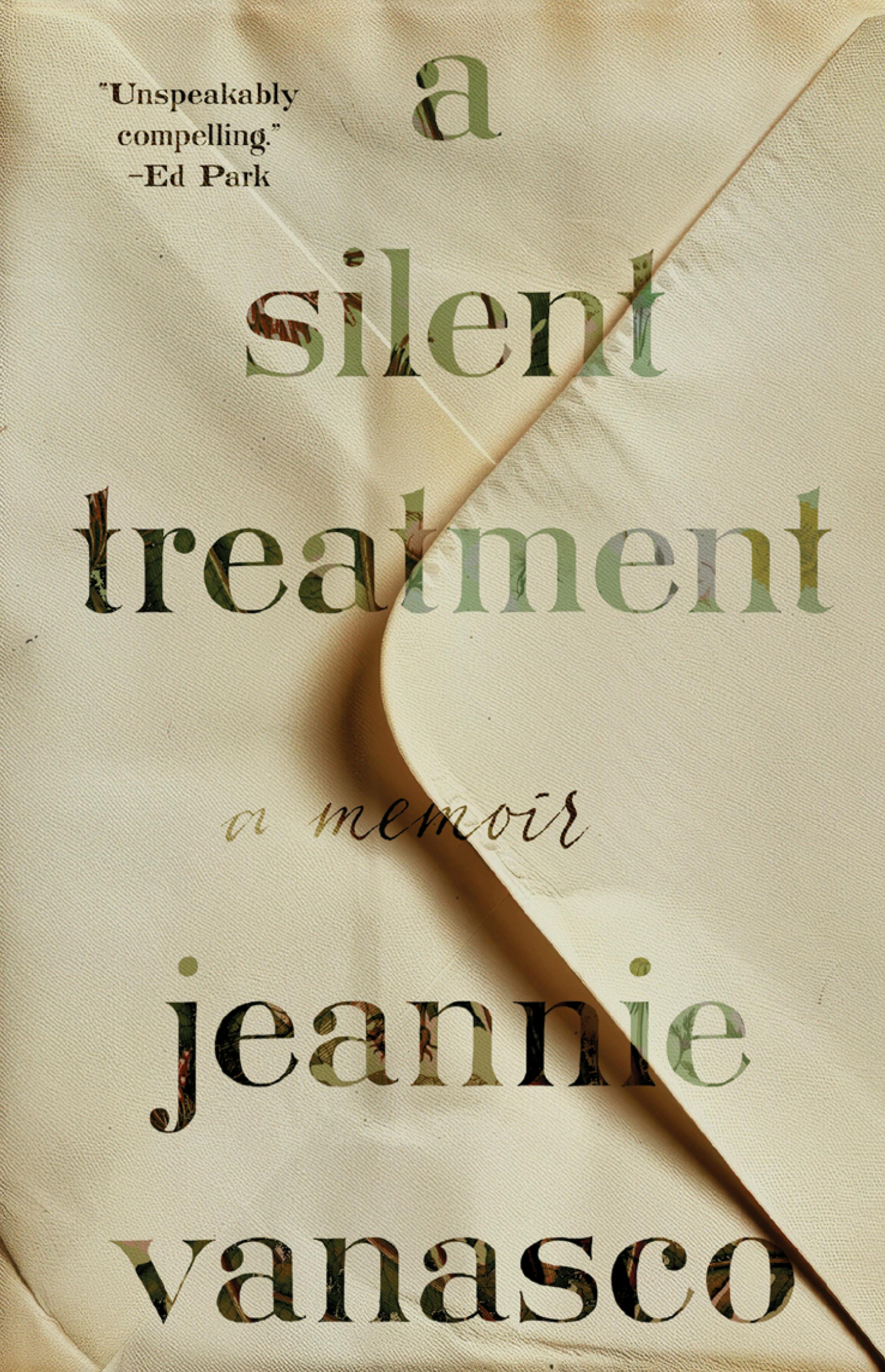
Plenty of memoirs have been written about fraught relationships between mothers and daughters, but few are as disturbing and fascinating as Jeannie Vanasco’s third memoir.
“A Silent Treatment” is about the ghosting the author’s mother inflicts on her frequently, for long periods of time and for reasons that are nearly unfathomable.
Later in life, the widowed Barbara moves across the country to live with Vanasco in a basement apartment that Vanasco and her husband have remodeled for her.
Once settled, Barbara takes to frequently and mysteriously ghosting her daughter — abruptly ceasing all communication, sometimes for days, often for months. “Over the five years since she moved in with Chris and me [it amounts] to a year and a half, at least,” she writes.
There is never any clear reason as to why, but during those silent times Barbara, who gave permission for “Silent Treatment” to be written, waits to take out her garbage and walk her dog until she knows her daughter isn’t around. She won’t answer her phone. She keeps her lights off and the door to her apartment locked.
Vanasco’s response is unusual and fascinating: She doesn’t try to lay blame or criticize, but seeks to understand. She approaches the question of “why” from a multitude of angles. She looks at her mother’s childhood and first marriage and sees her as a wounded soul. Even when she has no idea what her own transgression might be, she accepts blame.
The reasons behind the ghosting incidents might sound trivial, but Vanasco sees her mother’s pain in them. “Chris and I went to Home Depot without her. I didn’t drive her to IKEA as planned because of a tornado watch. I called her when Chris and I were driving to dinner. I asked if she could make sure I’d blown out a candle in the dining room. … That silence lasted three months.”
The book’s structure gives it power. Present tense makes it feel like we are reading over Vanasco’s shoulder while she tries to figure out what she wants to write and how to say it. She documents her writer’s block, her worries, her diligent, sometimes meandering research into ghosting (including goofy conversations with her Google Mini). She includes ruminations, doubts, chirpy and dishonest texts with her gently prodding editor, and fears that the book will never get done.