
Neal: Yamamoto’s Game 7 outing was memorable, but it can’t touch Morris’ complete game in ’91

Morris started three of the seven games in the 1991 World Series for the Twins, and that’s something that won’t happen in the modern era.

Columnist Icon
The Minnesota Star Tribune
November 4, 2025 at 5:39AM
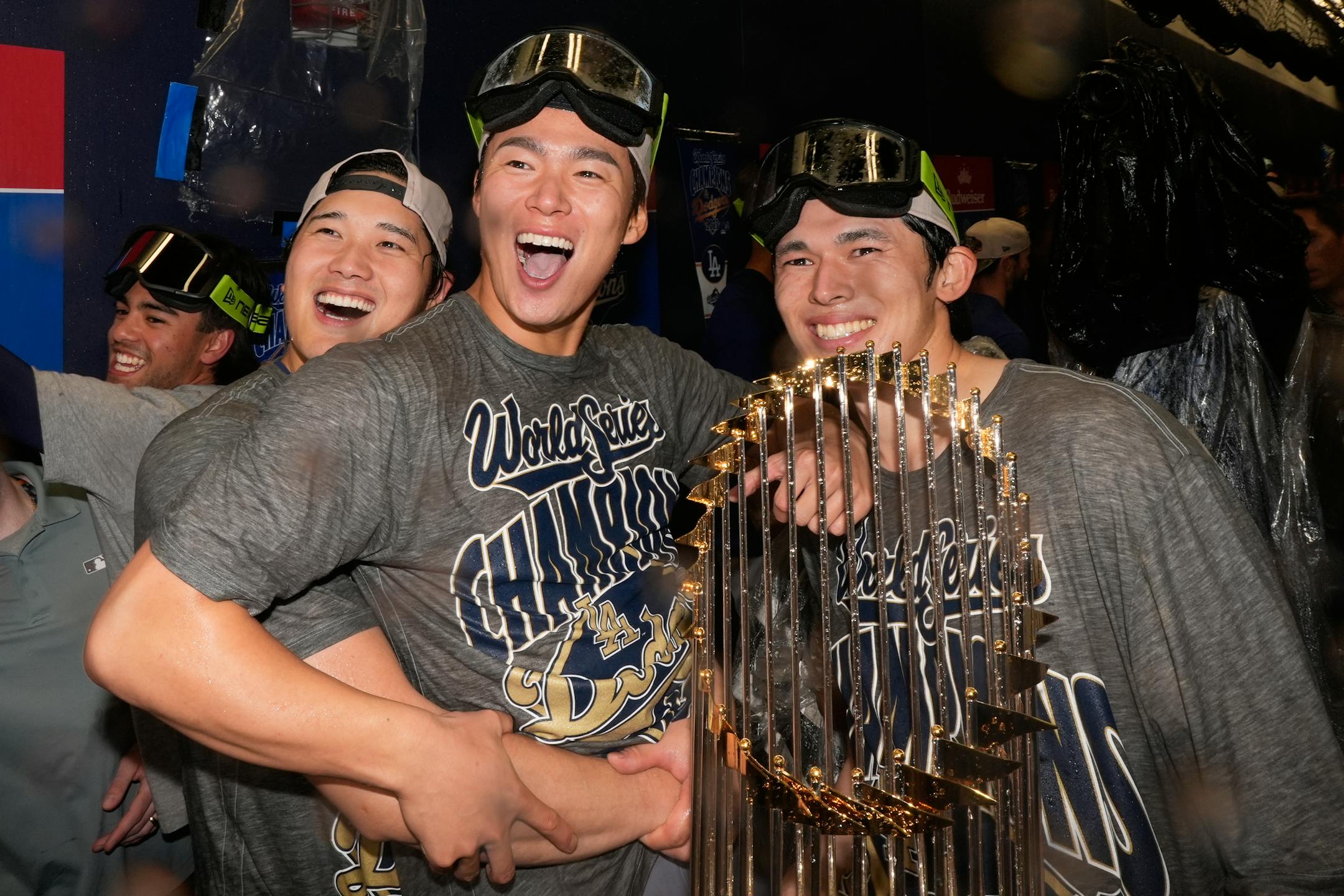
From left, Los Angeles Dodgers pitchers Shohei Ohtani, Yoshinobu Yamamoto and Roki Sasaki celebrate Saturday night in Toronto after they won the World Series. (Brynn Anderson/The Associated Press)

While the Los Angeles Dodgers are in post-championship-winning hubris, victorious righthander Yoshinobu Yamamoto has provided baseball fans in these parts with a talking point:

What is more impressive — winning a Game 7 with no days of rest, or winning a Game 7 by pitching 10 innings?

Yamamoto went six innings in Game 6 on Friday night, limiting Toronto to one run, five hits and a walk while striking out six. He needed 96 pitches. Then he threw 34 more pitches over 2⅔ innings Saturday night. He pitched out of a bases-loaded jam in the ninth, retired the side in order in the 10th and shattered Alejandro Kirk’s bat during a World Series-ending double play in the 11th.

It is not the first time a Game 6 starter has been used the following night. It last happened in 2001 when Randy Johnson pitched seven innings on 104 pitches in Game 6 and then threw 17 pitches over 1⅓ innings in Game 7.

The way pitchers’ workloads are monitored in today’s game, Yamamoto’s effort was amazing. Starters normally are doing leg work the day after an outing.

At the same time, structure is cast aside for Game 7 of a championship series, especially if you don’t have a strong bullpen, which the Dodgers didn’t. Their entire starting rotation pitched Saturday.

Yamamoto saved the day when needed and provided an unforgettable performance.

When photos of Yamamoto testing his arm began to circulate on social media hours before the first pitch, the possibility of him pitching in Game 7 gave this baseball fan goosebumps.

ADVERTISEMENT

Jack Morris, however, wasn’t surprised.

“I remember telling T.K. [Twins manager Tom Kelly] in Game 6 I was ready to go,” Morris said Monday. “And that was after pitching Game 4 with two days’ rest. You’re just living on adrenaline and you’re focused. Your body just responds.”

Morris already had pitched in Games 1 and 4 in the World Series against Atlanta. In the postgame afterglow of Kirby Puckett’s heroics in Game 6 to force Game 7, Morris was asked to the interview room as the next day’s starting pitcher.

In the immortal words of the late, great Marvin Gaye, let’s get it on,” Morris said then.

Morris spent 10 innings pitching his way into World Series lore. The two Game 7s were different. The Dodgers’ game against the Toronto Blue Jays was madness, with a benches-clearing incident, two Dodgers outfielders colliding while a ball was caught, a backup defensive specialist hitting a game-tying home run in the ninth, then Yamamoto’s amazing entrance.

There was no scoring in the Twins’ Game 7, so the suspense built as the game progressed. Morris considered murder when Kelly came to the mound in the eighth inning, but it was only to make sure Morris was fine with intentionally walking David Justice with runners on second and third. Sid Bream then grounded into a 3-2-3 double play as fans roared.

We know what happed in the 10th. Twins win 1-0.

I don’t know how to say or write “let’s get it on” in Japanese. But I’m sure Yamamoto was thinking along those lines when he went to the outfield hours before Game 7 to loosen up. That was his signal that he was ready to pitch if needed.

Morris, along with fellow St. Paul-born Hall of Famer Paul Molitor, threw out the first pitch before Game 7. Then they sat in a suite with their sons and other former Blue Jays players to watch 11 crazy innings.

View post on X

Did Morris wonder about Yamamoto’s command when he entered the game with two on and one out in the ninth?

“Not after the first pitch,” Morris said. “On the black. In the 90s.

“It was obvious that during the late part of the postseason, he was totally locked in. And, you know, I really do believe the whole theory behind less regular-season innings is because of moments like that. And you know, he was in tremendous shape, and mentally, he was locked in, which really helps physically. So, clearly, he was the best pitcher in the entire postseason. And you know, he shined in the biggest moments, which is clutch.”

While Yamamoto’s Game 7 performance was one of the best in the lengthy history of this great game, there’s a chance it could one day be repeated.

Morris started Games 1, 4, and 7 in 1991. Yamamoto got three wins, impressive, but in just two starts.

“I don’t think you are going to see another pitcher start three games [in a series],” Morris said. “That’s what I did, right?”

Another thing. Only three pitchers in major league baseball this season threw at least 200 innings. And only three pitched two complete games. Bailey Ober of the Twins finished tied for second in complete games. With one.

Managers are careful with arms. Statistics tell teams that hitter familiarity should keep most starters from facing the same lineup three times in a game.

The chances of a starter pitching 10 innings in any game, regular season or postseason, is no longer a possibility.

Yamamoto’s Game 7 was spectacular. But Morris’ Game 7 was a one-night-only magical ride that won’t happen again.

about the writer

about the writer

La Velle E. Neal III

Columnist

La Velle E. Neal III is a sports columnist for the Minnesota Star Tribune who previously covered the Twins for more than 20 years.

See Moreicon

More from Twins

See More
card image
Alex Kormann/The Minnesota Star Tribune

Pohlad takes control of the organization vowing to have a competitive team despite payroll limitations.

card image
card image