

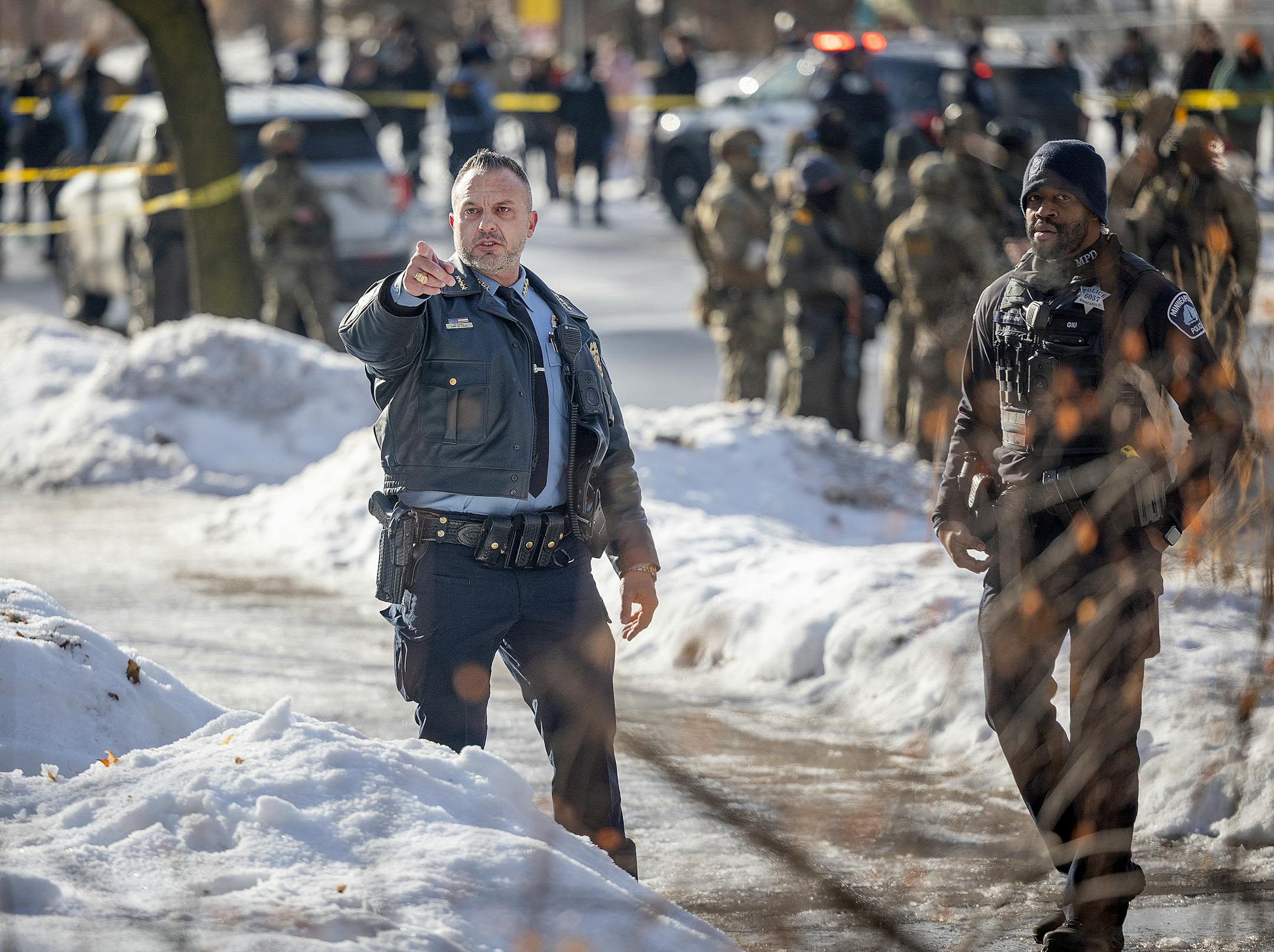
In a wide-ranging interview on the New York Times’ “The Daily” podcast, Minneapolis Police Chief Brian O’Hara called last week’s fatal shooting of 37-year-old Renee Good “predictable” and “entirely preventable.”
He railed on aggressive tactics employed by the influx of Immigration and Customs Enforcement (ICE) agents swarming the Twin Cities this month at the direction of President Donald Trump, criticized the actions of the agent involved in Good’s killing and expressed fears that the behavior of federal law enforcement may undermine any public trust his department has managed to rebuild since 2020.
“It’s not necessarily about which laws are being enforced, it’s about how that enforcement is happening," O’Hara explained, noting that some methods have unnecessarily endangered lives.
A dramatic surge in 911 calls to Minneapolis police have reported arrests by ICE that left cars abandoned in the roadway, blocking traffic — sometimes with dogs still inside. In one case O’Hara referenced last week, verified by the Minnesota Star Tribune, ICE agents reportedly pulled the driver out of a vehicle before placing it in park, allowing it to roll down a south Minneapolis street into oncoming traffic.
The recent crackdown in Minnesota has placed undue stress on his already short-staffed department, O’Hara said, forcing local cops to walk a tightrope at emotionally charged scenes where they are expected to de-escalate situations involving federal agents.
“As soon as we show up, we become the target of people’s frustration,” he said during the 35-minute interview. “The cops here — we’re human beings. I worry that we might hit a breaking point.”
Reflecting on theJan.7 shooting, O’Hara acknowledged that there are universally accepted rules in law enforcement advising officers how to safely interact with motorists.
“The number one is: You don’t place yourself in the path of the vehicle,” he said. “That’s like traffic stop 101. You don’t do that.”


