
Immigration surge dominates Minnesota precinct caucuses as election season begins

Caucuses offered an early opportunity for voters to hear from candidates as 2026 campaigns heat up.

The Minnesota Star Tribune
February 4, 2026 at 5:51AM
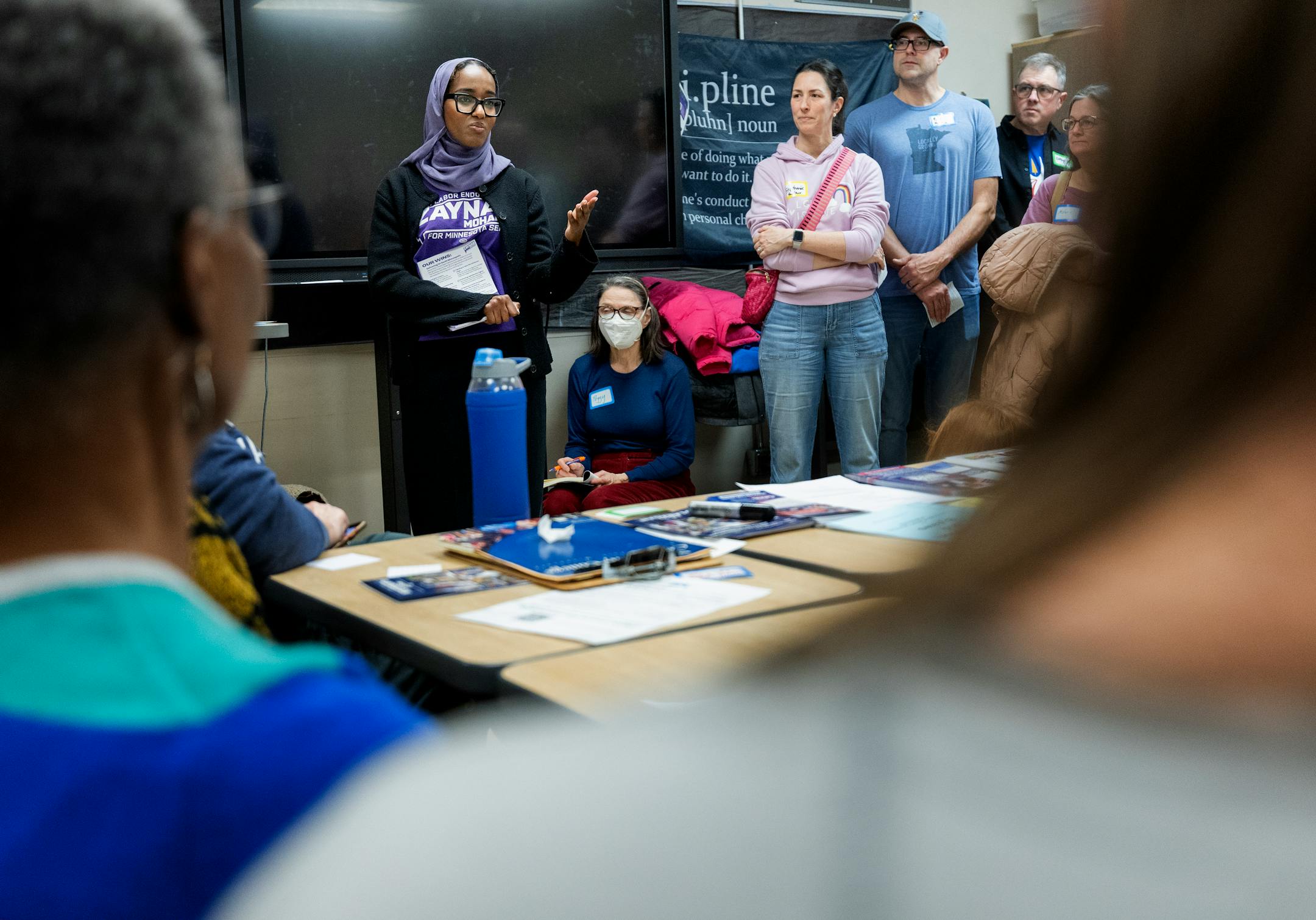
State Sen. Zaynab Mohamed talks to potential voters during a DFL caucus at South High School in Minneapolis on Feb. 3. (Carlos Gonzalez/The Minnesota Star Tribune)

At a Democratic Party precinct caucus in the heart of Minneapolis’ Somali community, one issue loomed larger than any other: President Donald Trump’s immigration crackdown.

The surge of thousands of immigration agents to Minnesota over the last two months has forced some residents to hide out in their homes. Everyone who gathered at a community center in Cedar Riverside on Feb. 3 knew someone who’s undocumented and afraid to go to the grocery store or take their child to the school bus, said Abdurrahman Mahmud.

“ICE is just sitting out there and snatching them away,” said Mahmud, who noted the crowd of several dozen people in the predominantly Somali neighborhood was smaller than in years past.

The precinct caucuses, which took place in classrooms and community centers across Minnesota, are seen by many candidates and activists as the unofficial kickoff of the 2026 election season.

There’s not a competitive race for the DFL nomination for governor. U.S. Sen. Amy Klobuchar launched her campaign to succeed Gov. Tim Walz in January and doesn’t face a high-profile challenge. But the caucus meetings offered an opportunity for voters to hear from legislative candidates and discuss issues that will affect the fall elections.

In Cedar Riverside and across town in south Minneapolis, the surge of immigration agents to Minnesota dominated the discussion. Federal agents from Immigration and Customs Enforcement and U.S. Border Patrol have drawn scrutiny for violent clashes with protesters and observers, alleged racial profiling and the killings of two U.S. citizens, Renee Good and Alex Pretti.

Sainab Yussuf, 47, said ICE’s presence was the biggest issue affecting her community and drew her to her first caucus meeting. Speaking through an interpreter, Yussuf thanked those who have protested the crackdown ordered by the Trump administration.

“The Minnesota community showed us that even when it’s cold,” said Yussuf, who said she came to the U.S. from Somalia in 2001, “they have warm hearts.”


At a high school in south Minneapolis, Jennifer Arnold said she and her neighbors in the Midtown Phillips neighborhood are exhausted after enduring the last two months of immigration enforcement.

Arnold led organizing efforts to get food to immigrant families and help their children get to school safely. A fundraiser through her child’s school brought in tens of thousands of dollars for rent relief, she said.

Residents have done their part, Arnold said, and she wants state DFL leaders to do the same. Walz should implement an eviction moratorium, she said, as the Minneapolis City Council has requested. So far, that hasn’t happened.

“It feels like being abandoned by our state government,” Arnold said.

“We’re having to scrap together whatever we can and risk our lives to go on the street and make sure our kids can get home from the bus safely,” she added. “I want to see that in our electeds, too.”

Arnold was lukewarm toward the idea of Klobuchar‘s campaign for governor. So were Kay and Jay Rossbach, of the East Phillips neighborhood, who worried Klobuchar would be too quick to make concessions to the Trump administration on things like immigration enforcement, trans rights issues, and shielding the Boundary Waters Canoe Area Wilderness from mining.

“I’m worried that she’s more of a politician in that way where she’s willing to make those compromises,” Jay Rossbach said.

Others were more excited by the idea of Klobuchar leading state government. Abdi Duh, who is from Ethiopia and is of Somali descent, said he’s been stopped by federal agents in the last month and hopes Klobuchar is elected governor and keeps up the fight against Trump.

“I like her personality, how she talks, how she cares for the people, and she’s very much decent,” Duh said. “I have a good attitude about her.”

State Sen. Omar Fateh told caucus goers that he wants to try again to pass a bill that would prohibit Minnesota state and local government entities from sharing data or collaborating with federal civil immigration enforcement.

“We need to make sure that we’re protecting undocumented residents,” he said. A previous version of that bill failed in 2024.

Alejandro Aguilera, 52, came to the U.S. from Honduras in 1991 and said he received his citizenship in time to vote for the first time in 2020. He’s also worried about the immigration crackdown and wants to see candidates elected who will stand up for immigrants. He said politicians willing to do that are “very few and far between.”

Aguilera supports Klobuchar’s run for governor, saying she would stand up for Minnesota, but could also work across the aisle with Republicans.

“She’s able to cross that party line, to engage the key Republicans ... to get them to support something,” Aguilera said.

While the ICE crackdown is personal for immigrant communities in Minneapolis, it also led many conversations at Republican caucuses in the suburbs of the Twin Cities.

While GOP caucus-goers offered support for immigration enforcement, several expressed concern that the surge in Minnesota has gone too far. Mark Obrecht, 49, said he worried the blowback from the ICE surge in Minnesota could hurt Republicans’ chances in the November election.

“I do think it’s swayed people away from the GOP side,” he said. “That’s a fear of mine.”

At the GOP precinct caucus in Delano, City Council Member Jason Franzen said few people will have a problem with deporting immigrants who have felonies or gross misdemeanors on their records. He said he also empathizes with Minnesotans who are frustrated by having to compete with undocumented immigrants for jobs.

At the same time, Franzen said his wife is a Polish immigrant who became a U.S. citizen two years ago, and “if somebody was accosting her because she had an accent,” it would make him angry.

He said “nobody wants to see somebody die” amid the immigration crackdown, referencing the killings of Good and Pretti by federal agents. Franzen said the country needs to reform its immigration system.

Ryan Faircloth of the Minnesota Star Tribune contributed to this story.

about the writers

about the writers

Allison Kite

Reporter

Allison Kite is a reporter for the Minnesota Star Tribune.

See Moreicon

Nathaniel Minor

Reporter

Nathaniel Minor is a reporter for the Minnesota Star Tribune.

See Moreicon

More from Politics

See More
card image
Richard Tsong-Taatarii/The Minnesota Star Tribune

The straw poll came as the GOP is dealing with political fallout from President Donald Trump’s immigration enforcement surge.

card image
card image