Minnesota GOP could pick a front-runner for governor at Tuesday precinct caucuses

GOP activists will cast a preference ballot at caucuses across the state on Feb. 3, serving as a temperature check on a crowded field of candidates.

February 3, 2026 at 12:00PM
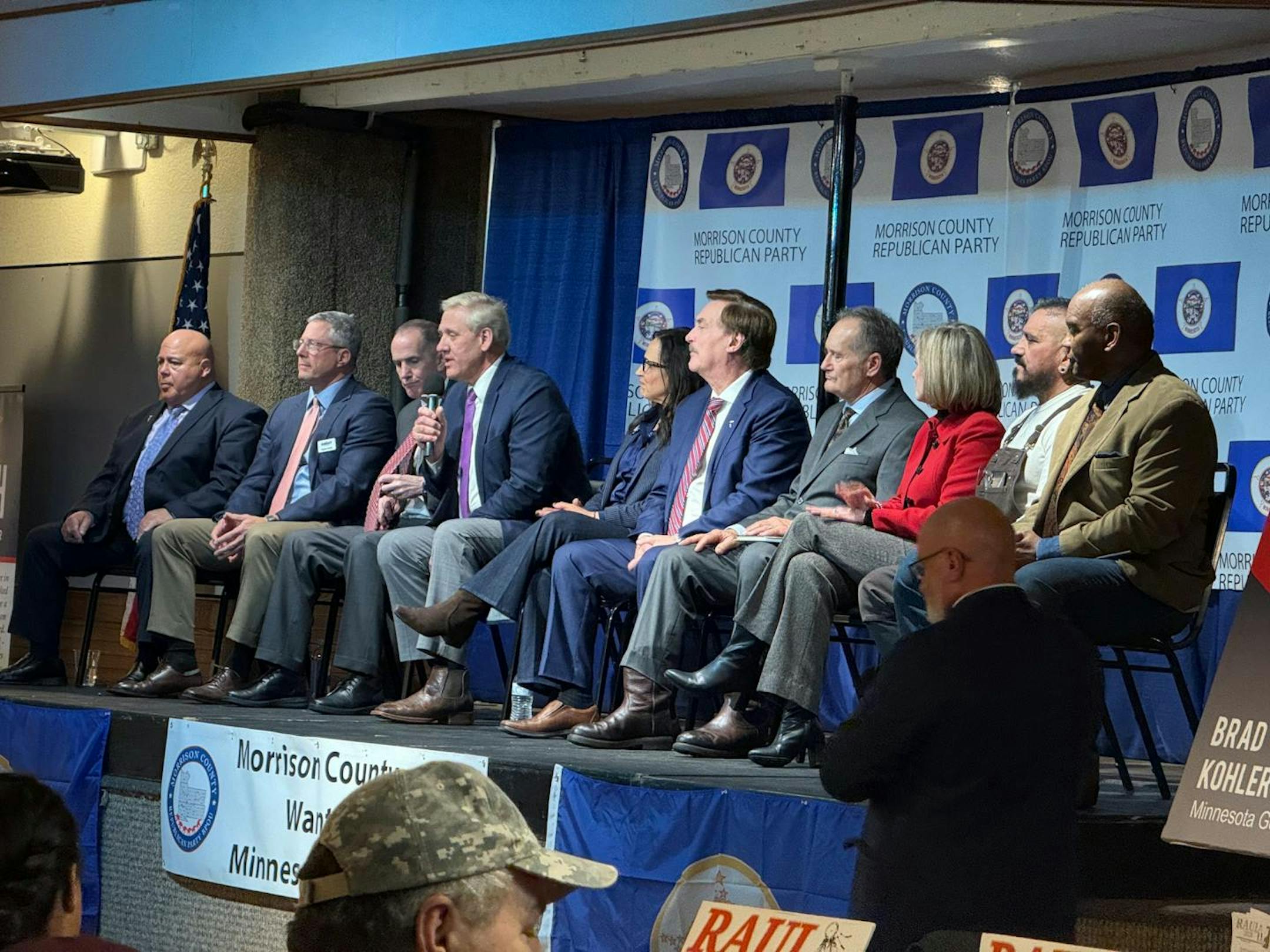
Ten Republicans vying to be Minnesota's next governor took the stage at a forum in Little Falls on Jan. 10, where they remained focused on the state's fraud scandal. (Reid Forgrave)

Minnesota Republicans meeting across the state Feb. 3 will offer a glimpse at which candidates for governor are true contenders for the party’s endorsement later this year.

GOP activists at precinct caucuses cast a preference ballot in the race for governor, which serves as a temperature check on a crowded field of more than a dozen candidates. The Republican straw poll also comes as the party is dealing with political fallout from President Donald Trump’s immigration enforcement surge and federal agents fatally shooting Renee Good and Alex Pretti.

The poll is not binding and doesn’t decide the eventual nominee. But it can be an early indicator of candidate strength. Republican Scott Jensen handily won the straw poll in 2022 before eventually winning the party’s endorsement and nomination for governor that year.

Minnesota House Speaker Lisa Demuth, MyPillow CEO Mike Lindell, businessman Kendall Qualls, Jensen and state Rep. Kristin Robbins are the most prominent GOP candidates in this year’s gubernatorial race.

Qualls, an Army veteran and former health care executive, ran for governor in 2022 but lost the GOP nomination to Jensen. In his second bid for the governor’s office, Qualls has shown he still has strong support among his party’s faithful. He won a December straw poll of more than 300 of the state GOP’s most engaged activists, with Demuth and Lindell following in second and third place, respectively. Demuth won a pair of January straw polls in Scott and Wright counties.

Qualls will give a speech to caucus-goers in Delano, according to his campaign.

Demuth and her running mate Ryan Wilson said Feb. 2 they planned to campaign in at least eight cities across the state before activists meet the next day.

Demuth, a first-time candidate for statewide office, told reporters combatting fraud is top of mind for Republicans and pointed to her legislative efforts to prevent fraud in the past. She mentioned numerous plans to cut taxes.
But Demuth also made a pitch for caucus-goers to pick her as the candidate “that will win in the November election.”

Attorney Chris Madel was also a contender for the GOP nomination before dropping out of the race in late January, criticizing how the federal government has handled its immigration enforcement operation in the Twin Cities area.

Many Republicans are debating the future of Operation Metro Surge, balancing internal disagreements about support for immigration enforcement with the shootings of Good and Pretti, the arrest of some U.S. citizens and aggressive tactics of some federal officers.

It’s shifted some of the attention away from the state’s growing Medicaid fraud crisis, which Republican have made the centerpiece of their 2026 campaigns.

Alex Plechash, chair of the Republican Party of Minnesota, said many in the GOP have an opinion about the immigration crackdown but it won’t be a motivating factor driving caucus turnout compared to “other things that are more important to Republicans.”

At the top of that list, Plechash said, is fraud.

“That was dominating the national news, let alone the Minnesota news, right up until Operation Metro Surge,” he said. “But the fraud and abuse in our state is so horrendously large that people are extremely upset about it.”

Plechash said Republican candidates will be united in saying fraud is a problem they want to solve, and will have their own ideas for changes. But he said activists will likely pick a favorite based on who is best to lead the state.

“That means how to handle staff, how to handle finances, how to order priorities, how to deal with media,” Plechash said.

Both of Minnesota’s major political parties will hold precinct caucuses, and participants at the caucuses choose delegates who will endorse candidates at the state DFL and GOP conventions later this spring. They also can present resolutions and changes to the parties’ platforms to be discussed at the state conventions.

The fight for the GOP nomination might not end at the party’s spring endorsing convention. Some candidates have said they will proceed to the August primary election if they do not win the endorsement, which could prolong the intraparty battle.

Demuth and Qualls have pledged to abide by the GOP endorsement, meaning they wouldn’t run in the primary if they do not win their party’s backing at the convention. State GOP delegates have typically favored candidates who make that pledge.

about the writers

about the writers

Walker Orenstein

Reporter

Walker Orenstein covers energy, natural resources and sustainability for the Star Tribune. Before that, he was a reporter at MinnPost and at news outlets in Washington state.

See Moreicon

Ryan Faircloth

Politics and government reporter

Ryan Faircloth covers Minnesota politics and government for the Star Tribune.

See Moreicon

More from News & Politics

See More
card image
card image