‘Up to our eyeballs’: Immigration lawyers struggle to keep up during Trump’s crackdown

Attorneys at three Minnesota nonprofits are juggling a flood of new cases and facing changing interpretations of existing laws.

The Minnesota Star Tribune
October 6, 2025 at 4:20PM
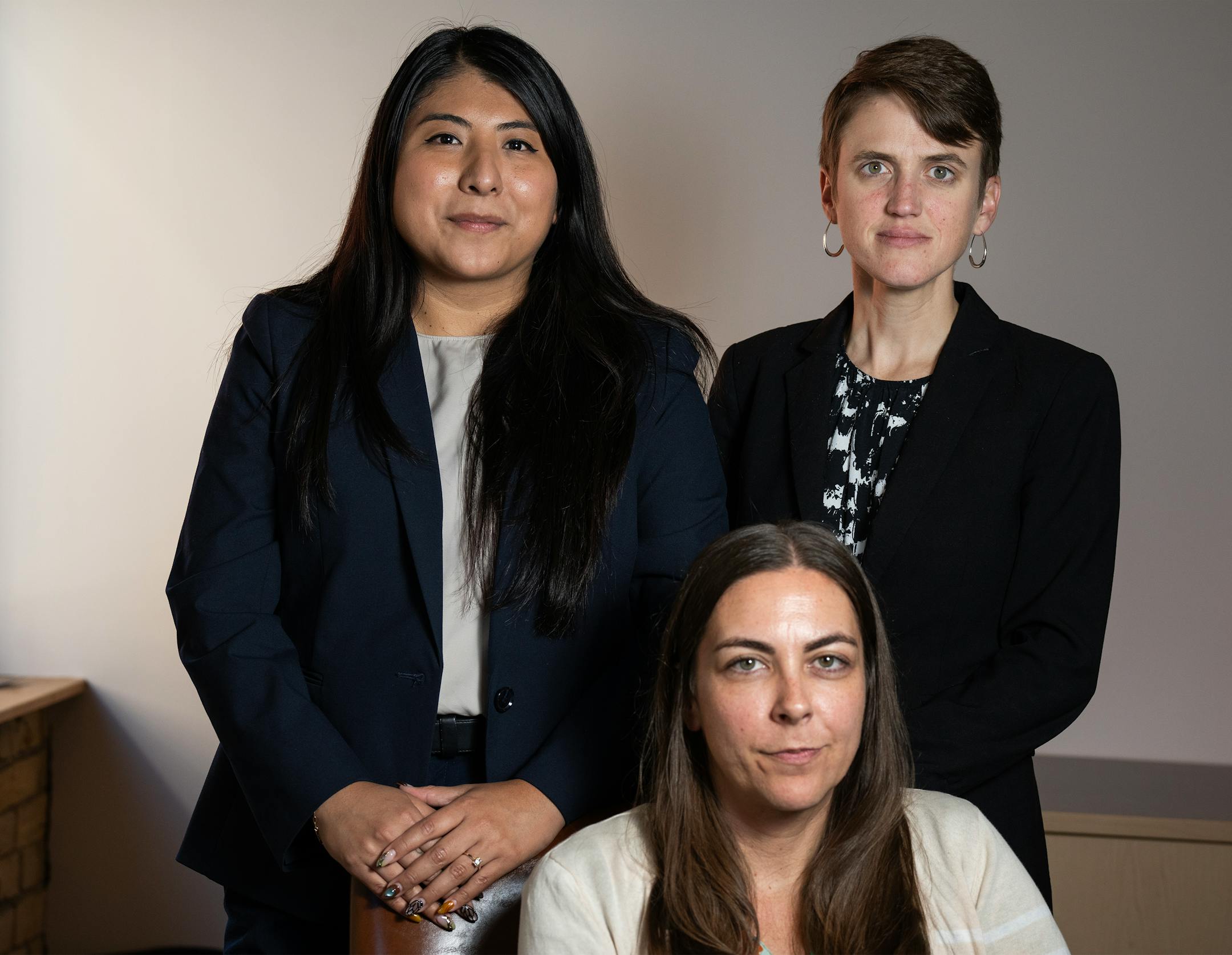
Immigration attorneys Michelle Gonzalez, left, Alison Griffith and managing attorney Danielle Hendrickson (seated) work at Mid-Minnesota Legal Aid, one of three nonprofits providing free representation to immigrants. (Richard Tsong-Taatarii/The Minnesota Star Tribune)

Minnesota’s immigration attorneys are struggling to keep pace with ballooning workloads and shifting legal interpretations as they navigate President Trump’s push for mass deportations.

“We are up to our eyeballs,” said Yasin Alsaidi, deputy director of Mid-Minnesota Legal Aid’s work in St. Cloud and Willmar.

The nonprofit is one of three in Minnesota that provide free legal services to immigrants. Lawyers at all three organizations are juggling up to 100 cases at a time and have long wait lists.

Immigration arrests have doubled since Trump took office with more than 1,000 detentions in Minnesota through the end of July, federal data shows. More people are being denied bail and deportations are happening twice as fast now, compared to under President Joe Biden.

Immigration cases are civil matters so, unlike in criminal court, people facing removal actions or other proceedings are not entitled to a government-paid public defender. The flood of new cases means many of those who are in detention or appearing at Fort Snelling Immigration Court do not have attorneys.

The Vera Institute for Justice, a nonprofit advocating for criminal justice reform, found that through August 61% of detainees and 43% of Minnesotans with immigration cases did not have a lawyer.

“No one wants to help us,” Jennifer Yugcha Galarza told Immigration Judge Audrey Carr through an interpreter during an August hearing. Yugcha Galarza’s asylum case was two years old but hadn’t progressed because she didn’t have a lawyer to help her gather evidence and fill out the required paperwork in English.

Immigration attorneys say fraud also is a growing problem.

There are so-called “notarios,” Spanish for notaries, who misrepresent themselves to people with immigration cases, claiming to be able to help navigate the complex system. Other scammers use the identities of legitimate immigration attorneys to steal from people struggling to find representation.

“Stop hiring people off the street,” Carr told a mother of two who said she was scammed out of $450. “Don’t hire people off TikTok or WhatsApp.”

Lawyers in private practice are just as busy. It can cost $2,000 to get legal help filling out an asylum application and up to $10,000 to hire a lawyer to represent someone with a removal order.

Still, Maria Miller, a Bloomington attorney who is chair of the Minnesota and Dakotas chapter of the American Immigration Lawyers Association, says her calendar is booked every 30 minutes for the next month.

“I’m not turning people away,” Miller said. “But I also think it is important for people to understand what I can and cannot do and the amount of money they may pay for something that may or may not do anything.”

Why representation is important

U.S. immigration cases have always been an uphill battle.

Applying for permanent residency through family or employer-based systems is complex and takes years. Humanitarian cases, such as asylum claims or refugee status, face more difficult odds.

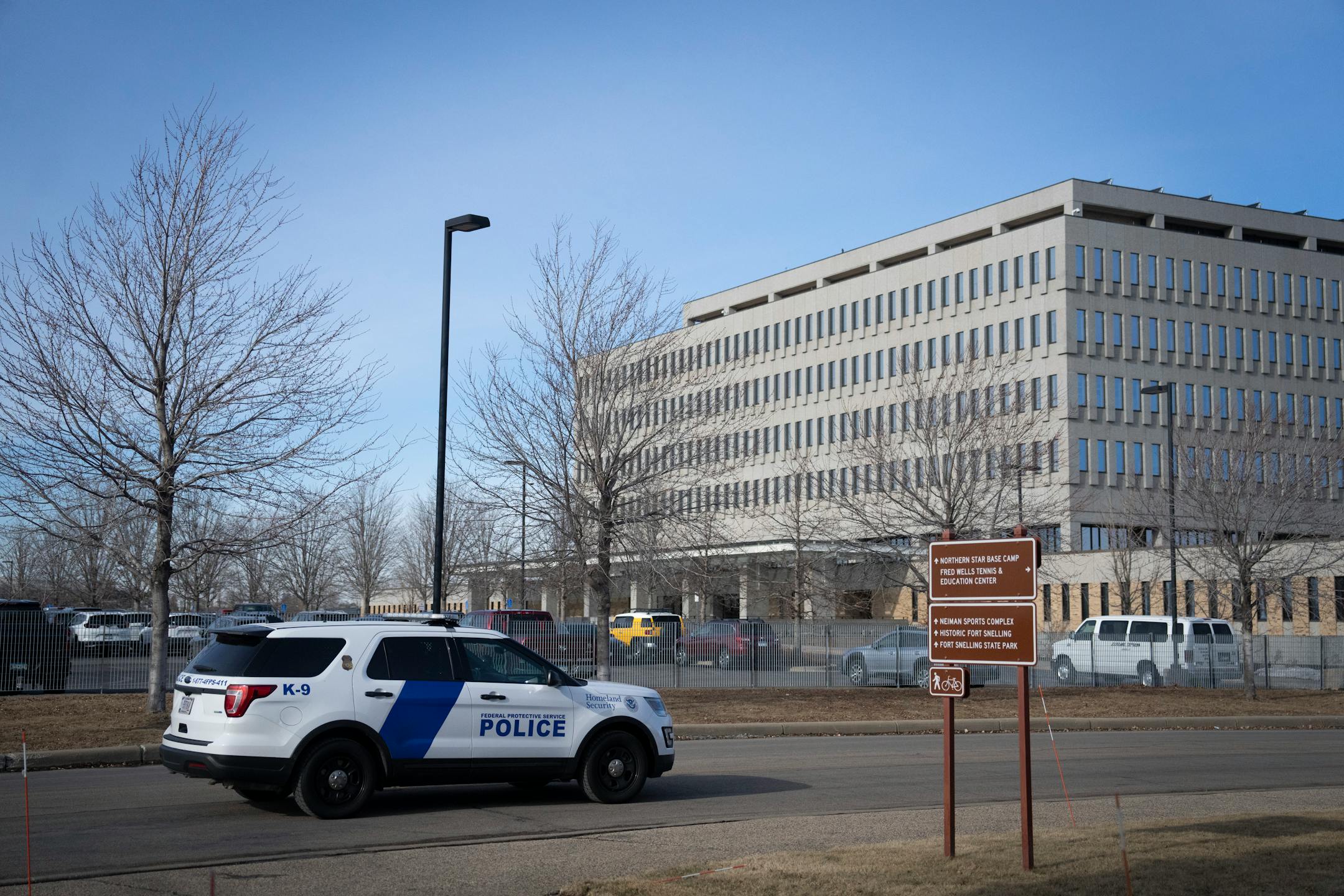
Immigration cases are not as transparent as typical criminal and civil courts. Case files are not readily available to the public and court hearings are either online or in small courtrooms at the Bishop Henry Whipple Building near Fort Snelling.

Since Trump took office, immigration cases are not just facing more scrutiny; the administration is changing the way immigration laws are interpreted. Navigating the system is increasingly difficult, making being represented by an attorney even more important.

“Attorneys knew things would be bad under Trump,” Miller said. “But they didn’t realize there would be a massive reinterpretation of the law.”

Since January, the U.S. Department of Homeland Security has widely expanded the use of expedited removals from border states to the entire country. Now, anyone who came to the U.S. illegally in the past two years can be removed without a court hearing.

Attorneys say immigrants with ongoing cases are afraid to go to court without a lawyer because immigration judges are agreeing to dismiss asylum claims and other cases so people eligible for expedited removal can quickly be deported.

A homeland security officer drives past the Bishop Henry Whipple Federal Building. (Renée Jones Schneider/The Minnesota Star Tribune)

In July, at the request of federal attorneys, immigration judges stopped releasing on bond nearly everyone detained for being in the country illegally. People who’ve shown up for all their hearings can find themselves unexpectedly detained by ICE.

It’s a move that’s led to lawsuits and a spike of habeas corpus petitions when those who are detained, but qualify for bail, ask a federal judge to intervene.

Without an attorney, fighting these types of immigration actions is nearly insurmountable.

Lawyers at Minnesota’s legal nonprofits say they want to help more people. But their funding, a mix of donations and government grants, is limited.

“There are so many more people who need our help who never needed it before,” said Alison Griffith, supervising attorney for Mid-Minnesota Legal Aid. “So many people who weren’t a priority for removal are now facing a removal order.”

Growing pressure on the system

The Trump administration continues to push ICE to increase immigrant arrests, detentions and deportations. The agency also has new tactics that result in more people facing immigration proceedings.

Seven Minnesota counties have signed partnership agreements with ICE to help with immigration enforcement. The Trump administration is suing Minnesota, Minneapolis, St. Paul and Hennepin County over “sanctuary policies.”

The Twin Cities were the starting-off point of a nationwide scrutiny of the immigrants who came to the U.S. through family, as students or for a job.

At the same time, the Trump administration has fired about 100 immigration judges nationwide and others have quit. The U.S. Department of Justice recently eliminated some qualifications to hear immigration cases so they can be replaced with military lawyers or others with less legal experience.

“In my view, they are interested in pursuing enforcement at the cost of due process,” said Zack Albun, director of immigration legal services for the Advocates for Human Rights. “It gets to a complicated question of tactics. Essentially, they are requiring more decisions to happen faster.”

about the writer

about the writer

Christopher Magan

Reporter

Christopher Magan covers Hennepin County.

See Moreicon

More from Twin Cities

See More
Operator Bill McNamara stands inside the Hastings Water Treatment Plant in Hastings, Minn. on Thursday, July 20, 2023. The plant filters for nitrates but not PFAs, but a new plant will be very expensive for the town.