
Opinion | On MLK Day, ‘Be Good’ isn’t a slogan; it’s a moral obligation

It is about showing up — repeatedly — grounded in history, guided by conscience and unwilling to outsource responsibility to symbols, slogans or someone else’s courage.

January 18, 2026 at 7:30PM
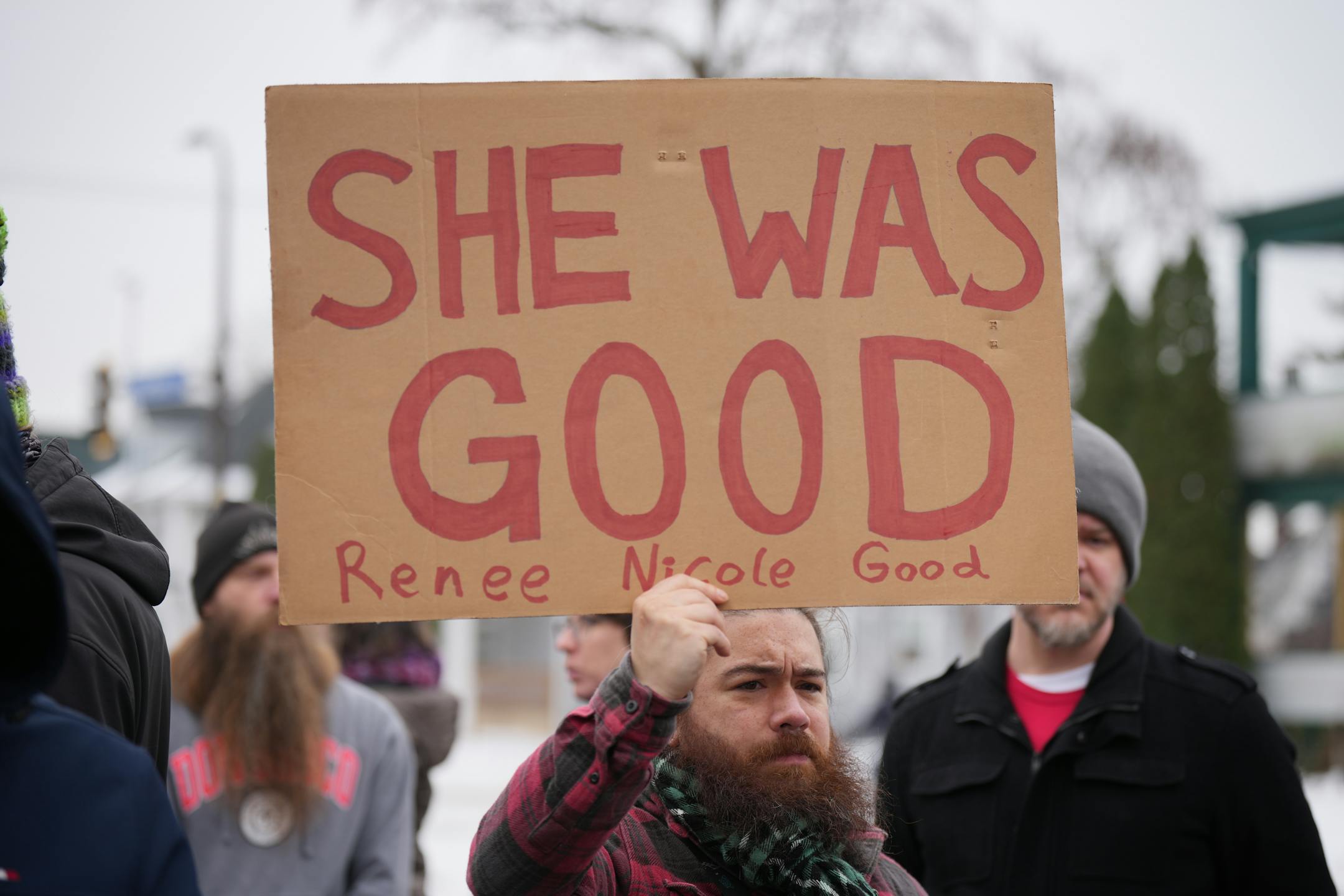
"It is of greater value to ask what a life like Renee Good’s demands of us now," Yohuru Williams writes. "What does it actually mean to be good in this moment, not as sentiment, but as practice?" (Jerry Holt/The Minnesota Star Tribune)

Opinion editor’s note: Strib Voices publishes a mix of guest commentaries online and in print each day. To contribute, click here.

•••

In the aftermath of the horrific killing of Renee Good, pins bearing the simple but arresting slogan “Be Good” began to appear, including one visibly worn by actor Mark Ruffalo at the Golden Globes. The phrase caught on quickly, as expressions tend to do in moments of grief, searching for meaning equal to the loss that inspired them.

As we prepare to reflect on the life and legacy of the Rev. Martin Luther King Jr., we should be wary of a familiar danger: turning real people into avatars and flattening their lives into symbols we can admire without obligation. It is of greater value to ask what a life like Renee Good’s demands of us now. What does it actually mean to be good in this moment, not as sentiment but as practice?

The first step is resisting the urge to define ourselves only by what we oppose. To be good requires being for something. It demands intention.

In this sense, “Be Good” is not a slogan. It is a practice. Each letter reminds us to lean into our shared humanity and reflect on our duty to fight for justice, equality and the principles we associate with American democracy.

The B asks us to be brave on purpose. Courage is not a personality trait; it is a choice. Much has been made of Renee Good’s refusal to comply, but what she demonstrated was something deeper — a classic upstander ethic rather than the safer posture of the bystander. She saw something wrong and chose not to stand idly by. That decision, made in an ordinary moment, revealed extraordinary moral clarity.

That bravery was matched by a deliberate exercise of conscience. As we mark MLK Day, approach the 100th anniversary of Black History Month and near the nation’s 250th year, history offers a familiar lesson that moral clarity is rarely recognized in real time. What we later honor, we often first punish.

Perhaps nowhere is this clearer than with the example of the Boston Massacre, the 1770 killing of civilians by British soldiers. Defending those who fired into the crowd, future president John Adams denounced the victims as “a motley rabble of saucy boys, negroes and mulattoes, Irish teagues and outlandish jack tars.” His aim was not historical accuracy, but persuasion — appealing to class bias and racial animus to cast the dead as disorderly and disposable. Law and power aligned to criminalize conscience.

Writing about the Boston Massacre generations later, W.E.B. Du Bois offered a sharply different interpretation. Drawing on the words of historian George Livermore, Du Bois noted that those in the crowd, menaced by soldiers, “could not restrain their emotion or stop to enquire if what they must do was according to the letter of the law.” Even if the event itself might be dismissed as an exaggerated “street brawl between citizens and soldiers, led by a runaway slave,” Du Bois argued that it took on “tremendous importance” because it stirred moral resolve and collective action. He was not celebrating disorder but naming a truth that still resonates: Conscience often moves before permission is granted —and long before history catches up.

That tension remains painfully contemporary. Conscience, once awakened, does not negotiate endlessly with convenience. It insists on justice.

To exercise conscience fully, however, we must also understand what it means to “Be Good” in a deeper sense:

  • Grapple with truth, even when it’s inconvenient or uncomfortable.
    • Oppose injustice where you stand, because unjust systems thrive when ordinary people comply.
      • Offer humanity without apology, remembering that resilience born of compassion is not weakness but the highest expression of empathy.
        • Do the work consistently, because freedom is a constant struggle and justice is not achieved in a single act. It is sustained over time.

          Being good, in this sense, is not about moral perfection. It is about moral presence and practice. It is about showing up — repeatedly — grounded in history, guided by conscience and unwilling to outsource responsibility to symbols, slogans or someone else’s courage.

          Renee Good did not ask to become a lesson. But if her life now presses us toward one, it is this: “Be Good” is not something we wear. It is something we choose.

          Yohuru Williams is the founding director of the Racial Justice Initiative at the University of St. Thomas. He is a historian whose work examines civil rights, democracy and the long struggle for justice in Black America.

          about the writer

          about the writer

          Yohuru Williams

          More from Commentaries

          See More
          card image
          Jerry Holt/The Minnesota Star Tribune

          It is about showing up — repeatedly — grounded in history, guided by conscience and unwilling to outsource responsibility to symbols, slogans or someone else’s courage.

          card image
          card image