
Opinion | ICE is sowing chaos in Minnesota schools

The harm falls most heavily on immigrant students and families, but the damage extends to the state’s entire public education system.

January 15, 2026 at 11:00AM
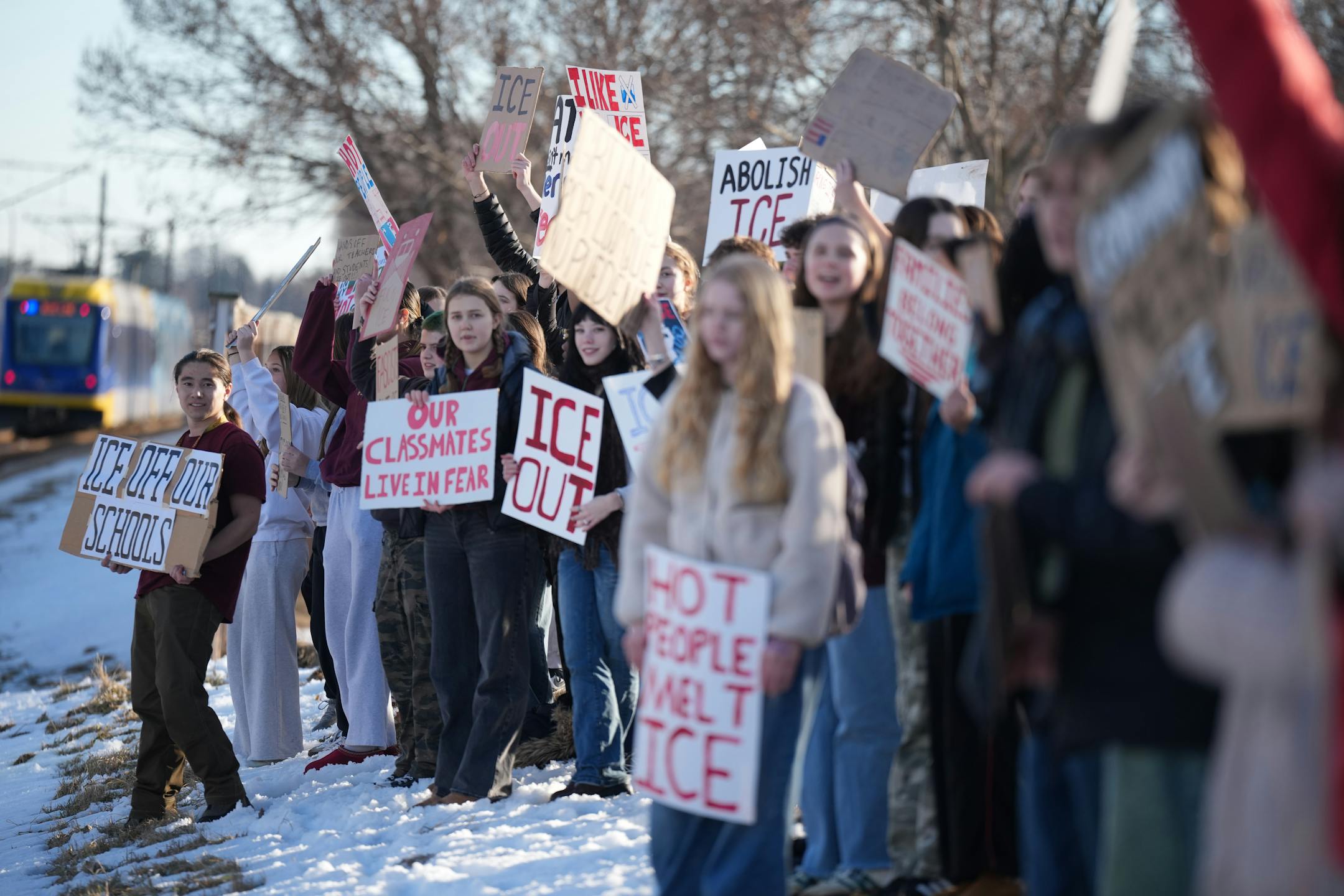
Students from Roosevelt High School stand near a light rail station after they walked out of school in a protest against ICE, on Jan. 12 in Minneapolis. (Jerry Holt/The Minnesota Star Tribune)

Opinion editor’s note: Strib Voices publishes a mix of guest commentaries online and in print each day. To contribute, click here.

•••

On Jan. 7, armed federal agents entered the grounds of Roosevelt High School in south Minneapolis during student dismissal. A school employee was forcibly detained. A chemical irritant was deployed in the presence of students, educators and community members. The Minneapolis Public Schools canceled classes and activities for the remainder of the week, citing safety concerns created by the presence and actions of federal agents.

This should alarm every Minnesotan — not only because of what happened at one school, but because of what it signals about the growing intrusion of federal enforcement into spaces that must remain safe for children.

Since its adoption in 1857, Minnesota’s Constitution has required the state to establish and maintain a general and uniform system of public education for every child. That obligation is foundational to our system of governance and affirms education as a civic right. But that constitutional duty can only be fulfilled when schools are safe, accessible and free from coercion, intimidation and fear. Armed enforcement actions on school grounds make that duty impossible to uphold.

On the same day as the federal actions at Roosevelt, less than three miles away, an ICE agent shot and killed Renee Good, a U.S.-born citizen, mother and poet who was serving as a community observer at the scene of immigration enforcement activity. Together, these incidents underscore the reality now confronting Minnesota communities: Federal enforcement practices are no longer confined to the margins of civic life. They are occurring in neighborhoods, near schools and, in this case, on school property.

For Minnesota students, the consequences are profound. Fear and instability disrupt well-being, erode trust in public institutions, and undermine educational access and achievement. These outcomes are fundamentally incompatible with Minnesota’s constitutional promise — and with our responsibility to safeguard the next generation.

The events at Roosevelt were not isolated. For months, ICE and other federal agents have engaged in targeted enforcement activity in and around Twin Cities public schools, particularly those serving large numbers of immigrant students. Parents have been detained and separated from their children. School buses have been followed by unmarked vehicles. Armed agents have been observed near pickup and drop-off sites. In impacted schools, attendance has dropped sharply as families weigh the risk of sending their children to school.

These outcomes are not accidental. They are the predictable result of federal policy decisions that dismantled longstanding protections treating schools as places of learning rather than sites of enforcement. In 2025, the Department of Homeland Security rescinded its “sensitive locations” guidance, which had limited immigration enforcement actions at schools, hospitals and churches. That change replaced clear boundaries with broad discretion, placing school districts in the impossible position of trying to educate children amid fear and intimidation.

The harm falls most heavily on immigrant students and their families, but the damage extends to Minnesota’s entire public education system. The U.S. Supreme Court affirmed in Plyler v. Doe (1982) that all children have a constitutional right to public K-12 education, regardless of immigration status. In Minnesota, approximately 78,000 English language learners — nearly 1 in 10 students statewide — are part of immigrant families. When federal enforcement actions deter school attendance, they strike at Minnesota’s constitutional authority and undermine students’ ability to exercise their right to education.

A quality, effective and empowering education system requires equitable access, a commitment to social justice and schools that are safe. Federal enforcement practices that bring weapons, chemical agents and fear into school communities erode these foundations and jeopardize the public purpose of education itself.

Minnesotans should not accept this as the new normal. Our schools must remain places of learning and care — not sites of intimidation and irreparable harm. Federal actions must comply with Minnesota’s constitutional responsibilities and the basic civic rights of the children our schools exist to serve. State and federal leaders must take immediate action to halt enforcement practices that endanger school communities. Our students, and our state’s future, depend on it.

Carlos Mariani Rosa is executive director of the Minnesota Education Equity Partnership and served in the Minnesota House from 1991-2023.

about the writer

about the writer

Carlos Mariani Rosa

More from Commentaries

See More
card image
Jerry Holt/The Minnesota Star Tribune

The harm falls most heavily on immigrant students and families, but the damage extends to the state’s entire public education system.

card image
card image