
Opinion | A day in the life of a Hispanic pastor during Minnesota’s ICE surge

Across Hispanic churches in the Twin Cities, attendance has dropped to less than half of what it was.

January 13, 2026 at 6:05PM
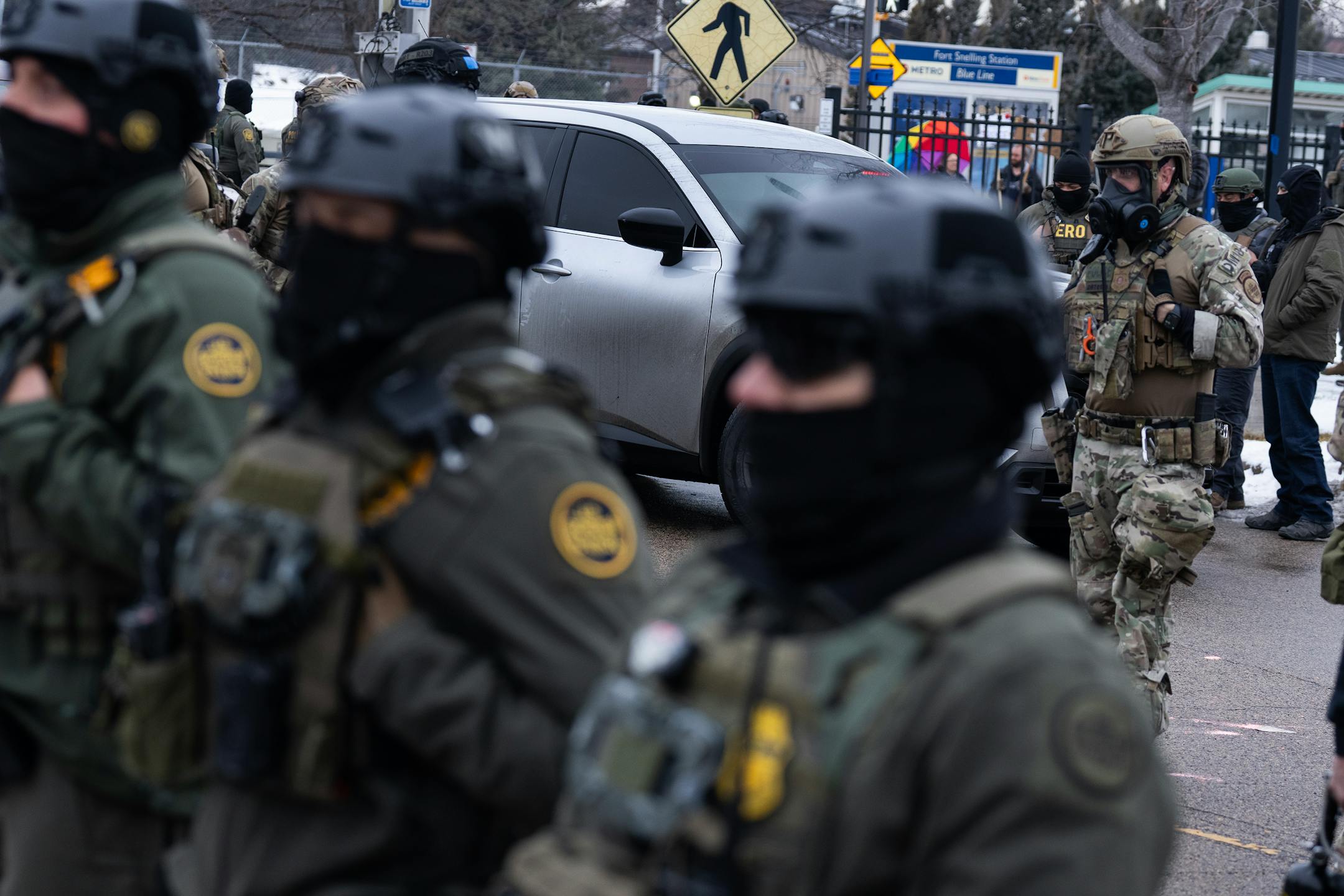
ICE agents near the Whipple Federal Building in St. Paul on Jan. 8. (Richard Tsong-Taatarii/The Minnesota Star Tribune)

Opinion editor’s note: Strib Voices publishes a mix of guest commentaries online and in print each day. To contribute, click here.

•••

Several people have asked how I am doing and how our congregation is navigating this difficult season. The best way I can answer is by sharing a glimpse into one ordinary day — and the larger reality surrounding it.

Friday, Jan. 9 was meant to be my day off. By midmorning, that changed. We received an urgent call asking us to rush to Anoka. A church member’s brother and nephew had gone to handle a simple car-related matter and found themselves surrounded by ICE agents in the parking lot. When we arrived, they were already gone — only the empty car remained.

Throughout the day, we encountered the quiet weight many families are carrying. A young girl proudly recited Bible verses she memorized in English and Spanish, while her mother — seven months pregnant —shared that she rarely leaves home out of fear, despite having her paperwork in process.

We delivered groceries to a family new to our church, living cramped in a basement with three children, one with Down syndrome. The parents now take turns leaving the house so their children won’t risk losing both parents at the same time. That same day, their daughter turned 14. There was no party, no guests, just a cheesecake that my wife gave her along with prayers and tears.

That evening, we drove a woman home because she was too afraid to take an Uber after hearing stories of ICE detentions involving Latino riders.

We also visited a 16-year-old whose mother has been suffering severe stomach pain for weeks but is afraid to seek medical care, even though she has a valid work permit and a pending asylum case.

In moments like this, many of us feel like firefighters — running from one emergency to the next, trying to put out fires, only to realize that the fire is spreading faster than we can respond. The needs are overwhelming, constant and deeply human.

This is not unique to our church. Across Hispanic churches in the Twin Cities, attendance has dropped to less than half of what it was. The challenge we now face is not only how to care for those who come — but how to minister faithfully to those who no longer feel safe attending at all.

In our case, we have limited in-person gatherings to Sunday services only. At the same time, we are intentionally staying connected by organizing people into small, homogeneous groups that meet through video calls — encouraging them to care for one another, pray together and stay alert to urgent needs within the community.

Alongside this, we are helping families complete DOPA (Delegation of Parental Authority) documents. These are legal forms in which parents designate a trusted adult to temporarily care for their children in the event that they are detained by ICE. Filling out these documents is heartbreaking — it means parents are planning for the possibility that they could be suddenly taken, leaving their children behind. Yet, it is one of the few ways we can offer protection, dignity and some peace of mind.

I ended the night on a Zoom call with Hispanic pastors across the Twin Cities, listening to similar stories, shared fears and shared resolve. While the pain is real, walking this road together brings peace, courage and renewed strength to keep serving.

I share this not to alarm, but to humanize what so many families are quietly enduring every day. The need is real, the fear is constant and the moment is urgent — but so is hope, faith, standing together and the power of God.

Joel Ramirez is the pastor of Iglesia Centro Cristiano de Minneapolis.

about the writer

about the writer

Joel Ramirez

More from Commentaries

See More
card image
Alex Kormann/The Minnesota Star Tribune

Some might say we’re extremists or agitators. I say we’re in community.

card image
card image