Five days after an ICE agent shot and killed Renee Good in south Minneapolis, federal immigration enforcement is expanding and becoming more visible, protests and confrontations continue to punctuate daily life, and local leaders are locked in an escalating battle with Washington over accountability and authority.
Homeland Security Secretary Kristi Noem said this past weekend that “hundreds more” ICE and Border Patrol officers are being sent to Minnesota, adding to what the department describes as its largest-ever immigration enforcement operation, even as state prosecutors push to preserve evidence and Minneapolis officials press for transparency in the investigation into Good’s death.
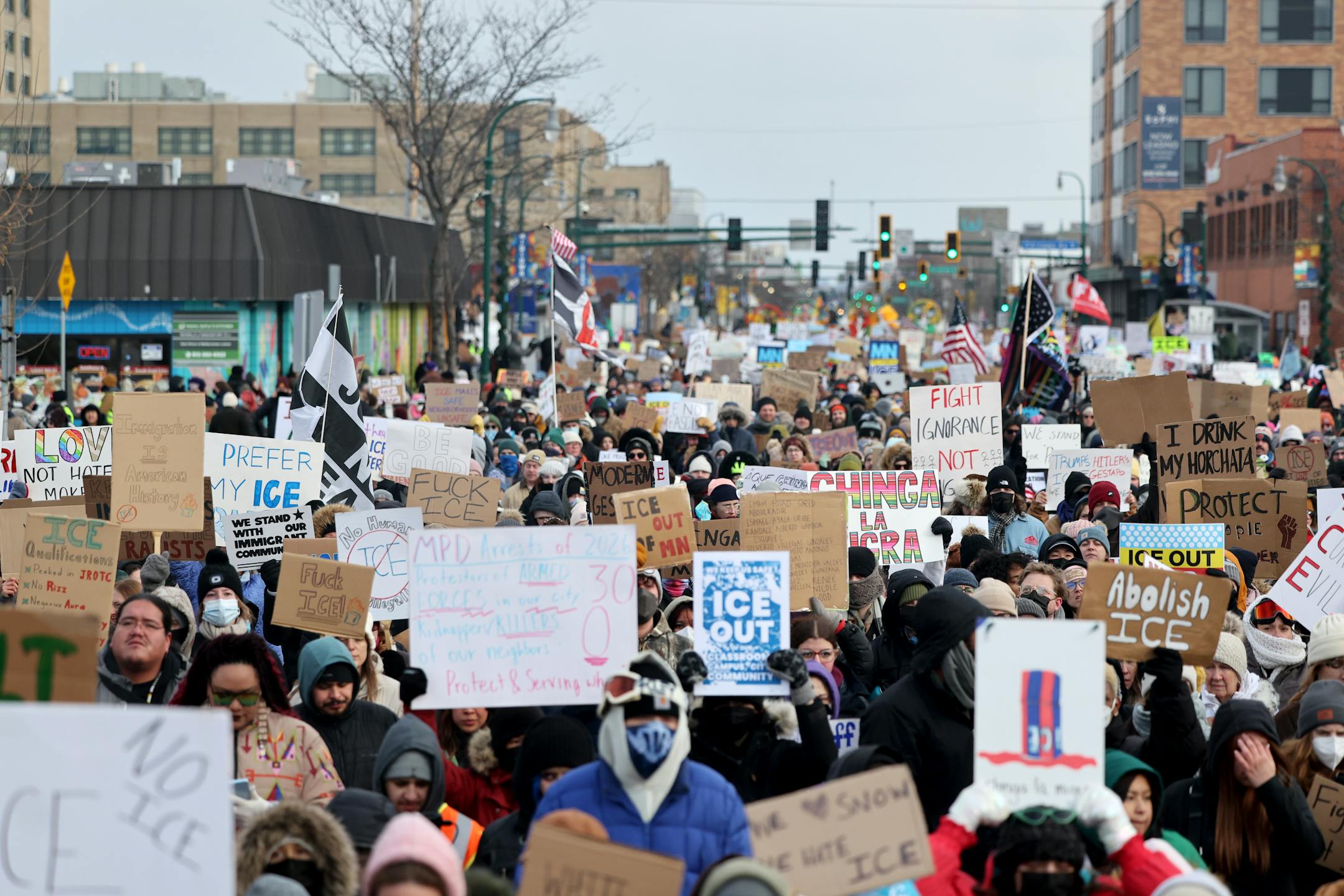
In the days since Wednesday’s shooting, demonstrations have unfolded across the city — from vigils and marches to tense protests that spilled into clashes with law enforcement. Activists tracking federal activity through community networks and Signal chats reported frequent sightings of ICE and Border Patrol officers in neighborhoods, downtown and near federal buildings.
Expanding federal footprint
Rather than winding down after the fatal shooting, federal officials have signaled that immigration enforcement in Minnesota is accelerating.
Noem said additional ICE and Border Patrol officers began arriving over the weekend. Federal authorities have said the added personnel are necessary to continue arrests and operations as protests persist and observers monitor agent activity across the Twin Cities.
Local leaders have warned that the expanding federal footprint is intensifying tensions rather than restoring order, particularly as details surrounding Good’s death remain under investigation.
A city still in motion
The days following the shooting have been marked by near-daily demonstrations — some solemn, others volatile — as the unrest has spread beyond protest sites and into schools and neighborhoods.
Vigils honoring Good have drawn crowds to churches and residential streets, where mourners have marched, sung and called for ICE to leave Minneapolis. Other protests have stretched late into the night, at times leading to arrests after police declared unlawful assemblies.