Editor's Pick

Editor's Pick

Political tribalism consumes debate over ICE shooting

Americans’ reactions to the videos of a violent act in Minneapolis have exposed the nation’s raw divisions.

The Minnesota Star Tribune
January 9, 2026 at 12:00PM
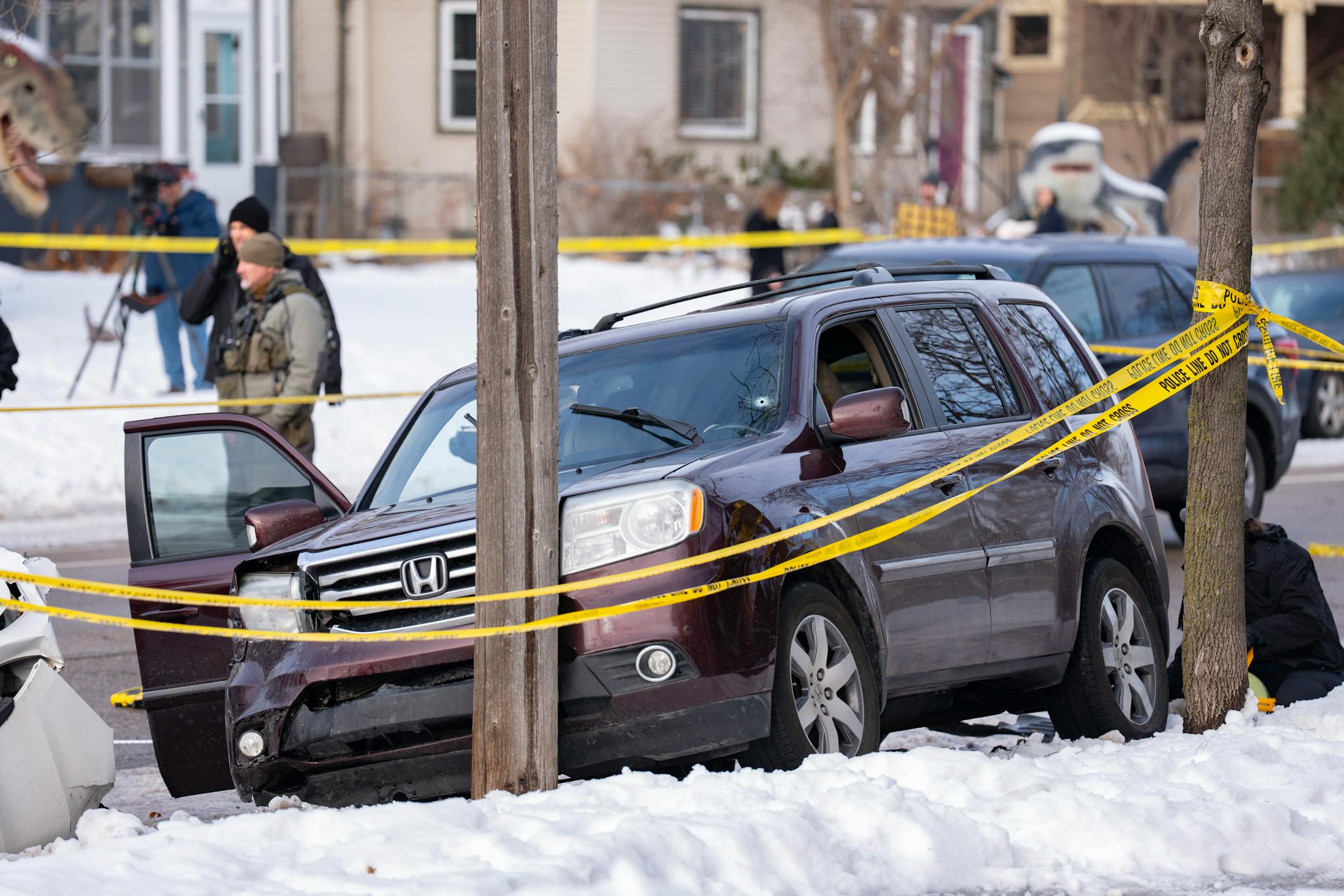
A bullet hole can be seen in the windshield of the SUV Renee Good was driving when she was fatally shot by ICE agent Jonathan Ross. (Alex Kormann/The Minnesota Star Tribune)

In the minutes after an immigration agent shot and killed a driver in Minneapolis on Jan. 7, graphic bystander videos of the incident quickly prompted dueling narratives.

One side argued the videos were clear evidence the agent murdered an innocent woman. The other side said the videos definitively showed the Immigration and Customs Enforcement agent defending himself against a woman using her vehicle as weapon.

It could be considered a Rorschach test for Americans’ entrenched belief sets, once again exposing the nation’s deep political divisions.

That sense of tribalism has been on display ever since. Homeland Security Secretary Kristi Noem quickly called the woman’s actions “domestic terrorism.” A day later, Democratic Gov. Tim Walz’s administration and Trump officials clashed over the investigation. The Minnesota Bureau of Criminal Apprehension said it was withdrawing from the investigation because it had been denied access to evidence, though the Trump administration disputed the state’s jurisdiction.

Walz suggested that move would taint the process: “When Kristi Noem was judge, jury and basically executioner yesterday, that’s very, very difficult to think that they were going to be fair.”

The debate had rapidly become Minnesota vs. the federal government, blue vs. red.

“Whatever you’re looking for,” said former Carleton College political science professor Steven Schier, “you’ll find it in one of those videos.”

Federal officials said an ICE agent “fired defensive shots” to save his own life.
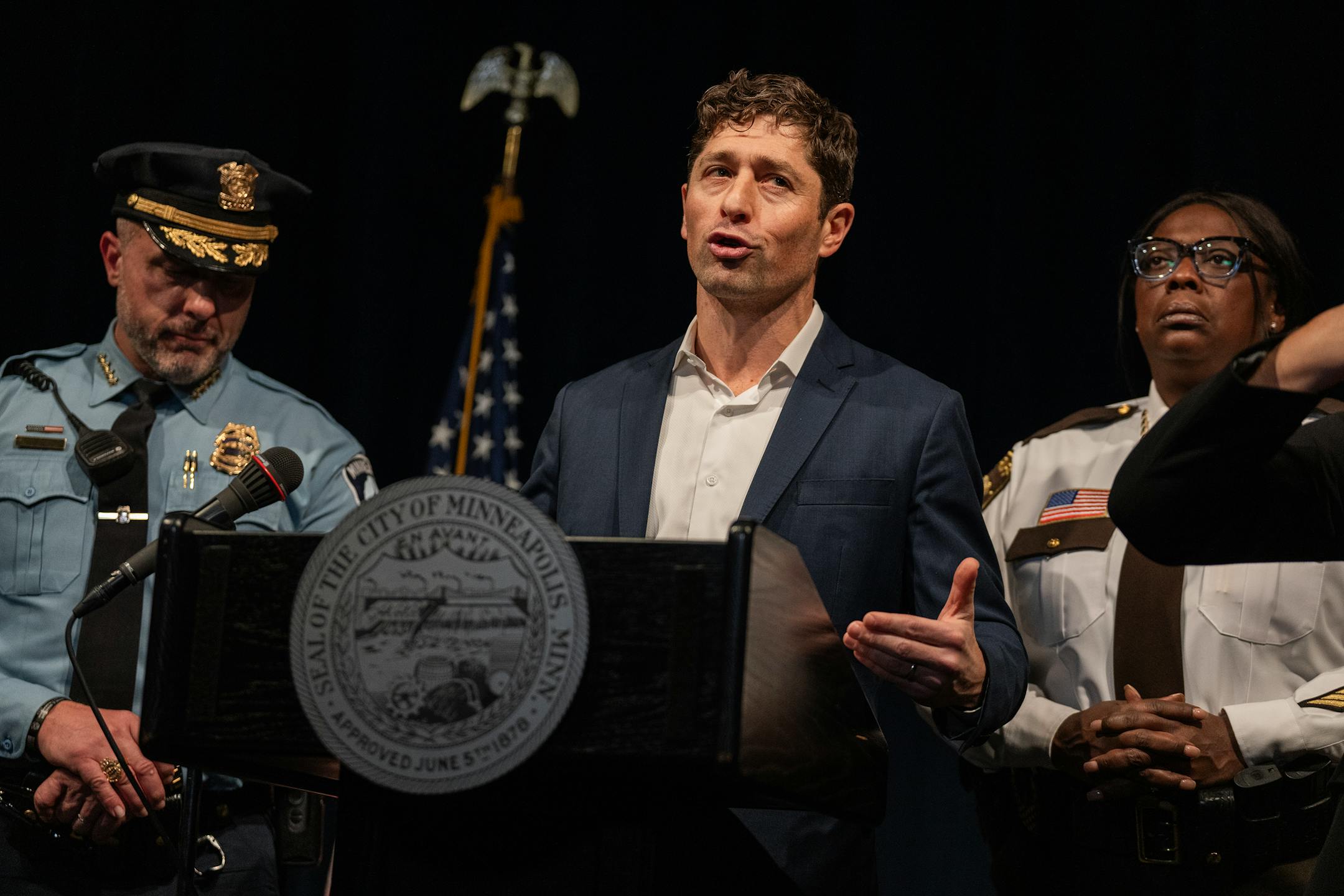
But Minneapolis Mayor Jacob Frey quickly disputed the self-defense claim as “spin” from the federal government.

“Having seen the video ... I want to tell everybody directly: That is bullshit,“ Frey said at a news conference. ”This was an agent recklessly using power that resulted in somebody dying, getting killed.”

Mayor Jacob Frey condemns the fatal shooting of a Minneapolis resident by ICE in Minneapolis on Jan. 7. (Richard Tsong-Taatarii/The Minnesota Star Tribune)

President Donald Trump said on Truth Social, the social media site he owns, that the driver “violently, willfully, and viciously ran over the ICE Officer,” calling the shooting self-defense. Trump said it was “hard to believe [the ICE agent] is alive,” based on the video, and blamed Democrats and the “radical left” for the incident.

Vice President JD Vance defended the ICE agent’s actions in a news conference the day after the killing, noting the same officer had been dragged by a car six months ago. “You think maybe he’s a little bit sensitive about somebody ramming him?” Vance said.

Some facts from videos of the shooting are indisputable: The woman, 37-year-old Renee Good, was in the driver’s seat of a Honda Pilot perpendicular to the flow of traffic on Portland Avenue. ICE agents approached and demanded she step out of her car; one agent reached into the driver’s side window to open her door. She backed up, then drove forward. An agent, identified by the Star Tribune as Jonathan Ross, stood by the front left side of the car. He fired his gun three times, the last shot fired from directly next to the driver’s side window. While it’s unclear if the vehicle struck the officer, at no point did it run him over.

But even with video evidence, opinions diverged. Those intense, immediate reactions short-circuit deliberative governance, Schier said, with determinations made well before an independent investigation is even announced.

“If you’re member of a tribe, you have a powerful need to back up and support everything any member of your tribe does across the board — even if you privately have doubts,“ said David Sturrock, a political science professor at Southwest Minnesota State University. ”It’s like we can’t let our side down, so we gotta say publicly our guy was right. We all have that impulse. It starts with family and goes from there. If we grant any member of our side made a mistake, we’re giving up a point to the other side, and we can’t afford to do that. That’s tribalism."

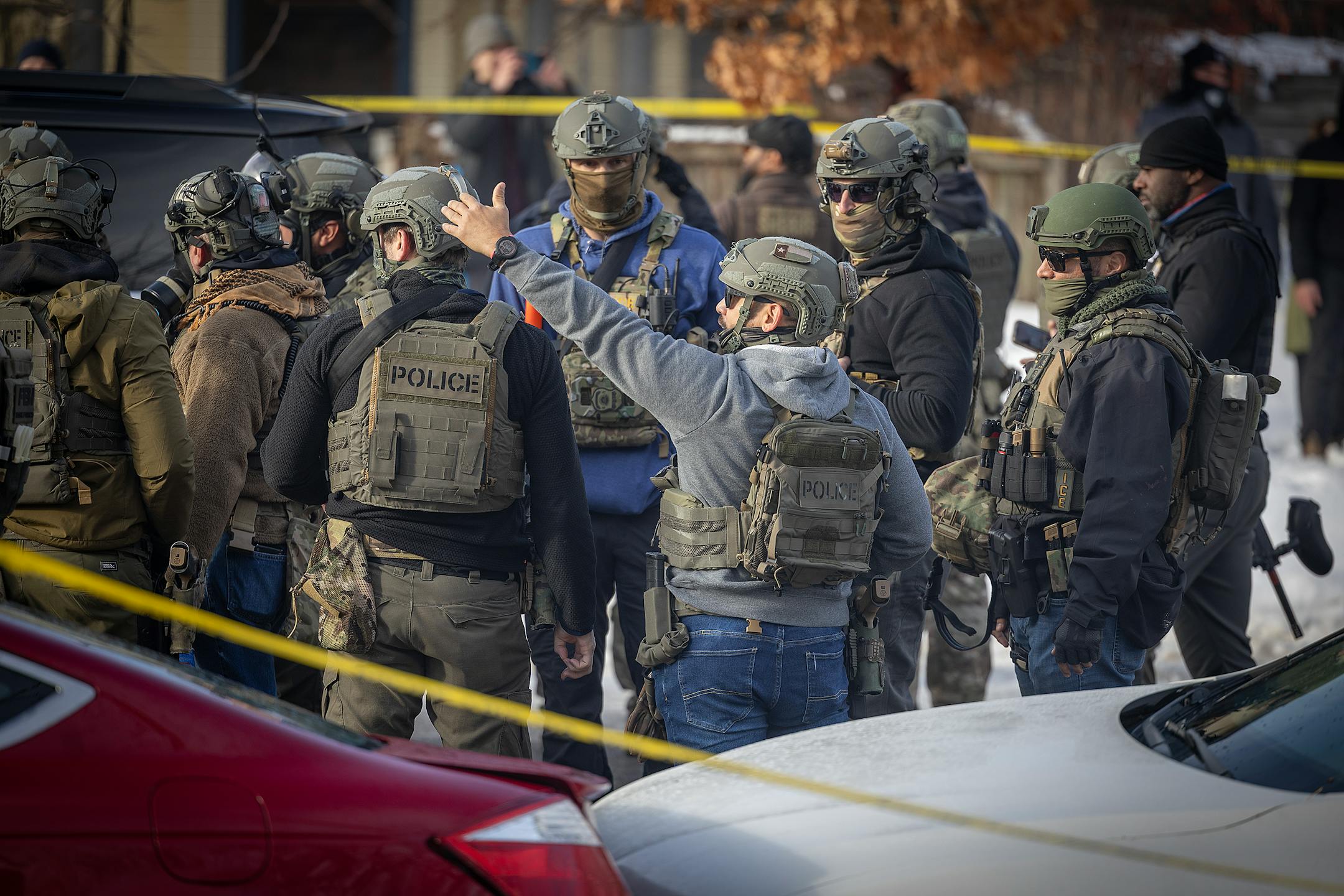
Federal agents stand where an ICE agent fatally shot a woman near Portland Avenue and E. 34th Street in Minneapolis on Jan. 7. (Elizabeth Flores/The Minnesota Star Tribune)

The impulse to ride confirmation bias to rushed conclusions has gone into hyperdrive in the social media age, Sturrock said, pointing to the old adage, “A lie can travel halfway around the world while the truth is putting on its shoes.” And that was during the age of telegraphs, Sturrock said.

Video evidence is still contextual, as any sports fan who has argued with video-assisted review can tell you.

“There’s still ambiguity in [the ICE shooting] video. There always is,” said Eric Zillmer, a neuropsychology professor and director of The Happiness Lab at Drexel University who has studied happiness in cohesive societies. “You don’t know what was happening before. You don’t know what everybody is thinking. You see the video, but you don’t know the internal world of the actors.”

Howard Lavine, a professor of political science at the University of Minnesota who has studied motivated reasoning, or the tendency to process information in a way that supports pre-existing beliefs, said ambiguity makes it easier for people to side with their tribe.

If the ICE shooting had been completely unambiguous — say, if ICE officers asked a woman to walk away, she complied, then they shot her in the back — there would be no instinct to move to our political corners, Lavine said.

Those who rush to judgment, certain their view is correct, see no ambiguity in the videos of the shooting, Lavine said.

“It’s, ‘No, she was killed in cold blood!,’ or, ‘No, she was a domestic terrorist trying to kill ICE agents!’” he said. “Because the political situation is so sensitive, so close to the edge.”

The fatal shooting comes as Minneapolis still tries to move forward from the police killing of George Floyd in May 2020, another incident that engendered distrust in official accounts from law enforcement.

In the hours after officers detained Floyd, a Minneapolis police spokesman attributed Floyd’s death to a “medical incident.” Bystander video later showed officer Derek Chauvin kneeling on Floyd as he cried for help, and many accused the police of covering for the officers in their initial statement, fueling protests and riots across the city. Chauvin was later convicted of murder and manslaughter.

Whatever happens in the coming days in an on-edge Minneapolis, Zillmer, the Drexel neuropsychologist, sees the instantaneous polarized reactions as a bad sign for American democracy.

“What it shows bigger picture is how fractured we are as a society,” he said. “We can’t even agree on what we saw in a video. That’s a symptom of a flawed democracy. It shows you in one video where this country is.”

about the writers

about the writers

Reid Forgrave

State/Regional Reporter

Reid Forgrave covers Minnesota and the Upper Midwest for the Star Tribune, particularly focused on long-form storytelling, controversial social and cultural issues, and the shifting politics around the Upper Midwest. He started at the paper in 2019.

See Moreicon

Andy Mannix

Investigations

Andy Mannix is an investigative reporter for the Minnesota Star Tribune.

See Moreicon

More from News & Politics

See More
card image
Anthony Souffle/The Minnesota Star Tribune

Some Twin Cities schools are responding to rumors about ICE agents on school properties.