
Opinion | When ICE comes for our kids’ caregivers, no one is safe

The staff member who was taken by immigration enforcement greeted my kids by name, wiped tears, tied shoes and helped create the stable environment every child deserves.

January 9, 2026 at 2:30PM
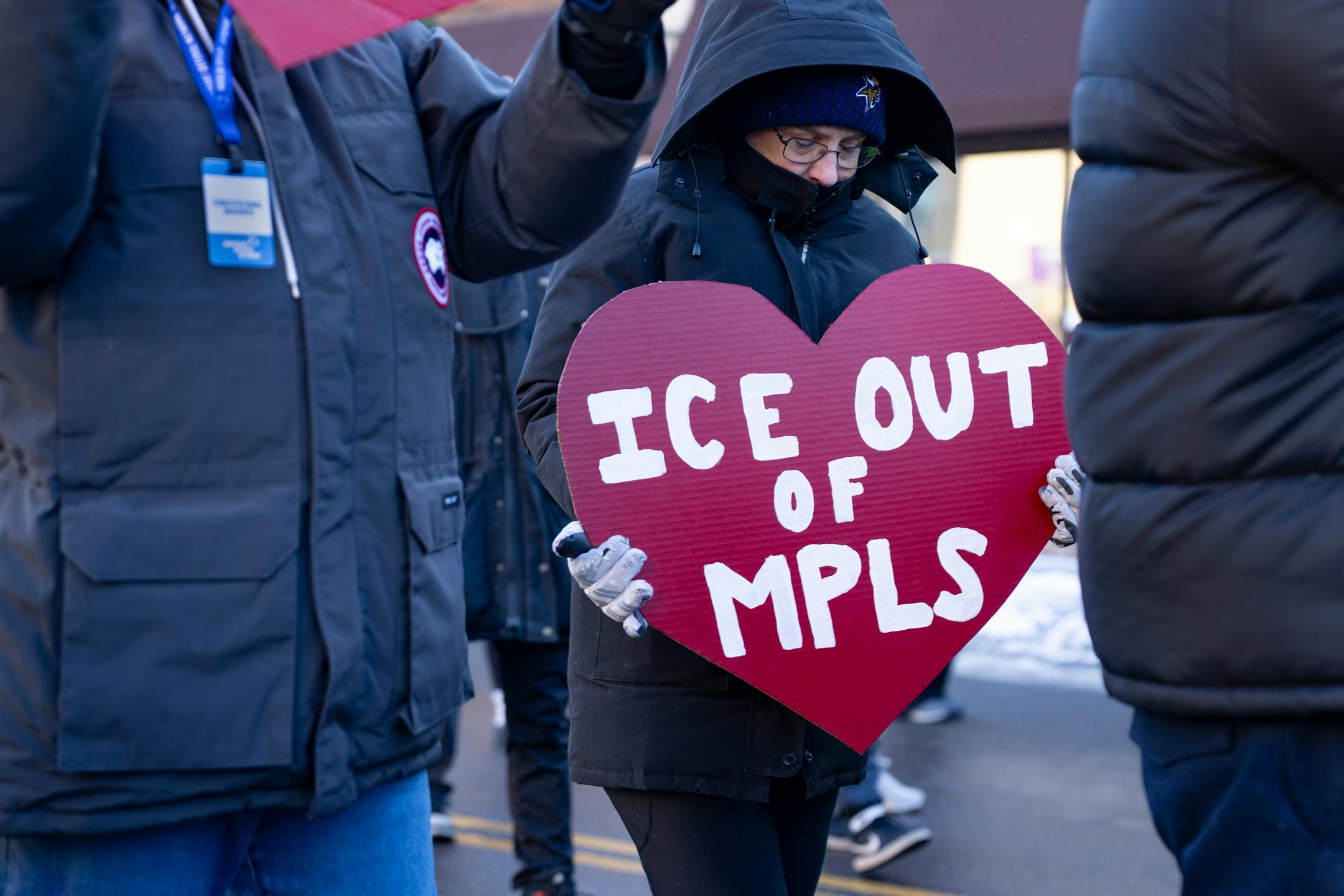
A demonstrator holds a handmade sign as they march during an anti-ICE protest on Lake Street in Minneapolis on Dec. 20, 2025. (Alex Kormann/The Minnesota Star Tribune)

Opinion editor’s note: Strib Voices publishes a mix of guest commentaries online and in print each day. To contribute, click here.

•••

The adults call it an “enforcement action.” My kids experienced it as something much simpler and more terrifying: a familiar, caring adult disappeared without warning.

To them — and to many of us parents — it felt like a kidnapping.

I am a physical education teacher with 12 years in Minnesota schools, currently teaching in Chanhassen. I am also a resident of south Minneapolis and a parent raising children in a community shaped by immigrants. I’ve spent my career teaching kids teamwork, trust and resilience. Yet nothing in my training prepared me to explain why someone who helped care for my children could be taken away in front of their workplace, with no regard for the children who depend on them.

This is the reality of immigration enforcement in the Twin Cities metro area today. It is not happening at the border or in some abstract policy debate. It is happening at day cares, apartment buildings, job sites and on sidewalks. It is happening in places that are supposed to be safe.

The day care staff member who was taken is not a headline or a statistic. They are someone who greeted my kids by name, who wiped tears, tied shoes and helped create the stable environment every child deserves. When ICE removes someone like that, they don’t just target an individual — they destabilize families, workplaces and entire neighborhoods.

As a teacher, I see the ripple effects immediately. Kids carry stress in their bodies before they can articulate it in words. Fear shows up as acting out, withdrawal or sudden academic struggles. When immigration enforcement operates with shock-and-awe tactics, children absorb the message that the adults in their lives can vanish at any moment. That is not safety. That is trauma.

Living in south Minneapolis, I have watched these tactics reshape the metro area. Parents are afraid to drive. Workers are afraid to report abuse or unsafe conditions. Families hesitate to attend school events, seek medical care or call for help in emergencies. This is not an unintended side effect — it is the predictable result of an enforcement strategy built on fear.

Supporters of aggressive ICE actions often claim they are about law and order. But there is nothing orderly about ripping caregivers from children or conducting operations that blur the line between civil enforcement and criminal abduction in the eyes of the community. When people in my neighborhood say ICE “kidnapped” someone, they are not being hyperbolic — they are describing the lived experience of sudden, unexplained disappearance enforced by armed authority.

If the goal of immigration policy is public safety, then we must ask: safe for whom? Because my kids do not feel safer. My students do not feel safer. My neighbors do not feel safer. The trust that holds communities together is eroded every time ICE treats schools, day cares and family spaces as acceptable hunting grounds.

We can have a serious conversation about immigration law without terrorizing children and caregivers. We can demand accountability, transparency and humanity from federal agencies operating in our neighborhoods. And we can refuse to accept that this is “just the way it is.”

As a teacher, a parent and a Minneapolis resident, I am asking our leaders to listen to the people living with the consequences of these policies. Immigration enforcement that traumatizes children and destabilizes communities is not a solution — it is a moral failure.

Our kids are watching. They are learning what power looks like, and who it protects. We owe them better lessons than this.

Tim Bergslien lives in Minneapolis.

about the writer

about the writer

Tim Bergslien

More from Commentaries

See More
card image
Ariana Cubillos/The Associated Press

His increasing belligerence abroad should raise alarm about more than the fate of Venezuela.

card image
card image