
ICE arrested dozens of refugees in Minnesota and sent them to Texas, lawyers say

The refugees, many of them from Somalia, had passed security screenings before coming to the United States. The Trump administration has vowed to “re-examine thousands of refugee cases.”

The New York Times
January 14, 2026 at 3:36PM
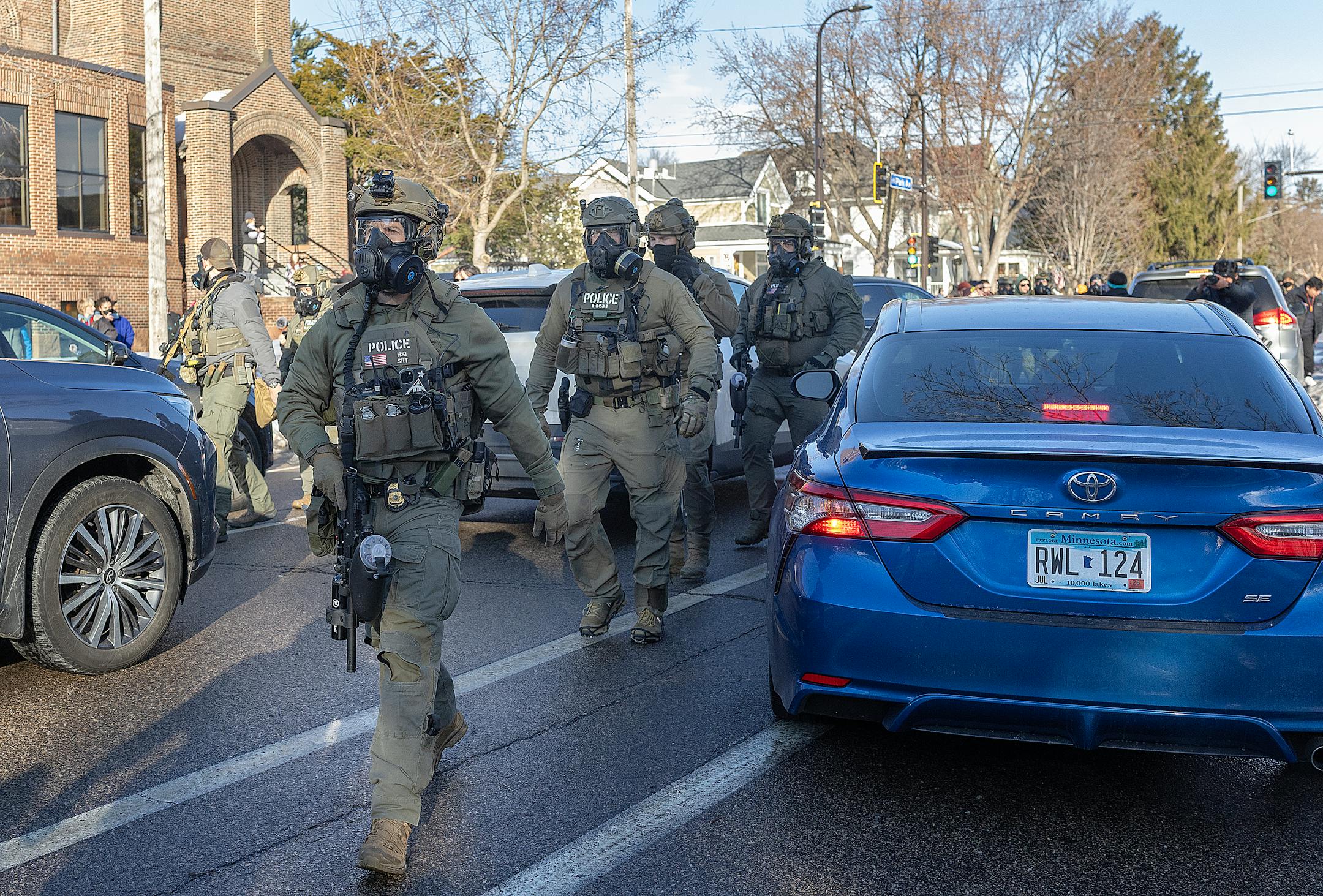
Protestors and ICE collide where they were patrolling near the area where Renee Good was killed by a federal immigration agent in Minneapolis, on Tuesday, Jan. 13, 2026. (Elizabeth Flores/The Minnesota Star Tribune)

Federal immigration agents in recent days have arrested dozens of refugees in Minnesota who had passed security screenings before being admitted to the United States, according to their lawyers and immigrant rights advocates.

The arrests of the refugees, who are mainly from Somalia and include children, come after an announcement last Friday that the Trump administration would “reexamine thousands of refugee cases through new background checks,” focusing on people who have yet to obtain green cards after arriving in the United States. But that announcement, by U.S. Citizenship and Immigration Services, did not say that the refugees would be subject to arrest and transfer to immigrant detention facilities.

Citizenship and Immigration Services did not respond to emailed questions on Tuesday. Immigration and Customs Enforcement, the agency that detained the refugees, according to the lawyers, also did not respond.

Michele Garnett McKenzie, executive director at the Advocates for Human Rights in Minneapolis, said most of the detainees were being transferred to facilities in Texas. She estimated that at least 100 people had been detained.

“It’s happening very fast,” she said, adding, “It’s devastating the community.”

Among the cases she cited was one of a Somali mother who was detained, leaving behind a toddler, and another family in which a mother and two adult children were detained.

President Donald Trump closed the United States to refugees from around the world on his first day in office. In November, he began targeting refugees in Minnesota, a blue state with the country’s largest Somali population, amid reports that some Somalis there had defrauded the state, collecting millions of dollars in social services that were never provided.

Last week, his administration said that it was starting a “sweeping initiative” to conduct new background checks and intensive verification of refugees to check for fraud and other crimes.

“The initial focus is on Minnesota’s 5,600 refugees who have not yet been given lawful permanent resident status,” said the announcement from Citizenship and Immigration Services.

On Tuesday, the Trump administration separately moved to end Temporary Protected Status for a small number of Somalis who entered the country without first obtaining humanitarian protection as refugees.

The detained refugees, like all people admitted through the U.S. Refugee Program of 1980, entered lawfully.

Before the U.S. government extends an invitation for someone to receive safe haven, the applicants must undergo rigorous vetting abroad by the State Department, the Department of Homeland Security and other government agencies. They must prove that they have a well-founded fear of persecution on account of their race, religion, political opinion, nationality or membership in a particular group.

Once admitted to the United States, refugees must apply for green cards within a year. They have sometimes delayed doing so because of cost and red tape, but they have never been arrested or threatened with deportation.

“This has never happened, that you arrive as a refugee, and that on day 366, if you are still not a green card holder, you are deportable,” said Tracy Roy, legal director at the Immigrant Law Center of Minnesota. “That has never been the way the statute has been interpreted.” She added that none of the cases she had been contacted about involved a refugee who had committed a crime beyond traffic violations.

Roy noted that aside from Somali refugees, people from Myanmar and Eritrea had also been detained.

Elsa Zerai said her friend, an Eritrean mother of three children, had been arrested at her home in St. Paul, Minnesota, on Tuesday morning. “I told the ICE agent that she came here legally and was working and taking care of her kids,” Zerai said, referring to her friend. “He told me that she was supposed to adjust her status a year ago. He did not have any other details.”

A daughter of the detained mother said the family had proof that she had already filed documents to obtain permanent residency.

The Trump administration has suspended the processing of green cards for refugees. Many have pending applications that will not be adjudicated based on current policy.

The refugee arrests follow days of unrest in Minneapolis fueled by the deadly shooting of an American citizen by an ICE agent this month. The Trump administration has said that the woman, Renee Nicole Good, 37, was trying to ram her vehicle into the agent, but state and local officials, including Gov. Tim Walz of Minnesota and Mayor Jacob Frey of Minneapolis, have disputed the government’s account.

Since the shooting, the Trump administration has escalated its immigration crackdown in the state, having sent about 2,000 federal agents to the Minneapolis and St. Paul areas.

Federal prosecutors in Minnesota have described a brazen and sprawling fraud scandal in which people stole millions and possibly billions of dollars from state social service organizations. Of the 98 people who have been charged in connection with the fraud so far, 85 are of Somali descent, according to the White House.

This article originally appeared in The New York Times.

about the writer

about the writer

Miriam Jordan

The New York Times

More from News & Politics

See More
card image
Aaron Lavinsky/The Minnesota Star Tribune

Madel has become well known in law enforcement circles after his successful defense of Minnesota state trooper Ryan Londregan for the shooting death of Ricky Cobb II

card image