

In P.D. Eastman’s classic picture book “Are You My Mother?” a baby bird hatches alone and goes on a quest. It asks a cow, a dog and even an excavator whether they might be its mother. Finally, the chick and its true mom reunite.
In nature, cowbirds also hatch without their parents present. Cowbird mothers leave their eggs behind in the nests of different species. Yet to grow up safely, the birds must join other cowbirds in flocks. They somehow need to learn what species they belong to.
Earlier research hinted that brown-headed cowbird chicks might reconnect with their parents. But a paper published recently in the journal Animal Behaviour found no evidence of a happy reunion. Instead, cowbird chicks learned who they were by hanging out with unrelated adult females.
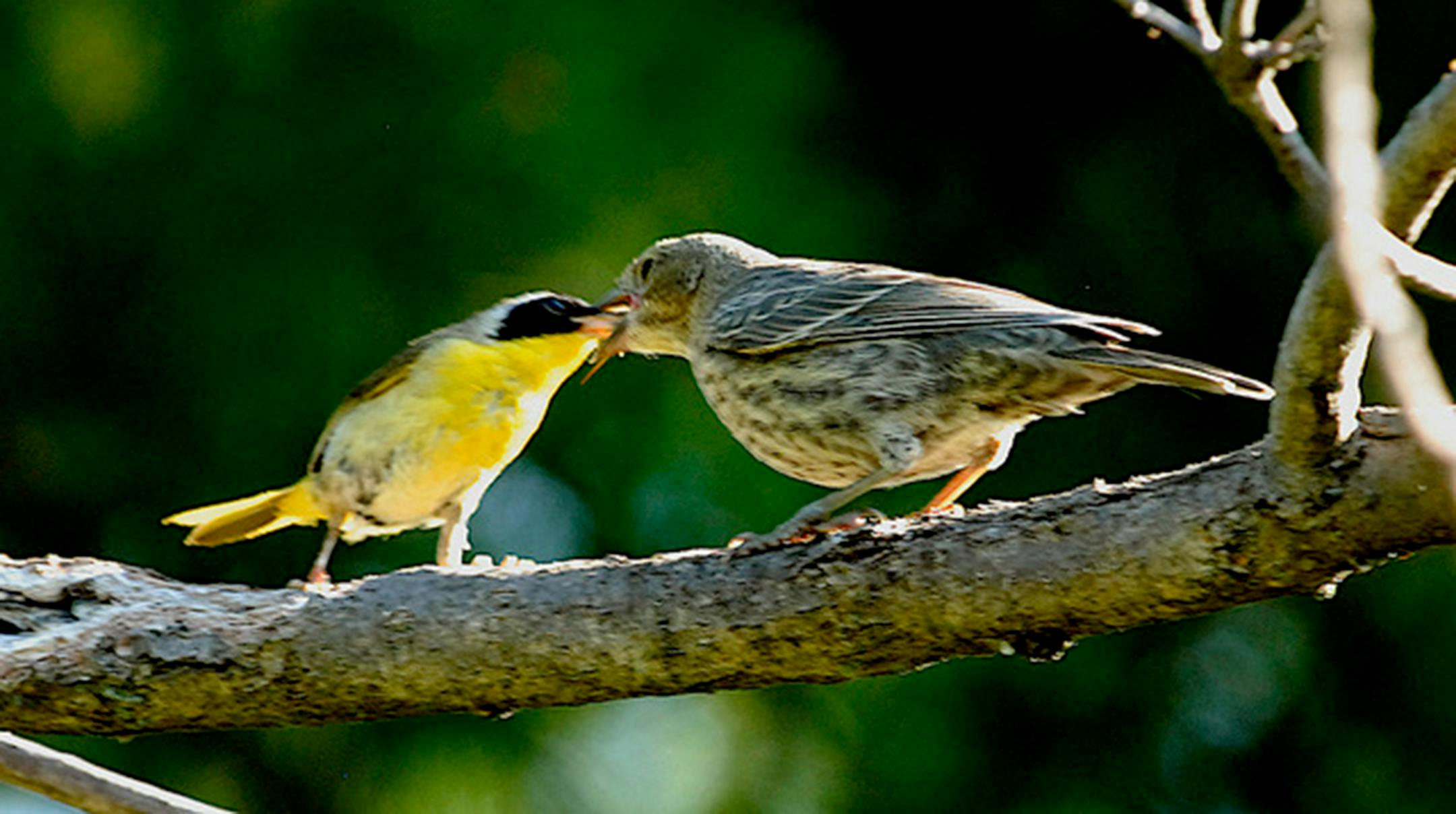
Brown-headed cowbirds are what scientists call brood parasites. That means parents don’t raise their own young. Mothers sneakily lay eggs in other birds’ nests, and oblivious host parents rear the young brood parasite alongside their own offspring. (Chicks of the common cuckoo, another brood parasite, kill their foster siblings by shoving them over the side of the nest.)
Unlike most birds, a young brood parasite doesn’t get attached to its host parents. You can see this if you rear cowbirds by hand, said Mark Hauber, a comparative psychologist at CUNY Graduate Center in New York: “They start hating you at some point.” If a cowbird imprinted on a family of yellow warblers, say, and sought out warblers’ company as an adult, it would never find a mate and reproduce.
Beyond mating, “there’s tons of different benefits to knowing what kind of bird you are,” said Mac Chamberlain, an ornithologist at the University of Illinois Urbana-Champaign who works with Hauber. For example, cowbirds flock together, roost together and learn from each other on where to find food.
There’s safety in numbers, too. “They do like to hang out with their own species. Mostly because they themselves get beaten up by the other species,” Hauber said. Many birds will attack the brood parasites on sight.
Chamberlain said that at his study site in Illinois, cowbird chicks stay with their host parents for about a month. Then they start to venture farther from their hosts’ territory. Somehow, he says, they bump into adult cowbirds and start hanging around them and learning how to behave. But the clock is ticking: By the end of the summer, the juveniles and adults will migrate south. “They have a short time period in which they need to learn these things,” Chamberlain said.


