Advertisement

Editor's Pick

Move over, Twin Cities: Small towns were Minnesota’s 2025 hottest housing markets

February 20, 2026
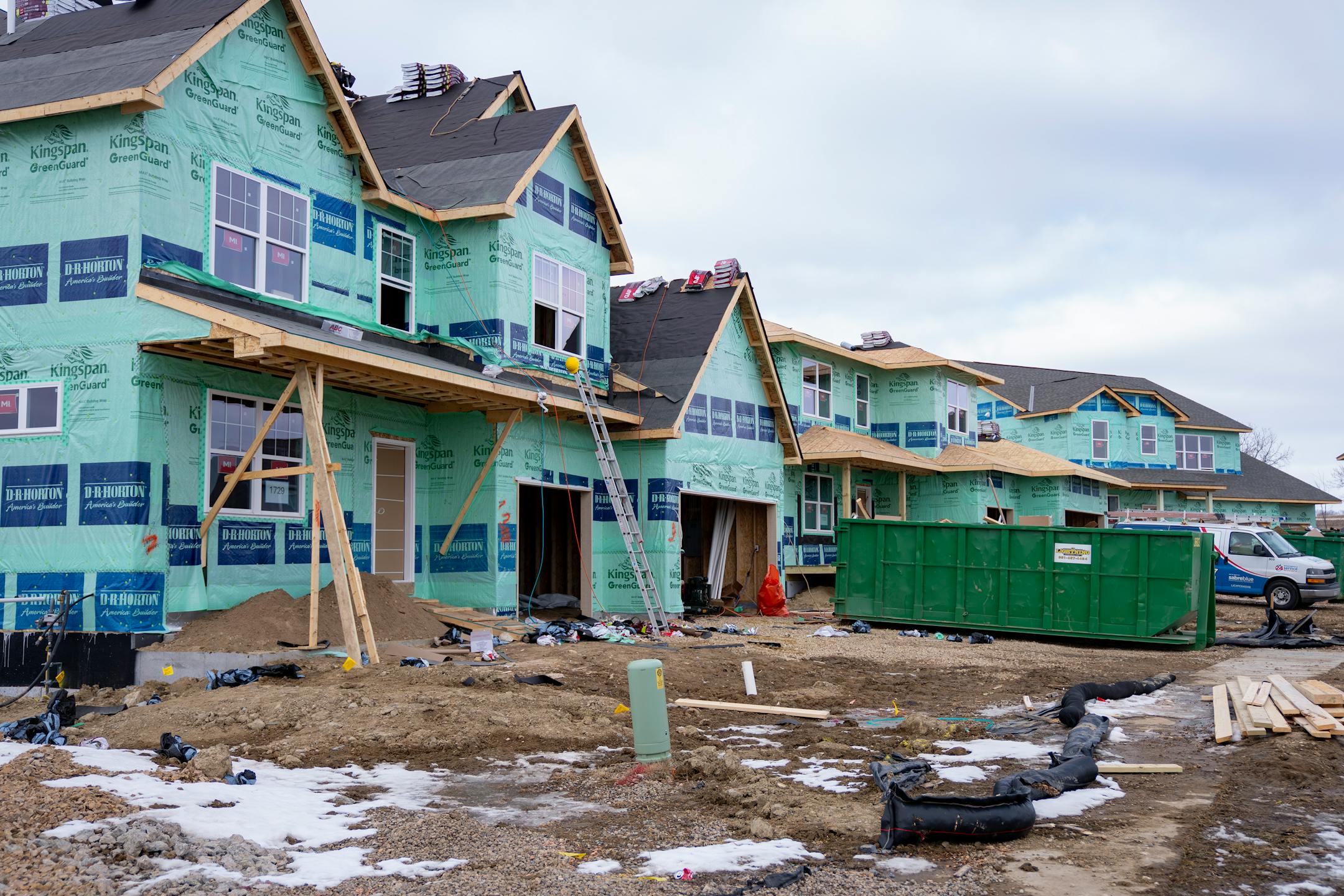
Houses are actively under construction in Chaska, seen here on Feb. 10. (Alex Kormann/The Minnesota Star Tribune)

Lake-home seekers, remote workers and bargain hunters helped propel outstate areas to the top of the Minnesota Star Tribune’s 10th-annual Hot Housing Index.

The Minnesota Star Tribune
Advertisement

Hanna Schmidt and Carl Smith thought they’d have little trouble affording their first house.

Their $400,000 budget was on par with the median house price in the Twin Cities and should have been enough to meet their wish list: three bedrooms, two bathrooms and a two-car garage in Hugo, Stillwater or a nearby suburb.

Then came their four-month house-hunting blitz last summer. They toured more than 30 homes, fell in love with 10 and lost bidding wars for all of them. Despite penning “love letters” to sellers and offering $10,000 or more above the asking price, the couple didn’t land a deal. At least not until they scratched out one of their wishes.

Last year, buyers outnumbered sellers in much of the Twin Cities metro, putting homeownership out of reach for many. Now small towns far from Minneapolis-St. Paul are becoming a battleground for homebuyers, with some historically sleepy areas seeing price hikes and sales jumps.

From Alexandria to Winona, half of Minnesota’s 10-hottest markets in 2025 were far-flung boroughs that offered the promise of lower prices and less competition, according to the Minnesota Star Tribune’s 10th-annual Hot Housing Index. The index identified the state’s 130 most in-demand ZIP codes by tracking the year-over-year change in prices, listings and sales using data from Realtor.com and research assistance from the trade group Minnesota Realtors.

While buyers gained some ground in the Twin Cities metro last year, the index showed that persistently high prices and a chronic shortage of listings seemed to force many buyers to embrace small-town life.

Schmidt and Smith expanded their search to Somerset, Wis., where they eventually found a home.

“When we put in offers on a house in the heart of Stillwater or White Bear Lake and Hugo, they would often go for $40,000 over asking,” Schmidt said. “It was almost like we didn’t stand a chance. It was like having 10 different break-ups.”

Advertisement

Outstate on the mind

The index analysis, limited to communities with at least 20 sales per month, looked beyond typical monthly sales and price rankings to determine which ZIP codes saw the biggest fluctuations in key metrics. Sudden gains or rapid drops determined which markets are hot or cold.

Different factors can make a market particularly popular. Take, for instance, Alexandria and Detroit Lakes, the two hottest ZIP codes in the state last year.

In 2025, there were enough house listings in Detroit Lakes, about a three-hour drive from the Twin Cities, to last more than three months. Buyers had plenty of houses to choose from, driving up annual pending sales by more than 30% — one of the biggest gains in the index.

Buyers in the Alexandria area weren’t so lucky. The 56308 ZIP code had only a 1½ month supply of listings. With homes scarce, the area experienced bigger price gains, with properties fetching 22% above the state’s average per square foot.

Because it’s about an hour closer to the metro, Alexandria’s prices and demand more closely reflect what’s happening in the Twin Cities.

Moorhead, the third-hottest market in 2025, benefited from proximity to Fargo, where population growth has been strong. That helped drive a 57% increase in pending sales from the previous five years’ average. It was also a relatively affordable option for people who wanted the quaint community vibe along with big-city amenities.

Advertisement

On average, properties in Moorhead sold for about $140 per square foot, about 14% higher than previous years but at least $100 per square foot lower than many metro-area cities.

Remote possibility

Though scattered across the state, 2025’s hot spots seemed to appeal to a similar buyer: someone looking for ample space and a small-town atmosphere, maybe even some lakeshore.

“There’s built-up buyer demand out there,” said Wendy Uzelac, a sales agent in Grand Rapids and president of Minnesota Realtors. “Buyers are saying, ‘The market isn’t going to come down anytime soon, so we’re just going to jump in.’ You just have to jump in sometime.”

Uzelac said some of the same trends that took hold during the pandemic are still driving sales and prices. They also could be a reason why Alexandria, Detroit Lakes and Moorhead ranked so high.

Though many employers have called employees back to the office at least part time, remote work and the expansion of high-speed internet across Minnesota have enabled buyers to live wherever they want, not just in commuting range of their workplace. The best evidence of that, Uzelac said, is people still list strong Wi-Fi as a top search criteria.

“That tells me they still want to work remotely,” she said.

Advertisement

Many, she said, are looking for a getaway house that will eventually become their retirement home. Others are just interested in a slower pace of life.

“There’s even been a push for young families wanting to move to an area where they can raise the kids in a little bit more of a relaxed atmosphere and do fun things like have chickens,” she said, “or join 4-H or [the National FFA Organization] and learn where their food comes from.”

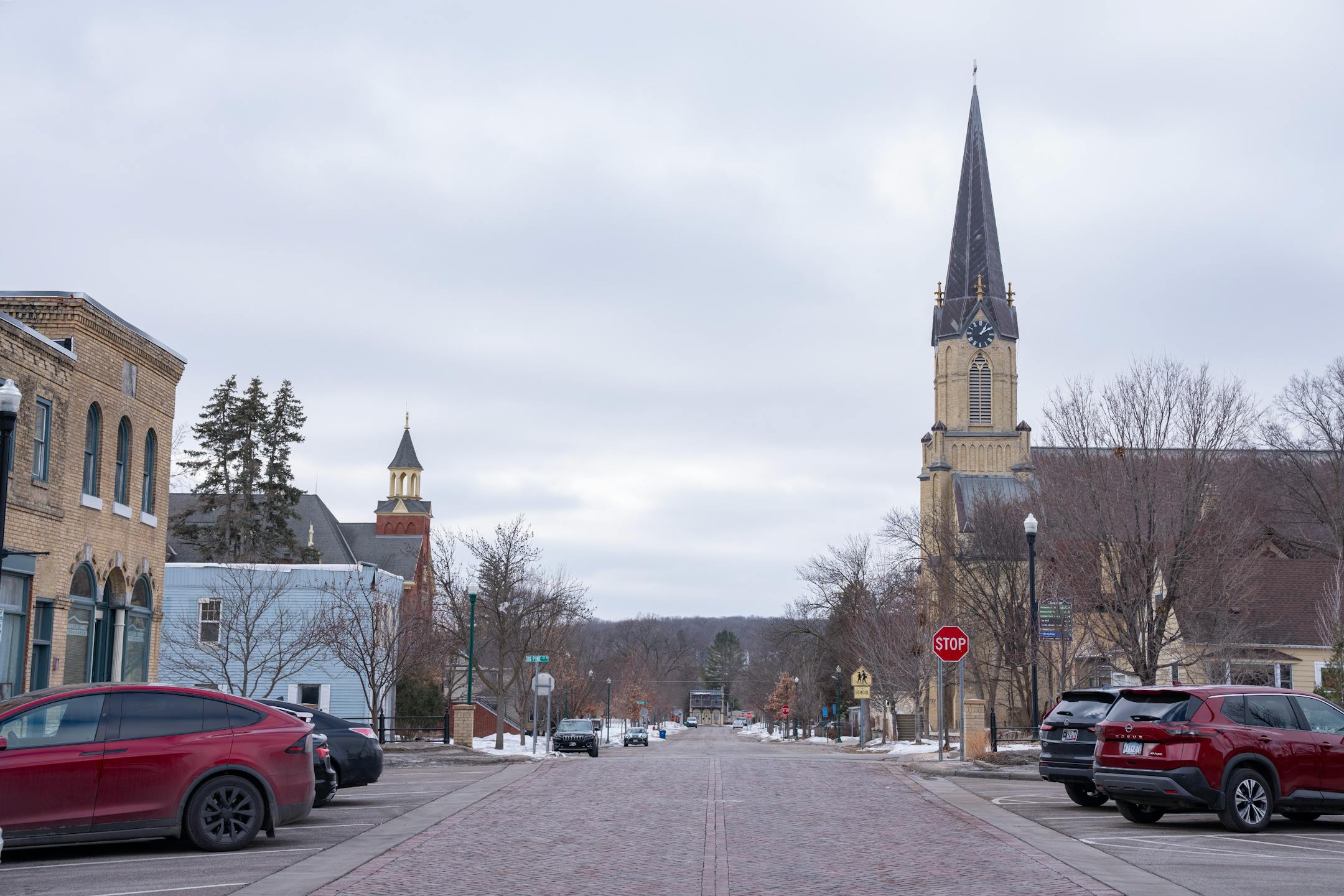
Cars line historic 2nd Street in Chaska with Guardian Angels Catholic Church in the background on Feb. 10. (Alex Kormann/The Minnesota Star Tribune)

Outer-ring suburbs

The five metro-area ZIP codes that made the top 10 were all outer-ring suburbs.

The 56304 ZIP code, flush with new houses, is on the fringes of the far western metro near St. Cloud. Many of those homes are affordable for young families, which drew buyers from more expensive suburbs closer to the Minneapolis-St. Paul core.

Topping the metro winners was 55318, a ZIP that includes much of Chaska. About a quarter of the second-ring suburb’s sales were new builds, helping drive a 25% increase in pending deals. Despite that influx of listings, overall inventory was down slightly, causing a 16% increase in prices.

Throughout the state, fast-growing communities with an abundance of new construction attracted buyers, putting upward pressure on the per-square-foot cost of housing because of the high cost of homebuilding. Areas with lots of lakeshore also saw big gains because the per-square-foot total includes the cost of the land, and lakeshore is limited.

Advertisement

Greg Anderson, a Chaska resident and broker with ReMax West, said prices might be rising, but Chaska is still a bargain compared to nearby communities closer to Lake Minnetonka.

In addition, he said, buyers are drawn to the area because the city has cultivated its reputation as a free-standing small town.

“We want to be the best small town in Minnesota,” he said. “That’s different from being the best suburb of Minneapolis.”

People walk around the indoor track above a basketball court inside the Chaska Community Center on Feb. 10. Community members, including David Christian, a member of the 1980 Olympic USA hockey team, enjoy food and drinks during a watch party for the Olympic curling mixed doubles gold medal match at the Crooked Pint inside the Chaska Curling Center on Feb. 10.

Adjusting expectations

Small-town charm and no shortage of historic Main Street shops and restaurants helped make the 55082 ZIP code in Stillwater the 10th-hottest in the metro.

The city was one of Schmidt and Smith’s top choices, but it was also too expensive and too competitive.

It’s one of several well-established suburbs where a shortage of listings is driving double-digit increases in prices that now rival some of the most coveted neighborhoods in Minnesota’s central cities and suburbs.

The same was true of the top 10 suburbs Hamel and Shorewood/Wayzata. They’re now out of reach for many entry-level buyers and those whose house-hunting budgets are failing to keep up with higher mortgage rates and record prices. Those cities all dealt with double-digit price gains, limited inventory and prices significantly higher than outlying cities.

Schmidt said their agent, Sarah Deziel of BRIX Real Estate, helped them set realistic expectations, including establishing a “must-have and like-to-have list” of priorities.

Quickly, the couple realized their first choice of location was simply a “nice-to-have,” so they opened their minds to farther-out communities, including Woodbury, Oakdale and even Blaine.

The couple adjusted their expectations and lowered their price ceiling to give them room to negotiate upward with sellers.

They were about to abandon their house hunt and resign themselves to renting when a $350,000 house on Wisconsin’s Apple River came on the market. After offering $20,000 more than the asking price, Schmidt and Smith finally saw an offer accepted.

“It all came down to, ‘Do we want to live in a house we love more than a city we want to be in?’” Schmidt said. “When our agent sent back the signed offer, I cried.”

about the writers

about the writers

Jim Buchta

Reporter

Jim Buchta has covered real estate for the Star Tribune for several years. He also has covered energy, small business, consumer affairs and travel.

See Moreicon

Tom Nehil

Newsroom developer

Tom Nehil is the Minnesota Star Tribune’s newsroom developer, using code to help find and tell stories.

See Moreicon

More from Real Estate

See More
card image
Jeff Wheeler/The Minnesota Star Tribune

Different metrics may appeal to different buyers in the Minnesota Star Tribune’s 10th-annual Hot Housing Index.

card image
Sleep Number headquarters in downtown Minneapolis. (DAVID JOLES)
Advertisement