Advertisement

Could the Gophers find a way to duplicate Indiana’s football success?

A lot of things would have to go right for the Gophers to challenge for a College Football Playoff title. Here is a list of some of the key factors.

The Minnesota Star Tribune
February 26, 2026 at 11:00AM
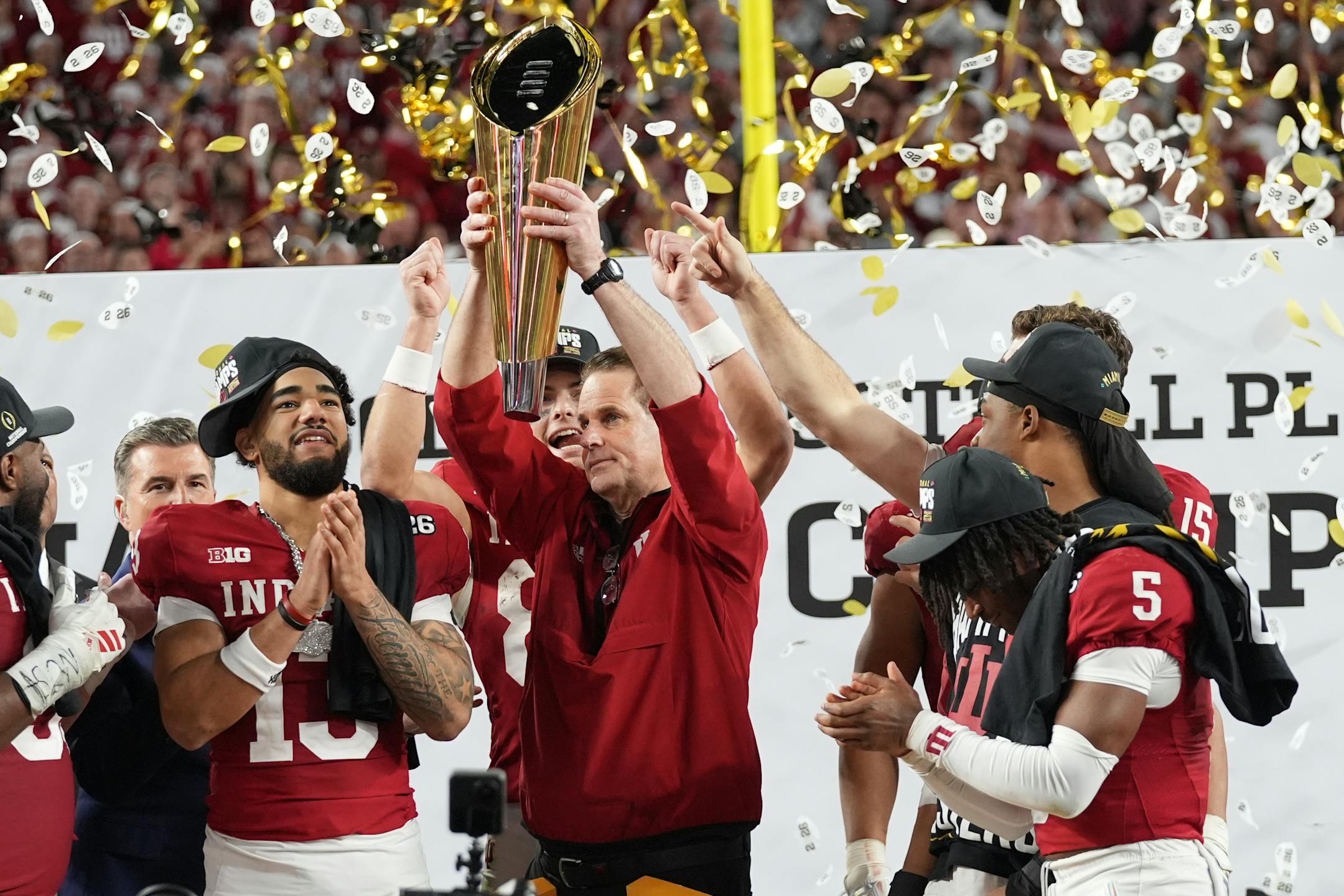
Indiana head coach Curt Cignetti led his team to the national title in only his second year with the Hoosiers. (Lynne Sladky/The Associated Press)
Advertisement

It’s been six weeks since Indiana won the College Football Playoff, completing a rags-to-riches story that saw a program with the second-worst all-time winning percentage (42.3%) among Power Four conference schools climb to the sport’s pinnacle by winning its first national championship.

Yes, the Indiana Hoosiers are college football’s national champions, and it still seems strange hearing those words roll off someone’s tongue.

Of course, the first reaction to the Hoosiers’ coronation for many fans in Minnesota was, “If Indiana can win it all, why can’t the Gophers?”

Technically, the Gophers — or any other Football Bowl Subdivision team — can win a national championship in football. In fact, Minnesota has won seven. Of course, the Gophers’ last national title came 66 years ago. Moreover, they last won the Big Ten championship in 1967 when they shared the title with Purdue and, yep, Indiana.

College football in 2026 barely resembles what it looked like in the 1960s, and realistically, the Gophers winning a national championship in this era would rank up there with Indiana’s coronation. So, yeah, we’re telling you there’s a chance because the Hoosiers proved it can be done. For the Gophers to one day catch such lightning in a bottle, they’ll need several things to align perfectly. Following the Hoosiers’ lead, at least in these areas, would be a start:

Land a once-in-a-lifetime coach
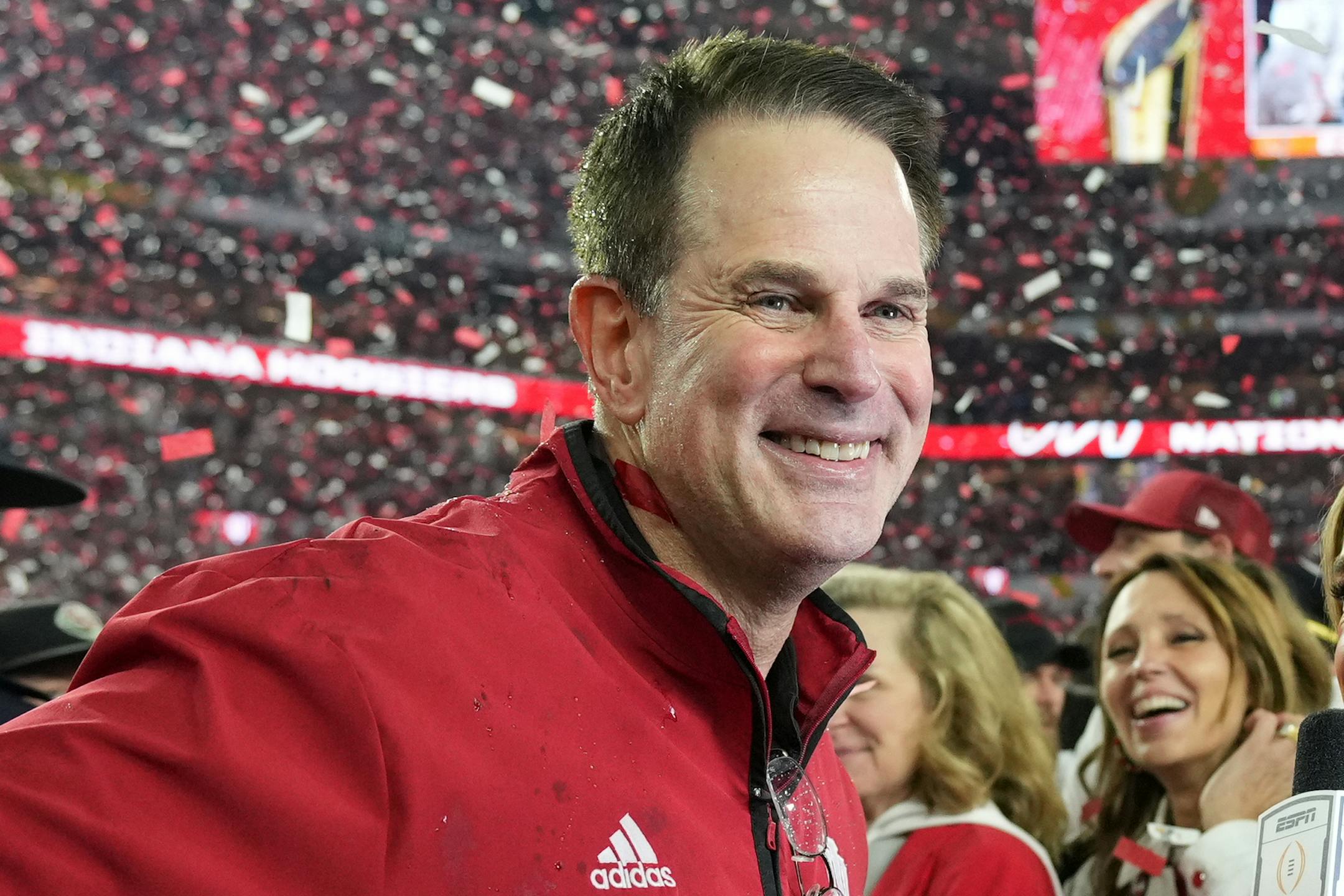
Indiana head coach Curt Cignetti smiles after winning the College Football Playoff title in January. (Rebecca Blackwell/The Associated Press)

“I win. Google me,” was Curt Cignetti’s brash response at his introductory news conference in 2023 after Indiana hired the coaching lifer away from James Madison, which made the successful transition from FCS to FBS. Cignetti has won wherever he’s coached: 53-17 at Division II Indiana University of Pennsylvania, 14-9 at FCS level Elon, 52-9 at James Madison, including an FCS runner-up finish, and seasons of 11-2 and 16-0 at Indiana with a first-round College Football Playoff appearance followed by Big Ten and CFP championships.

The 64-year-old Pittsburgh native thrust himself into the upper echelon of college coaches by delivering big results in the era of name, image and likeness (NIL) payments and unlimited transfer portal movements.

“The driving force behind all this is just that they hired a guy who, it turned out, needed to be in a job like this,’’ said Zach Osterman, the Indiana football beat writer for the Indianapolis Star. “Indiana wanted somebody who had a really tight hold on the large-scale process of roster building.”
ADVERTISEMENT

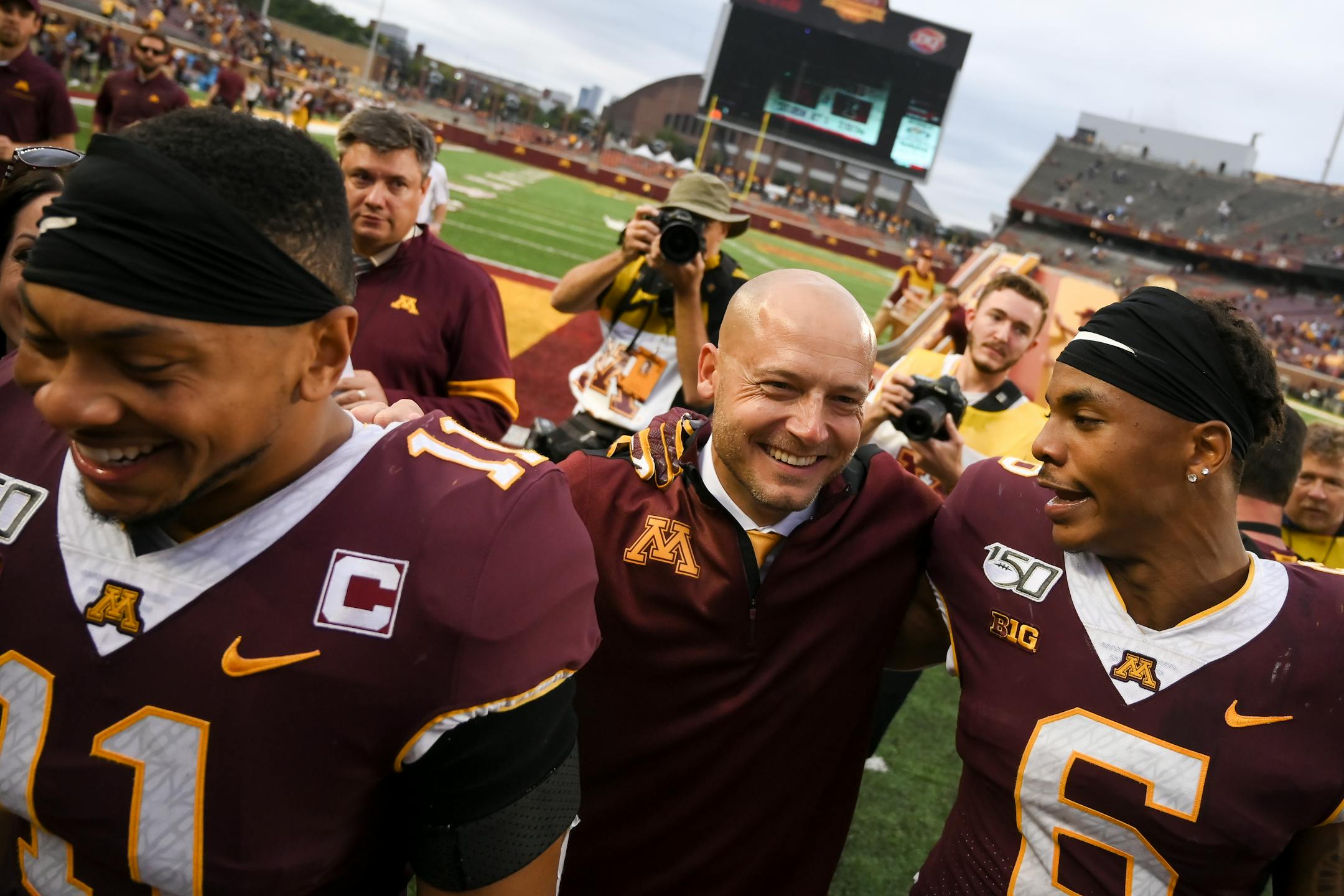
Cignetti’s success is sure to apply pressure to other coaches across college football, especially if the playoff expands from 12 teams to 16 (the SEC’s plan) or 24 (the Big Ten’s hope). Do the Gophers have a coach that can take them to the CFP? Well, there will be differing opinions on that question, but in P.J. Fleck, the Gophers have a coach entering his 10th season in Dinkytown who’s assembled a résumé that tops any predecessor since Murray Warmath. Fleck has won 60% of his games (66-44), a win percentage that trails only Henry L. Williams (.786) and Bernie Bierman (.716) among Gophers coaches with 40 or more games.

Gophers football coach P.J. Fleck is 66-44 in nine seasons at Minnesota. (Alex Kormann/The Minnesota Star Tribune)

While Fleck hasn’t had Cignetti-level success, he led the Gophers to a season that would have put them on the fringe of the playoff race if a 12-team format existed at the time. That was in 2019 when the Gophers went 11-2 and finished No. 10 in the final two major polls, their best finish since the 1962 team was No. 10.

Even before Indiana won its national championship, Fleck pointed to the Hoosiers’ 11-2 campaign in 2024 as a goal for his team to strive toward. He realizes that fans want another run like that 2019 surge.

“With the College Football Playoff where it is, as Indiana showed last year, anybody can get there,” Fleck said last summer. “If we’re delusional enough to know we can do that, we can get there. … You’ve got to continue to raise the expectations.”

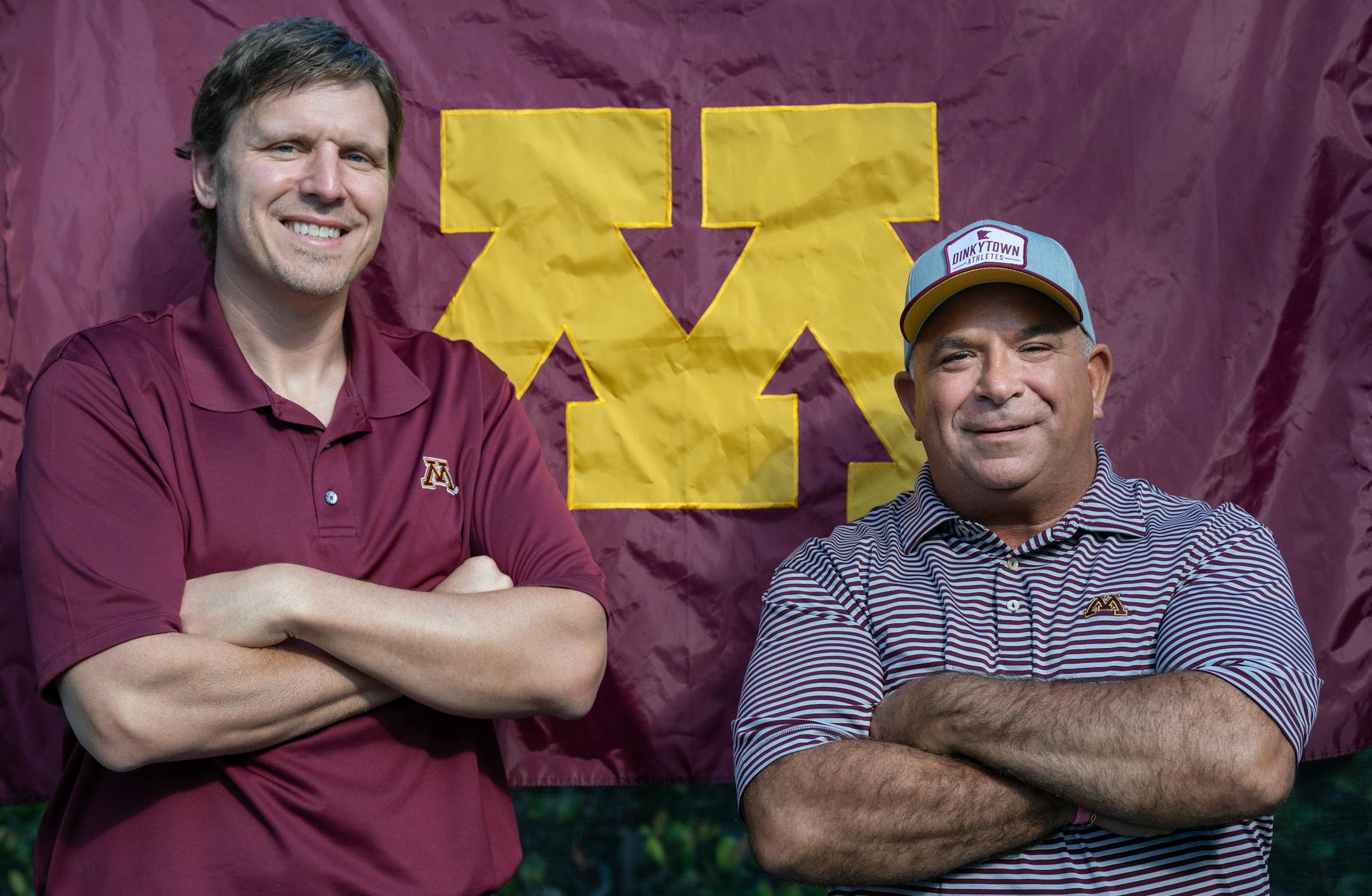
Those sentiments are shared by Derek Burns, co-founder and president of Dinkytown Athletes, the approved NIL collective for Gophers athletics.

“With the major changes that have happened in college athletics and specifically football in the last few years — NIL, the transfer portal, revenue sharing — it’s presented an opportunity for a reshuffling of the deck, if you will,” said Burns, a former Gophers offensive lineman. “The teams that win don’t have to be the same few teams. … For programs like Minnesota that haven’t had a lot of top-end success over the last couple of decades, it presents an opportunity.”

Advertisement

Find an Oilman, a Sneakerman or a Techman

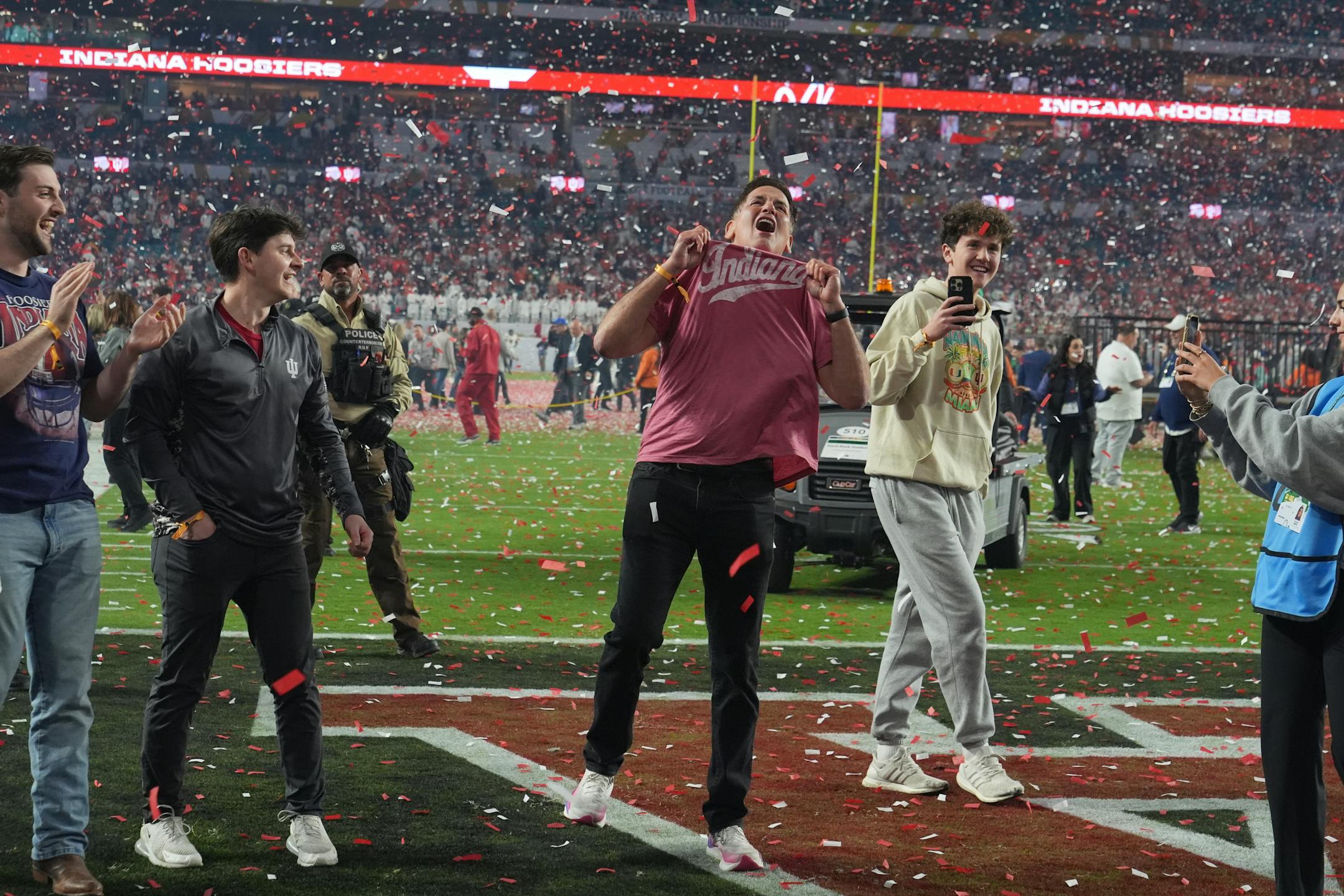
Mark Cuban celebrates after Indiana's win in the College Football Playoff national championship game. (Marta Lavandier/The Associated Press)

Big-time college football equals big bucks, and it certainly helps a program to have a deep-pocketed billionaire booster.

Oregon has Nike co-founder Phil Knight, who has donated more than $1 billion to the university, with a substantial portion going to athletics facilities. He remains active in NIL donations.

Texas Tech has Cody Campbell, a former Red Raiders offensive lineman who is the co-founder of Double Eagle Energy Holdings and reportedly has donated $25 million to the Texas Tech football program. Campbell also has secured more than $60 million in NIL money for the athletic department through the Matador Club, which he developed.

Michigan State has Greg and Dawn Williams, who gave a gift of $401 million, $290 million of which will go to the athletic department’s $1 billion fundraising campaign. Greg Williams is the CEO and co-founder of Acrisure, a financial technology and insurance company based in Grand Rapids, Mich.

And Indiana has famous alum Mark Cuban, who has been a contributor to the athletic department and has become more involved over the past few years. Osterman, however, stressed that the Hoosiers aren’t reliant on one single donor in their NIL efforts.

“Indiana went comfortably north of $20 million last year on their roster,” Osterman said. “That’s not Ohio State money. … But it’s healthy enough to keep the guys that you want to keep.”

Advertisement

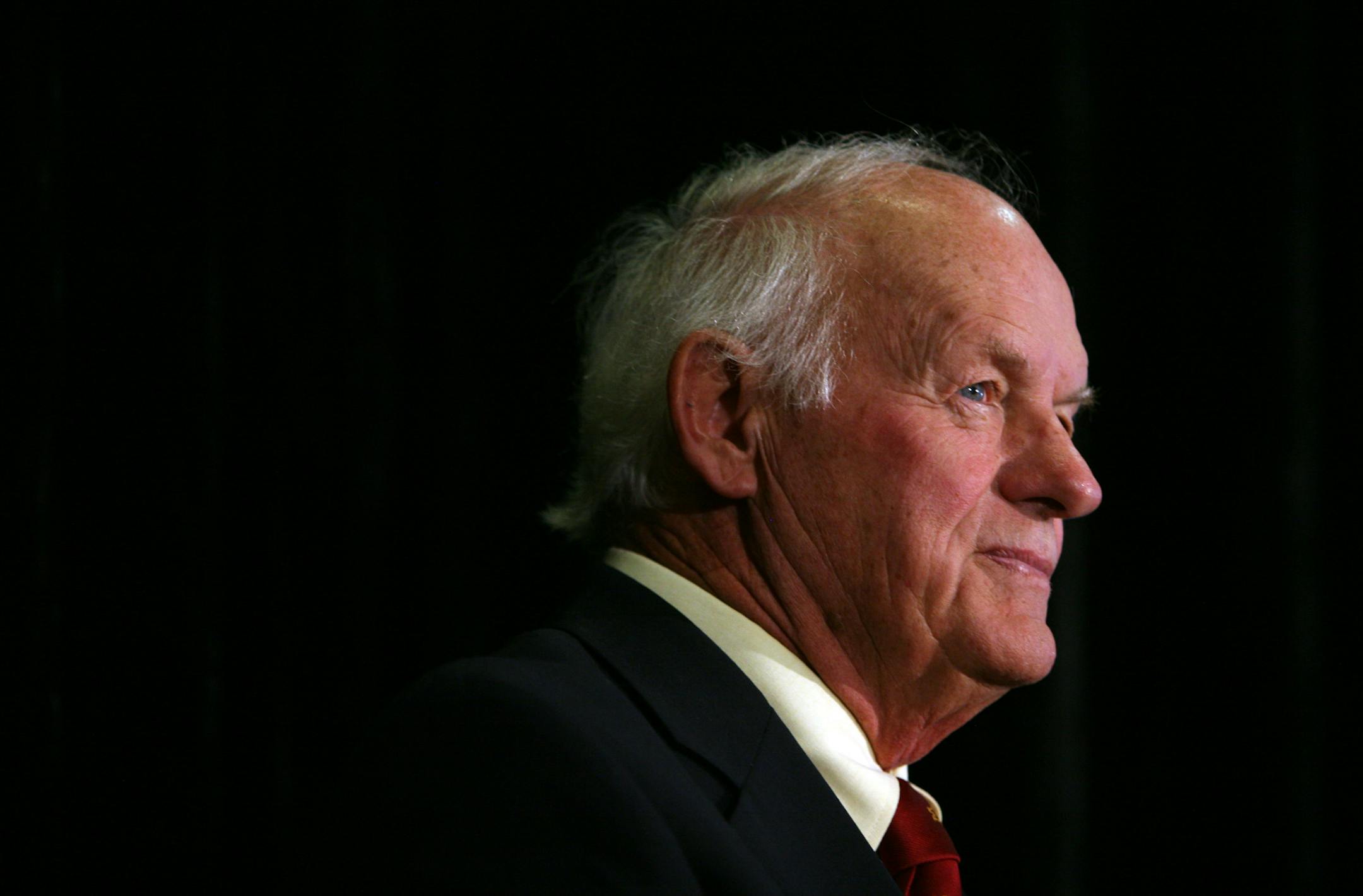
The Gophers have yet to develop their “whale,” a deep-pocketed donor who could bankroll the football program, but they had a chance. T. Denny Sanford, a billionaire businessman and Minnesota alum, pledged $35 million to help fund a Gophers football stadium in 2003. The deal fell apart because of issues over naming rights and payment terms, though Sanford still donated $6 million to the stadium drive.

T. Denny Sanford donated $6 million for the construction of the Gophers on-campus football stadium. (Harkness, Kyndell/The Minnesota Star Tribune)

In 2007, he donated $400 million to Sioux Valley Hospital and Health Systems, which renamed itself Sanford Health. Sanford Health called off a merger with Fairview Health Services and the University of Minnesota Hospital in April of 2013 because of concerns voiced by state and university officials.

Sanford later found other places for his donations. He gave $10 million to South Dakota State to help fund its football stadium, Dana J. Dykhouse Stadium, and $20 million to the University of South Dakota to build an indoor track and field facility.

Keep pushing to improve NIL donations

Derek Burns, left, and Rob Gag are the co-founders of the NIL collective Dinkytown Athletes. (Jerry Holt/The Minnesota Star Tribune)

Fleck famously warned in 2023 that the Gophers would become “a Triple-A ballclub for somebody else” without increased NIL donations. Through Dinkytown Athletes and other collectives, the Gophers have been able to retain most of their players, with a couple of glaring exceptions in running back Bucky Irving in 2022 and safety Koi Perich this year, both of whom took the money and ran to Oregon.

“We’ve been fortunate to see our support and membership grow year over year, every year,” Burns said.

Though he wouldn’t reveal specific financial figures, Burns believes the Gophers’ NIL donations would reside in the middle of the 18-team Big Ten.

Advertisement

“It’s hard to get good data from anybody because a lot of NIL figures aren’t disclosed, but I would be comfortable saying we’re in the middle, somewhere in the middle,” Burns said. “Beyond that, it would be speculative.”

Be efficient in the transfer portal

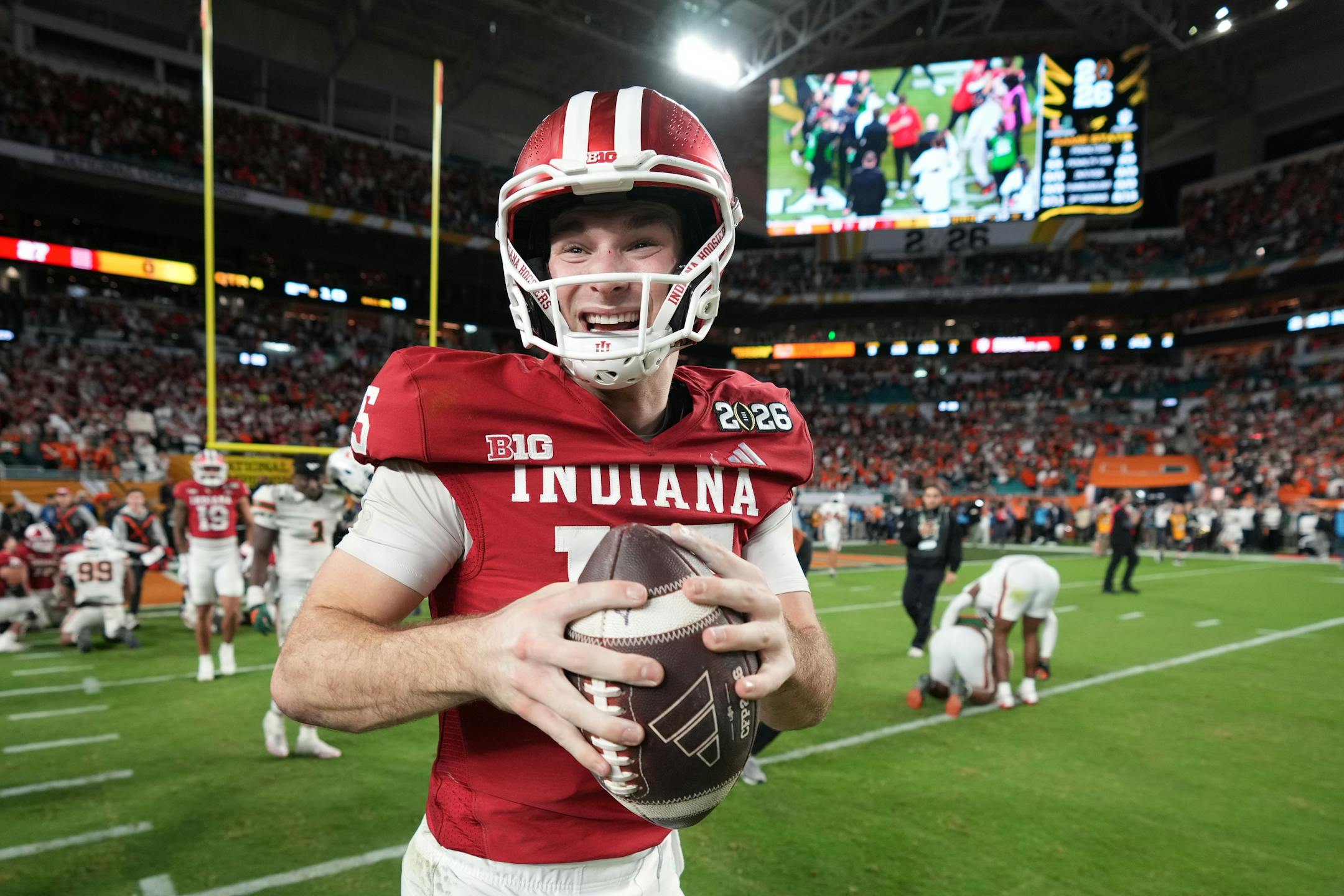
Fernando Mendoza won the Heisman Trophy after transferring from Cal to Indiana. (Rebecca Blackwell/The Associated Press)

To say Indiana has done a good job in the transfer portal would be an understatement. Just check out the Hoosiers’ past two quarterbacks.

Kurtis Rourke started for three seasons at Ohio University and transferred to Indiana to become the Hoosiers’ quarterback in 2024. He led Indiana to an 11-2 record and an appearance in the College Football Playoff.

With Rourke’s eligibility exhausted, Cignetti and his staff turned to the transfer portal again and landed Fernando Mendoza, who once was committed to Yale. He flipped to Cal and had a middling 9-10 record as a starter for the Golden Bears. Indiana plucked him out of the portal and developed him into a Heisman Trophy-winning national championship quarterback in 2025.

“You go back to [Cignetti’s] time at Elon and at James Madison, in five or six years in a row he’s had a quarterback who’s at least all-conference, if not better,” Osterman said, pointing to the quarterback development by Cignetti and offensive coordinator Mike Shanahan.

Mendoza’s NIL valuation was $2.6 million, according to Yahoo Sports, and the Hoosiers will have another transfer, former TCU QB Josh Hoover, as their 2026 starter. Hoover has an NIL valuation reportedly between $2.1 million and $2.3 million, according to recruiting-focused website On3.

For the Gophers, finding bargains in the portal, especially among the FCS ranks, has been essential to their recent success. Quarterback Max Brosmer (New Hampshire) was a standout in 2024 and now plays for the Vikings. Linebacker Jack Gibbens (Abilene Christian) starts for the New England Patriots. Defensive back Jack Henderson (Southeastern Louisiana) had a productive two years with the Gophers and is now with the Miami Dolphins.

Last year, the Gophers didn’t get the boost they needed from the transfer portal, particularly on the offensive line, and the results showed in an ineffective run game.

“Your hit rate on transfers and talent acquisition has to be high,” Burns said. “You can’t afford to miss in the portal or with any talent acquisition. And that’s something that you need to learn from quickly and adjust your strategy.”

Gain help from the administration

University of Minnesota Athletic Director Mark Coyle must keep investing in the football program if he hopes to replicate Indiana's success. (Alex Kormann/The Minnesota Star Tribune)

Over the past three decades, the University of Minnesota has invested in football infrastructure. The Gophers opened a new football stadium that cost roughly $288.5 million in 2009. Their Athletes Village, which cost approximately $166 million and includes a new indoor football facility, opened in January 2018.

There are new financial concerns in 2026, which come from the House v. NCAA settlement in which schools now share revenue with current and former student-athletes. For the 2025-26 season, that figure is $20.5 million for schools that are fully funding, which Minnesota will do. The amount of revenue sharing is expected to increase roughly 4% per year, growing to a projected $32.9 million in 2035.

Last June, Gophers athletic director Mark Coyle told the Minnesota Star Tribune that, “Minnesota is positioned in this new world in a really, really good spot,” when it comes to the new financial reality. Still, the athletic department projected a $8.75 million deficit between revenues and expenses in 2025-26.

The athletic department will cut costs in attempt to trim the deficit. Other departments in the Big Ten are seeking or receiving outside help. The University of Wisconsin is asking for $14.6 million annually from the state legislature to help with revenue sharing. Indiana’s athletic department took out $56 million in loans from the university.

“This is an ongoing discussion that is going to happen on every athletic department and university within the Big Ten in the SEC,” Burns said. “You have revenue being shared with the athletes coming out of the court settlement. So, you have a gap. And the question is, what do you do to cover that gap? And so in many cases, the institutions have stepped up to close that gap or provide mechanisms of support to be able to help cover that. That’s not happened to my knowledge yet at Minnesota, but it’s part of the conversation going forward.”

Coyle gave Fleck an amended contract, approved by the Board of Regents on Feb. 12, that increases his compensation to $7.9 million in 2026, which will rank 10th among Big Ten coaches. Cignetti, by comparison, recently signed a contract that will pay him an average of $13.2 million annually through 2033.

The Gophers assistant coaching salary poll in 2024, according to USA Today, was roughly $4.6 million, which ranked 15th among the 15 Big Ten teams required to report figures (Northwestern, Penn State and USC are not required to report figures). That Gophers’ figure increased to $5.5 million in 2025.

Hoosiers defensive coordinator Bryant Haines, by contrast, received a three-year contract extension in December that will pay him an average of $3.1 million.

Win your one-score games

The Gophers had some close calls in their magical 2019 season, including a 35-32 win over Georgia Southern. (Aaron Lavinsky/The Minnesota Star Tribune)

The Gophers’ breakout 2019 season nearly didn’t happen. They needed to rally from fourth-quarter deficits to beat South Dakota State 28-21, Fresno State 38-25 in overtime and Georgia Southern 35-32 on a winning TD with 13 seconds left. Minnesota finished 6-1 in one-score games that year.

For Indiana to complete a 16-0 season only two years after going 3-9, much had to go the Hoosiers’ way. In 2025, they played four one-score games, beating Iowa 20-15, Penn State 27-24, Ohio State 13-10 in the Big Ten title game and Miami (Fla.) 27-21 in the College Football Playoff final. That all added up to the improbable national championship that teams across the country hope to repeat.

For Osterman, it all comes back to Cignetti and how he transformed Indiana into a champion. “That is the secret sauce in all of this,” Osterman said.

about the writer

about the writer

Randy Johnson

College football reporter

Randy Johnson covers University of Minnesota football and college football for the Minnesota Star Tribune, along with Gophers hockey and the Wild.

See Moreicon

More from Gophers

See More
card image
Lynne Sladky/The Associated Press

A lot of things would have to go right for the Gophers to challenge for a College Football Playoff title. Here is a list of some of the key factors.

card image
card image
Advertisement