Following ‘Phantom’: How one musical became a reason to travel

The enduring production shows where the arts can take us, from “Masquerade” in New York to Paris’ Palais Garnier to the current U.S. tour.

The Minnesota Star Tribune
February 17, 2026 at 12:00PM
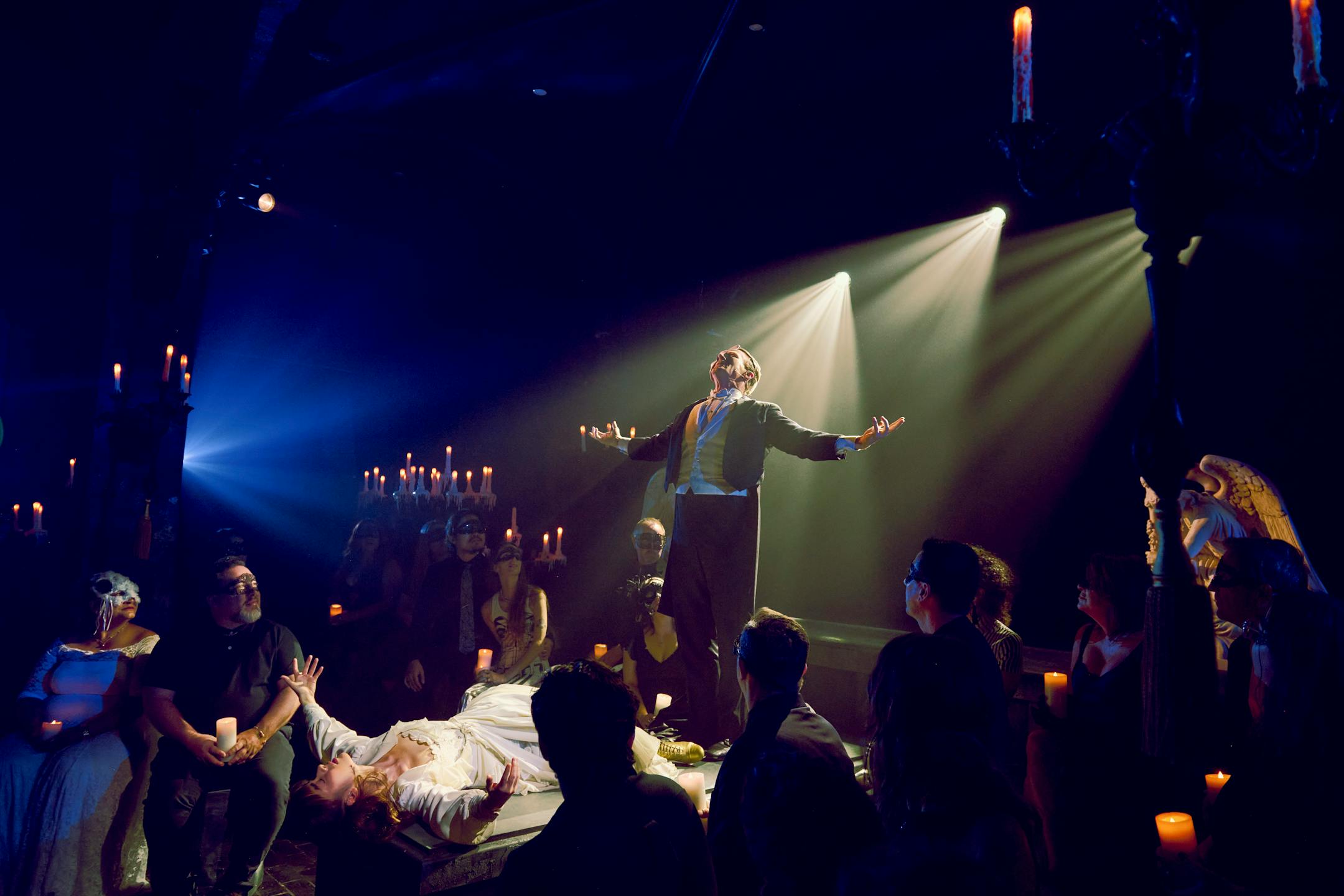
Cast and audience in the intimate play “Masquerade” in Midtown Manhattan. Even more so than the original, “Masquerade” makes this the Phantom’s show, one in which patrons are guided through his “darkest dreams.” (GEORGE ETHEREDGE/The New York Times)

The tour guide at the Palais Garnier in Paris spoke dramatically of the opera house’s marvels: Marc Chagall’s painted ceilings, the hidden signatures left by architect Charles Garnier, a stage so high it could hold the Arc de Triomphe.

But all I wanted to know was where the Opera Ghost kept his boat.

In the auditorium, she pointed to Box No. 5, which, according to the story, must always be kept empty because it belongs to the Phantom of the Opera. Our guide mentioned that “something” had happened there once. “A myth,” she said, quickly moving on.

When I asked whether anyone could see the underground lake upon which the famed opera house was built, and where the ghost was rumored to reside, the answer was stern: “Oh no. No, no, no.”

That visit to the opera house — the real one that inspired the story — was the middle stop on my whirlwind month of Phantom sightings. I had just seen “Masquerade,” a new immersive reimagining of “The Phantom of the Opera,” in New York City. Weeks later, the newly launched national tour of “Phantom” brought the tale closer to home, to the Orpheum Theatre in Minneapolis.

I first came to “Phantom” as a teenager when I saw the show on a class trip to New York and became obsessed with the cast recording. It was operatic and thrilling, and its earworm of a score burrowed deep in my brain.

But after one too many replays on my Discman, I couldn’t listen to it at all. The melodrama started to feel frozen in the 1980s — cringey, a little too much synthesizer.

Last fall, I found my way back to it.
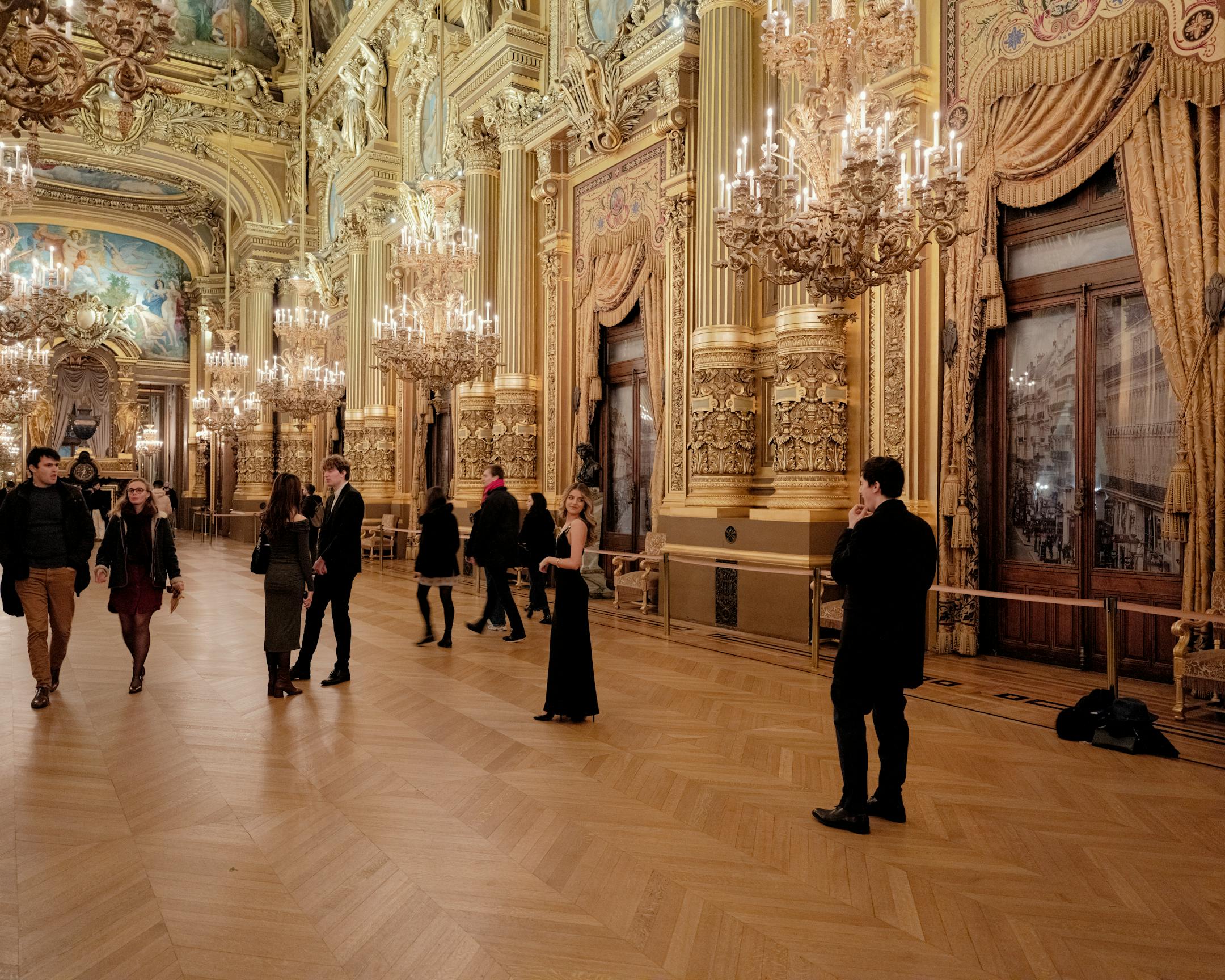
The golden grand foyer, open to anyone with a ticket at the Palais Garnier opera house in Paris. (ELLIOTT VERDIER/The New York Times)

Immersive experiences

On a trip to New York to catch some new theater, I let my curiosity justify a $200 ticket to “Masquerade.” The Andrew Lloyd Webber–approved production, directed by Diane Paulus, is staged inside a former art supply store in Midtown Manhattan. Audience members are handed masks at the door and a glass of sparkling wine at the start, then guided through a precise sequence of rooms.

It feels as if you’re walking in on something that’s already underway, but it isn’t a free-for-all; cast members tell you where to stand, where to walk, when to sit and where to look. The experience is tightly orchestrated, even as it gives the illusion that the story is unfolding around you.

At one point, the Phantom and Christine, the ingenue and the object of his obsession, glide toward you in a gondola, crossing an underground lake. When the boat appeared, I giggled — an uncomfortable little laugh at how absurdly iconic the moment is, how close to parody it’s become after all these years. And then, I felt myself choke up. I was choosing to believe.

After “Masquerade,” my visit to the Palais Garnier gave real-life context to the fantasy of the musical. The tour of this 150-year-old Paris landmark begins on the ground floor, in dim corridors that once served as VIP entrances. It feels claustrophobic and almost subterranean, easy to imagine the low arches once lit only by lanterns.

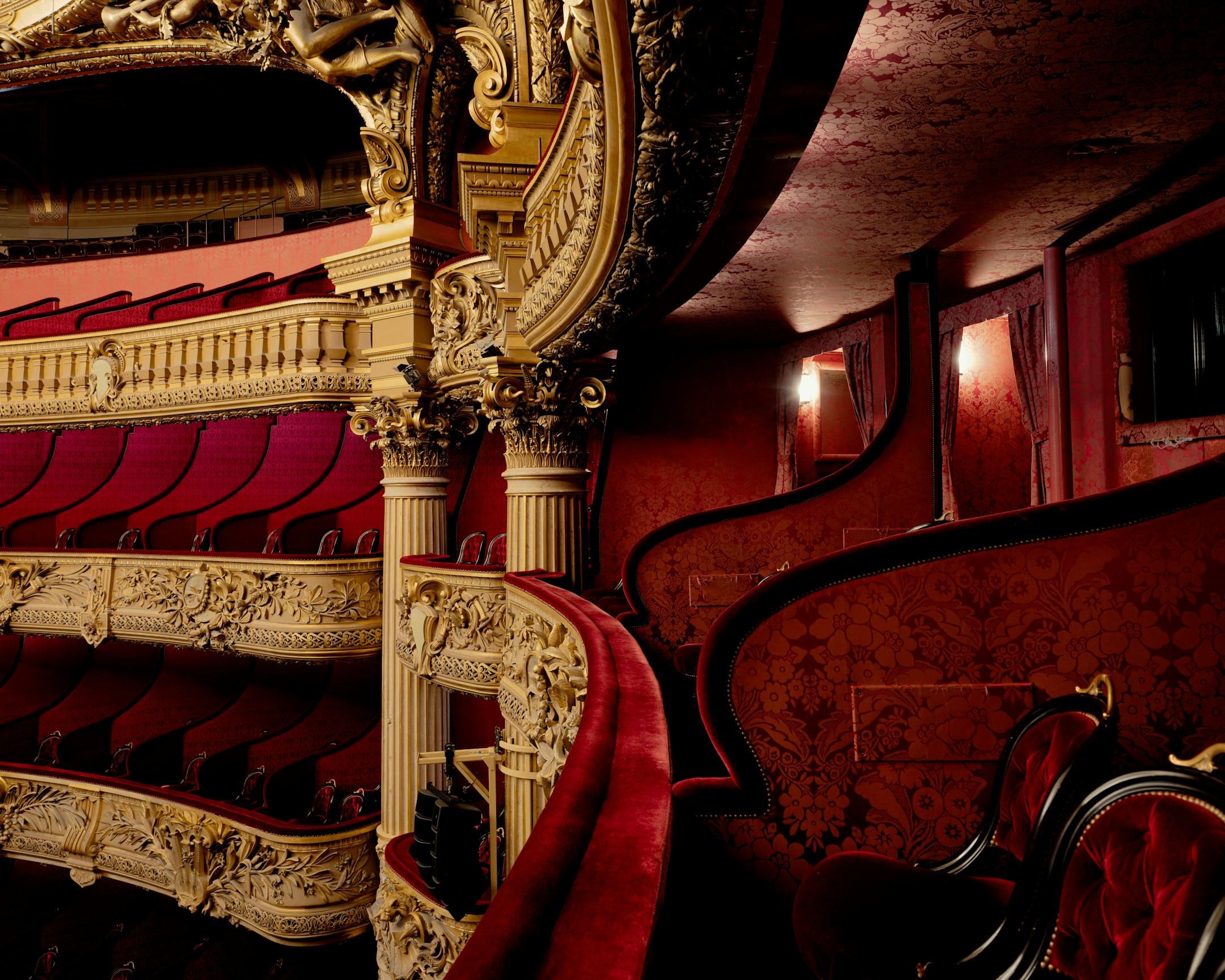
As you ascend the grand staircase, the opera house reveals itself in full. There is marble and gold everywhere, balconies jutting out so patrons could see and be seen, neat rows of doors to exclusive box seats. The plush red velvet auditorium feels impossibly ornate, crowned by the glittering chandelier. Grand doesn’t begin to cover it.

The tour guide may have deflected my Phantom questions, but the opera house plays up just enough of the mystery. A brass plaque on the door to Box 5 reads “Loge du Fantôme de l’Opéra.” And a room in the gift shop is devoted to the legend. There are white masks, eerie dolls and blue-bound editions of Gaston Leroux’s stories, first published in 1909, about a disfigured musical genius, the seed that grew into the blockbuster musical.

Seats on the balconies at the Palais Garnier. (ELLIOTT VERDIER/The New York Times)

Embracing reinvention

“The Phantom of the Opera,” which turns 40 in 2026, has had extraordinary reach. More than 160 million people have seen it in over 200 cities worldwide, making it one of the most widely experienced live performances in history. It’s the kind of show people return to again and again, often at very different moments in their lives.

“Phantom” continues to endure as Lloyd Webber has seemingly embraced reinvention. In recent years, the composer’s works have been produced in striking new forms, with a stripped-down, Tony-winning revival of “Sunset Boulevard,” a ballroom-infused “Cats” heading to Broadway in March, and “Masquerade,” which pulls “Phantom” apart and rebuilds it as a walkthrough world.

The “Phantom” national tour offers another new look. When the show arrived at the Orpheum last November, it came refreshed and redesigned but glitzy as ever, with the chandelier swinging above and the orchestra swelling below. The national tour is now in St. Louis, with a stop in Kansas City, Mo., this December.

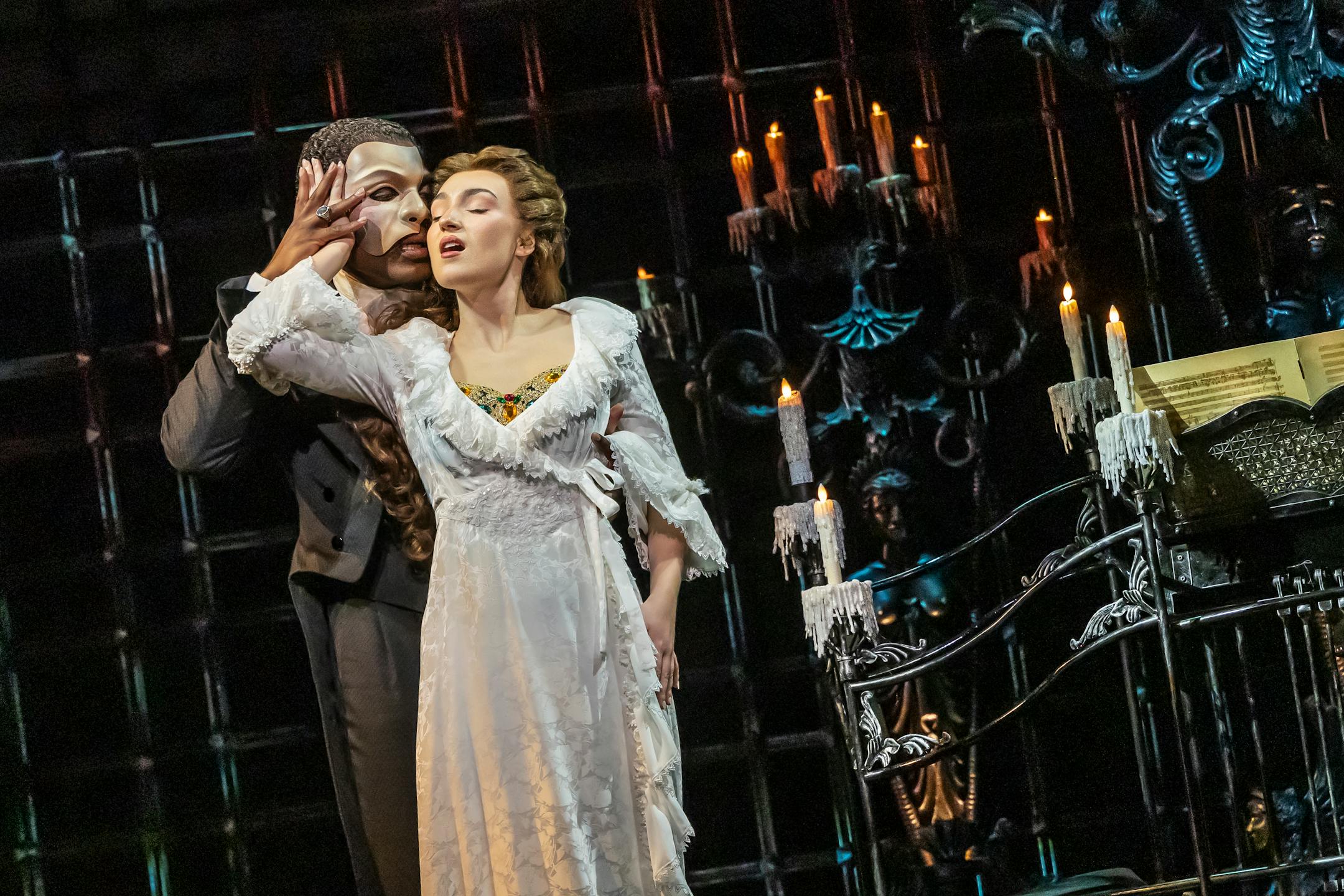
Isaiah Bailey is The Phantom and Jordan Lee Gilbert as Christine Daaé in the 2025 tour of "The Phantom of the Opera." (Matthew Murphy)

I brought my 7-year-old son, newly taken with the show’s spookiness, and my 77-year-old father, and saw how this one show stretched so seamlessly across generations.

The boat appeared again — this time framed by the Orpheum’s vast stage rather than a candlelit basement. I giggled. And once more, I began to tear up.

Midway through the performance, the audience was treated to a peek behind the mask of live theater. Right at the climax, just after the Phantom’s most villainous act, Christine and the Phantom descended once more to the underground lake. Their gondola sailed offstage — and then everything stopped.

The music cut. The lights came up. There was an announcement about technical difficulties. For one quiet moment, we weren’t sure whether the Phantom was up to something even more sinister than usual.

The show resumed, of course. No real opera ghost here. But this pause, I thought, is why people keep coming back — and is also, perhaps, how murmurs of an opera ghost first spread in those grand Parisian halls. In the theater, anything can happen.

about the writer

about the writer

Sharyn Jackson

Reporter

Sharyn Jackson is a features reporter covering the Twin Cities' vibrant food and drink scene.

See Moreicon

More from Travel

See More
card image
GEORGE ETHEREDGE/The New York Times

The enduring production shows where the arts can take us, from “Masquerade” in New York to Paris’ Palais Garnier to the current U.S. tour.

card image
card image