Advertisement

Fairview bets big on robotic specialty pharmacy

Opening of $52 million distribution center in Shoreview gives Fairview chance to seize on growing pharmacy, mail-order marketplace and compete with national chains.

The Minnesota Star Tribune
February 24, 2026 at 6:14PM
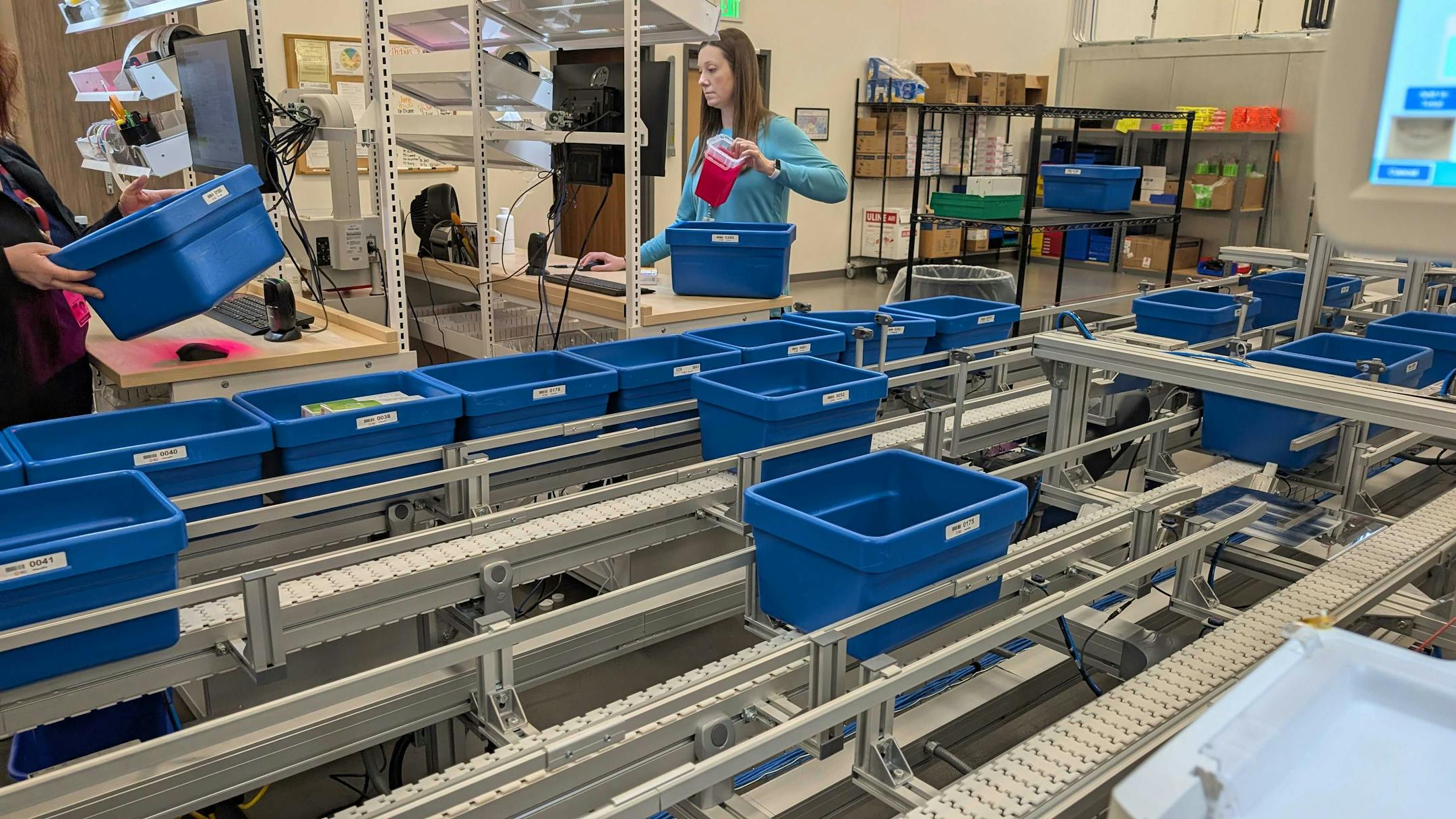
Blue bins are bar-coded to travel around Fairview Health Services' new prescription distribution facility and pick up medications from pharmacists or robotic dispensers for mail-order delivery to patients. (Jeremy Olson/The Minnesota Star Tribune)
Advertisement

Blue bin 0175 whirred along a conveyer belt in Fairview Health Services’ new automated pharmacy in Shoreview with a big job: pick up five medications that treat anxiety, migraine headaches and obesity and deliver them to a Minnesotan awaiting prescription refills.

The footlong plastic tote was one of dozens circulating the warehouse, collecting prescriptions from human pharmacists and robot dispensers. Its short journey showed why Fairview bet big on the facility. Fairview’s $52 million investment is a big bet on the growing U.S. market for packaging and selling mail-order and specialty medications.

The health system is competing with national pharmacy chains and serving an aging population that has an increasing need for specialty medications that treat cancer and other conditions. The investment also diversifies revenues for a health system whose hospitals and clinics have experienced losses in recent years and growing financial pressures.

“The demand for pharmacy services continues to grow at an unprecedented rate, and we don’t see any signs of that slowing,” said John Pastor, president of Fairview’s pharmacy services division.

Known largely by its joint operation of hospitals and clinics with the University of Minnesota — a relationship that almost fractured until the two sides brokered a deal last month — Fairview also operates one of the largest pharmacies in the U.S. that is run by a health system.

The pharmacy division largely serves Fairview patients, but also sends medications to patients nationwide whose hospitals and clinics contract with the health system for specialty drugs. The closure of retail pharmacies has created “pharmacy deserts” and a need for mail-order options, especially in rural areas, Pastor said.

Fairview Pharmacy is the health system’s fastest-growing division right now, with revenue increasing 16% in the quarter that ended in September. And that was before the new robotic dispensing facility started cranking out prescription orders in January.

The “outsized” reliance on its pharmacy business creates risks for Fairview, according to a Moody’s credit rating analysis published last spring. Manufacturers could raise the price of specialty medications at the same time as public and private payers lower how much they reimburse for them. And Fairview had to spend more to make more, sacrificing cash on hand to invest in its growing pharmacy business, the analysis stated.

Advertisement

The newly named Seven Lakes facility, a sprawling warehouse just off Interstate 694, is designed to address those challenges by increasing the speed and accuracy of prescription orders, Pastor said.

The building houses a pharmacy call center as well as an infusion center for patients needing IV medications to treat cancer and other disorders. It also has ultraclean labs where technicians mix up IV solutions that are sent to patients to administer at home.

Fairview also relocated its compounding pharmacy, which provides custom-made prescription eyedrops and other medications such as GLP-1 weight-loss drugs when brand-name versions aren’t available or have been in short supply.

The center has unused space for services to grow. Fairview provides medications for home infusions to about 3,000 patients each day, and that number is growing 10% to 15% per year, said Tim Affeldt, Fairview’s vice president of specialty and infusion operations.

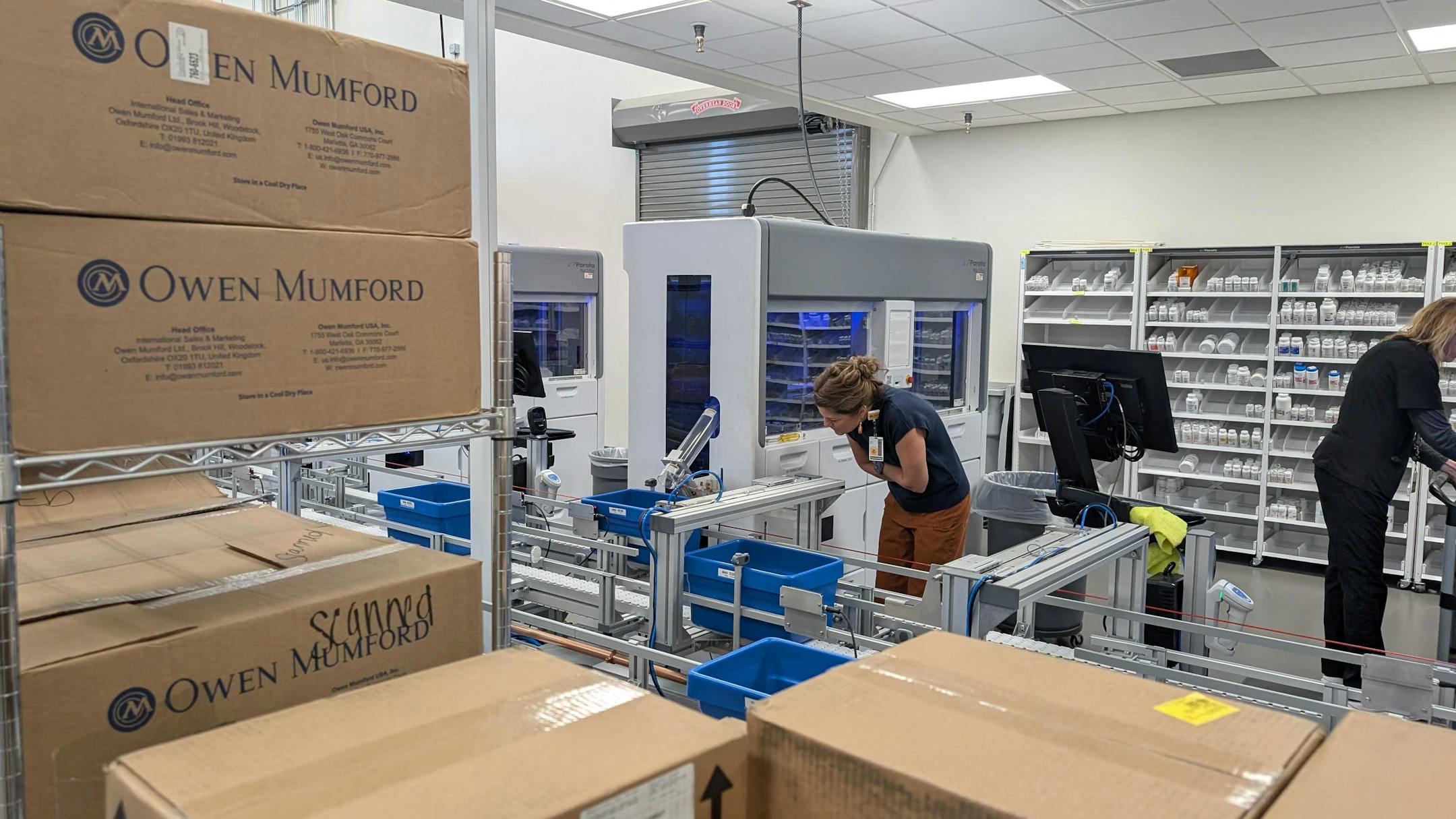
The mail-order dispensing center sits in the middle of it all, featuring an E-shaped conveyor for bins to circulate and pick up prescription orders that have been matched to their bar codes. About 30% of Fairview’s mail-order prescriptions needed filling by pharmacists and technicians at the old site, but now the robotic system handles as much as 70%.

Tori Grier, site manager for Fairview Health's specialty and mail-service pharmacy, observes one of the robotic prescription dispensers at work in the new Seven Lakes facility in Shoreview. (Jeremy Olston/The Minnesota Star Tribune)

Bin 0175 rolled by a bar-code scanner and was rerouted off the main conveyor to its first stop: a robotic dispenser loaded with the most common prescription pills. An arm inside the dispenser retrieved headache pills from a bulk container, which were then counted and dropped into a bottle that was labeled and spit out into the bin.

Advertisement

The bin received a second bottle before it was diverted back to the main conveyor and routed to the other side of the building. A pharmacist then filled an order for a less common anti-anxiety medication and checked it with the prescription information on her computer before placing it in the bin.

The new facility supports Fairview’s nonprofit mission to provide low-cost and accessible care, Affeldt said. The pharmacy prepares and delivers antibiotics and other short-term IV solutions that many large pharmacy chains refuse because they aren’t as lucrative as the latest cancer drugs and immunotherapies, he said. “We play a huge role in filling that gap.”

Affeldt said he is particularly proud of the call center, where pharmacists and technicians review orders for accuracy and any drug combinations that could be hazardous. Screeners also check to see if patients are eligible for rebates or discounts, and have saved them $30 million in recent years, he said.

“Patients literally would have had to put $30 million more on their credit cards” without those checks, he said.

Whether the mounting pile of drugs in bin 0175 qualified for discounts is unclear. The Minnesota Star Tribune followed it around to see how the facility worked on condition that it not publish revealing details about the prescriptions or their recipient.

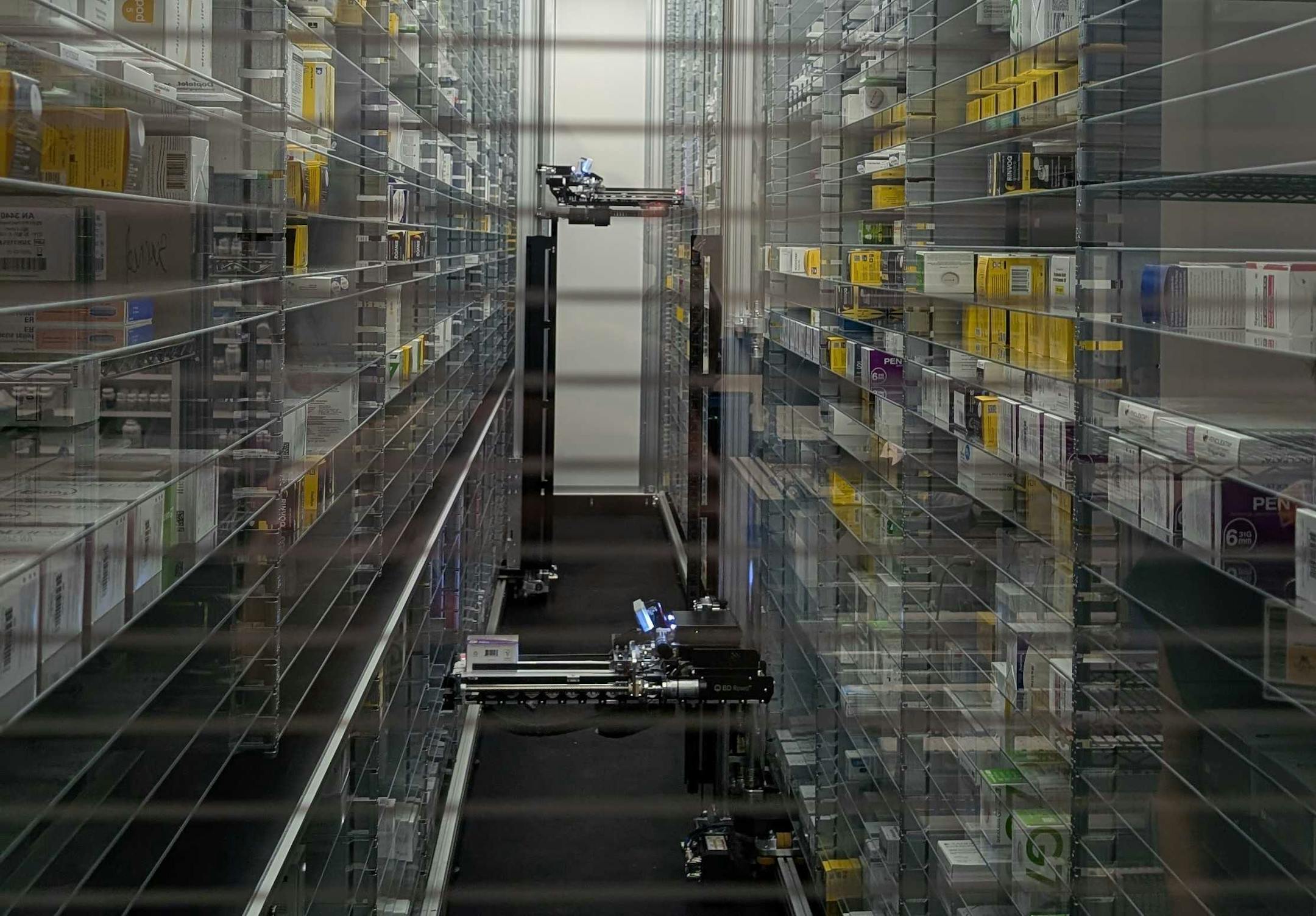
Robotic arms dart around and pick up packages of prefilled medications and prescription supplies at Fairview Health's new specialty and mail-order pharmacy facility in Shoreview. (Jeremy Olson/The Minnesota Star Tribune)

Robotic dispensing is nothing new. Pharmacies have been using machines for decades to cut down on human errors when prescription labels are misread or pills are miscounted. But the Fairview facility is cutting-edge, attaching the conveyor directly to a robotic dispenser of medications that must be kept in cold storage, said Tori Grier, site manager for the specialty and mail-order pharmacy.

Advertisement

A traffic backup of blue bins formed outside the cold storage dispenser, so the system automatically put bin 0175 in a holding pattern. It wandered around and around the conveyer until the backlog cleared. The bin was diverted for a pickup of syringes containing a GLP-1 weight-loss medication that must be kept cold to remain effective.

“The system is smart enough to know the order that it should fill them,” Grier said. Medications in cold storage are usually filled last, for example, so the bins can deliver them to the shipping department before they warm up.

Increasing usage of GLP-1 weight-loss medications has fueled growth of Fairview’s pharmacy division. Its compounding pharmacy filled numerous prescriptions two years ago during a shortage of brand-name versions. Now its mail-order center is cranking out injectable and pill forms of the medication.

Minutes after receiving its order, bin 0175 was full. A pharmacist checked its bottles before they were sealed in a package and placed on a separate conveyer bound for the facility’s delivery room. The package was mailed out the next day.

Bin 0175 went back into circulation for its next order. The facility cranks out 50,000 specialty and mail-order prescriptions each month, or about 1,600 per day.

about the writer

about the writer

Jeremy Olson

Reporter

Jeremy Olson is a Pulitzer Prize-winning reporter covering health care for the Star Tribune. Trained in investigative and computer-assisted reporting, Olson has covered politics, social services, and family issues.

See Moreicon

More from Business

See More
card image
Alex Kormann/The Minnesota Star Tribune

The Eden Prairie-based manufacturer says the company-wide software problems led to a quarterly loss and a 11.3% drop in sales.

card image
card image
Advertisement