
Faculty, students push University of Minnesota to denounce ICE and killing of alumnus Alex Pretti

It illustrates the complex balancing act for colleges and universities in responding to ICE actions.

The Minnesota Star Tribune
February 5, 2026 at 12:00PM
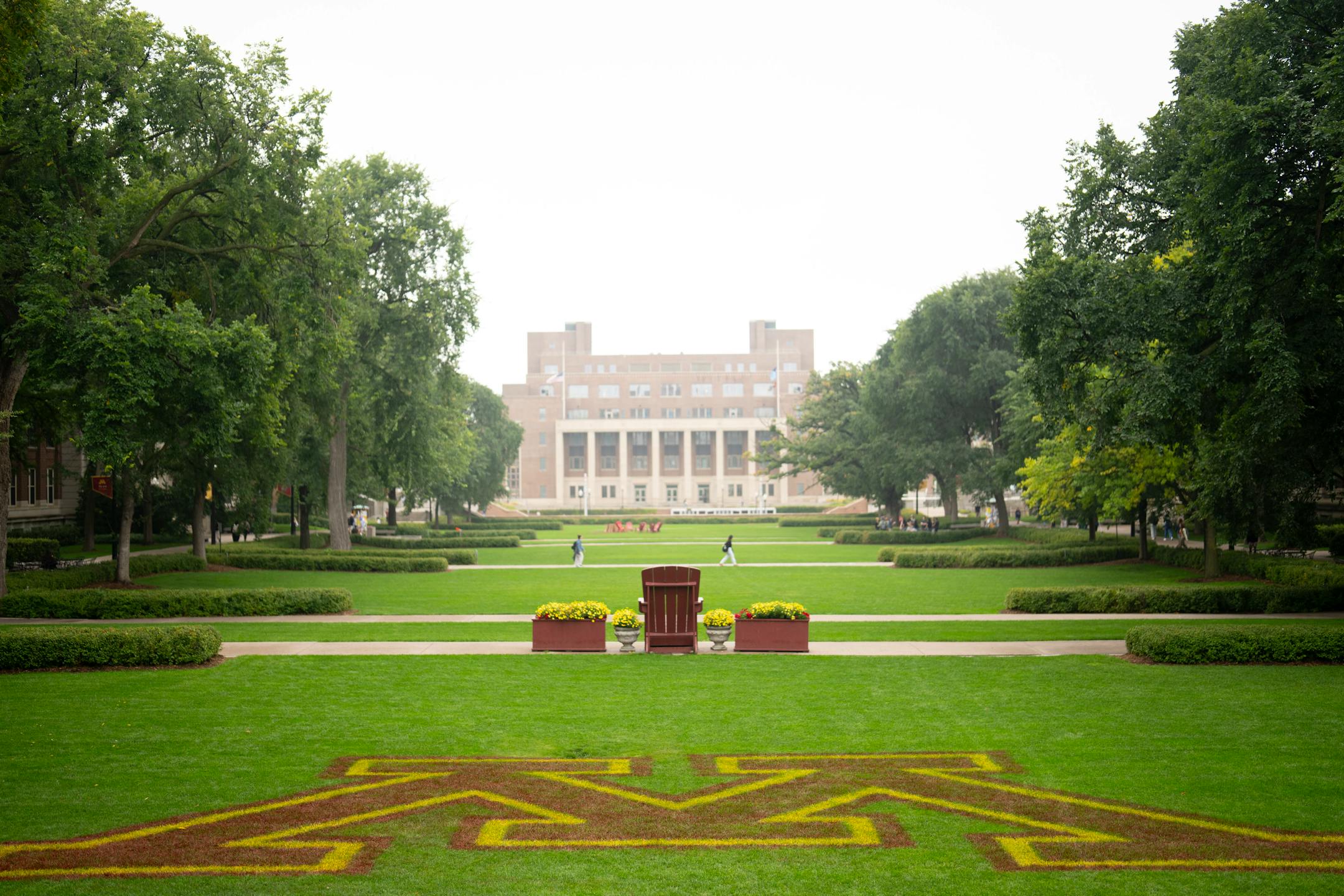
Alex Pretti graduated from the University of Minnesota, shown in September 2025, in 2011. (Alex Kormann/The Minnesota Star Tribune)

When Minneapolis’ immigrant communities were targeted by ICE in December, University of Minnesota President Rebecca Cunningham’s message spoke of students feeling “vulnerable and afraid” but didn’t mention who was affected or why.

After Renee Good was shot, Cunningham sent an email about “anger, grief and sadness,” and said students could participate in a moment of silence. Some students criticized her for not sharing anything about keeping communities safe or offering support.

Then, when Alex Pretti, a 2011 U graduate, was killed by federal agents, a U Facebook post called it a “tragic loss.” At an online event days later, Cunningham spoke of violence and terror, but behind the scenes, administrators said a faculty member and musician couldn’t play violin at the gathering because her outfit denounced ICE.

As Minneapolis lingers in the national spotlight over ICE activity, protests and the two high-profile killings, the U, the state’s public flagship university, is facing scrutiny for its public communications. Some critics say the U’s statements are too vague and don’t go far enough in condemning ICE or calling for justice.

The tension highlights the challenges that colleges and universities across Minnesota are facing in responding publicly to unprecedented events. It’s especially thorny as universities face the Trump administration’s cuts to federal research funding and attacks on diversity initiatives.

“The university has the opportunity to be a moral leader, and they’re not doing it,” said V.V. Ganeshananthan, a U English professor. “I really just have not yet seen the clear and powerful messaging that would serve the moment.”

Emails have been “vague and not very supportive,” said U sophomore Siri Wilkes. “We all know what they’re talking about, but they never explicitly say anything.”

Since Operation Metro Surge began, universities have been sharing information about safety, immigration policies, mental health and memorial vigils with their campuses. But how much to share, what to include and how far the messages wade into politics vary.

Besides stronger statements, U faculty in the local chapter of the American Association of University Professors and the graduate student union are pushing the U to do more, including barring immigration officers from entering U buildings and property and not complying with federal information requests.

Brit Kirwan, the former president of Ohio State University, said he believes it is “highly appropriate” for a university president to speak out when issues directly affect the community. Condemning ICE’s killing of Minnesotans and calling for an independent investigation and ICE’s de-escalation would all make sense, but administrators face a tough climate, he said.

“It’s just an incredibly difficult balancing act at this moment in higher education because of what I think are the highly inappropriate and vindictive actions by the [Trump] administration,” he said, citing cuts to research funding.

U faces criticism

U spokesperson Briana Reenshuler said that the U’s “priority is the safety and well-being of our students, faculty, staff and visitors” and that the U aims to be a supportive place where people can express a range of emotions and perspectives.

The U and Cunningham have communicated often through social media, emails and events, with messages emphasizing staying calm and connecting with others while reiterating the U’s values. The U has provided information on immigration policies, mental health resources and offered remote learning for students who feel unsafe coming to class.

Cal Mergendahl, a College of Science and Engineering doctoral student, said there was “near radio silence” from the U for 48 hours after Good died. When an email arrived about a moment of silence, it sounded like it was from human resources, she said.

Freshman Presley Conrad said she had no problem with the U’s communication but wanted more of it, including details on what happened to the 67 people arrested after protesting ICE agents reportedly staying at the Graduate Hotel by campus.

Others on social media have called the U’s statements about Pretti’s death too liberal and defended ICE.

Several people said the U and its administrators are on the right track.

Rick Hess, of the American Enterprise Institute, a conservative think tank, said for years college leaders were “shouting political views from the roof,” which made it harder for opposing perspectives to be heard on campus. Now they’re seeing backlash to that approach.

“When the college president says, ‘ICE is evil,’ it makes it harder to conduct research or foster robust debate about the appropriate role of ICE or immigration enforcement,” said Hess.

Regent James Farnsworth said he was “comfortable with the approach our administration has taken so far” in its messaging.

Individual schools and institutes at the U have also sent out their own communications. An email signed by 20 professors from the U’s Human Rights Program condemned Pretti’s death, racial profiling by federal agents, community members’ arrests and the treatment they receive in custody.

Other colleges respond to ICE surge

Some leaders of other Twin Cities colleges have been more outspoken about the ICE surge when communicating with their campus communities.

A note from Macalester College President Suzanne Rivera Jan. 13 shared how “know your rights” cards were distributed on campus and a van picked up returning students from the airport. In a second message, she stated her “profound anguish” at the violence from federal agents and assured students that their First Amendment rights would be respected if they participated in a strike.

At Minneapolis College, where Pretti graduated from a nursing program, President Sharon Pierce said in an email that officials felt “the weight of this violence” and noted the “sorrow, anger and exhaustion that accompany seeing our neighbors treated as targets.”

At Augsburg University, President Paul Pribbenow wrote a message acknowledging the impact of the ICE surge. Pribbenow, who previously condemned a student’s detainment, ended by sharing the school’s commitment to human dignity, academic freedom and justice.

In an interview, Pribbenow noted that Augsburg is about 80% students of color and sits in the Cedar-Riverside neighborhood, home to a large Somali community. He said he has to balance the desire to share details about Augsburg’s response with ensuring that students there don’t become more of a target.

Conflict over U ‘community gathering’

A recent “community gathering” at the U, held two days after Pretti’s death, demonstrated the varying perspectives of administrators and some faculty members about how to respond.

Cunningham called recent events “deeply troubling” and noted that the community has seen its neighbors die. The level of violence is “terrifying,” she said.

Kate Derickson, a geography professor, said the event’s speakers didn’t condemn Pretti’s killing, urge a drawdown of ICE agents or defend him from some of federal authorities’ accusations.

“It seems our university leaders cannot even say that it is wrong to murder a former student in broad daylight ... because some people might disagree,” she said.

At the event, some faculty members were upset about how Stephanie Arado, a U violin professor, was treated after she wore a black tunic with “The Evil Must End Now” on the front and “ICE Out” on the back. The music school’s director had asked her to perform, Arado said, and she wasn’t given a dress code.

A U administrator told Arado she couldn’t wear the outfit if she wanted to play.

“I had a voice, a voice that I wanted to share,” she said. “It was heartbreaking to me and made me really angry.”

Then U police officers told Arado that she had to leave Northrop auditorium but didn’t say why. They said she had to wait for another musician in the parking ramp.

Jane Kirtley, a media ethics professor, said the U’s response “sounds like an overreaction, to put it mildly.” But officials had the right to restrict who could perform since it was their event.

Police may have violated Arado’s rights by ejecting her from Northrop, Kirtley said, if they made her leave as retaliation for her outfit. That’s viewpoint discrimination, which is generally a First Amendment violation, she said.

In a statement, U officials said the event was “intended to be a solemn, peaceful space for community unity, not a venue for community activism. Professor Arado’s attire did not align with the non-political spirit of the program and she was given the choice to change or forgo her performance.”

Will Jones, a history professor, said many people had hoped the event would provide a space to express the outrage they felt about Pretti’s death.

“The university chose to ignore those pleas and to impose restrictions on the way community members could express their grief,” he said.

about the writer

about the writer

Erin Adler

Reporter

Erin Adler is a news reporter covering higher education in Minnesota. She previously covered south metro suburban news, K-12 education and Carver County for the Minnesota Star Tribune.

See Moreicon

More from News & Politics

See More
card image
Elizabeth Flores/The Minnesota Star Tribune

Across Minnesota, thousands of immigrants and refugees are staying home from work, church and school to avoid ICE agents.

card image
card image