
Energy grants canceled by Trump administration could push up power bills

President Trump’s Energy Department said the two multimillion-dollar grants would lead to more expensive, less reliable energy. But advocates see it leading to higher rates for customers.

The Minnesota Star Tribune
October 8, 2025 at 11:00AM
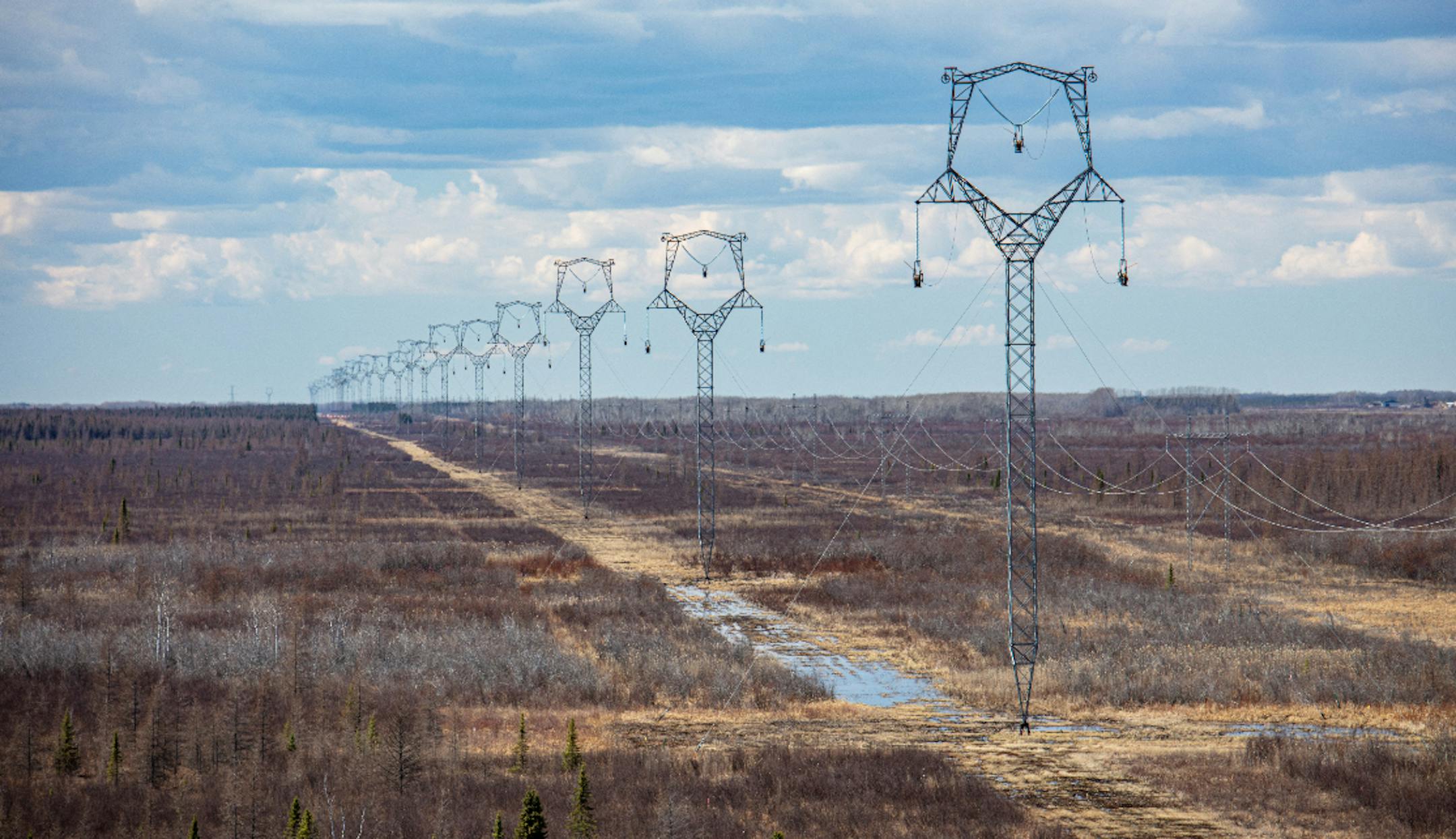
Photo credit A stretch of the 500-kilovolt Great Northern Transmission Line in northern Minnesota.
The Trump administration cut grants that were intended for upgrades to transmission lines in Minnesota. Those costs will now be paid for by ratepayers, according to Minnesota officials. (Provided by Minnesota Power)

Minnesota officials and energy industry professionals are warning that the Trump administration’s recent funding cuts to state transmission line projects will likely result in ratepayers picking up the tab.

Last week, President Trump’s Energy Department rescinded $7.5 billion in grants for U.S. energy projects, including more than half a billion dollars going to Minnesota. In a statement, the agency said the “awards terminated failed to meet the standards required to justify continued taxpayer investment and would have led to less reliable, more expensive energy.”

Just two years prior, President Biden’s Energy Department celebrated those same projects, saying they would “ensure America’s power grid can provide reliable, affordable power.”

The shifting messages — in some cases, claiming the exact opposite outcomes — is baffling state officials and energy industry professionals, as projects once hailed as a benefit to the American people are now being targeted by the same agencies as a waste of taxpayer money.

Industry representatives said the canceled grants, which White House Office of Management and Budget director Russell Vought described as “Green New Scam funding,” is making it difficult for developers and utilities to follow through on approved projects, many of which are under construction.

“Businesses like certainty, and all these changes at the 11th hour are very difficult. And the bottom line is that the average citizen — you and I — are going to pay for this,” said Beth Soholt, executive director of the Clean Grid Alliance, a trade association representing clean energy developers.

That’s because Minnesota’s transmission projects, which are part of a larger initiative to add transmission lines across seven Midwestern states, will have to be built anyway, Soholt said. The canceled grants include a $464 million grant awarded to the Minnesota Department of Commerce and a $50 million grant awarded to Duluth-based Minnesota Power.

“Hundreds, if not thousands, of working men and women’s jobs are on hold, if not canceled, and that in itself was transmission money that Minnesota ratepayers would have benefited from,” said state Sen. Nick Frentz, a Democrat representing Mankato who chairs the Senate Energy, Utilities, Environment, and Climate Committee. “We’re gonna have to build that transmission some other way, right? Who do you think’s gonna pay for it? The ratepayers in those utility districts.”

The Commerce Department and Duluth utility now have 30 days to appeal the Trump administration’s decision. In a statement released last week, Minnesota Power said it looked forward to explaining to federal officials why upgrading its 48-year-old transmission line was important. It also noted that the $50 million federal grant would help keep “project costs for our customers as low as possible.”

The issue isn’t Minnesota-specific, Soholt said. New transmission lines are needed all across the country to meet growing energy demand and allow new power plants to come online, she said.

Currently, thousands of solar arrays, wind farms, battery storage systems and gas-fired power plants are waiting to connect to the nation’s electrical grids, according to various reports from regional grid operators.

A December report by the Midwest’s regional grid operator — known as the Midcontinent Independent System Operator, or MISO — identified more than 1,100 completed projects in Midwestern states that were waiting to connect to the grid. In Minnesota, the report found, projects are delayed an average of 831 days before being brought online.

“We need the ability for new generation to connect to the grid more easily,” said Mike Schowalter, who leads the regional grid work for the clean energy advocacy nonprofit Fresh Energy. “One of the hardest problems we’re having right now is that the grid really is constrained.”

Energy experts say that adding more transmission lines is key to reducing that backlog and easing congestion on the nation’s electrical grids, saying that there simply isn’t enough space on the current network of wires for all the projects needed to meet American energy needs.

A November report by the North American Electric Reliability Corp., a nonpartisan organization that advocates for safe and reliable energy grids, determined that the U.S. would benefit by adding 35 gigawatts of new transmission lines. It also noted that increasing connections between the regional grids would make the system more reliable as it faces ongoing stress from extreme weather.

According to MISO, the Minnesota transmission projects are intended to do just that, adding and strengthening connections between the MISO grid and its neighboring grid, the Southwest Power Pool (SPP).

This initiative “was designed to address the growing backlog of generation interconnection requests in areas where MISO and SPP transmission systems overlap,” MISO spokesperson Brandon Morris told the Minnesota Star Tribune, adding that the buildout aims to “relieve congestion.”

Soholt also said the Trump administration would be wrong to assume that new transmission lines would only benefit clean energy projects, noting that fossil fuel power plants must also wait to connect to the grid. “It just happens that we have a lot of renewables in the queue, but it could be literally any kind of generation,” she said.

Grid congestion will only get worse, Soholt added, as new data centers powering artificial intelligence come online and as more Americans adopt electric vehicles and home appliances.

“If the cancellation stands, it is a huge missed opportunity in creating a more reliable, stable grid and keeping ratepayer costs low,” she said “When it comes to delivering reliable power, politics should not be the driver.”

about the writer

about the writer

Kristoffer Tigue

Reporter

Kristoffer Tigue is a reporter for the Minnesota Star Tribune.

See Moreicon

More from Environment

See More
Rising above the treeline (Top of this photo), on the shore of Birch Lake, the Twin Metals Copper Nickel Mine Plant site and Tailings Management site is part of the proposed plan. ] In theory, the copper-nickel mine Twin Metals wants to build in the headwaters of the Boundary Waters Canoe Area Wilderness is a zero-discharge mine — a closed loop that will endlessly recycle millions of gallons of water, including rainwater and the polluted process water it uses to extract ore and
Brian Peterson/The Minnesota Star Tribune

The copper-nickel mine is controversial for its proximity to the Boundary Waters Canoe Area Wilderness, and the Biden Administration had canceled its leases.

card image
card image