
Recent wolf sightings in Ely rekindle debate over the Endangered Species Act

Residents worried about safety say it’s time to drop the wolf’s protected status after several close encounters this month alone.

The Minnesota Star Tribune
November 16, 2025 at 1:16AM
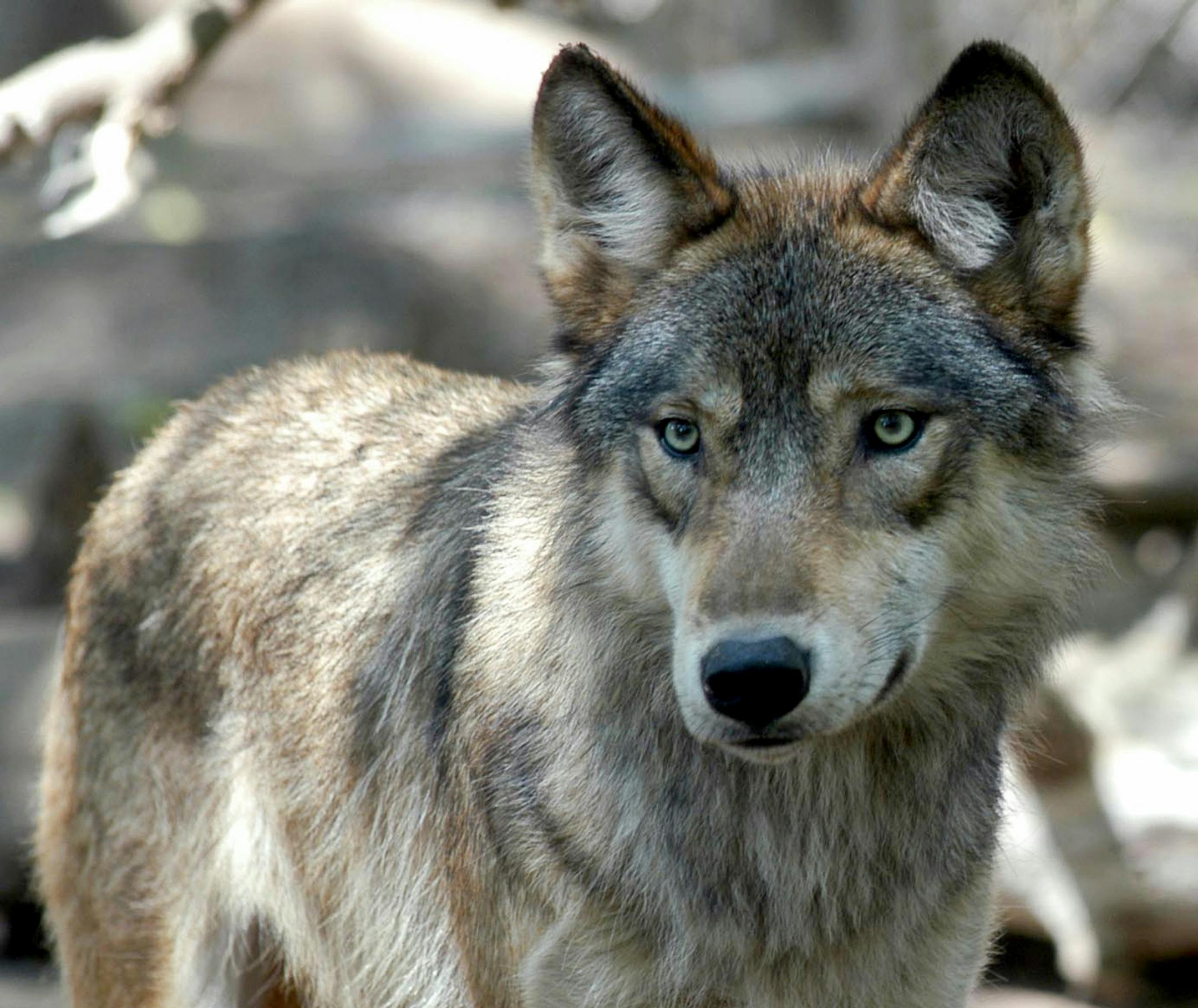
FILE - In this July 16, 2004, file photo, a gray wolf is seen at the Wildlife Science Center in Forest Lake, Minn.
A gray wolf at the Wildlife Science Center in Forest Lake, Minn., July 16, 2004. (Dawn Villella/The Associated Press)

Some Ely residents aren’t too thrilled about their newest neighbors.

The rural city in northern Minnesota — located just outside the Superior National Forest and the Boundary Waters Canoe Area Wilderness — has become a regular hangout for several gray wolves that have appeared in town at least three times this month alone.

“This wolf has been seen daily in Ely for nearly a month and a half now,” one resident said in a post Monday on Wolf.Report, a social media site dedicated to sharing close encounters with the iconic Minnesota predator.

The day before, Ely police posted a video of two wolves running down a city street and passing through people’s yards. Another post from The Ely Echo shows a wolf walking just outside the local public school.

Residents first reported seeing the wolves in April.

It’s not unheard of for wolves to come so close to humans, but it is rare, even in smaller rural cities like Ely, which has a population of roughly 3,200 people and sits on the edge of the state’s only federally protected wilderness area. That has some Ely residents worried the wolves are becoming too comfortable around humans, potentially leading to dangerous conflicts with pets or children.

The encounters follow renewed debate over the status of the U.S. gray wolf population and whether it should continue to be listed as threatened under the federal Endangered Species Act.

U.S. Rep. Pete Stauber, a Republican who represents northeastern Minnesota’s Eighth District, has called for federal officials to delist the gray wolf so states can better control their wolf population. Stauber told the Minnesota Star Tribune in an August interview he’s personally had run-ins with wolves while hunting and heard similar stories from several of his constituents.

“I am a deer hunter; you’ll see packs of wolves walking right underneath your deer stand,” Stauber said. “And if you have game cameras, you’ll see the wolves almost on a daily or a nightly basis coming across your camera.”

Minnesota officials estimate about 2,700 gray wolves live in the state today, far above the goal of 1,400 set under Endangered Species Act. Stauber believes the population is likely higher.

But conservation advocates have pushed back against the idea of delisting the gray wolf, saying the wolves haven’t recovered fully in other states, even if they have in Minnesota. Some advocates also worry a delisting risks the kind of trophy hunting that made the wolf endangered in the first place.

Earlier this year, several congressional Republicans introduced legislation that would delist the wolf. The Trump administration is also proposing rule changes to the Endangered Species Act that environmentalists say would dramatically weaken the law.

“Removing protection for wolves would reverse the recovery of one of our most beloved species and take us back to a time when wolves were shot, trapped, and poisoned until they disappeared from the landscape,” Susan Holmes, executive director of the Endangered Species Coalition, said in a statement responding to those proposals.

The recent wolf sightings have stirred a similar debate in Ely, with some residents calling for the animals’ delisting for the sake of safety. Others have claimed the wolves are only following their natural prey into town after some residents started feeding the local deer.

“People think they can feed other animals and not attract wolves and coyotes,” wrote Ely resident Kim Breimeier in a recent Facebook post. “We sometimes would have so many deer on the road from people feeding them that it was hard to drive in our neighborhood.”

While wolves pose a threat to livestock and pets, attacks on humans are exceedingly rare.

“Wolves represent little threat to humans, unless people habituate them by providing them with food,” according to Colorado State University.

Some research suggests that wolves, along with other predators, are coming into conflict with people more often partly due to expanding urban and agricultural development as well as warming global temperatures. A study in 2023, for example, found that expanding human development has taken habitat away from predators like wolves, while warming temperatures are altering migratory and hunting behaviors.

about the writer

about the writer

Kristoffer Tigue

Reporter

Kristoffer Tigue is a reporter for the Minnesota Star Tribune.

See Moreicon

More from Environment

See More
card image
Anthony Souffle/The Minnesota Star Tribune

The agency allowed the project for Franconia Minerals despite criticism from environmentalist groups.

card image
card image