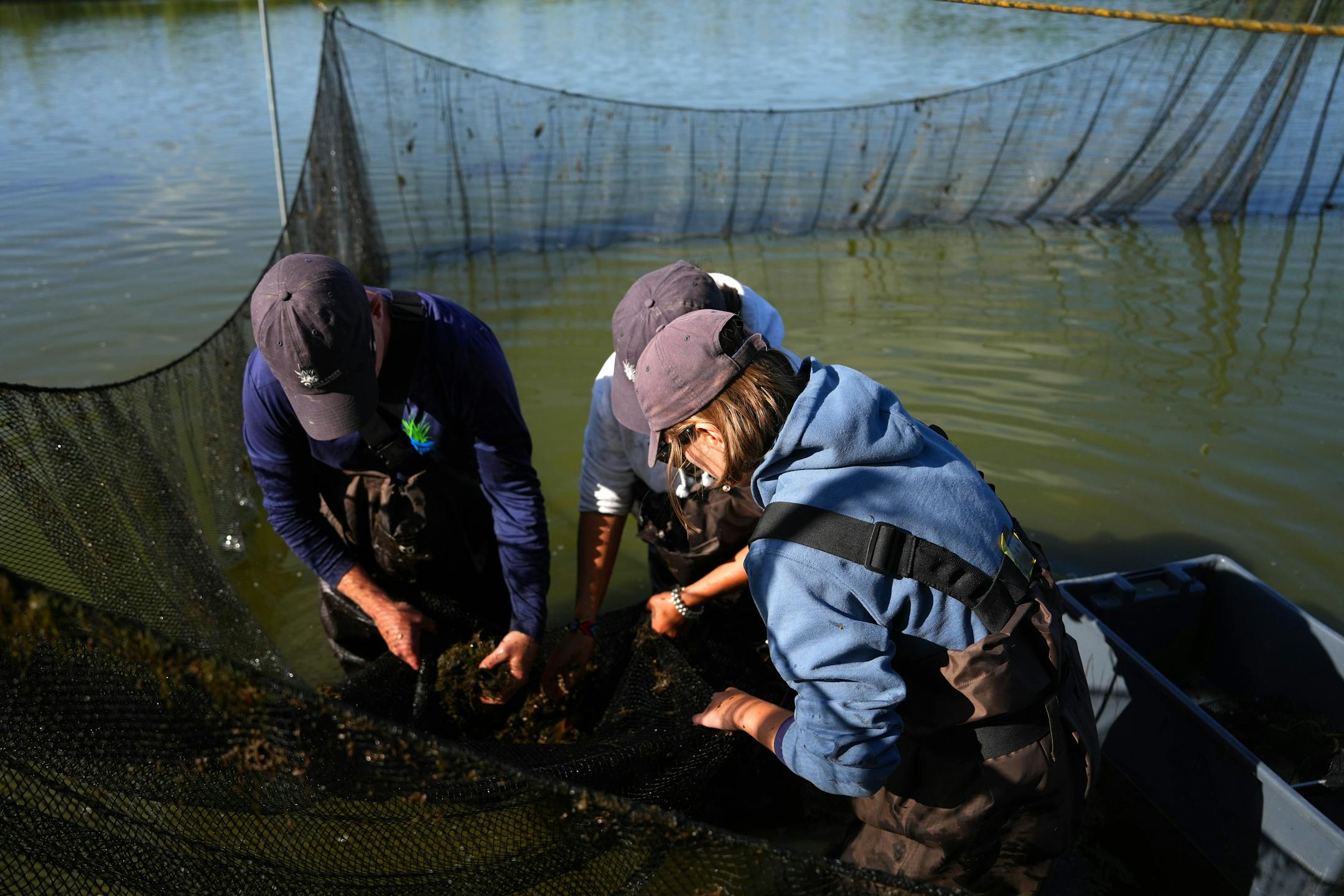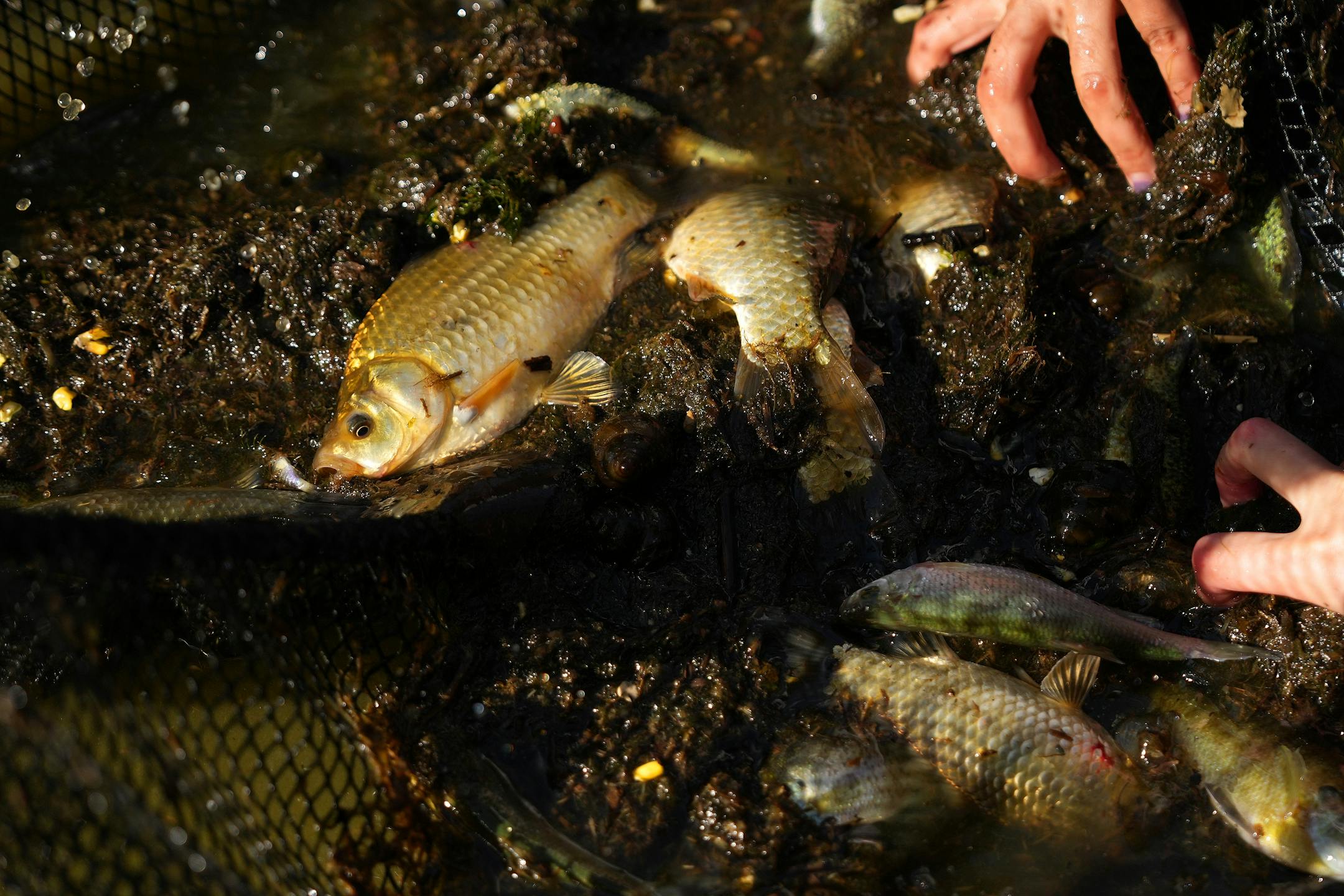
The nets tightened, and the lake erupted. Bronze scales flashed, water churned and a heap of orange-hued fish thrashed against the mesh as crews pulled them toward shore.
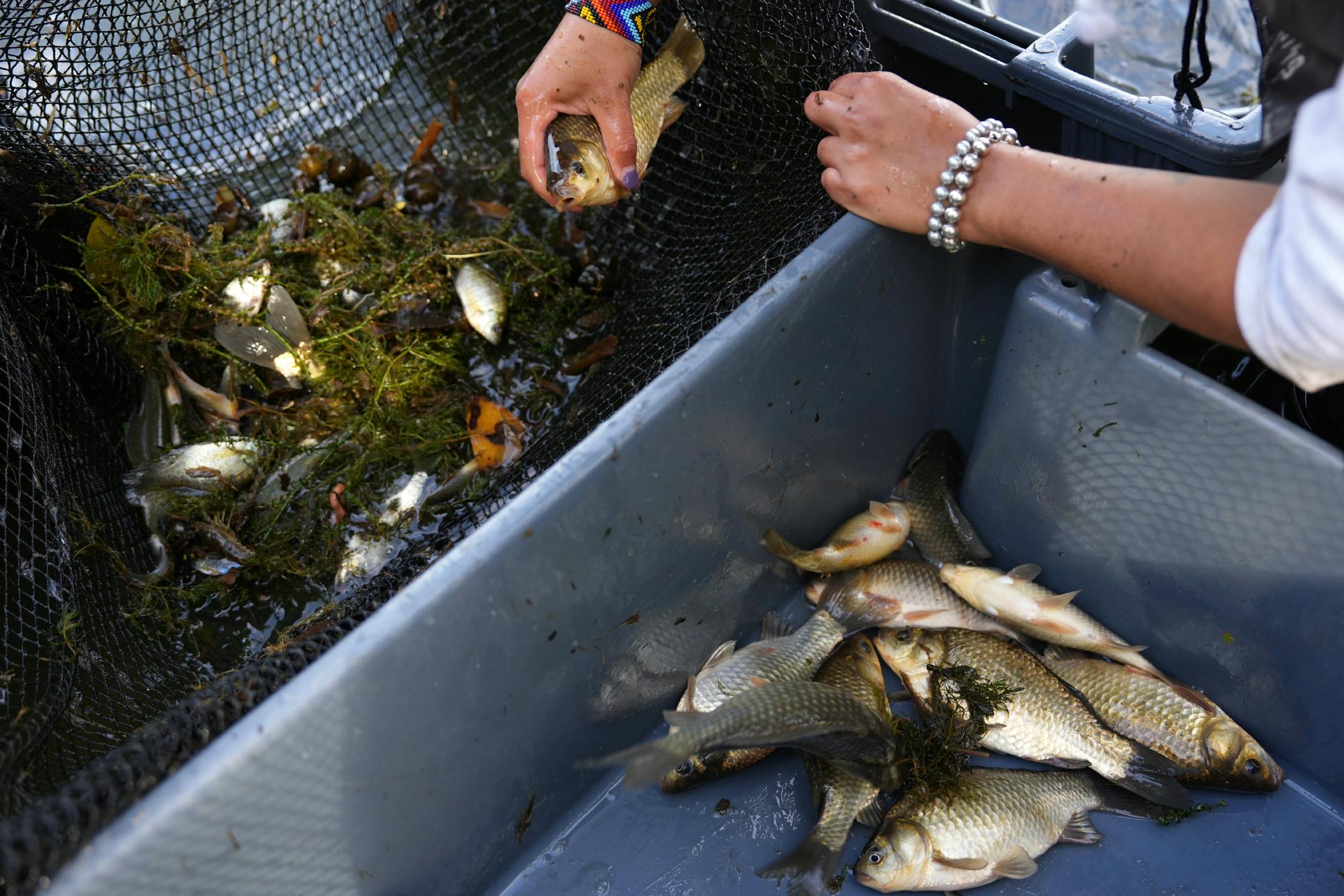
They weren’t perch or sunfish — they were descendants of former pets, the goldfish won at carnivals or bought in pet stores, long ago dumped in Lake Cornelia and left to multiply. Some were no bigger than a hand, others stretched the length of a forearm, with a few growing close to a foot long.
Those discarded prizes have since grown into an ecological headache in some Minnesota lakes. Bottom feeders like their carp cousins, the goldfish churn up sediment, release phosphorus and fuel algae blooms that cloud the water and crowd out native species.
That’s why the city of Edina and the Nine Mile Creek Watershed District have made their removal a priority, and this summer, trucked them to a place where, for some wild residents, the goldfish are appetizing and in-demand: the Minnesota Zoo.
Week after week, nets are baited and sprung, workers wade in with buckets, and the goldfish are hauled away.
“I was standing there looking at this writhing mass of fish as we emptied it into buckets,” said Peter Mans, an Edina water resources intern who spent the summer elbow-deep in the fishy-smelling project. “I had no idea this was in the lake. Nobody would have any idea.”
The numbers are staggering. In 2023, crews pulled around 50,000 goldfish — weighing more than a ton altogether — from Cornelia’s two basins. By this year, the haul had dropped dramatically: about 8,547 goldfish weighing 1,716 pounds through the 2025 season so far, according to Jordan Wein, a water resources project manager with Nine Mile Creek Watershed District.
Crews scoop and sort each slippery body by hand. Bluegills and perch go back in the water. Goldfish are weighed, measured and packed into tubs, destined for the zoo’s bears, sea lions and even an otter.