

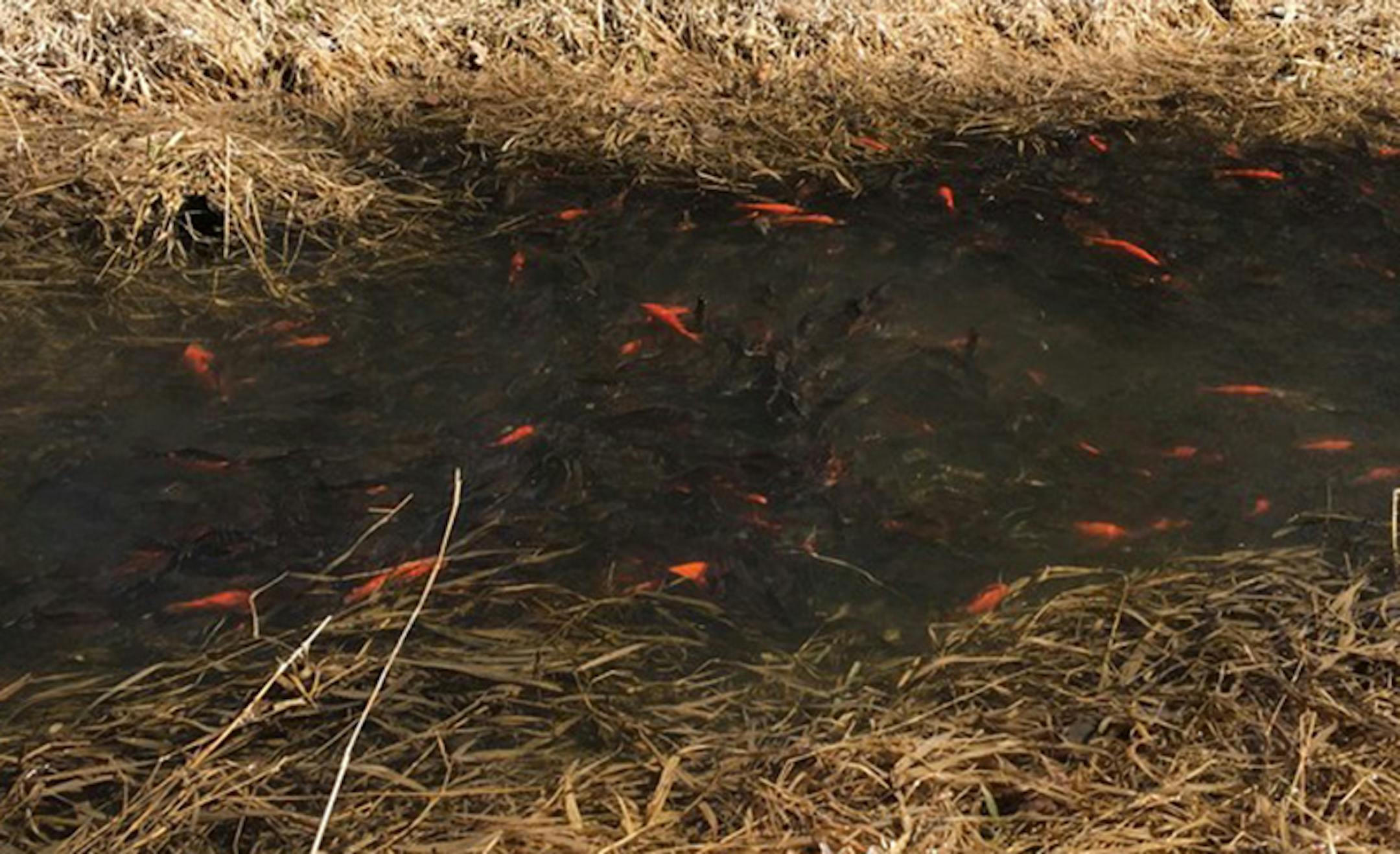
What almost certainly started with pet owners trying to do a good deed went decidedly wrong, and now a chain of lakes in Chaska is swarming with invasive goldfish.
Staffers with the Carver County Water Management Organization spotted the flashy fish this week while doing routine monitoring at Big Woods Lake in Chaska. Madeline Seveland, the group's education coordinator, said they probably number in the thousands.
"This is the first time our staff has seen them in such a high population density," she said.
Goldfish already had been spotted in nearby Hazeltine Lake, Seveland said, and most likely have spread to the other three Chaska lakes connected by creeks to Big Woods: McKnight, Jonathan and Grace.
But they can't go anywhere else unless somebody moves them, she said. Unlike zebra mussels, goldfish can't hitch rides on boats from one lake to another.
Goldfish are a type of carp originally from Asia, not native to Minnesota. They impair water quality by feeding along lake floors, disrupting plants and stirring up sediment that releases phosphorus into the water, encouraging algae growth. They also compete with native species for food.
Experts don't know exactly how the goldfish got in the Chaska lakes in the first place, but the most likely scenario is that people who no longer wanted them thought that releasing them in a lake would be a humane way to get rid of them. There must have been at least one male and one female "and they found each other," Seveland said.
From there, they likely reproduced quickly. Goldfish reach sexual maturity when they're a year old, said Megan Weber, extension educator for the Minnesota Aquatic Invasive Species Research Center. They can spawn more than a thousand eggs at a time, multiple times a week.


