How often do earthquakes happen in Minnesota?

They are rare, but do take place. The largest recorded was in 1975.

The Minnesota Star Tribune
November 21, 2025 at 12:00PM
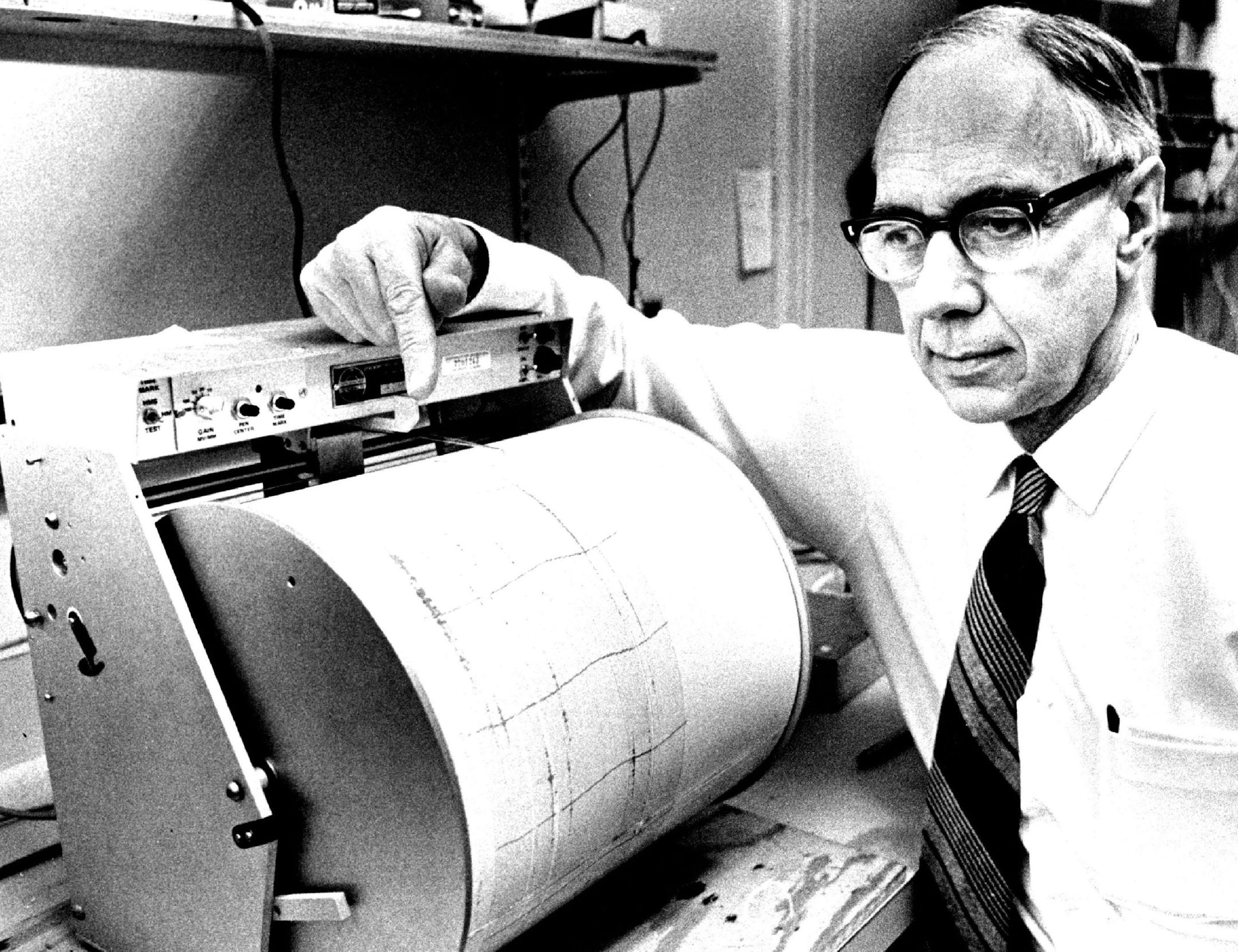
"Only Harold Mooney and his seismograph know if Minnesota had an earthquake," this newspaper wrote in 1980, in a profile of the University of Minnesota geophysics professor. He kept a tally of local quakes, which are relatively rare. (Jack Gillis/Minneapolis Star Tribune)

Listen and subscribe to our Curious Minnesota podcast: Apple Podcasts | Spotify

Windows rattled. Dishes fell from shelves.

Cracks appeared in the foundations of several buildings. And across the border in Clark, S.D., the rumbling caused one woman to tumble out of her bed, according to newspaper accounts.

On July 9, 1975, Minnesota’s largest earthquake ever recorded shook the area around Morris, in the west-central part of the state. It measured 4.6 to 4.8 on the Richter scale.

No one was injured. It did shake people up a little, though.

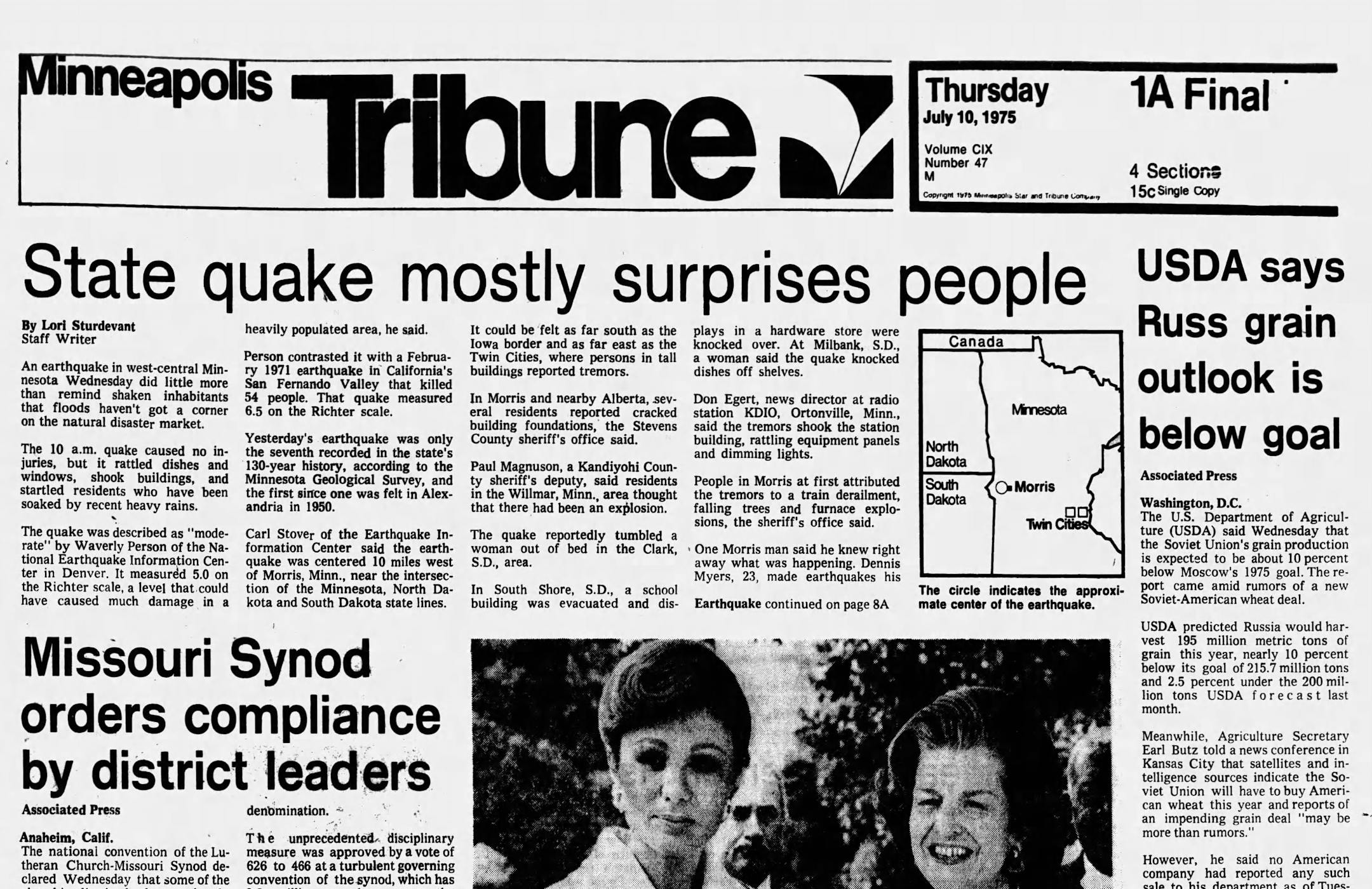
“State quake mostly surprises people,” read the Minneapolis Tribune headline the next day.

Rhonda Broberg, who lives in Robbinsdale, recorded the event in her childhood diary. “My grandma called — long distance — panicked,” she recalled. “An earthquake had just shaken her house in Johnson.”

Fifty years later, Broberg recently looked through her diary and read what she wrote as a little girl. Thinking about that day made her wonder how rare the event was. She wrote to Curious Minnesota, the Strib’s audience-driven reporting project, to ask: “How often do earthquakes take place in Minnesota?”
The short answer? Not that often, especially compared to states like California and Alaska.

“It’s very infrequent,” said Aaron Hirsch, a geophysicist at the Minnesota Geological Survey. “There have been about nine earthquakes since 1975 that have been of note.”

The 1975 quake was the top story in the Minneapolis Tribune the next day, although the headline kept things in perspective.

Location, location, location

The reason Minnesota experiences relatively little seismic activity has to do with our location — smack dab in the middle of a tectonic plate — and the age of the rocks beneath our feet, said Hirsch.

Most earthquakes happen along the boundaries of the Earth’s tectonic plates.

“We are nowhere near a plate boundary. We are, like, the near center of the North American plate,” Hirsch said.

“Additionally, we are part of what’s called the craton, which is one of the oldest rocks in the world,” he said. “The rocks are cold, so they’re very stable, and so that usually means that we are to have significantly less earthquakes as well.”

Why do quakes happen at all in Minnesota?

The 1975 quake may not have been a tectonic earthquake caused by plate movement at all, Hirsch explained.

“It may have been associated more with what’s called isostatic rebound,” he said.

This process was caused by the glaciers that came down from Canada 14,000 years ago, pushing down on the Earth’s crust, he said.

“If you imagine standing on your bed, you’re going to depress the bed, you know, with your feet, but then when you move your feet, that then rebounds back up,” he said. “The Earth can kind of respond similarly.”

But the Earth’s rebound is happening much, much more slowly. The land is still rising — and earthquakes can happen as this rebound triggers long-dormant faults.

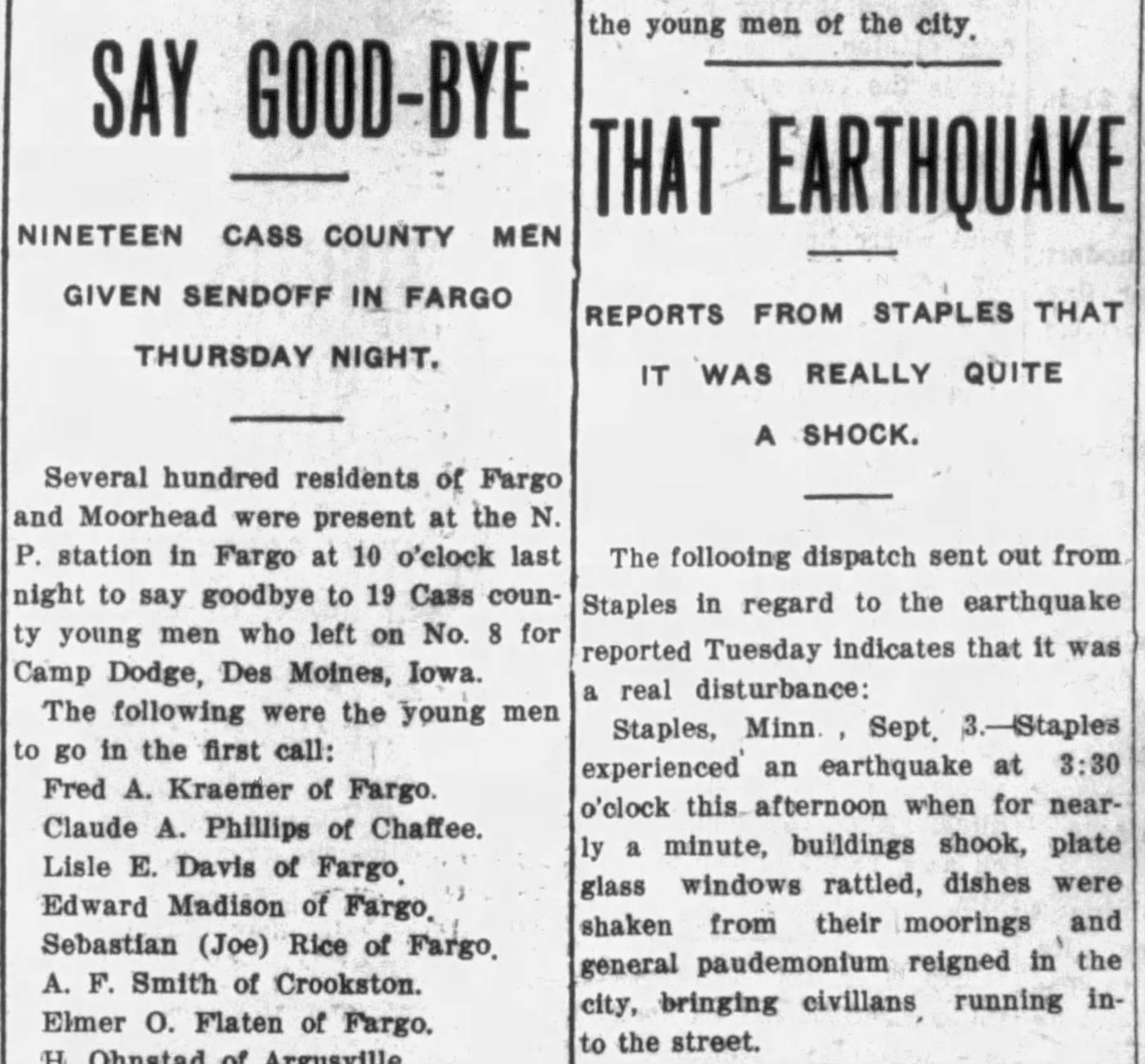
How the Moorhead Daily News covered "that earthquake" in 1917.

Minnesota’s earthquake history

The last measurable earthquake in Minnesota was in 2011 in Brandon, near Alexandria, said Hirsch.

At the time, U.S. Geological Survey geophysicist John Bellini told the Star Tribune that it measured 2.5 in magnitude and likely “felt like a truck rumbling by or thunder.”

Before 1900, earthquake data in Minnesota was not well documented, so it’s difficult to determine the magnitude of earthquakes that happened here before that, according to a 2014 Minnesota Geological Survey paper by geophysicist Val Chandler.

But the Morris earthquake and a 1917 quake in Staples — estimated to have a magnitude of 4.3 based on observations of its intensity — are considered the two largest in state history that are well documented.

“Earthquake Jars Section of Minnesota,” was the headline in the Park Rapids Enterprise after the 1917 quake. While buildings shook in Staples, in Park Rapids “the vibrations were so slight that when the reports first began to gain circulation, those who had not noticed the disturbance invariably looked for the joke,” the paper wrote. “Reports came from so many places, however, that they could not be doubted.”

In 1979, the University of Minnesota’s Harold Mooney estimated that Minnesota’s average recurrence rate for a magnitude 4 earthquake is every 10 years. He put that at 30 years for a magnitude 4.5 quake.

The chance of a severe earthquake ever happening in Minnesota is extremely unlikely, Chandler wrote:

“Although we cannot assign a zero probability of a seriously damaging earthquake occurring in the time span of a human life, the threat is very small compared to other natural hazards that have well-proven records of destruction, such as winter storms, tornadoes, and flooding.”

If you’d like to submit a Curious Minnesota question, fill out the form below:

Read more Curious Minnesota stories:

about the writer

about the writer

Erica Pearson

Reporter

Erica Pearson is a reporter and editor at the Star Tribune.

See Moreicon

More from Curious Minnesota

See More
card image
Hennepin County Library

Composer of “The Music Man” flew in to participate in the event. There were way more than 76 trombones.