Eagan company finds new life for dead car batteries

Gopher Resource's plant in Eagan is one of the few plants left recycling and repurposing car batteries.

The Minnesota Star Tribune
April 23, 2014 at 8:21PM
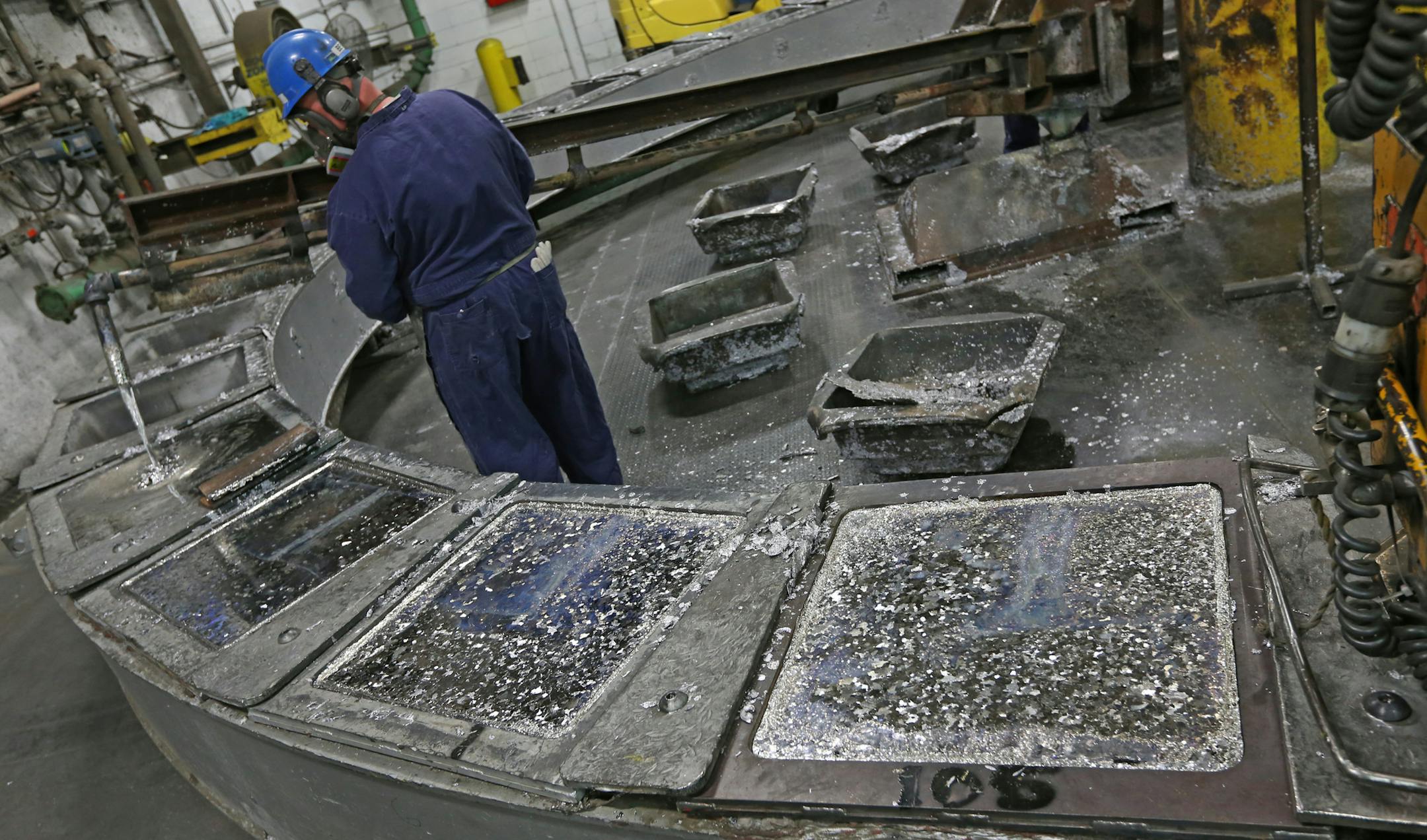
Gopher Resource employee Tracy Bennett poured melted lead from recycled batteries into ingots for reuse at the Eagan plant on 4/16/14. Eagan-based Gopher Resource recycles the lead and plastic out of millions of car/truck batteries a year (That equals 540 million pounds of lead and 30 million pounds of plastic each year.) Gopher Resource has plants in Eagan, MN. and Florida. The company added 72 workers last year in Minnesota, and just opened a Florida plant, and is increasing total production a
Gopher Resource employee Tracy Bennett poured melted lead from recycled car batteries into ingots for reuse at the Eagan plant. (The Minnesota Star Tribune)

Tractor trailers filled with dead car batteries made their way up to Gopher Resource’s recycling plant in Eagan. The 30-plus pound blocks were fed into a giant industrial blender and soon became material for new batteries and ammunition.

Eagan-based Gopher is one of the few companies left in the nation that sells its recycled products to battery and ammo manufacturers. Stricter environmental rules have spurred the demise of several competitors, leaving Gopher in a strong position to grow.

“There used to be 100 lead smelters in the United States, but over time we are down to 12. They [smelters] … don’t keep up with the regulations. Those that do, [survive],” said Gopher business development officer Dan Leach, during a recent tour of the facility.

Employment for the privately held company recently hit 600 after it added 72 workers and built a new plant in Tampa. Gopher, which generates “hundreds of millions” in sales annually, is also on track to boost lead and plastic recycling rates 20 percent this year.

“We will probably recycle 540 million pounds of lead-acid batteries this year … 300 million of that is right here in Eagan,” Leach said.

Gopher has since spent more than $8 million on air and water pollution-controls in Eagan to comply with more stringent environmental rules. Next week, it begins testing a new $15 million sulfur-dioxide removal system that could be a first in the industry. The company is working with the EPA and state on that project.

Gopher has been cited in the last decade for EPA violations, including improper labeling, a missing factory sign and once in 2010 for exceeding acceptable air lead-levels under tightened EPA rules.

But Leach said company owners hope to stay ahead of environmental regulations. If Gopher stays within guidelines, it can continue to grow and provide jobs, he said.
Wayne Gjerde, recycling market coordinator for the Minnesota Pollution Control Agency, said Minnesota used to have an issue with batteries being dumped in landfills or chucked on the side of roads. But today, “batteries are one of the success stories in recycling. Now we see a pretty high rate of recycling on car batteries,” noting that Gopher is the only battery smelter in the state. It now processes more than 10 million car, truck and boat batteries a year.

‘I like this a lot’

On Wednesday, Andrew Lindsey and three other workers in respirators, shoveled hardened lead from the floor around the kettle and pouring area. Soon, they were guiding a nozzle of oozing silvery metal into 1-ton molds that hardened in two minutes.

“It’s so cool to learn the steps to making lead,” said Lindsey, who started his job April 1. “I never knew about any of this, the furnace, the kettle, the lead. I like this a lot.”

Lindsey, who now makes $20.24 an hour, has to keep up with a demanding pace. It takes about 100 car batteries to create a 1-ton block of lead. Across the Gopher complex sits a sprawling warehouse filled with pallets of towering batteries.

“Some days we had 70 semi trucks full of batteries coming in. Today we have 47,” Leach said while taking visitors on a tour Wednesday.

After the dead batteries were unloaded from the trucks and smashed up using an industrial blender, water and grates separated the lead, sulfuric acid and plastic that made up the batteries.

Chunks of lead were collected, washed and fed into a 2,500 degree furnace. Workers then poured the molten liquid into 1-ton blocks or 70-pound ingots that are shipped to battery manufacturers.

Supplier to ammo makers

Some of the lead was cast into cylinders and shipped to Federal Cartridge in Anoka and other ammunition makers. Gopher’s been supplying lead to the military and ammunition makers for 60 years. It’s also supplied the nation’s largest batterymakers for decades.

“We buy millions of pounds from them every year,” said Rick Leiby, metal operations vice president at East Penn Manufacturing, the country’s second largest lead-acid battery maker. “Their operation does some things that not everyone does. They not only recover the lead but they also recover polypropylene plastic from the battery case. We take the plastic and turn it into new battery cases.”

At Johnson Controls Power Solutions, the largest U.S. lead-acid battery maker, recycling general manager Tom Parmenter said he likes that Gopher helps keep car and truck batteries out of the waste stream. “Gopher is an important partner in our effort to bring battery recycling levels in the U.S. to 100 percent,” he said. “At Johnson Controls, we are working actively to ensure that all automotive batteries get recycled safely. Gopher helps us realize that goal.”

Dee DePass • 612-673-7725

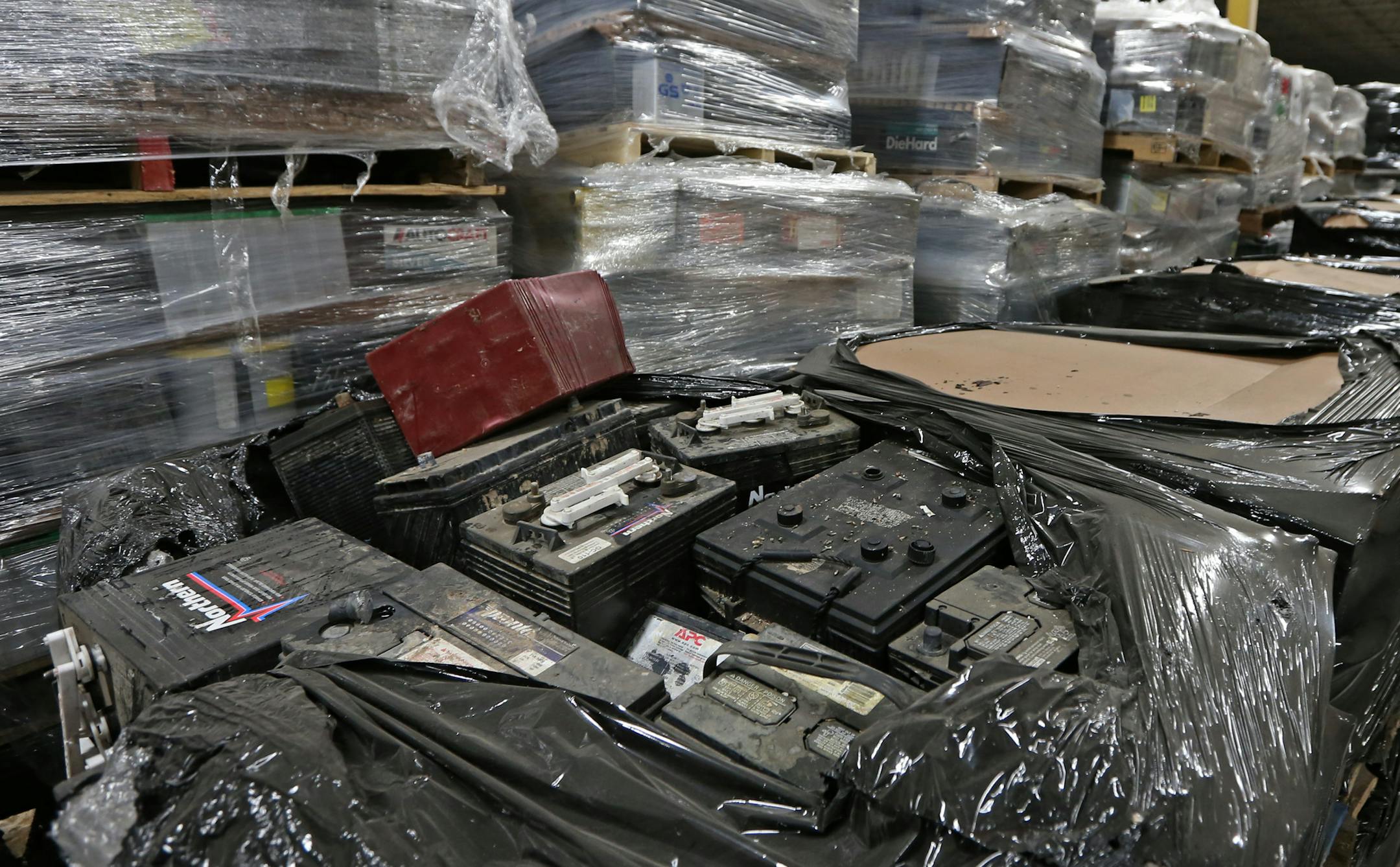
Lead acid batteries, mostly from cars, were stored at a Gopher Resource warehouse awaiting to be recycled by the Eagan-based company. Eagan-based Gopher Resource recycles the lead and plastic out of millions of car/truck batteries a year (That equals 540 million pounds of lead and 30 million pounds of plastic each year.) Gopher Resource has plants in Eagan, Mn. and Florida. The company added 72 workers last year in Minnesota, and just opened a Florida plant, and is increasing total production ab
Lead acid batteries, mostly from cars, were stored at a Gopher Resource warehouse awaiting to be recycled by the Eagan-based company. Eagan-based Gopher Resource recycles the lead and plastic out of millions of car/truck batteries a year (That equals 540 million pounds of lead and 30 million pounds of plastic each year.) Gopher Resource has plants in Eagan, Mn. and Florida. The company added 72 workers last year in Minnesota, and just opened a Florida plant, and is increasing total production about 25% this year.] Bruce Bisping/Star Tribune bbisping@startribune.com Daniel Leach/source. (The Minnesota Star Tribune)
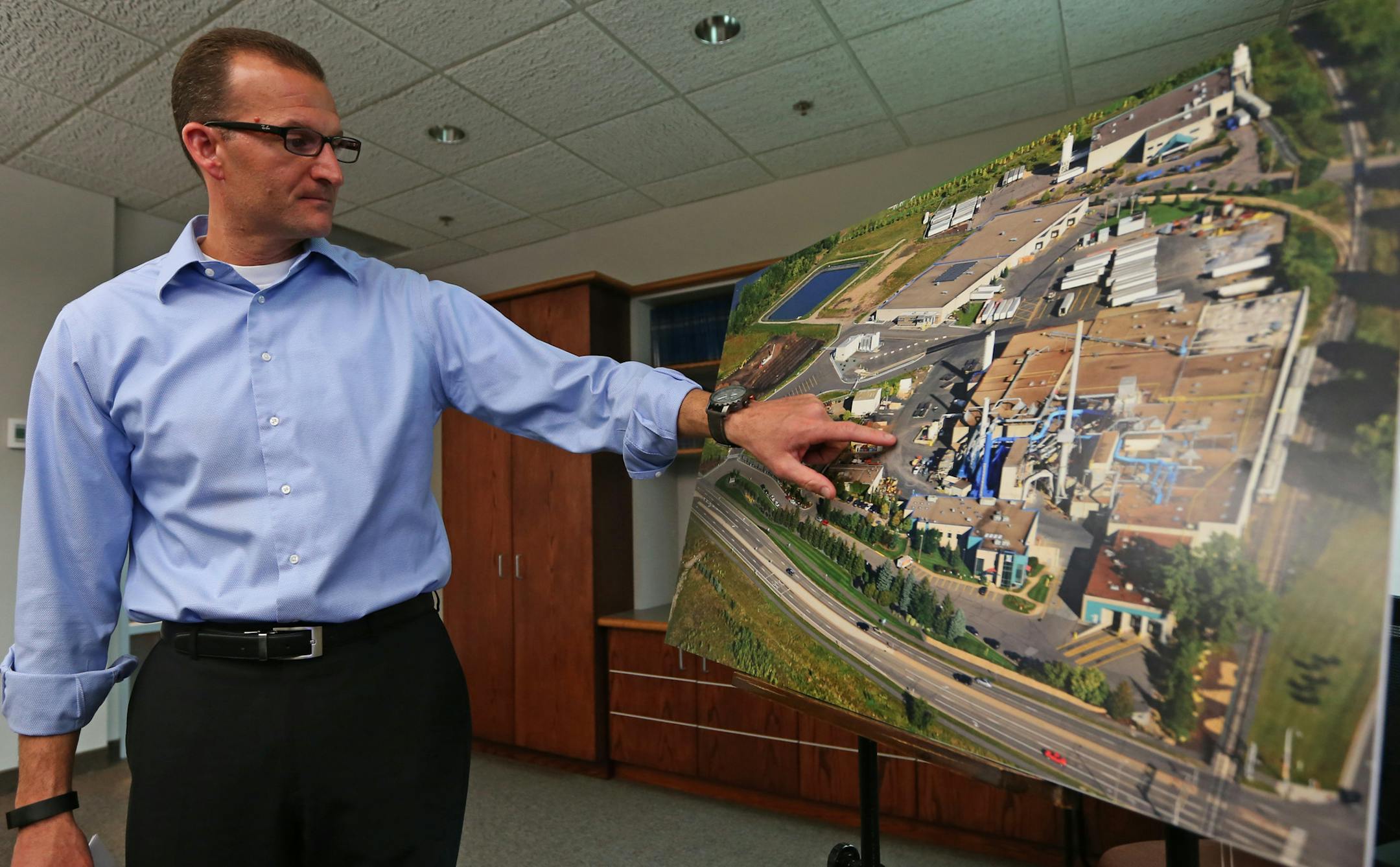
Daniel Leach, Gopher Resource Chief Business Development Officer explained the operations of Gopher Resource on a large photograph. Eagan-based Gopher Resource recycles the lead and plastic out of millions of car/truck batteries a year (That equals 540 million pounds of lead and 30 million pounds of plastic each year.) Gopher Resource has plants in Eagan, Mn. and Florida. The company added 72 workers last year in Minnesota, and just opened a Florida plant, and is increasing total production abou
Daniel Leach, Gopher Resource’s business development officer, explained the operations of Gopher Resource on a large photograph. (The Minnesota Star Tribune)
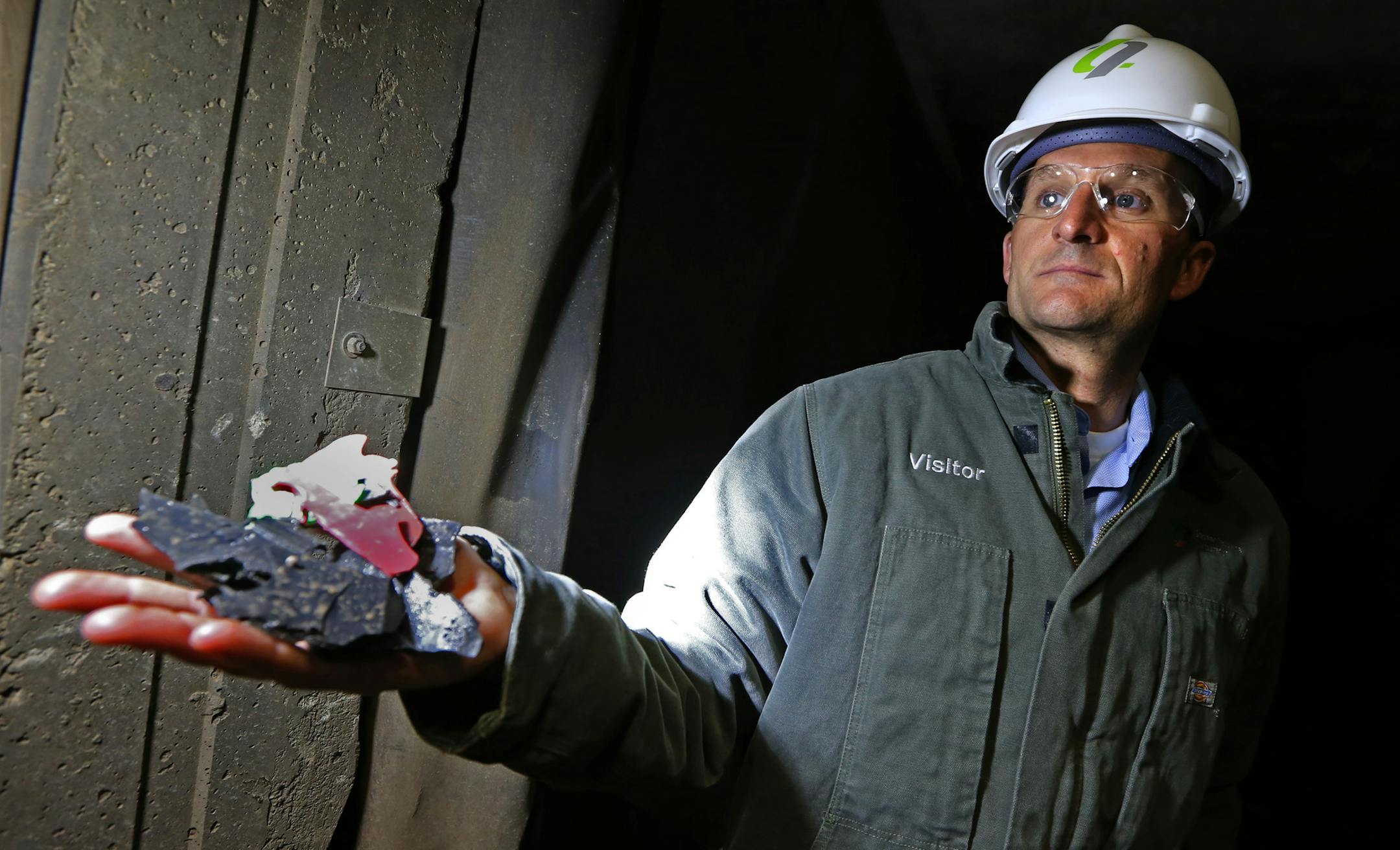
Daniel Leach, Gopher Resource Chief Business Development Officer held recycled plastic battery casing chips that would be futher processed into pellets for reuse. Eagan-based Gopher Resource recycles the lead and plastic out of millions of car/truck batteries a year (That equals 540 million pounds of lead and 30 million pounds of plastic each year.) Gopher Resource has plants in Eagan, Mn. and Florida. The company added 72 workers last year in Minnesota, and just opened a Florida plant, and is i
Daniel Leach held recycled plastic battery casing chips that would be processed into pellets for reuse. Gopher Resource of Eagan recycles the lead and plastic out of millions of car and truck batteries a year. (The Minnesota Star Tribune)
about the writer

about the writer

Dee DePass

Reporter

Dee DePass is an award-winning business reporter covering Minnesota small businesses for the Minnesota Star Tribune. She previously covered commercial real estate, manufacturing, the economy, workplace issues and banking.

See Moreicon

More from Business

See More
card image
Hormel headquarters in Austin, MN. ] GLEN STUBBE * gstubbe@startribune.com Friday September 11, 2015 Despite woes throughout the food industry, partly due to consumers turning away some from processed foods, Hormel has managed to continue prospering -- even though a good part of its business -- Spam, chili -- is about as processed as you can get. But the company's turkey and pork offerings are riding a hot protein trend. And over the past two years, it's made some of the biggest acquisitions in