Don Shelby finds the divine in trees — and immutable laws of nature

The former WCCO TV news anchor believes no act is too small to help fight climate change.

The Minnesota Star Tribune
August 9, 2025 at 1:16PM
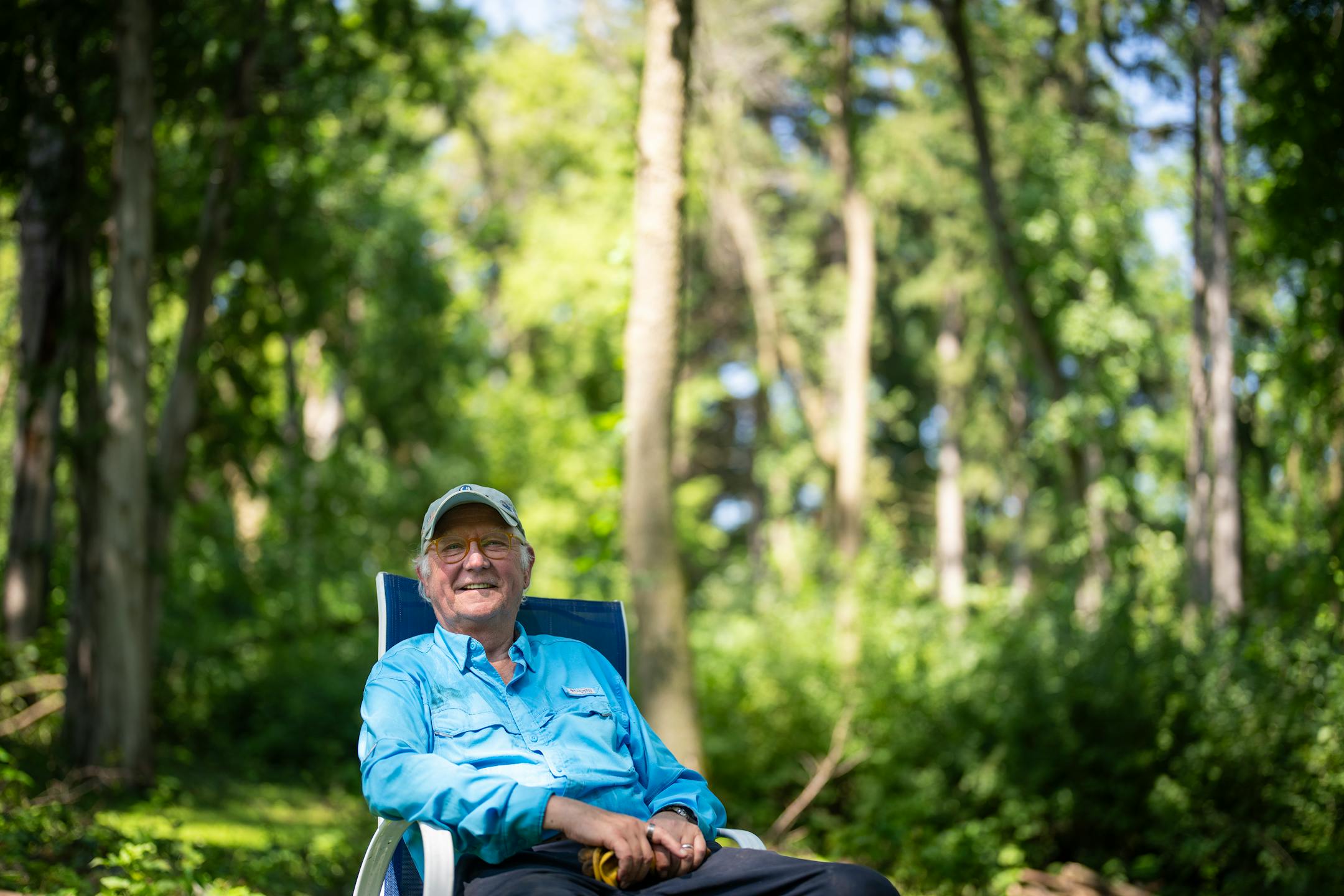
Don Shelby: “Planting trees makes me feel like I’m doing my part, even in a very small way of growing one tree at a time." (Leila Navidi/The Minnesota Star Tribune)

Former WCCO anchor Don Shelby hiked some of the highest peaks in Alaska, sought craggy sheets of ice to climb on frozen waterfalls and rode some of Minnesota’s toughest terrain on a mountain bike.

Now, at 78 years old, he is taking things a bit slower. The latest sign his body needed a break: He threw out his back while trying to lift a heavy riding lawn tractor onto several blocks, Shelby said.

Driven by his personal belief that no act is too small to help stop climate change, Shelby plants trees whenever he can, including in the yards of his friends and family by request. He recently planted red pine saplings on his daughter’s 2.5-acre lot in Excelsior.

Shelby said his interest in trees grew over the years. He thinks of trees as mothers and their seeds and fruits as their children.

“Planting trees makes me feel like I’m doing my part, even in a very small way of growing one tree at a time,” he said.

In this edition of “How I Get Outside,” we asked Shelby about his hobby, his past adventures and his favorite place in Minnesota. His responses have been edited for length and clarity.
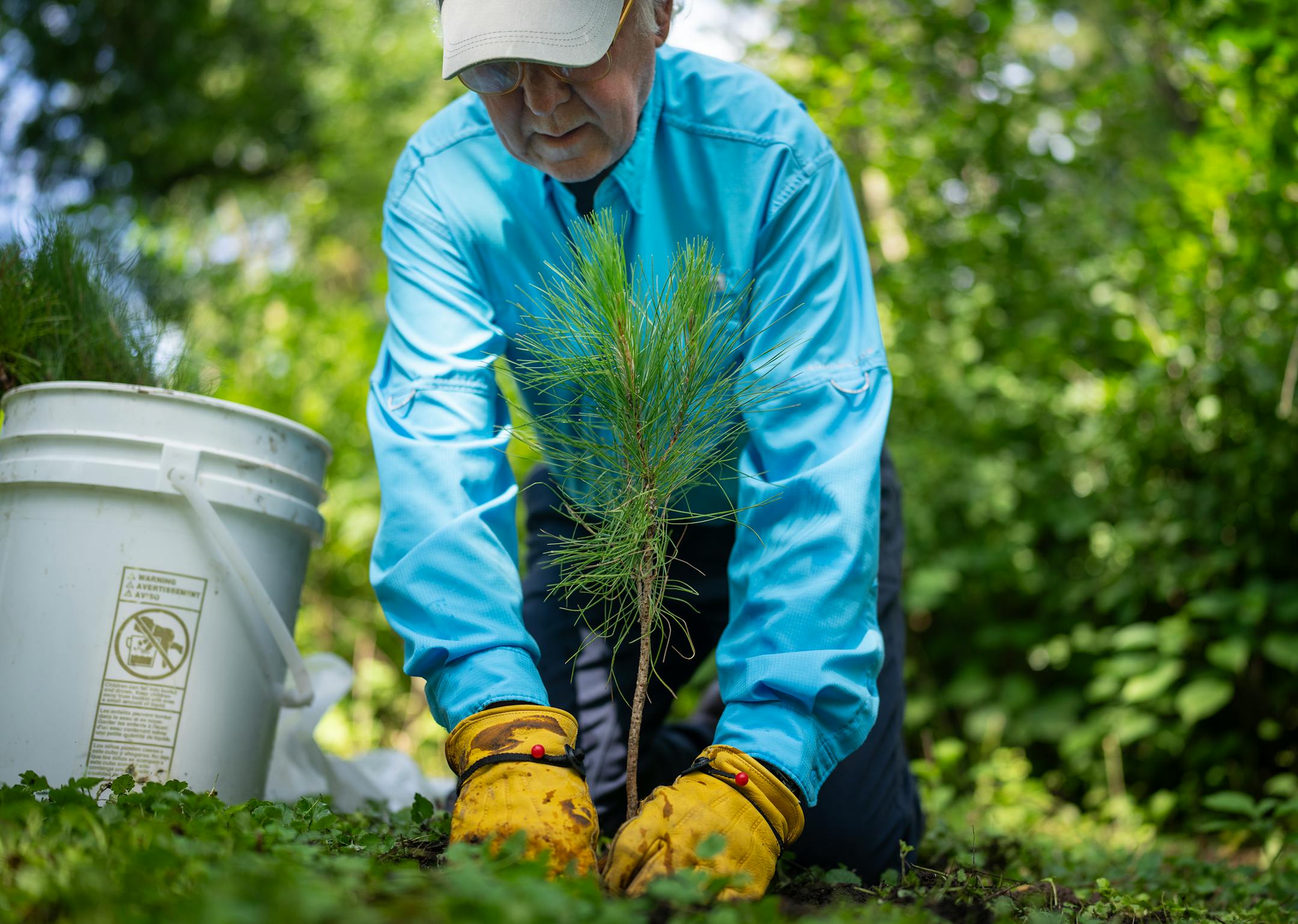
Don Shelby recently planted red pine saplings on his daughter’s property. (Leila Navidi/The Minnesota Star Tribune)

Q: When did you become so passionate about trees?

A: It started a long time ago ... I was 9 years old and my mom was hanging laundry, and I was out helping her, and then I asked a question: “Where’s God? I’d like to find God.” She said, “God’s everywhere. God’s in this. God’s in that. God’s inside you.”

She struggled to explain it to a kid. For a very curious kid, that didn’t make any sense. And she said, “For heaven’s sake, in that tree right there.” And she ended up going out and doing chores. She came back an hour later and she looked out back and she found me hugging a tree.

I’m the original tree hugger. For a little boy, somebody told him that God was in the tree and I just wanted to express my kindness.

Q: How did your interest in trees spur your planting hobby?

A: As science took hold in me and the more I learned, I realized the quaint observation that my mother had in her answer. There are the immutable laws of nature, which can be God to some people, that creates the unique carbon cycle balance in equilibrium in this world that without trees, human beings can’t exist. We cannot exist without the contribution that trees make. I just love trees.

Q: What have you learned about yourself from planting trees?

A: So many people say, oh, climate change, nature, there’s nothing we can do. Nature’s so powerful and it doesn’t care about us, it’ll bring us tornadoes and hurricanes and floods and people throw up their hands. It’s like when sometimes they vote, they say, “My vote doesn’t count.”

The truth is, it does count. The smallest thing you do that contributes to the longevity of life and the balance of nature is an incredible contribution and should not be discounted. But you have to have the humility that you are just a tiny, tiny speck doing a tiny, tiny, tiny amount of work. But you are doing the work, and so when all is said and done, at least you can say, “I tried. I did not throw up my hands.”

Q: What was your best day outside? What was your worst?

A: Well, they’re the same. It was on a solo winter [camping trip] in the Boundary Waters. And I had done a lot of winter camps and I had taught in the [military] service, Arctic survival.

I just went in for three days. What I didn’t know: It was going to be the record low temperature in the history of the Boundary Waters. That’s the worst thing that could possibly happen. Because you have to be very, very prepared and have some skill at keeping your body from freezing. In conditions like that, that was the scariest time, and because I was by myself and made it, it was the best time.

Q: What made that experience one of the best times for you?

A: So the answer to your question is it was the best time, because there was no one there to help me. It had to be [my] wits and courage and the bottom line was, at the end of it, I drove home and I was fine and that’s what made it the best time.

Q: What’s your favorite place to be outside in Minnesota?

A: In Minnesota if had to pick a single place, it’s sitting on the point of Listening Point [by Burntside Lake in the BWCAW] with Sigurd Olson’s writing cabin behind me in the spring or the summer or the fall. One of the things he wrote about that place is when you’ve seen heavy fog suddenly tumble into a place, he called it the white stallions of fog. And I thought, “Wow, what a wonderful image that is.” And so I sit there and wait sometimes or go out specifically when it’s foggy, to experience that.

Q: What’s an outdoor activity you wish you knew how to do?

A: You’re talking to a guy with terminal ADHD who’s lived to 78, and I have run into so many things in my life that I did not know how to do. But when you have ADHD, that means you can’t let that pass. You have to learn it. You have to experience it.

Q: What’s an outdoor activity you think is overrated?

A: I think running. But I do not criticize people who run because I know that’s great for your health, and great to stay in shape, good for your body, good for your lungs. But for me, running is too fast. You miss a lot ... you’re going too fast to stop and look around and notice things.

Q: You’ve been given the chance to go on your dream outdoor adventure: What is it, and what three people would you bring with you?

A: I would like to go to New Zealand and do both the North and South Islands. I would like to climb mountains, and I would like to experience a river [Whanganui River] in the country of New Zealand that has been protected by a law that gives the river its own rights as a person would have. The river can be assigned an attorney if anyone seeks to pollute it or if anyone seeks to damage it in any way. It has a voice in the course of the law in New Zealand and that’s something that came out of the Maori tradition, the Indigenous people of New Zealand.

I’d bring my wife and my daughters.

Don Shelby plants trees whenever he can, including in the yards of his friends and family by request. (Leila Navidi/The Minnesota Star Tribune)
about the writer

about the writer

Alex Chhith

Reporter

Alex Chhith is a general assignment reporter for the Minnesota Star Tribune.

See Moreicon

More from How I Get Outside

See More
card image
Leila Navidi/The Minnesota Star Tribune

Dessa has worked with musicians from Doomtree to Broadway’s Lin-Manuel Miranda and her next show is with the Minnesota Orchestra on Nov. 7.