
Burcum: Student loan program changes derail a student’s med school dreams

Eva Skipwith hoped to go to medical school. But changes to student loan program put an end to those aspirations for her and others, jeopardizing the nation’s future health care workforce.

Columnist Icon
The Minnesota Star Tribune
July 23, 2025 at 11:00AM
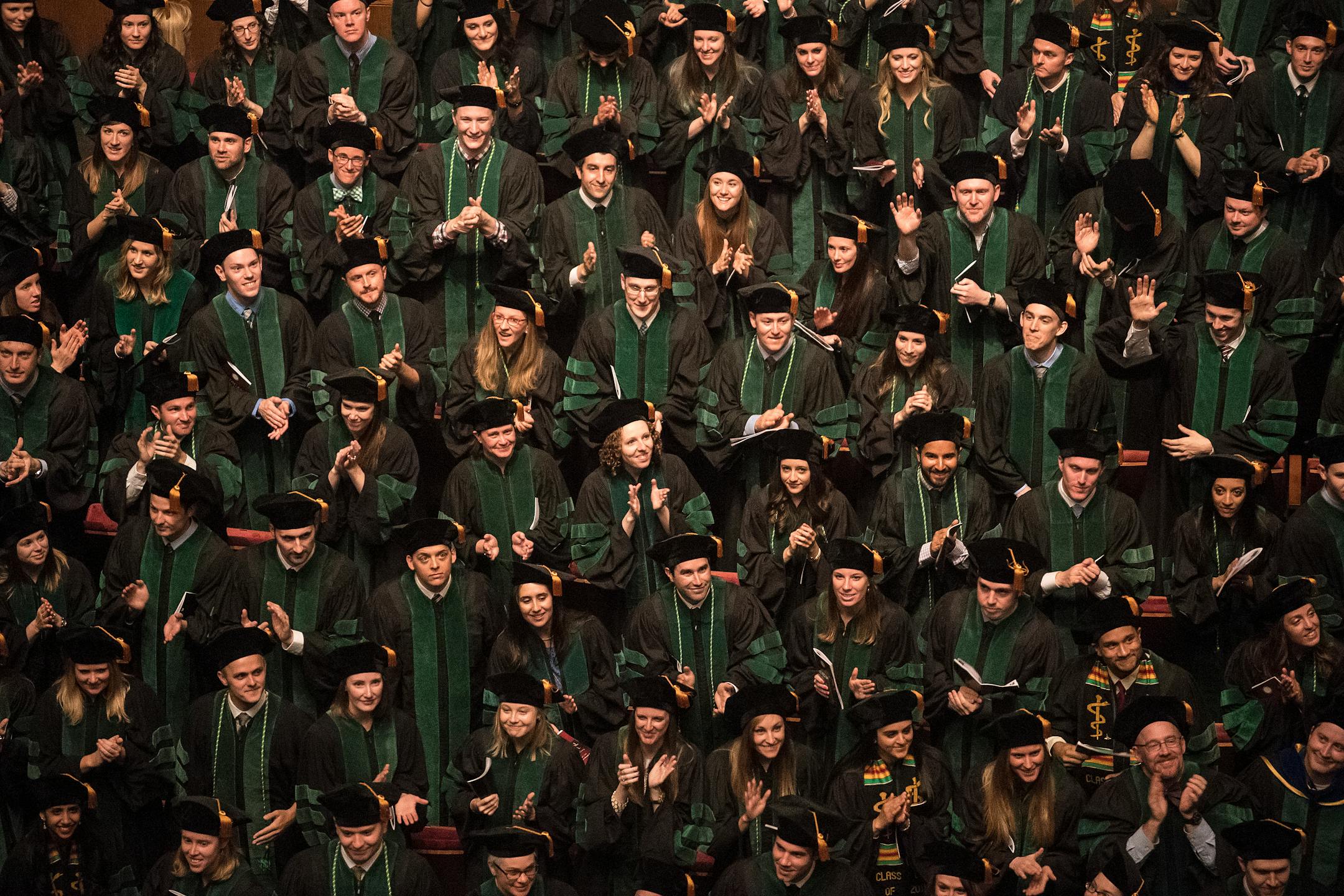
University of Minnesota Medical School graduates turned around to acknowledge friends and family in attendance at the May 6, 2016 commencement ceremony at the Northrop Auditorium.
University of Minnesota Medical School graduates acknowledge friends and family in attendance at their commencement ceremony on May 6, 2016, at Northrop Auditorium in Minneapolis. (Aaron Lavinsky/The Minnesota Star Tribune)

Opinion editor’s note: Strib Voices publishes a mix of commentary online and in print each day. To contribute, click here.

•••

With Minnesota and the nation facing an alarming shortage of physicians in the next decade, we should be knocking down barriers, not putting more up, so that talented students like Eva Skipwith enter this vital profession.

Skipwith is a junior majoring in biology at Augsburg University in Minneapolis and works as a lab tech for the Children’s Minnesota health care system. She’s also the eldest child of immigrant parents, an experience she wrote poignantly about recently, and spent two years in Somalia as a teenager.

The time abroad in the impoverished country sparked her interest not only in medical school, but in public service.

“I wanted to go into the field to give back to people,” she told me during an interview, aspiring to family medicine, heart health or trauma surgery.

There’s a depressing reason that Skipwith used the word “wanted,” past tense, vs. “want.” The recently passed reconciliation bill, also known as the Big Beautiful Bill, has for now derailed Skipwith’s dreams of becoming a doctor.

One of the controversial legislation’s under-the-radar measures “eliminates the Graduate PLUS loan program and limits the amount of federal loans that students can take out to cover the cost of medical school,” according to a July 17 letter penned by U.S. Sen. Amy Klobuchar.

As Klobuchar notes, removing affordable federal loan options could deter students from going into medicine. Skipwith’s career detour is an early casualty.

She now plans to become a physician assistant, a profession that will require 27 months of additional education after graduating with her undergraduate degree. Medical school is typically four years.

While Skipwith knows she could get private loans and potentially scholarships to help pay for her M.D., she’s leery of the higher interest rates that often come with going the private route.

She’s also currently attending classes on a scholarship, but that assistance doesn’t cover all her costs. Becoming a physician assistant means shorter coursework, less debt and a faster start to paying off whatever she does wind up owing.

Skipwith is quick to say that she isn’t “settling” on being a physician assistant. That educational path is “still a privilege, especially when so many people don’t have the opportunity to attend college.”

But, she added, ”I would have liked to have had more options," with medical school being one of them.

The Minnesota Medical Association is one of a number of professional medical organizations sounding the alarm about the education borrowing changes. In a statement, it noted that getting a medical degree is the “most expensive post-secondary education in the United States.”

The price tag of getting an M.D. in Minnesota backs up these concerns. A medical student budget put together by the University of Minnesota for the 2025-26 academic year lists first-year tuition as $49,282 at the Twin Cities campus, a sum that does not include books and other coursework materials, housing, food, transportation and loan fees.

Including these necessary living expenses adds another $34,681, bringing the total first-year attendance cost to $83,963. Total cost for Year 2: $87,486. Year 3: $86,141. Year 4: $57,366.

These figures quickly make clear why the reconciliation bill changes are problematic.

Until now, the Graduate PLUS program allowed students to borrow the cost of attendance. That program goes away for new borrowers next year, though “borrowers who already received a Grad PLUS loan before June 30, 2026, can continue borrowing under current terms through the 2028-29 academic year," reports the TheCollegeInvestor.com.

But the bill’s damage doesn’t end with eliminating Grad PLUS. It also creates another medical education finance challenge: enacting new caps on the annual and total amounts that pursuers of professional degrees can borrow. The new limits are $50,000 a year along with a $200,000 lifetime limit, according to the Institute for College Access and Success.

To be fair, the change’s proponents have legitimate criticisms about medical education’s cost. Becoming a doctor shouldn’t require signing up for decades of debt.

But it’s hard to see how limiting what students can borrow in hopes that tuition eventually comes down, without offering any other assistance, is much of a solution. This is more wishful thinking than smart policy, and there’s too much at stake to rely on that.

Students like Skipwith will go elsewhere. In her case, she’s staying in health care, which is encouraging. But other would-be doctors will take their talents to another field. We all lose when that happens.

The Association of American Medical Colleges estimates that “the United States will face a physician shortage of up to 86,000 physicians by 2036.” There’s also a Minnesota-specific facet of this that should spark alarm.

Rural areas in the state already face “severe shortages of primary care physicians,” according to a 2024 Minnesota Department of Health report. In addition, “almost one in three rural physicians plan to leave the workforce within the next five years.”

If you think it takes a long time now to get an appointment, just wait. Many Minnesotans can also look forward to more windshield time to drive to clinics if this trend continues unabated.

In a statement, the University of Minnesota noted that the new loan limits could also deter other students from entering in the state’s future health care workforce, such as dentists, veterinarians and pharmacists. About 70% of the state’s physicians and other health workers receive training at the U, and “almost 1,000 of current graduate health professionals utilize the Grad PLUS Loan program,” the statement said. The school “has over 2,500 student recipients of a Grad PLUS Loan, totaling more than $54 million in loans borrowed.”

Incentives, not deterrents, are critical to strengthen the pipeline of future medical professionals. The Big Beautiful Bill’s architects diagnosed the student debt problem accurately but made a serious error in prescribing a cure.

about the writer

about the writer

Jill Burcum

Editorial Columnist

See Moreicon

More from Columnists

See More
card image
Mark Vancleave/The Minnesota Star Tribune

As Faribault joins the list of cities without a birth center, it may be time for the Legislature to get involved.