

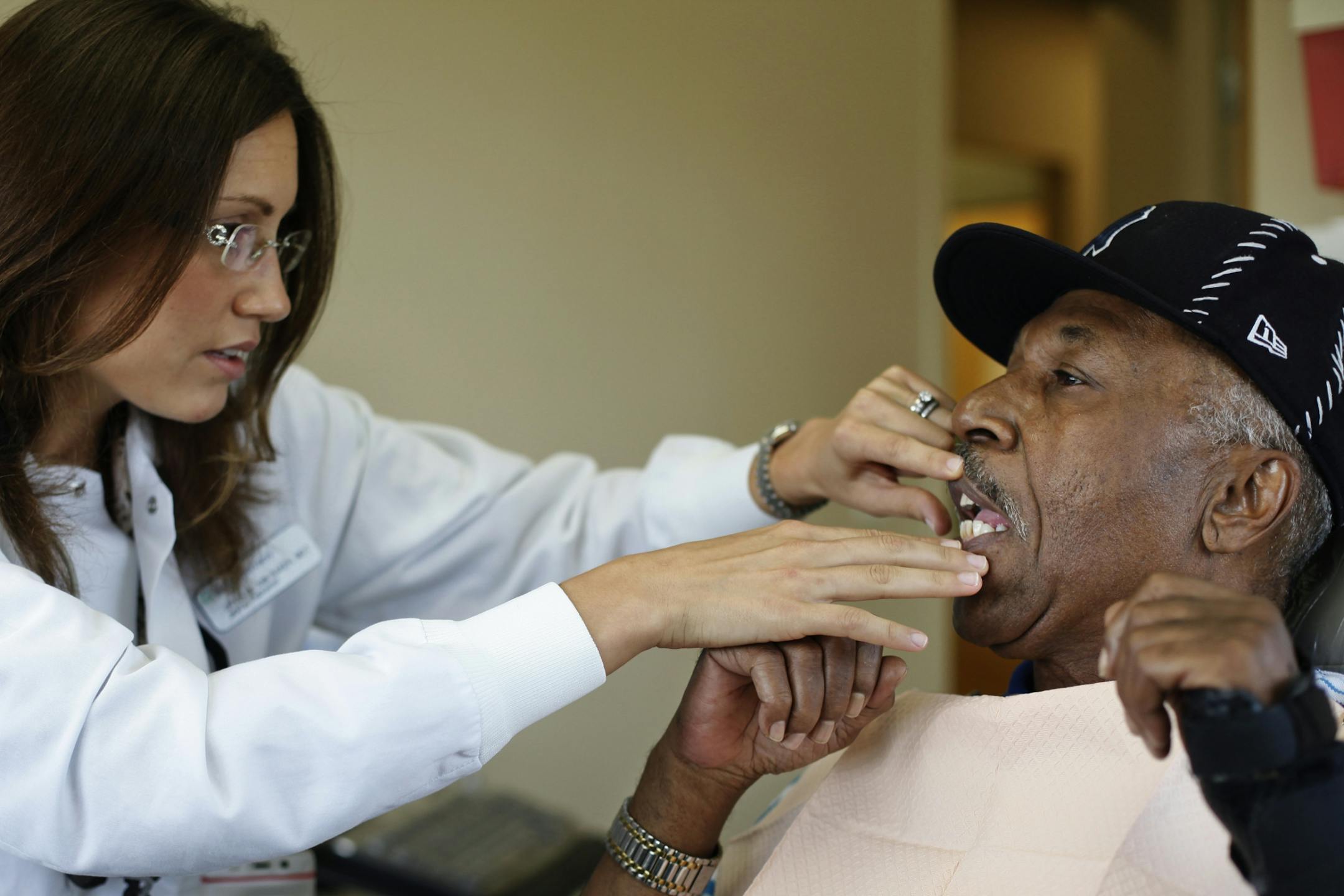
Laura Dvorak had never heard even heard of a dental therapist until she showed up at a St. Paul clinic last week to get three cavities filled.
But after spending more than an hour in the chair with Crystal Ann Baker, a newly hired dental therapist at HealthPartners' Midway Clinic, Dvorak says she's a fan.
"I was very satisfied with her work and her bedside manner and her training," said Dvorak, 35, of Maple Plain. "If you hadn't told me she wasn't a dentist, I would have assumed she was."
Dental therapists span the divide between the hygienist and the dentist, similar to the way a nurse practitioner or physician assistant works in a medical setting. They practice under a dentist's supervision and are trained to do such things as fill cavities, place crowns, give local anesthesia and, in some cases, pull teeth.
A year after the first cohort of dental therapists began practicing in Minnesota, the new and controversial breed of dental worker is showing early signs of acceptance.
"We're kind of setting the model," said Baker, who was hired by HealthPartners in March. "There's still a lot of resistance. Not because people are worried that we're ill-qualified; it's more about how do we incorporate this new profession into our practice?"
While the state has licensed just 15 dental therapists, their arrival comes at a time of growing need. Under the federal health care law, as many as 5 million more children will be covered in 2014, and nationwide attention is turning to dental therapists as one way to help more disadvantaged people get dental care at a lower cost.
Alaska became the first state to use dental therapists in 2005, but their work was established under federal law and remains limited to native villages. Minnesota is the only state to license dental therapists, under a 2009 law.


