

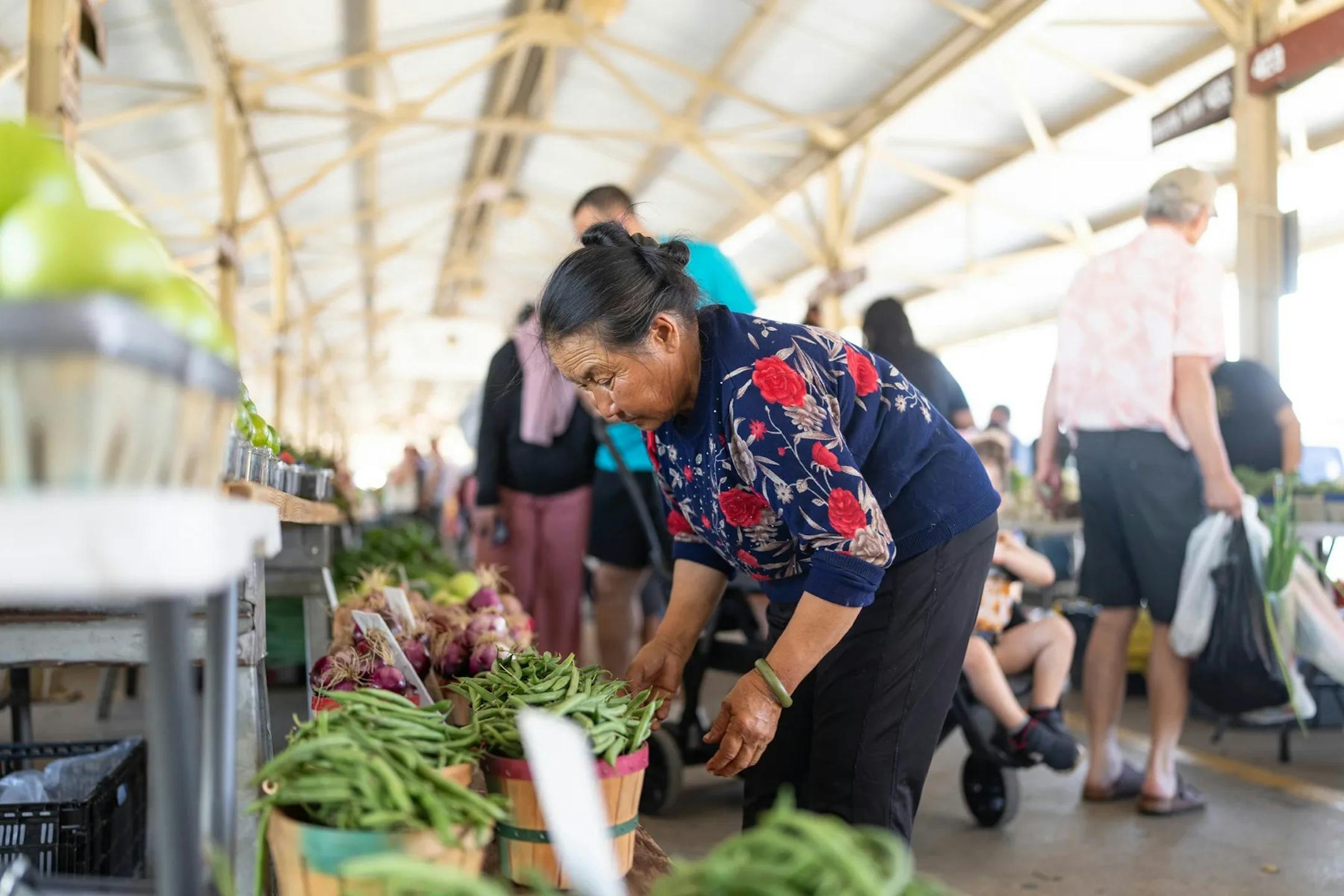
For more than three decades at the Minneapolis Farmers Market, Mai Yang, 66, has sold everything from blueberries and tomatoes to food prized in Hmong cuisine including bitter melon, Malabar spinach and sweet potato leaves.
Her family-run farm, based in Hastings, spans three generations, with her daughter Stacy and granddaughter joining her at the market on the weekends.
Stacy Yang jokes that she doesn’t have a green thumb, but says farming is at the center of her mother’s life.
“My mother takes a lot of pride in her work, even when it comes to presenting the vegetables a certain way for the farmers market,” Stacy said. “We’re trying to keep the business as long as possible because this is her only source of income.”
Cuts in July to Supplemental Nutrition Assistance Program (SNAP) funds, however, mean that Mai Yang might have to rethink what she plants next year. SNAP customers, many of whom seek produce specific to Hmong cuisine, contribute 25% to 30% of their income every month.
The cuts to SNAP, which allows 440,000 Minnesotans to buy food at grocery stores and farmers markets, were part of President Donald Trump’s budget bill.
A second program, cut this spring, is also affecting small family farms in Minnesota. In March, the USDA cancelled $18 million in funding for food assistance programs: Local Food Purchase Assistance (LFPA) and Local Food for Schools (LFS), which are used by food banks and schools to buy fresh produce from local farmers.
Minnesota is home to over 65,000 farms. Of those, less than 1% are run by farmers of color (as of 2022). That number, though small, is significant to the state’s food system.


