Can this public hospital survive — and could Minnesota survive without it?

Closure of taxpayer-supported HCMC “ain’t happening,” Hennepin County says, but changes are needed to stem financial losses.

The Minnesota Star Tribune
October 5, 2025 at 12:00PM
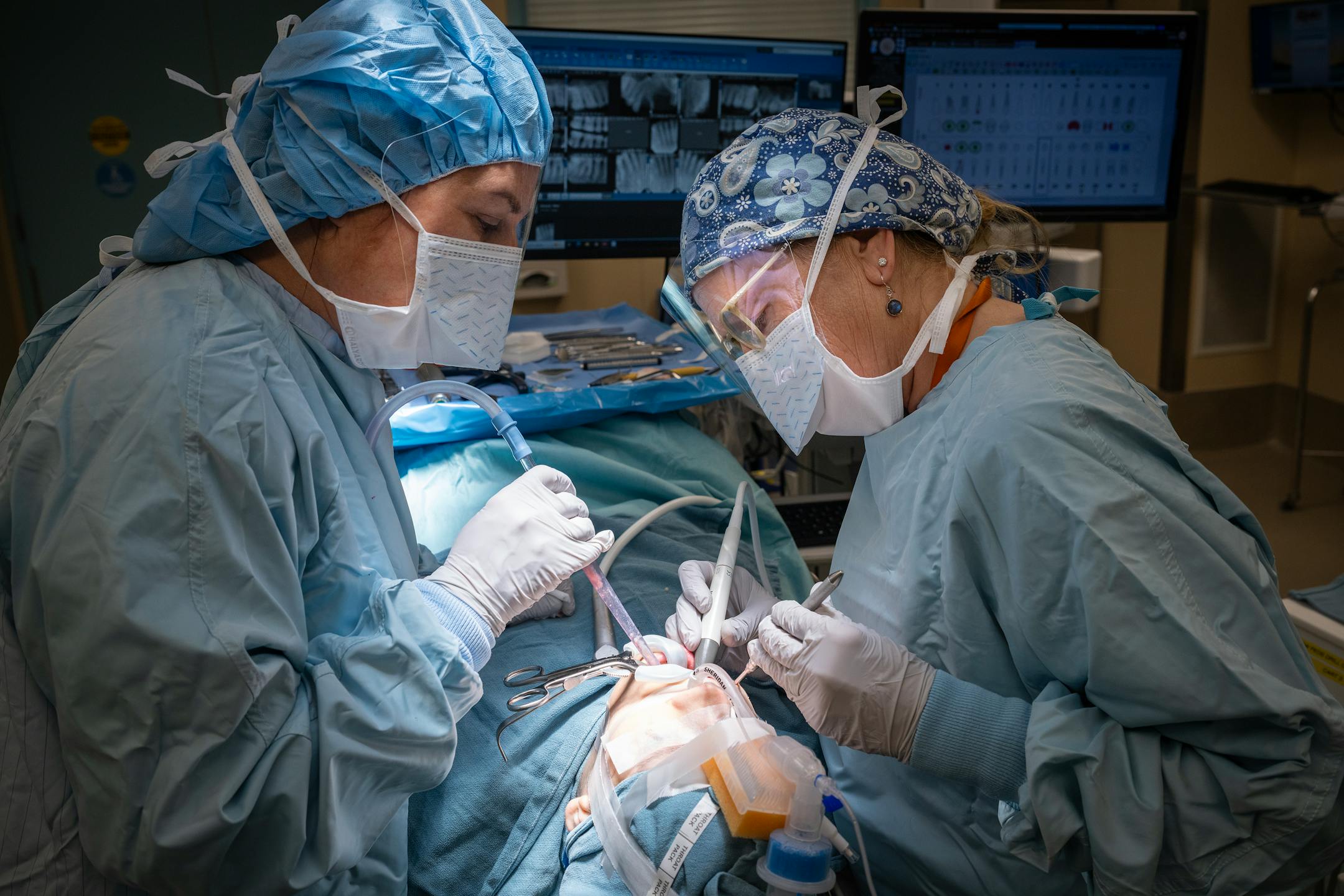
Dentist Dr. Cynthia Strand, right, and dental assistant Erin Muzzio perform dental care on Susan Linnell under general anesthesia at HCMC in Minneapolis last month. (Leila Navidi/The Minnesota Star Tribune)

Three people arrived at HCMC in downtown Minneapolis on a recent Friday around the same time and for the same reason: They could not find the health care they needed anywhere else.

Audrey Gohre’s feet were mangled by a boat propeller in Lake Waconia. Skyler Seidel burned 40% of his skin when he tripped carrying a pot of boiling oil in Sturgis, S.D. Susan Linnell had the dental problems of a woman her age, 57, but the mental capacity of a toddler.

“She can’t cooperate,” said her mother, Carol Linnell. “I worry about her biting the dentists.”

The specialized care of all three patients last month underscores what’s at stake as Hennepin County retakes direct control of the taxpayer-supported hospital and its parent health care system, Hennepin Healthcare.

Without increasing funding or making cuts, the county can’t afford HCMC and its worsening financial problems. It also can’t afford to lose the urban medical center and its unmatched expertise in areas such as wound and burn care.

“Those kinds of services, that’s what the state expects HCMC to offer,” said Jeffery Lunde, a county board member who advocated for the change in governing.
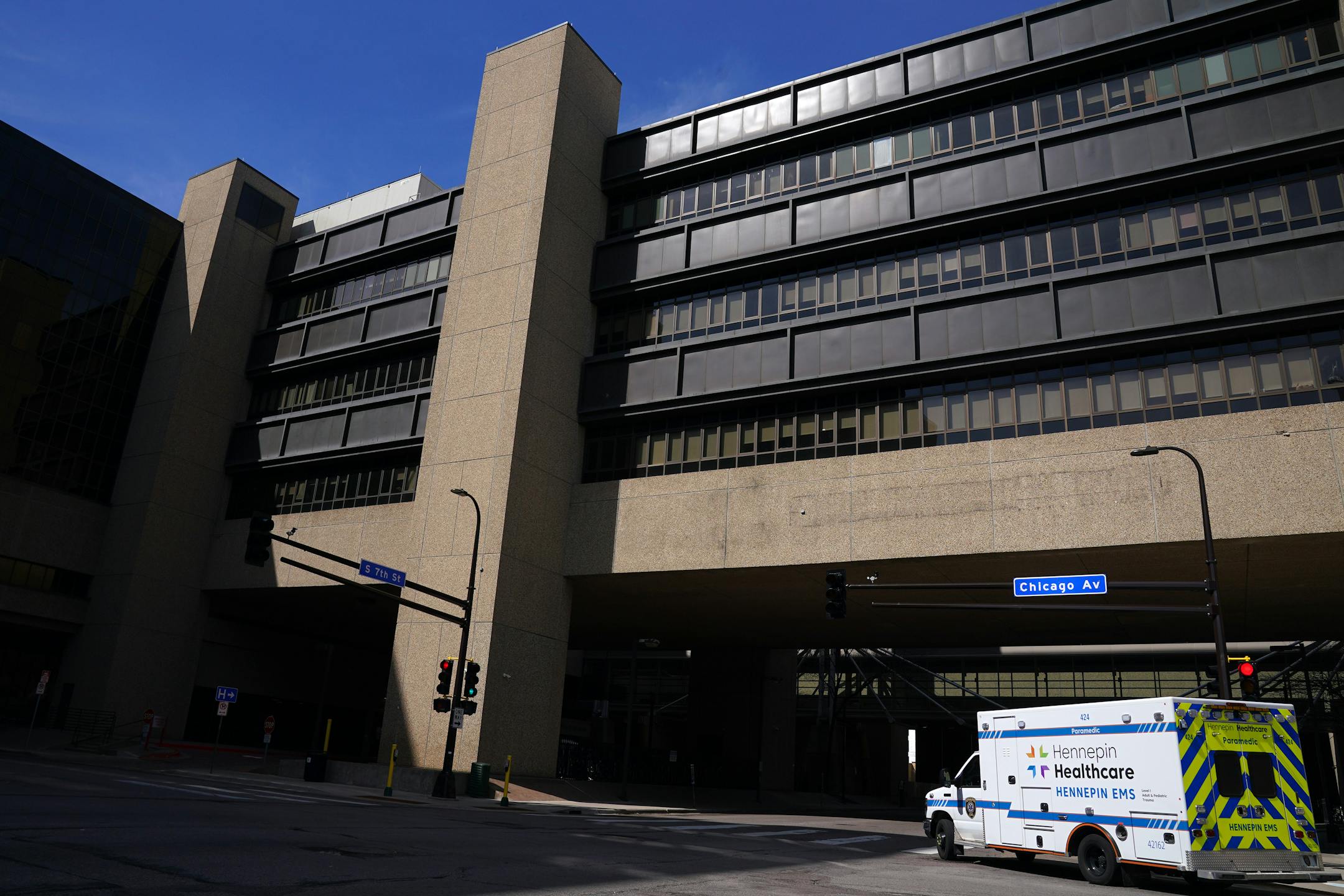
The emergency department at HCMC is the state’s busiest, treating 92,000 patients each year. (Anthony Soufflé/The Minnesota Star Tribune)

Formerly known as Hennepin County Medical Center, HCMC is nationally known for treating traumatic injuries and training the next generation of U.S. emergency room physicians. Its emergency department is the state’s busiest, treating 92,000 patients each year. Locally, the hospital is known as a safety net for patients who can’t afford their care; it ranks 12th in Minnesota for total patient admissions, but second for uninsured patients.

Lately, HCMC is known for something else: losing money.

The public hospital spent $59 million more on medical care than it made in 2023, and has lost money on operations in six of the last eight years. With $1.3 billion in operating expenses, it is the largest of 31 Minnesota hospitals in financial distress.

Those losses compelled county leaders in August to dissolve the volunteer board that had managed the hospital since 2007. Dr. Tom Klemond, interim chief executive, said the new leaders face difficult choices, including perhaps shuttering redundant services and partnering with others to care for patients. But the hospital must preserve its charitable mission, he argued, and maintain services — even money-losers — that patients can’t find elsewhere.

“What is it that only we can do?” Klemond said. “What is it that is so, so dear to us that we would never not do it?”

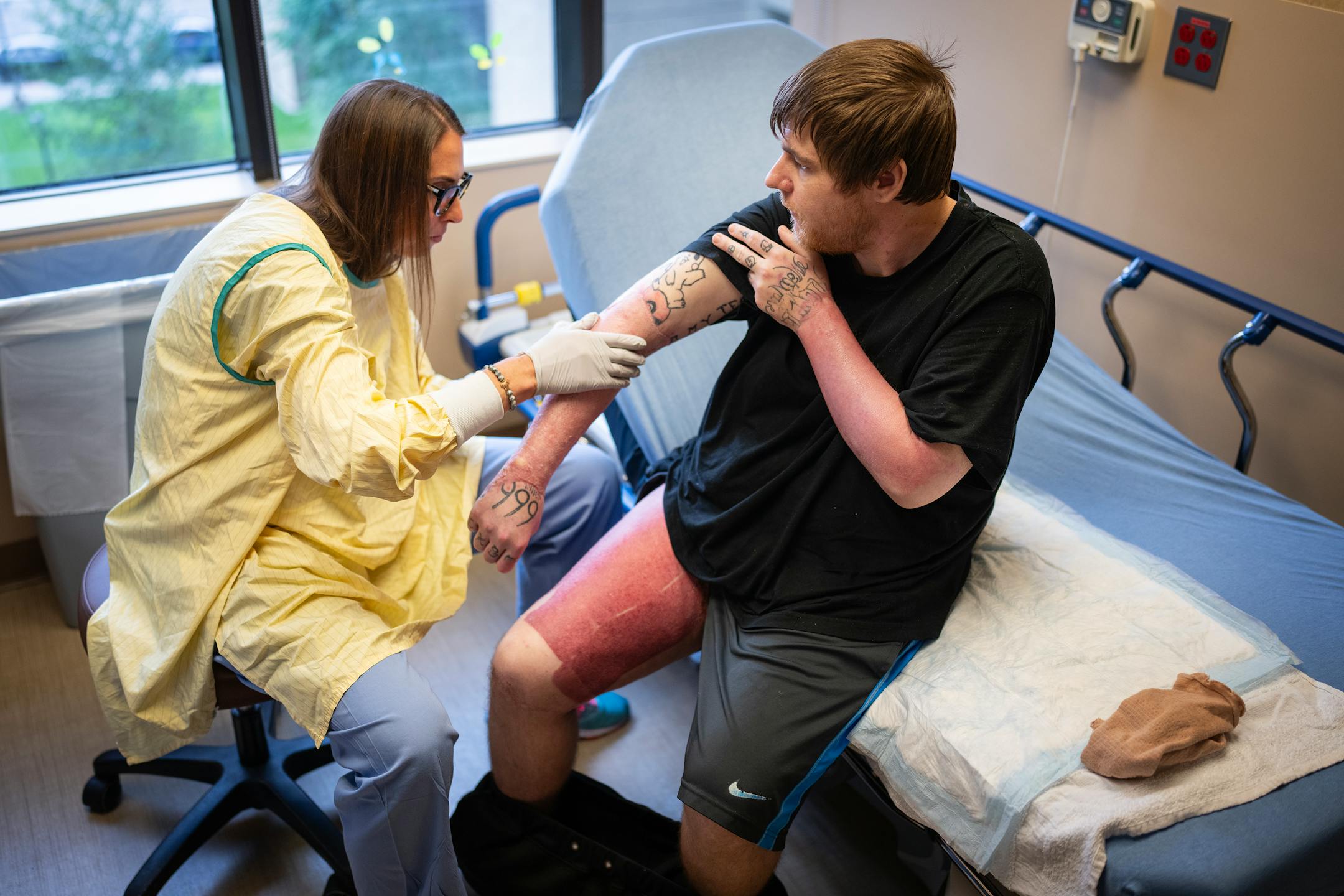
Skyler Seidel of Sturgis, S.D., burned over 40% of his body in an accident with hot frying oil. He talks to physician assistant Emily Schwantke during a follow-up appointment in the HCMC Burn Center. (Leila Navidi/The Minnesota Star Tribune)

Big on burn care

HCMC’s 17-bed inpatient burn unit is one of the nation’s largest, treating and managing skin wounds from burns, frostbite, infections and other causes. Its service area stretches from Michigan and Montana.

Seidel was flown 600 miles to HCMC on July 31 after being scalded by leftover fryer oil at work. The 34-year-old remembered unyielding pain until he was sedated. His right wrist was burned on all sides and curled in a fist.

“I don’t wish it on my worst enemy,” he said.

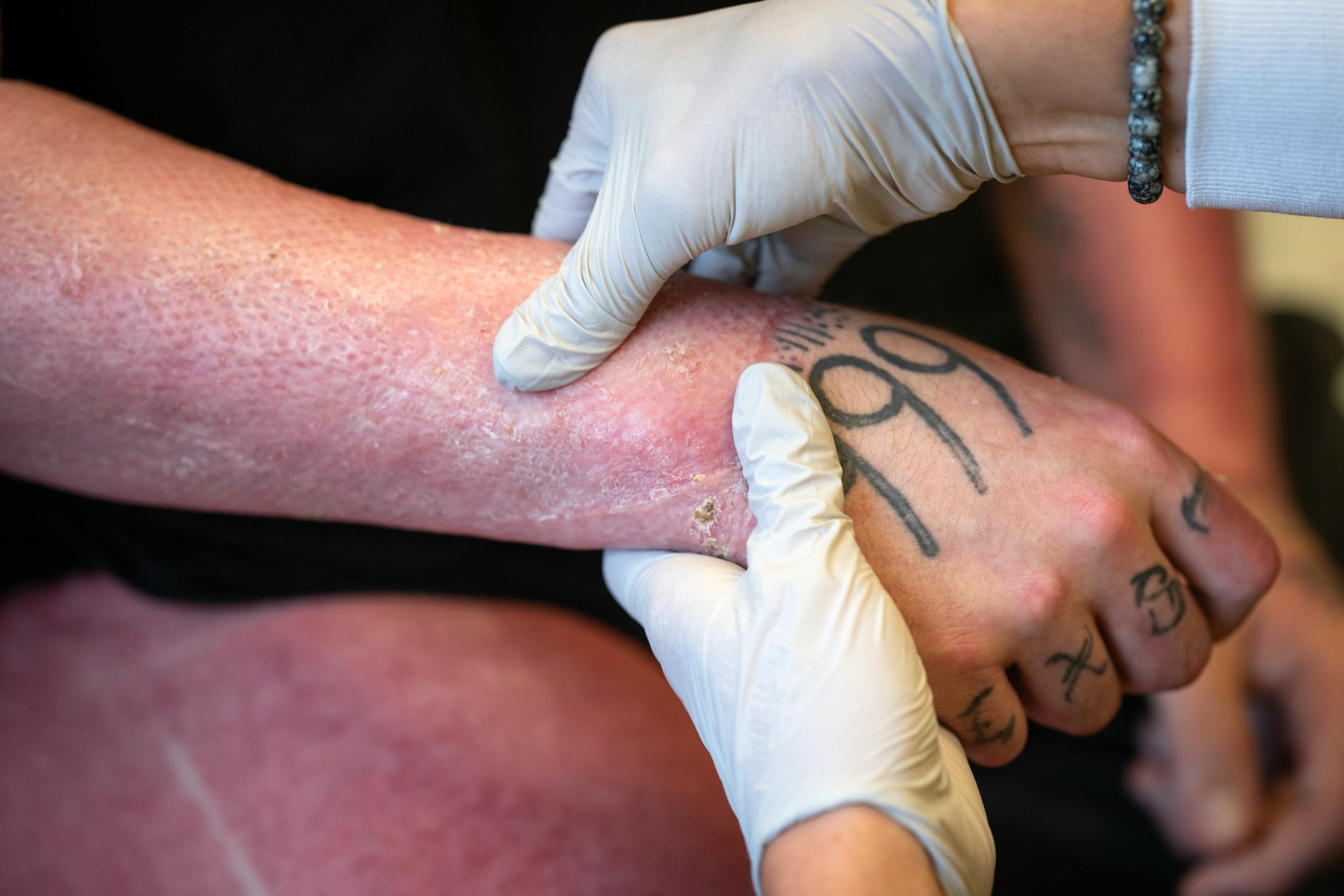
Seidel’s next clear-headed memory was two weeks later, at HCMC. A plastic-like coating covered his arms, where doctors removed dead skin until he received surgical grafts of replacement skin.

Sept. 19 was Seidel’s first checkup back at HCMC after he was discharged following a month in the hospital. The surgically attached grafts were pink and distinct from the rest of his skin. His right arm was coated with scars and peeling skin in place of old tattoos. He could move his right wrist, but it hurt and trembled. Tasks like opening a bottle were too difficult.

Burn specialist Emily Schwantke offered encouragement.

“This is all healed,” said the physician assistant, gently touching the grafts on Seidel’s legs and torso. “This looks great.”

Seidel worried that he damaged his wrist by doing too many physical therapy exercises at home, but Schwantke said he needed to keep doing them to regain motion. She recommended ibuprofen on top of prescription painkillers.

Seidel left relieved. He was on track to get back to work, with one condition.

“I will never touch a fryer,” he said. “Never again.”

Many patients are injured at work, which helps HCMC’s burn unit financially because worker’s compensation plans like Seidel’s tend to pay better than health insurance, said Dr. Jon Gayken, a medical director for the burn unit.

But the unit takes all comers. Gayken was a patient of the HCMC unit himself at age 17, when a bacterial infection caused large swatches of skin to die.

Some patients struggle with the high cost. If hospital units for burn injuries were more profitable, Gayken said, “you probably would have a lot more burn centers.”

Skyler Seidel of Sturgis, S.D., is recovering from an accident, with help from HCMC's Burn Center. (Leila Navidi/The Minnesota Star Tribune)

Offering a rare therapy 24/7

One of HCMC’s biggest financial challenges is its share of patients who are uninsured or covered by Medicaid, the state-federal health insurance program for the poor and disabled. The program, known as Medical Assistance in Minnesota, typically covers only about 70% of hospitals’ reported costs to treat their patients.

Hospitals often struggle to overcome such losses when more than 25% of their patients are on Medicaid. At HCMC, they make up 48% of patient care.

It’s hardly a new problem. Hennepin Healthcare spent $200 million to open a gleaming specialty center across from the hospital in 2018 with a key goal: entice privately insured workers from downtown offices to balance out its Medicaid population.

Then COVID-19 hit, and people stopped coming downtown as much for work, much less for health care.

“I don’t think [the new building] has had the effect at anywhere near the scale that we were hoping for,” Klemond said.

HCMC’s hyperbaric medicine unit is an exception, sealing patients in pressurized chambers that accelerate the distribution of oxygen to damaged tissues and hasten healing.

Patients travel from across Minnesota for hyperbaric sessions, called “dives,” in a unit that looks and feels like a submarine.

Gohre, 18, started treatments amid two surgeries to save her toes, which she said had been “chopped up” on Aug. 6 by a boat propeller.

Doctors recommended 30 sessions over two months to hasten growth of blood vessels to her feet. The schedule required the Waconia High School graduate to delay a college move to Nebraska, but she was willing if it helped her walk.

“I can like stand to brush my teeth now,” she said.

Hyperbaric units have sprung up nationally, scheduling time for patients in small, single-person tubes. They are commonly used to reduce the side effects of cancer-killing radiation, among other therapies.

HCMC goes further, operating three room-sized chambers, including one spacious enough for eight patients in recliners. A technician accompanies them, allowing the unit to treat more fragile patients, including diabetics with nagging wounds.

The unit also is open 24/7 and staffed with nurses for emergencies, including a record 53-hour session that saved a Lake Superior scuba diver.

Gohre was one of 24 hyperbaric oxygen patients on Sept. 19, including two flown from Mankato to treat carbon monoxide poisoning. Two others had strokes that threatened blindness unless the treatment could hasten healing around their eyes.

Hyperbaric unit manager Ryan Wudtke said HCMC could save money by sticking to scheduled sessions and eliminating emergency care, but that doesn’t seem right, given the absence of other providers: “We just can’t do that to our community.”

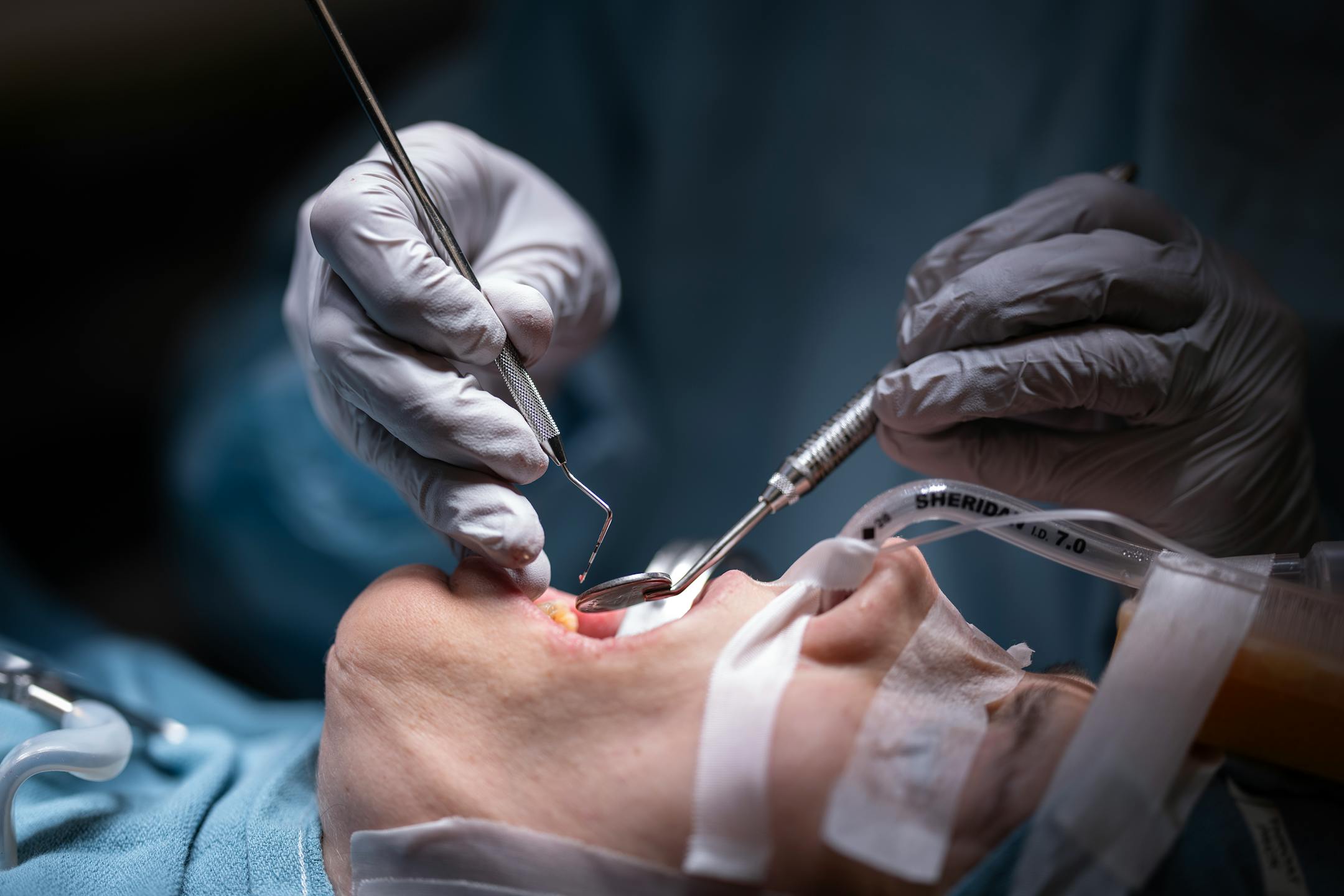
Dr. Cynthia Strand performs routine dental care on patient Susan Linnell. HCMC is one of the few hospitals in the state that provides complete dental care to developmentally disabled patients by putting them under general anesthesia. (Leila Navidi/The Minnesota Star Tribune)

Cash flow problems

Hennepin Healthcare already receives extra public support, including around $40 million per year from county taxpayers to pay medical bills of patients who can’t afford their care.

The provider also receives federal boosts for medical education and the disproportionate cost of treating so many uninsured patients, and was the first in Minnesota to set up a directed-payment taxing scheme that maximizes payouts from Medicaid.

Hennepin Healthcare nonetheless was having cash flow problems in mid-summer, prompting the county board vote to supplant its governing board.

Leaders of the former board opposed the change, arguing it would politicize hospital oversight. Lunde said he believes that the county can save millions by eliminating administrative redundancies.

Closing HCMC “ain’t happening,” nor can it lose its trauma focus or unique specialties, Lunde said. “Those services are going to remain there. We’re just going to have to find a way to take care of it.”

HCMC is one of the only Minnesota hospitals that provides complete dental care to developmentally disabled patients by putting them under general anesthesia. Other than brief checkups, Linnell, the 57-year-old with a developmental disability, hadn’t had a comprehensive exam since 2018 because she can’t comply with dentists’ instructions.

“Her vocabulary is maybe three,” her mother said. The family waited nine months for the appointment because of demand and other hospitals dropping the costly service.

Dentist Cynthia Strand led an OR team Sept. 19 to check Linnell’s teeth and then immediately treat problems.

“You have to guess at how much time to allow,” Strand said while exploring her patient’s gums. “You work until you’re done.”

Strand filled five cavities and capped five teeth with sealants. Linnell’s teeth had eroded, the dentist said, probably because of acid reflux that she couldn’t communicate at her group home in Newport.

Linnell awoke to see her dentist and parents. She was confused but not biting her wrist, which is her way of communicating pain and fear. Seidel by that point in the day was halfway home to Sturgis, eager to strengthen his burned forearm.

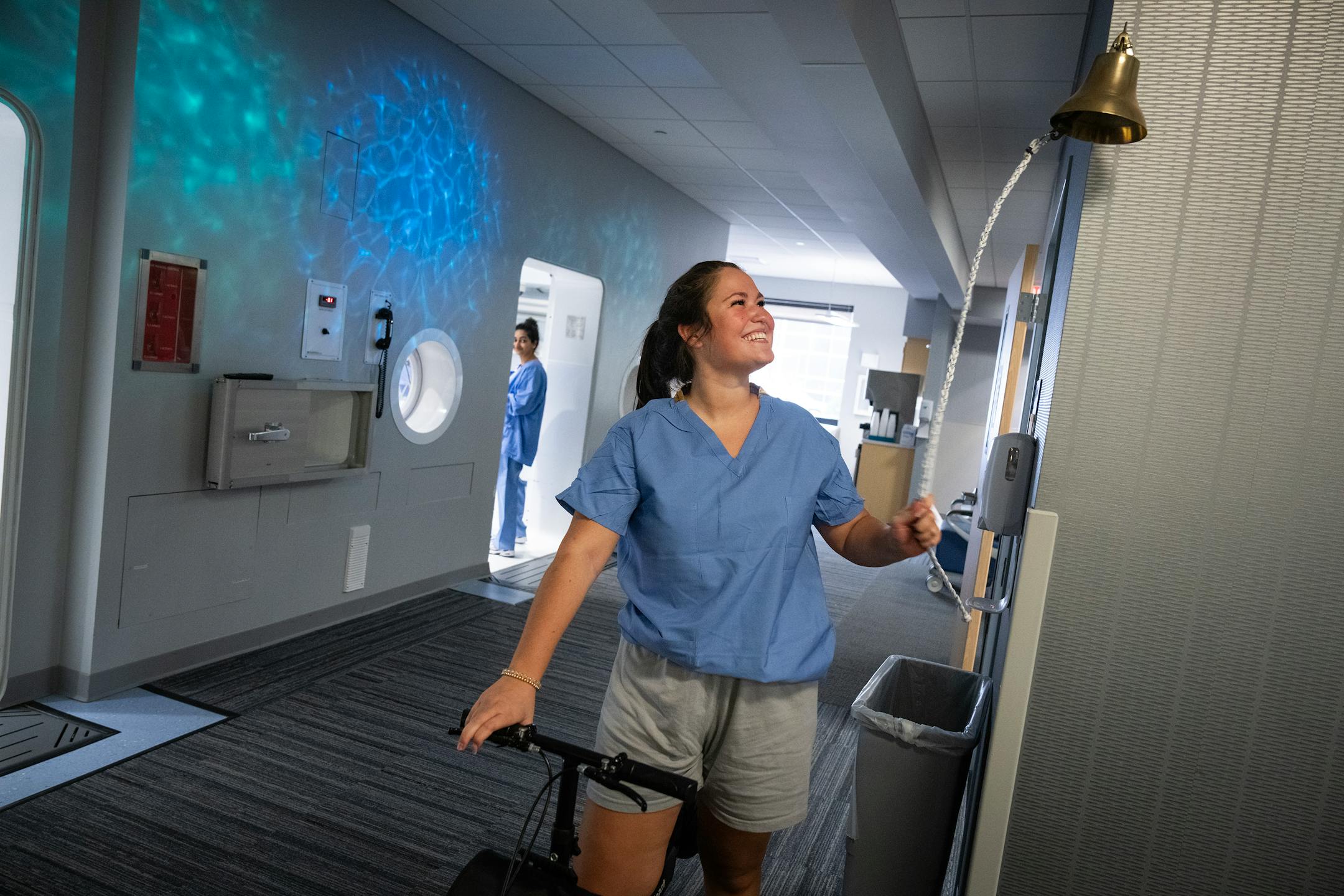
Sept. 19 was big for Gohre: her final hyperbaric session. She had gained enough strength in her left leg to progress from a wheelchair to a scooter. She rolled out of the chamber and down the hall to a replica diving bell, which patients ring to signify the end of their treatments.

Technicians and nurses gathered with Gohre for a picture. The healing from her traumatic injury was coming to an end, but weeks of therapy and strength-building were ahead. She hoped to go to college yet this fall.

“I’ll come back and visit,” she said to a nurse.

“On two feet,” the nurse replied.

Audrey Gohre, 18, of Waconia, who was injured by a boat propeller, rings the bell after her final hyperbaric treatment at HCMC. (Leila Navidi/The Minnesota Star Tribune)
about the writer

about the writer

Jeremy Olson

Reporter

Jeremy Olson is a Pulitzer Prize-winning reporter covering health care for the Star Tribune. Trained in investigative and computer-assisted reporting, Olson has covered politics, social services, and family issues.

See Moreicon

More from Health Care

See More
Nancy Ingham gives newborn Sophia Rash a hepatitis B shot several hours after she was born, Jan. 17, 2006.
Renée Jones Schneider/The Minnesota Star Tribune

A federal vaccine advisory committee voted on Friday to end the longstanding recommendation that all U.S. babies get the hepatitis B vaccine on the day they're born.

card image
Nancy Ingham gives newborn Sophia Rash a hepatitis B shot several hours after she was born, Jan. 17, 2006.