Growing up, there was a word in Ojibwe that Faron Jackson heard from his father on the good days. The days when they went together to pick berries, to hunt, to harvest manoomin, also known as wild rice..
Minotaagwad, his father would tell him. It’s a good thing we’re doing today.
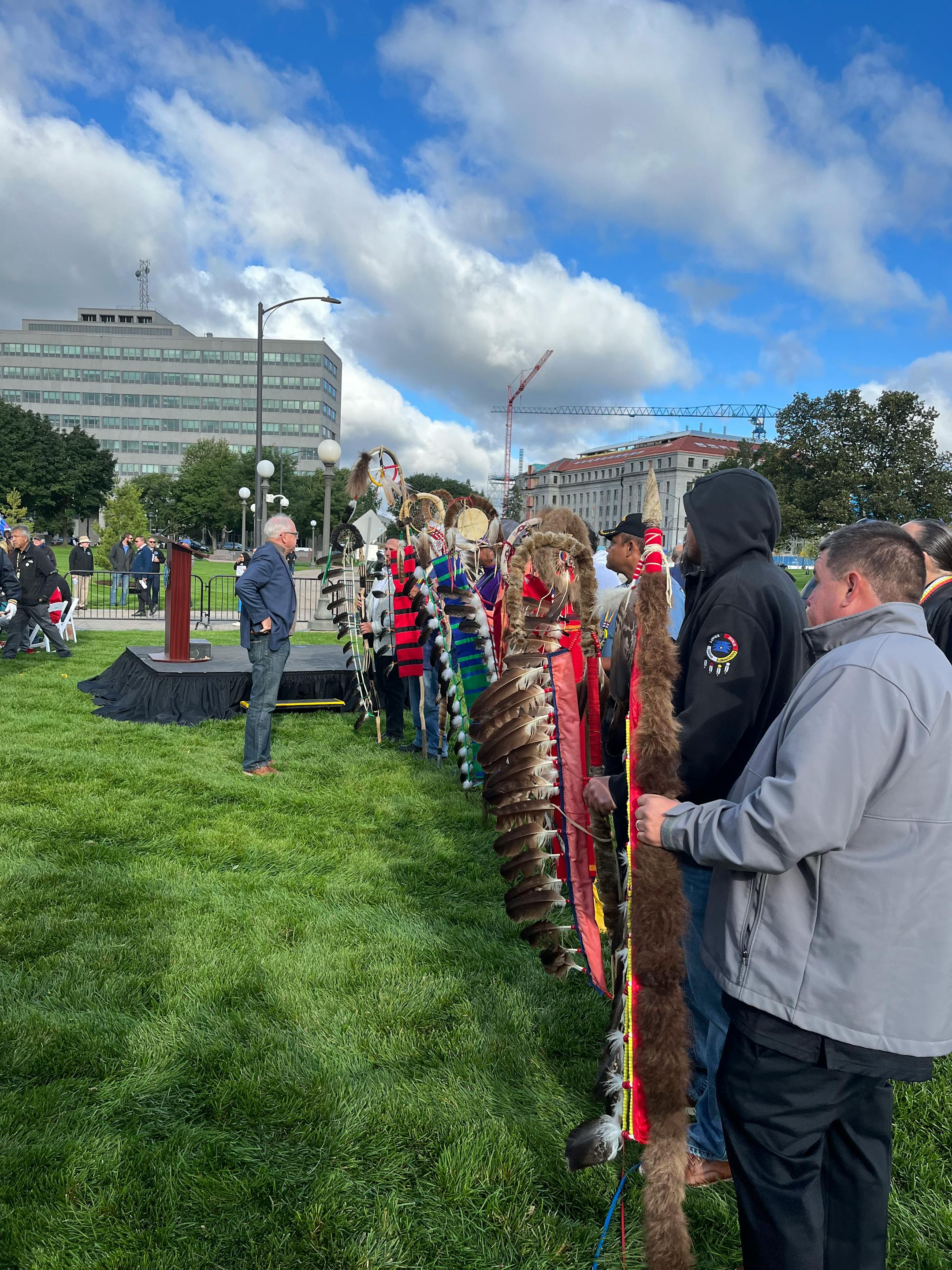
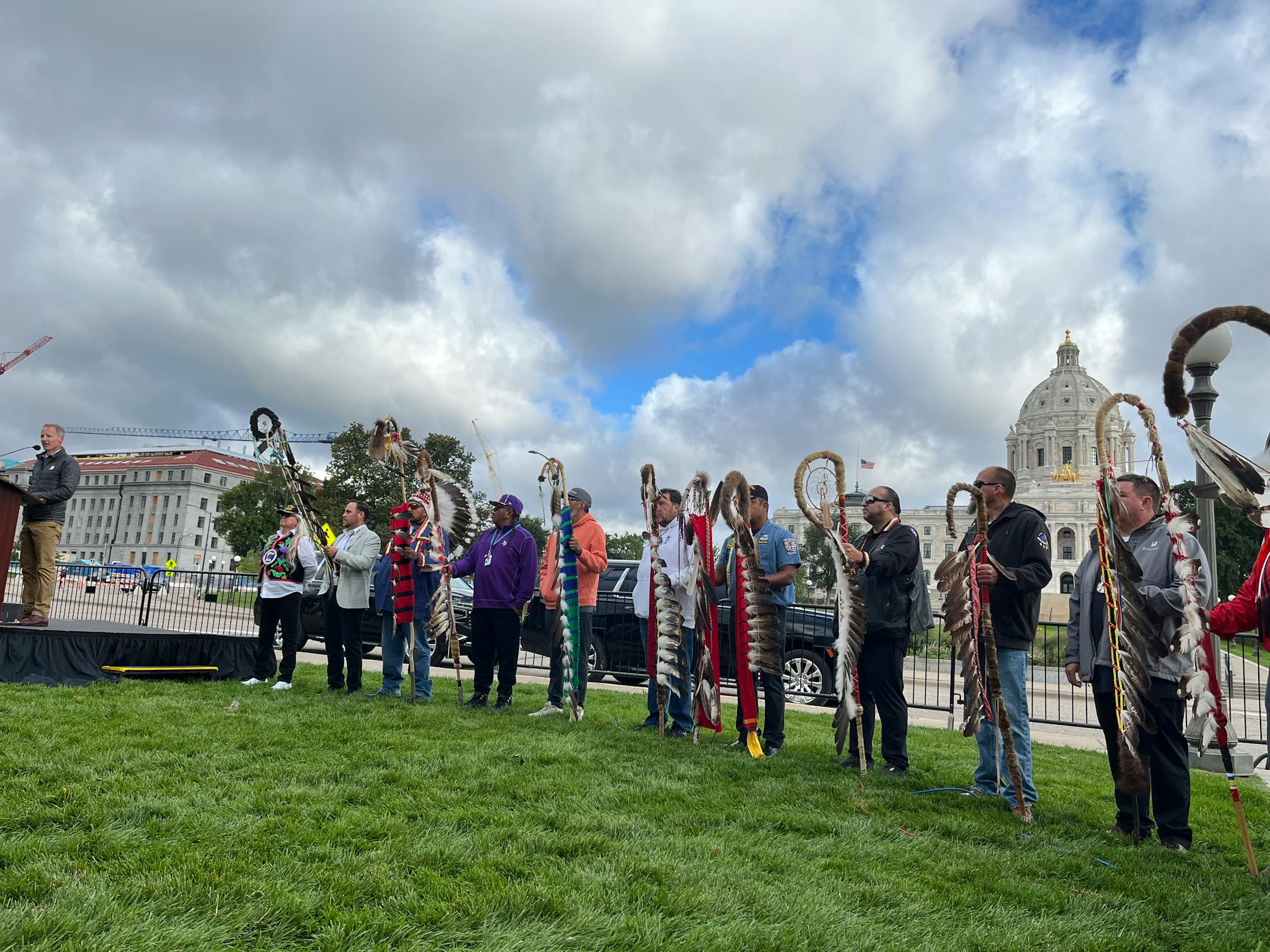
On Friday, Jackson, now chairman of the Leech Lake Band of Ojibwe, stood on the grounds of the State Capitol, now home, for the first time ever, to the flags of all 11 of Minnesota’s sovereign tribal nations.
“It’s a good thing we’re doing today,” he told the crowd gathered at the state’s new Tribal Flag Plaza.
Leech Lake’s flag fluttered beside the flags of the Lower Sioux Indian Community, White Earth Nation, Grand Portage Band of Lake Superior Chippewa, Shakopee Mdewakanton Sioux Community, Mille Lacs Band of Ojibwe, Red Lake Nation, Fond du Lac Band of Lake Superior Chippewa, the Upper Sioux Community, Prairie Island Indian Community and Bois Forte Band of Chippewa.
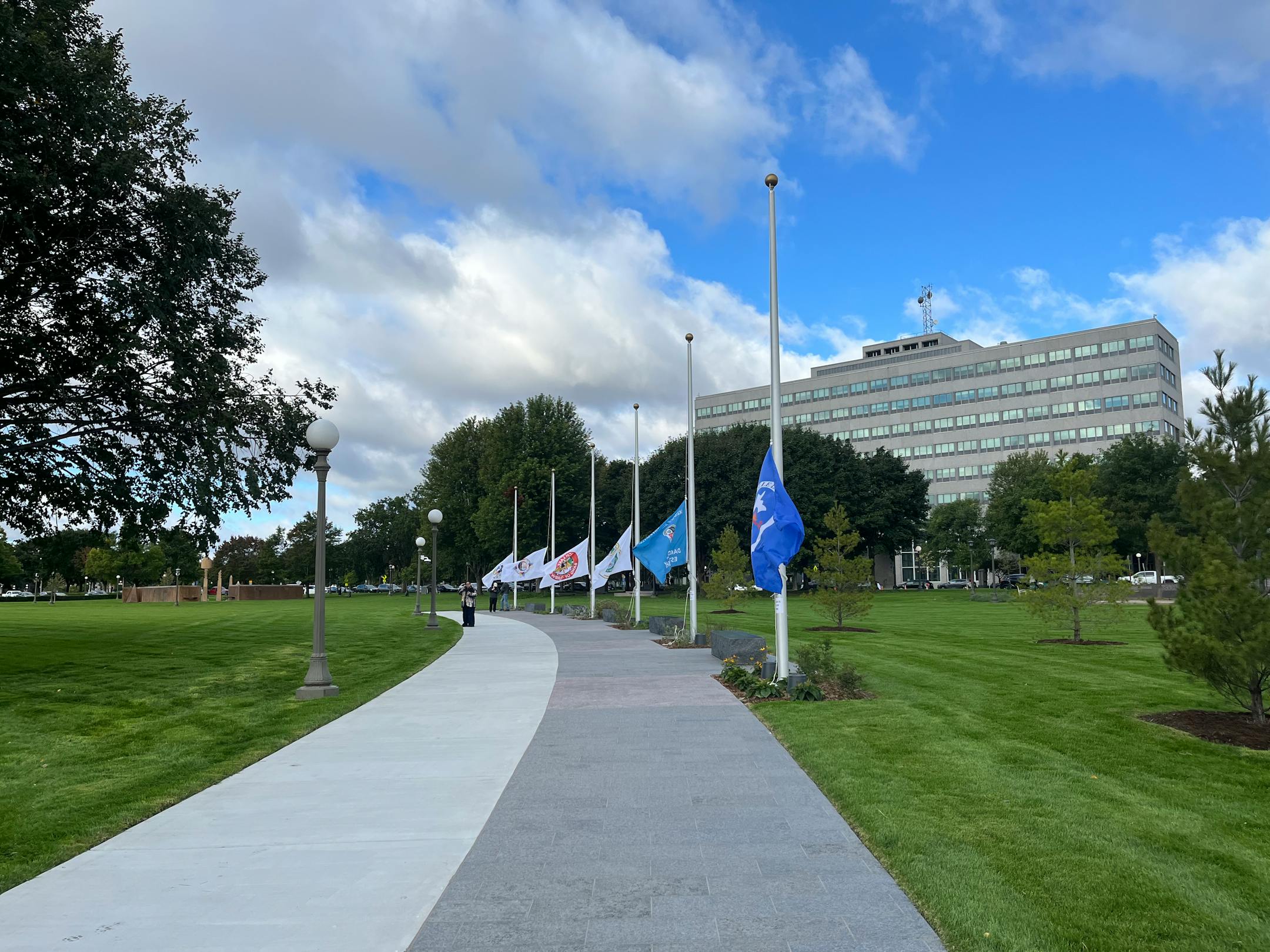
At the foot of each flagpole grew plants sacred to each nation, between flagstones of Minnesota granite, flanked by young white pines that will one day offer shade and shelter from the wind. Creating this plaza — modeled after similar installations in Montana and Oklahoma — has been in the works for years. All part of the ongoing effort to turn the Capitol Grounds into a more welcoming, inclusive space for all. Including the people who were here first.
“This was always Dakota land,” said Kevin Jensvold, tribal chairman of Pezihutazizi Oyate, the Upper Sioux Community. The Dakota people have been here for 10,000 years, “and we’ll be here for 10,000 more.”
In the Dakota creation stories, the world began a few miles from the Capitol grounds, at Bdote, the confluence of the Minnesota and Mississippi Rivers. Long before Zebulon Pike arrived, seeking land for the site they would eventually call Fort Snelling, and would eventually serve as a concentration camp for the Dakota as they were forced from their land — an atrocity that would be enshrined on the state flag and seal for generations.