


It took a while for the layoff notice to reach paleontologist Nicole Dzenowski.
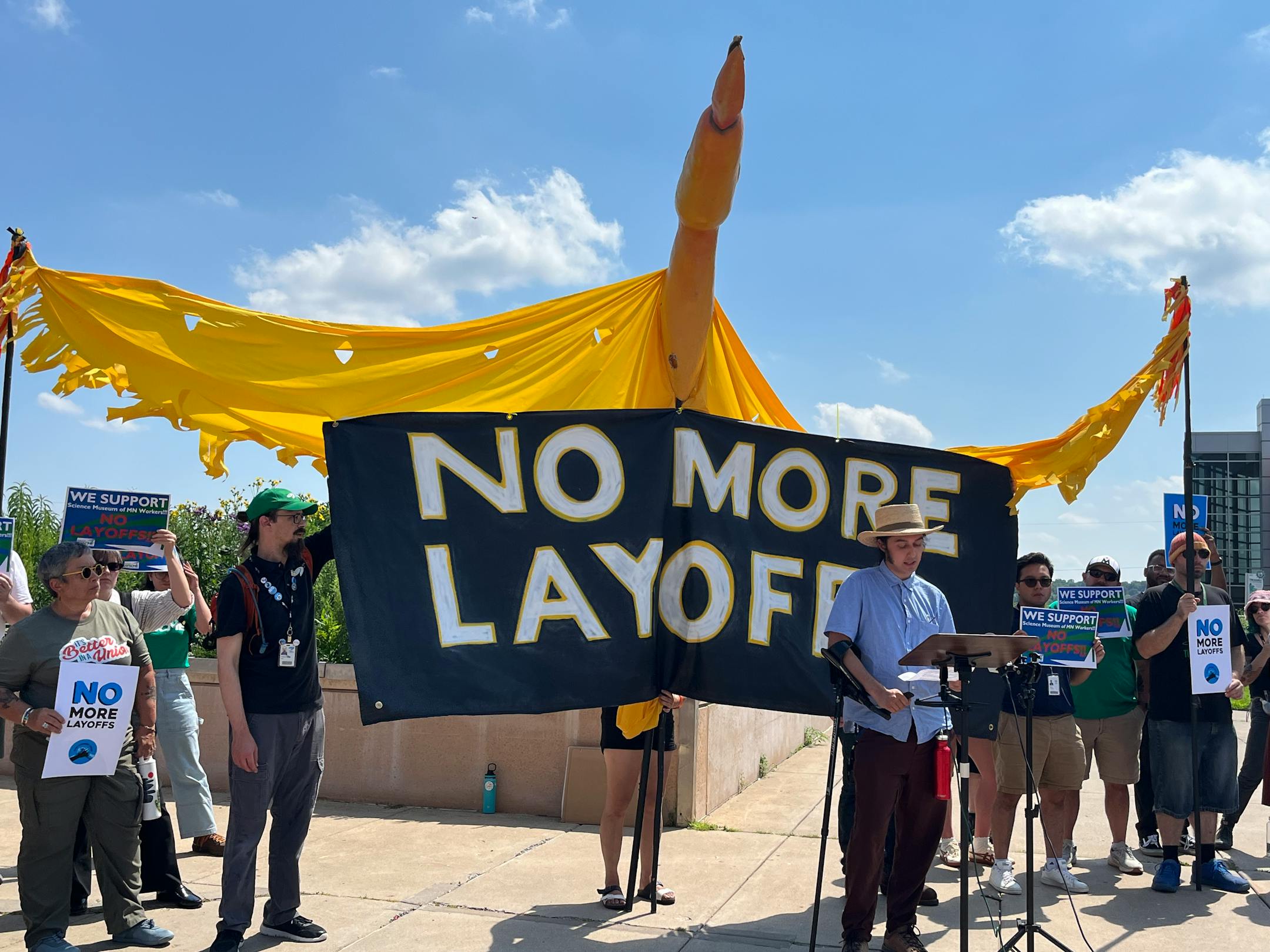
“I found out I was laid off in the middle of field season in Montana, when I crested a hill that finally gave me enough service for the messages that my position had been eliminated,” Dzenowski said Tuesday afternoon, standing in front of the Science Museum of Minnesota, surrounded by museum staff reeling from another round of layoffs.
Facing state and federal budget cuts, rising costs and declining attendance, the museum announced earlier in July that it was eliminating 43 jobs — cutting 13% of its remaining workforce, slashing millions from its own budget. A “comprehensive restructuring,” the museum called it.
For almost 120 years, the Science Museum has collected wonders and shared them with the state. Fossils. Antiquities. Questionable medical devices. A giant astronaut. Cool rocks. Residents bring in their own treasures and set up shop in the Collectors’ Corner. Museum scientists operate a field research station on the St. Croix, working to reduce pollution in the watershed. Thousands of children spend their summers at the museum’s camps each year. Thousands more are visited by staff who bring the exhibits and lab equipment to schools and communities across the state.
The restructuring hit scientists, summer camp staff and ticket-takers who make $35,000 a year and want to know why their jobs are the ones getting cut at a museum where the CEO earns six figures.
Museum staff rallied with members of AFSCME Council 5 under a great yellow puppet — of a bird? Pterodactyl? — and a banner reading “no more layoffs.” People who devote their lives to museum work know how to catch the public’s eye.
One of the eliminated positions was the paleontology lab manager, Dzenowski’s job. Initially, she said, the museum planned to have volunteers run the lab, but eventually offered the position back to her, but only part-time.
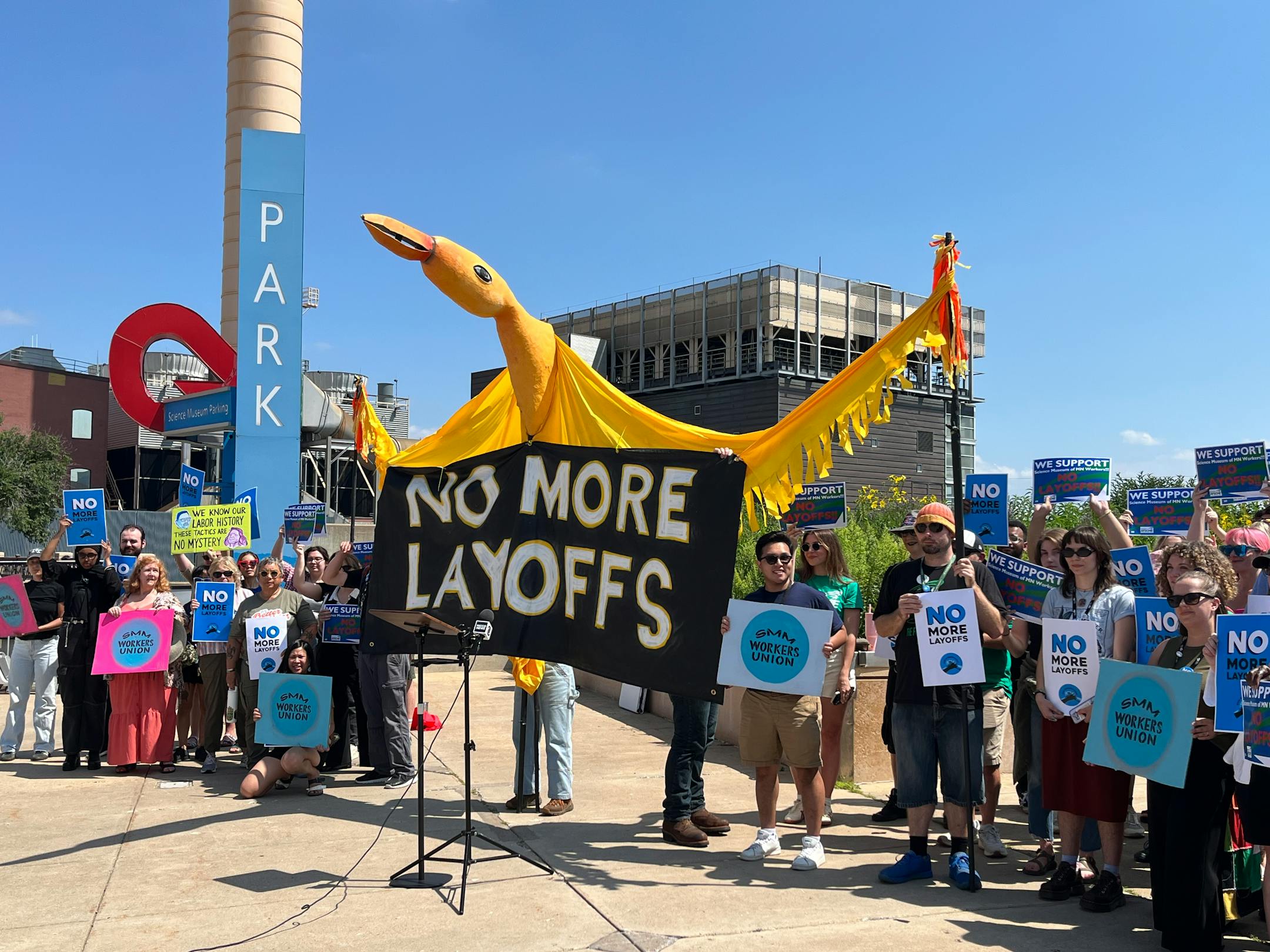
The Science Museum is a union shop, and the terms of its recently negotiated contract bar management from firing staff and replacing them with volunteers. The lab is the only one of its kind in the state, and Dzenowski supervises a team of trained volunteers who clean, preserve and prepare thousands of fossils for study.


