

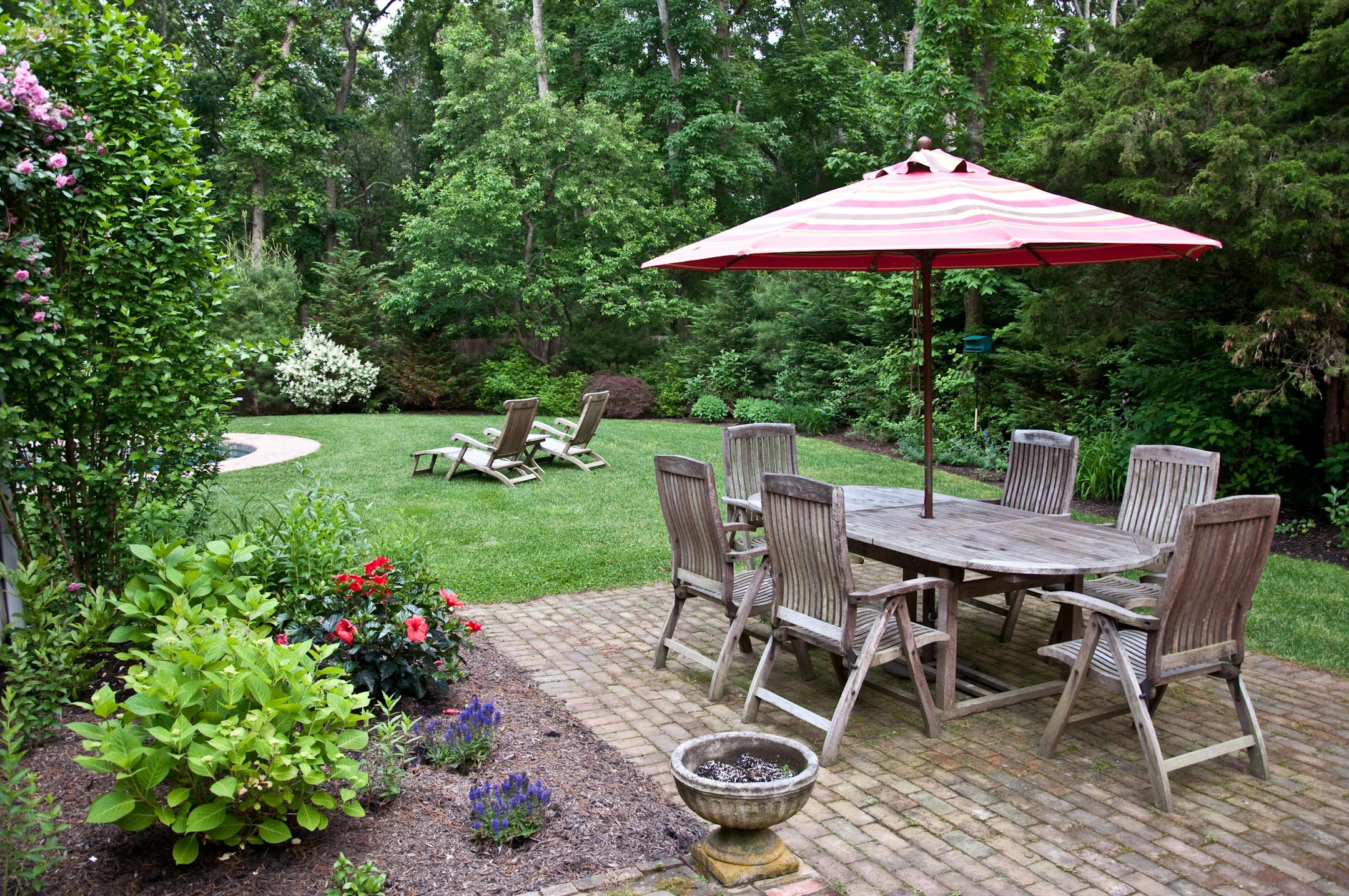
Q: I recently had a flagstone patio installed in my backyard. I love the patio, but I also love having my bird feeder, so the flagstones are covered with bird poop. I routinely take down the feeder at dusk and then hose the pavers, but that doesn’t always remove the stains. Any recommendations, other than taking down the bird feeder?
A: Birds don’t have separate systems for eliminating solid and liquid waste, like we do. With a few exceptions - hummingbirds being one - it all comes out in one sticky, acidic substance that dries hard. The droppings make a real mess on a patio near a feeder or on a deck overhung by trees where birds perch. If the birds have been feeding on berries, the droppings can be red or purple, and if they land on awnings or outdoor furniture cushions, they can stain just like fresh berry juice. When the poop lands on a car, droppings can etch the clear coat on paint and leave the surface looking dull.
It was long thought that uric acid was what made bird poop white and so difficult to remove, because uric acid crystals are white and don’t easily dissolve in water. Many websites still blame uric acid for the issues with bird poop, but research published in the Journal of Ornithology in 2020 found that while birds do produce uric acid as a water-thrifty way to eliminate nitrogen waste, bacteria in their guts apparently convert it before the birds excrete it. The study found bird droppings contain only breakdown products: ammonium urate, struvite and two unknown compounds. Ammonium urate, found in fertilizer and explosives, is a white crystal, and struvite, which is found in some kidney stones, can also be white.
Whatever the precise chemical composition, bird poop can be a pain to clean up, especially if you don’t get to it right away. Some solutions work most of the time, but not always, probably because all bird poop isn’t the same. It varies by the kind of birds, their diet and whether the droppings are fresh or dried. But in all cases, the deposits are easier to remove when they are still gooey. Also true: If you’re dealing with a delicate surface, rinsing off the crud is safer than rubbing it off because bird poop often contains sand. In lieu of teeth, birds use grit in their gizzards to grind up food.
When bird droppings build up into a caked-on mess inches deep, a proper cleanup can look like a hazardous-waste scene, complete with workers in protective clothing and full-face respirators. Large quantities of bird poop are indeed classified as hazardous or infectious waste in many areas because birds can carry dozens of diseases, and their dried deposits can contain spores of fungal diseases that infect humans. Large cleanup jobs are probably best left to pros, or at least to homeowners who follow all the precautions and don’t suffer from respiratory problems. Wetting down the deposits before scraping them off is key, as is protecting yourself from inhaling any dust and disposing of the waste as local hazardous-waste rules require.
But a typical cleanup around a home doesn’t involve shoveling off waste, just washing it off. That isn’t especially dangerous as long as you follow basic safety precautions, such as wearing rubber gloves if you need to touch the deposits or rinse water and eye protection in case of splashes. On patios, decks and many other surfaces, simply hosing off the surface with water squirted through a spray nozzle is often enough. If everything doesn’t come off, pick up a broom and use it as a no-stooping-required scrub brush, then rinse again. Or add a little hand dishwashing detergent to a bucket of hot water and dip the broom into that before you scrub.
Water, soap and elbow grease provide all the cleaning power needed at the Sylvan Heights Bird Park, which cares for 5,000 birds in Scotland Neck, North Carolina, said Ali Lubbock, one of the founders. “We just wash everything down,” she said. For especially tenacious droppings - she singled out pigeon poop - they first scrape off any dry clumps, then wet everything down. “Put on rubber gloves and scrub,” she said. When you finish and take off the gloves, wash your hands, using soap and water.
Some people recommend using club soda or seltzer rather than plain water. Carbonated water is useful for many household cleaning efforts because the bubbles help to physically eject grime from surfaces. It might be a good thing to try on a relatively small space, such as a car window, but it’s impractical for a patio.


