
Barriers for minority-owned cannabis businesses remain despite Minnesota’s equity program

As Minnesota grants more cannabis licenses, small-scale entrepreneurs of color say the state is not creating an equitable system for legal marijuana sales.

Sahan Journal
November 1, 2025 at 7:00PM
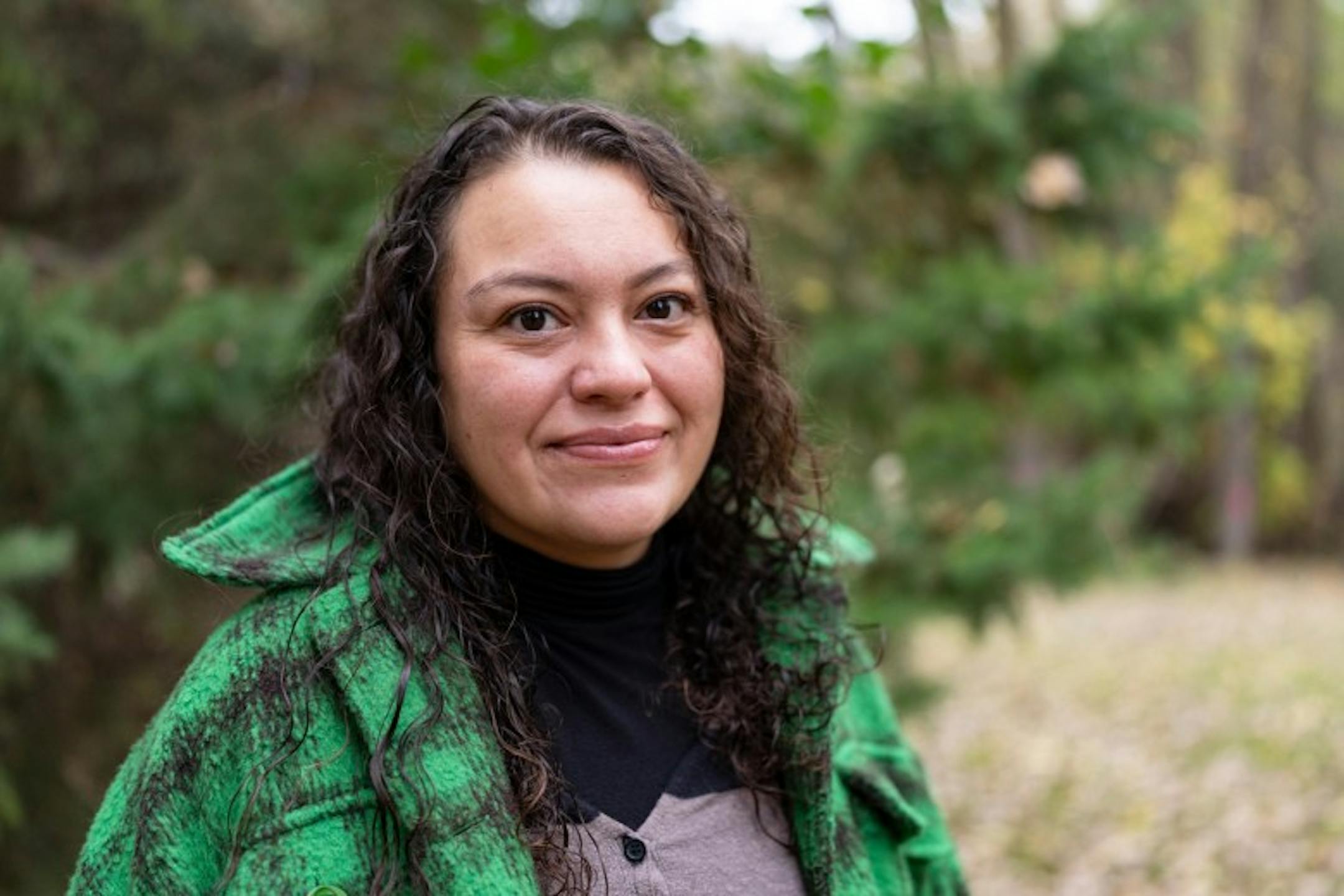
Cannabis entrepreneur Veronika Alfaro is owner and operator of Mi Sota Essence. ( Aaron Nesheim/Sahan Journal)

When Minnesota legalized adult-use cannabis in August 2023, Alysha Bellamy was stoked.

Now, more than two years later, Bellamy has doubts about whether the law will give small-scale entrepreneurs of color a fair chance to succeed.

The Minnesota Adult-Use Cannabis Act legalized the use, possession and cultivation of the plant. But the sale of marijuana wasn’t legalized until June, when licenses granting preliminary approval for cultivation, manufacturing and retail sales started to roll out to small and mid-sized businesses.

The law also expunged all past marijuana convictions, about 57,000 of them as of May 2024, and a Cannabis Expungement Board was set up for reviewing cannabis records, a provision unique to Minnesota, says DFL Rep. Jessica Hanson, who co-authored the bill. “There was no perfect method that would guarantee holistic repair and equity,” she said, but the process is continuing.

To make up for the fact that communities of color were disproportionately affected by cannabis prohibition, the state promised to prioritize their startup businesses through a social equity licensing program. But entrepreneurs say the bureaucratic and financial barriers to starting a business are still daunting, and that well-established multistate operators have a head start in Minnesota’s new market.

In November 2024, social equity applicants sued the Office of Cannabis Management after it denied two-thirds of the applications. The plaintiffs claimed that the OCM did not provide substantial reasons for rejecting their applications, while the OCM claimed that the plaintiffs were attempting to “flood the zone and place their thumb on the scale at the expense of legitimate social equity applicants,” it said in a news release.

This halted the social equity license lottery that was scheduled for November 2024. In April, a judge ruled that the OCM illegally cancelled the lottery and was obligated to hold it. The OCM also agreed to give the plaintiffs priority in the upcoming license lotteries.

To qualify for a social equity license, an applicant must meet at least one in a list of criteria: having been convicted of a cannabis-related offense (or having a parent, spouse, guardian or dependent who was); being a veteran or National Guard member, including those who were discharged due to a cannabis offense; having lived for the past five years in an area with high poverty, over-policing, or low median income; or operating a small farm.

Before legalization, enforcement of cannabis laws disproportionately affected communities of color. Nationally, Black people are 3.6 times more likely to be arrested for marijuana than white people, despite similar usage levels, according to the American Civil Liberties Union. In Minnesota, Black people were found to be nearly five times more likely to be arrested on marijuana charges compared to white people.

While the licenses started rolling out via lottery, big multistate operators (MSOs) like Rise and Green Goods, the state’s licensed medical-use cannabis providers, were allowed to repurpose part of their inventory under a “combined business license” and enter the recreational-use market.

This left small-scale entrepreneurs of color feeling deceived. They say that established businesses had an advantage of being able to start selling right away, while small-scale businesses are having to scramble to get their business together.

Marcus Harcus was among those who advocated for the inclusion of the social equity provision in the bill. The cannabis entrepreneur has a preliminary approval license and is hoping to secure an operating license for a retail store that needs $1.5 million in funding. He, too, is disappointed by how the law is being implemented.

“We were overrepresented in being criminalized, and will be probably underrepresented in having licenses and adequately capitalized businesses,” he said. “It’s sad that the state didn’t live up to this rhetoric about equitable craft cannabis.”

After navigating the bureaucratic maze of the license application comes one of the toughest hurdles of the cannabis business: funding. With cannabis still illegal federally, banks often don’t provide loans for starting a business, even in a state where it is legal.

Minnesota’s law established the Office of Cannabis Management to provide guidance, webinars and community outreach. It also introduced grants for businesses that can range from $2,500 to $75,000.

But compared to what it takes to get a business running, these grants can feel like little more than a drop in the bucket. Even for businesses that clear those hurdles, heavy regulation, high taxes, competition and barriers to funding make it hard to turn a profit.

Only 27.3% of U.S. cannabis operators report being profitable, significantly lower than the 65.3% national average for non-cannabis small businesses, according to a 2024 study by Whitney Economics. The report also found that while 33.7% of white cannabis operators report profitability, 17.5% of their non-white counterparts are profitable.

Jessica Jackson, the OCM’s social equity director, acknowledges that the law is in its nascent stages. However, she said that entrepreneurs’ concerns stem from a “scarcity mindset, because there’s limited capital.”

“Given the amount of opportunity that exists in Minnesota, I don’t think that it’s going to create a loss for our operators that are seeking to enter. I know that as our market matures, it’s not going to create the sort of the risk that they’re feeling right now in their early stage stress,” Jackson said.

About the partnership

This story comes to you from Sahan Journal, a nonprofit newsroom dedicated to covering Minnesota’s immigrants and communities of color. Sign up for a free newsletter to receive Sahan’s stories in your inbox.

about the writer

about the writer

Shubhanjana Das

More from News & Politics

See More
card image
Ayrton Breckenridge/The Minnesota Star Tribune

A report from Violence Free Minnesota said domestic violence homicides have dropped from a record number in 2023. But deaths among bystanders and interveners remain at all-time high.

card image
card image