Denker: Women have always wanted, and deserved, more. Let’s not turn back the clock now.

I think of women like Carol Tierney and what they stood for whenever I see Instagram posts about “tradwives.”

Columnist Icon
The Minnesota Star Tribune
September 2, 2025 at 11:00AM
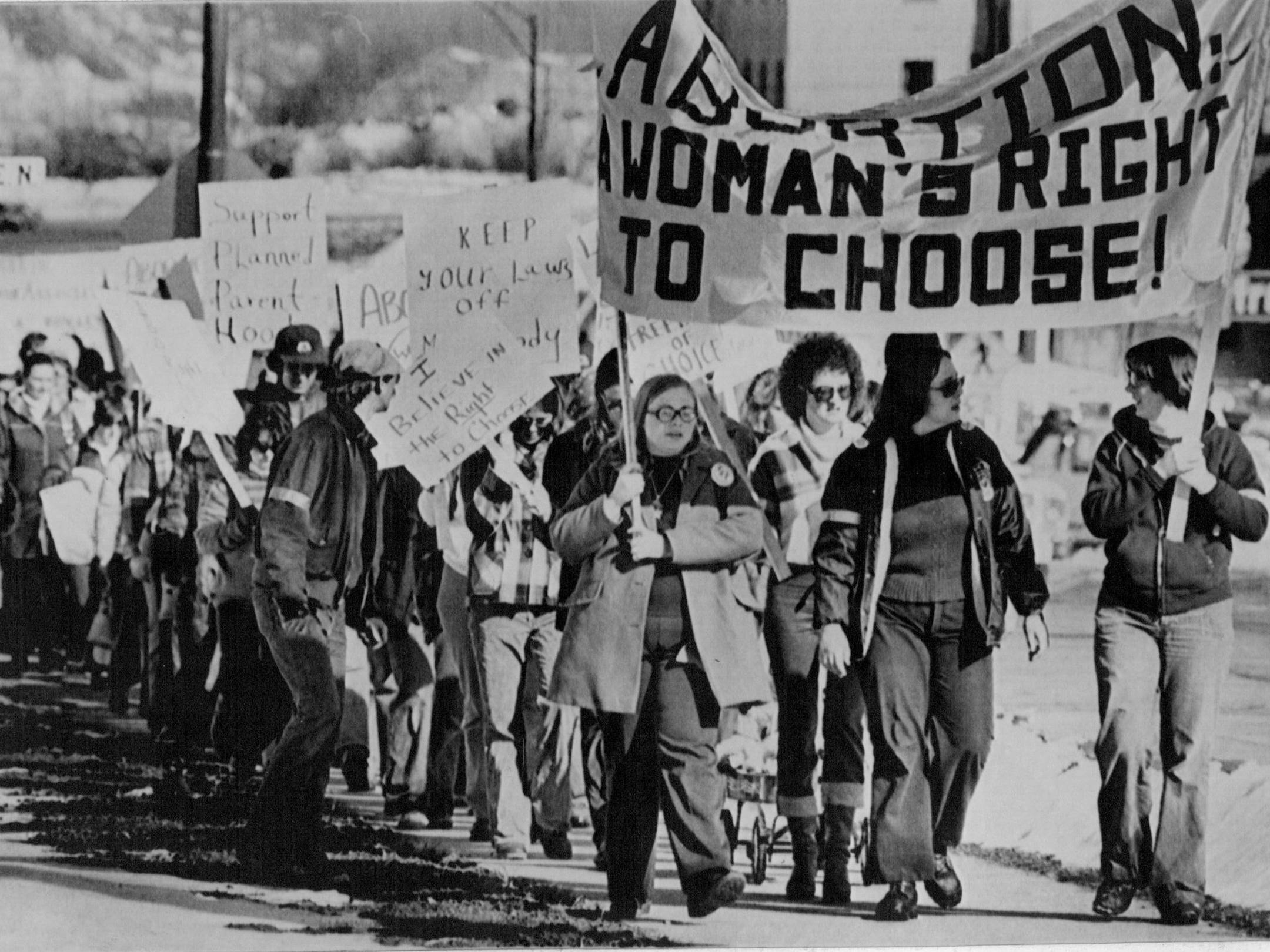
Hundreds march in support of abortion rights in 1979 in Virginia, Minn.: Perhaps women like Carol Tierney find it hard to let go because they see the ideals they lived for suddenly at risk, writes Angela Denker. March 31, 1979 ABORTION RIGHTS RALLY -- Some 250 women marched, through the streets of Virginia, Minn., on March 31, 1979, joining people in cities around the world in an "international day of action" for abortion rights. (Bruce Bisping/The Minnesota Star Tribune)

Opinion editor’s note: Strib Voices publishes a mix of material from 11 contributing columnists, along with other commentary online and in print each day. To contribute, click here.

•••

When I first met Carol Tierney, she was 87 years old. She had lived a long and a good life, and she was not ready to die.

Carol proudly told me that first visit about an embroidered pillow she displayed on her couch that was covered with cats. She told me it was special to her because her doctor had told her she was like a cat. Each time they thought her heart might finally give out, Carol fought back.

“I have nine lives,” she said.

In the end, her recoveries totaled many more than nine. But still this summer, at age 88 and a half — the half was important to Carol, her daughters told me — she died.

In my work as a pastor, I’ve known many people whom I’ve visited for months and years before their deaths. I’ve ministered to families who have survived the worst of tragedies, accidents, suicides, addictions, even murder. To live as Carol did, for nearly 90 years, with two adult daughters, two grandchildren and her first great-grandchild on the way, it was no one’s definition of a tragedy.
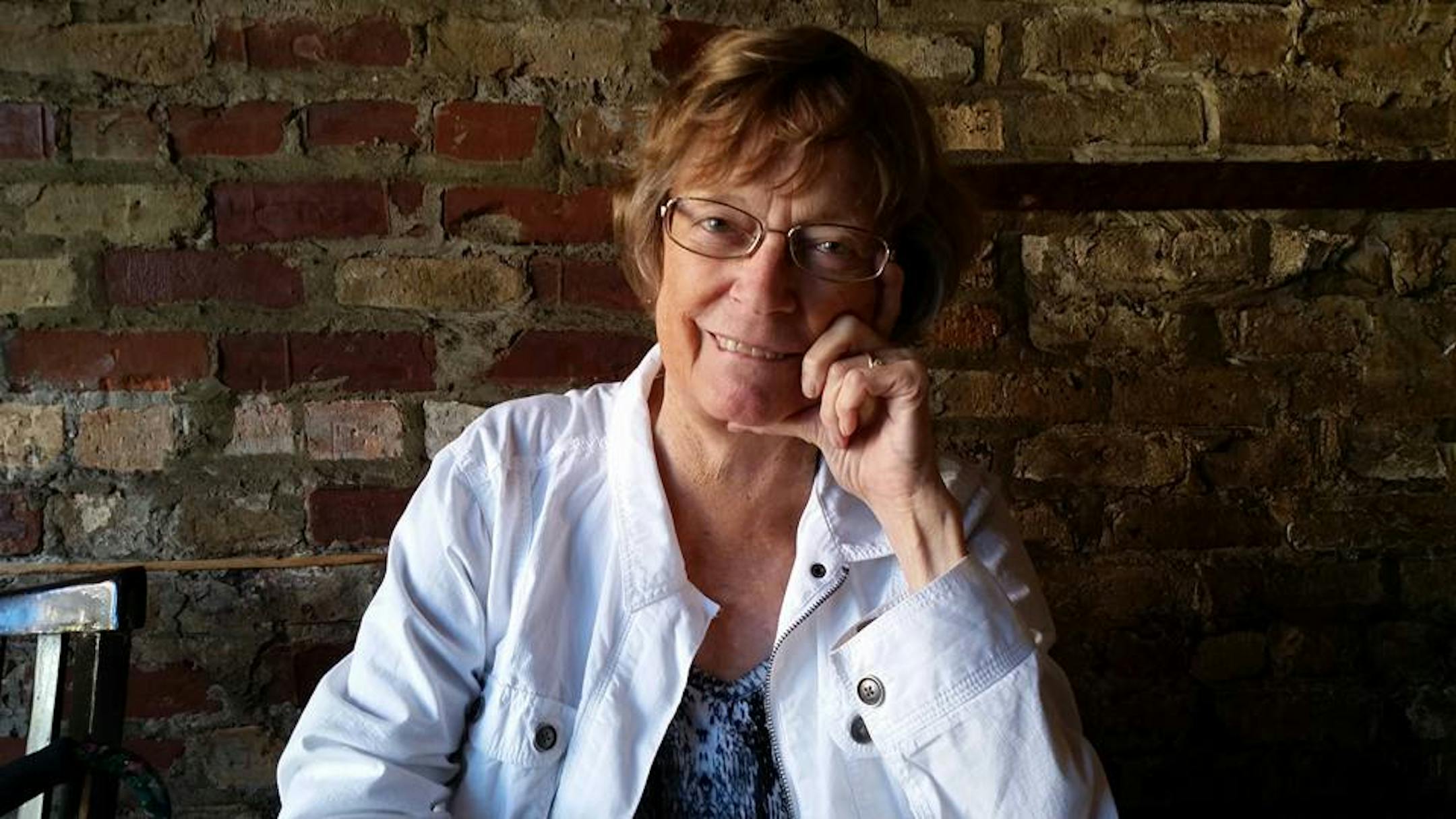
Carol Tierney (Provided)

And still, in the weeks since Carol’s death, I keep thinking about her and her stubborn insistence on holding on to life. I remember her steely resolve, coupled with her consistent focus on remaining well-informed about the news of the day, and I wonder if part of the reason she held on so hard was that she could see many of the ideals she lived for suddenly at risk as America turns backwards into a past that wise people like her hoped we’d left behind.

Carol was a public school teacher in Hopkins for 40 years. Shortly before her death, one of her former elementary school students came to visit. The student recounted Carol’s impact on their life, sharing memories and moments that may have seemed insignificant to the world at large — a world reeling politically in the face of war in Ukraine and starvation in Gaza and turmoil on the streets of our nation’s capital.

But we all remember those teachers who changed us.

By the time of her death, Carol had been widowed for nearly 15 years. Her husband, Tom, died within months of being diagnosed with pancreatic cancer. Tom was the last of a long line of suitors for Carol, who wanted to be a teacher more than she wanted to be a wife.

Born in 1936 in the midst of the Great Depression on a hardscrabble farm in Newfolden, Minn., with an outhouse and no electricity, Carol prioritized her education and work at a time when women were mostly expected to marry and stay at home. She worked hard, earning a scholarship to a teacher’s college, and was named valedictorian of her high school class. When she graduated early from the teacher’s college, a portion of Carol’s salary went to pay for her younger sister’s education.

Like so many women of her era, women who took jobs and worked hard on the home front during World War II only to be pushed back into the kitchen during the 1950s, Carol excelled and achieved — only to be told again and again: “Don’t get a big head.”

“Smile.”

Her active mind and progressive politics brought her and Tom together. They were fellow high school valedictorians. While Tom’s desire to work in businesses that served the poor sometimes led to financial hardship, it was Carol’s public school teaching that kept the family afloat.

She was an early champion of school integration and the civil rights movement, and refused to stay silent about the ways sexism and racism threatened the ideals that make America great. She even kept in touch with former elementary school students who later went to prison, continuing to encourage them toward education and greater knowledge in the midst of incarceration.

Making money had never been the important thing for them.

Still, Carol had a nascent sense she could have done more. That the world had somehow undervalued her, and I saw this in her final years. Most of the times I came to see her, she was holding an edition of this very newspaper in her hands. Of all people, Carol, in great physical pain and nearing the end of her life, could have been forgiven for not keeping up with American and global politics.

But she did. She faithfully followed the 2024 U.S. presidential election, and she was worried about what the outcome meant, not just for her daughters and for the children who would have been her students, but for all of us. She saw a world where the forces that had pushed her down, pushed her back, told her to be quiet and let things be the way they were, those forces were amassing more strength and power by the day.

Funny enough, I often think about Carol today when I’m scrolling Instagram videos of “tradwives:” preternaturally calm young mothers with blond cascading waves and gingham print puff-sleeve dresses, waxing prosaically about the glories of exiting the workforce and submitting to their husbands, many of them eschewing the vaccines that were revolutionary in saving children’s lives in Carol’s day as well as eschewing the American privilege of a public school education.

When I think of how desperately Carol clung to life over these past several years, I think she was doing it for them — and for us. Carol knew what life once was like for women without access to paying work, without access to education and without the right to vote — the latter of which is now being threatened by American pastors with the ear of the secretary of defense, Minnesota native and Christian nationalist Pete Hegseth.

Carol was 36 years old when Roe v. Wade became the law of the land, and she was 85 when it was overturned three years ago, leaving pregnant women unable to access lifesaving medical care, the value of their life determined by their state residency. Today, women athletes can be subject to medical testing in some states to determine their eligibility for athletic competition, with womanhood determined by the ever-fluctuating status of our hormones.

Meanwhile, Republican women in Trump’s orbit are expected to uphold exacting beauty standards, in some cases requiring drastic cosmetic and plastic surgery, to fit into a political system that values women according to their appearance. And while Carol was born just 16 years after the 19th Amendment gave women the right to vote, her life ended with watching Donald Trump defeat not one but two women candidates for president.

American women and mothers are rightfully exhausted in this moment, seeking an off-ramp from a punishing and relentless existence, at work and in the home. But unfortunately it’s in this very moment that we must refuse to check out while they legislate our rights away.

That’s why I knew I had to write about Carol, even though she lived a long life, even though her life by many standards was unremarkable.

In these last few years, I believe that something in Carol, as she desperately clung to life in one hand and the newspaper and her beloved books in the other, saw peril coming. She knew she couldn’t stop it or change it. But she wanted to bear witness, weak as she was.

And so I bear witness to her in hopes that my generation of American women and younger will not willingly submit to turning back the clock. Women like Carol worked too hard to change and improve our country for the good of us all.

about the writer

about the writer

Angela Denker

Contributing Columnist

The Rev. Angela Denker is a contributing columnist for the Minnesota Star Tribune. She is a pastor, author and journalist who focuses on religion, politics, parenting and everyday life.

See Moreicon

More from Contributing Columnists

See More
card image
Jeff Wheeler/The Minnesota Star Tribune

The loss of more than a billion dollars that’s occurred on the governor’s watch makes him unfit for further service to the state.

card image