

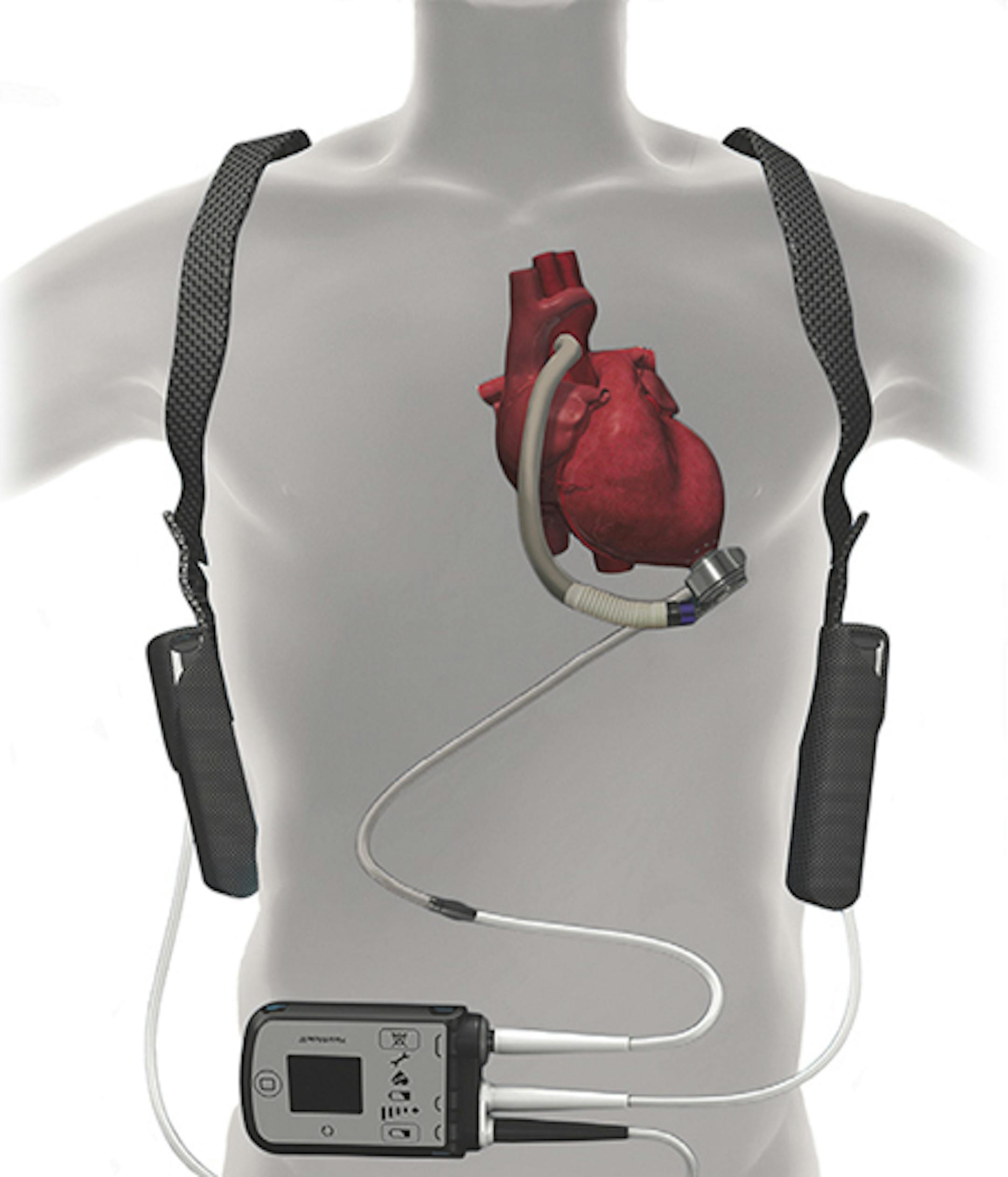
Abbott Laboratories' HeartMate 3 heart pump for advanced heart failure kept more patients alive for two years with fewer incidents of stroke than the company's prior left ventricular assist device (LVAD), according to clinical trial data unveiled at an industry conference.
Researchers in the company-sponsored trial found that the newer version of the device was much less likely to need to be replaced because of clot-related problems that drove a larger number of device replacements with Abbott's older HeartMate II device. The positive clinical trial data for the HeartMate 3 were released over the weekend as part of the American College of Cardiology annual meeting in Orlando, Fla.
Illinois-based Abbott Labs competes with Minnesota-run Medtronic in the market for implantable heart pumps that are used to circulate blood in patients whose heart failure is so advanced that they are candidates for heart transplant. Medtronic's HeartWare device is approved for use in patients who need an LVAD until a heart transplant becomes available ("bridge-to-transplant therapy"), as well as those who plan to be on the pump indefinitely ("destination therapy").
Abbott's HeartMate 3 device, which was acquired by St. Jude Medical when it was still a Minnesota-run company, is approved in the U.S. for short-term bridge-to-therapy use but not for long-term use unless it's part of a clinical trial.
The new data show that the HeartMate 3 has the best survival data among LVADs evaluated in clinical trials, with a nearly 83 percent survival rate at two years. JPMorgan Chase analyst Mike Weinstein wrote that the survival rate appeared to be better than the rates seen for Medtronic's LVAD at one year in comparable studies, according to a note to investors. The note predicted that the HeartMate 3 would get approval as a destination therapy by the end of this year.
Abbott's Momentum 3 trial, published in the New England Journal of Medicine on Sunday to coincide with the cardiology meeting, found that among 366 heart-failure patients randomized to receive either a HeartMate 3 or its predecessor, the HeartMate II, the newer device performed better.
Specifically, the survival rates were 83 percent for the HeartMate 3 and 76 percent with the HeartMate II, while survival without major adverse events was 78 percent for the newer device vs. 56 percent with the older one.
A key difference between the groups was the greatly reduced number of people who needed to have their HeartMate devices removed because the machines got gummed up with blood clots.


