A desperate mother and a vicious stabbing expose cracks in Minnesota’s civil commitment process

As President Trump seeks more aggressive civil commitments for the mentally ill and dangerous, a Minnesota case raises questions about the state’s system.

The Minnesota Star Tribune
August 23, 2025 at 6:41PM
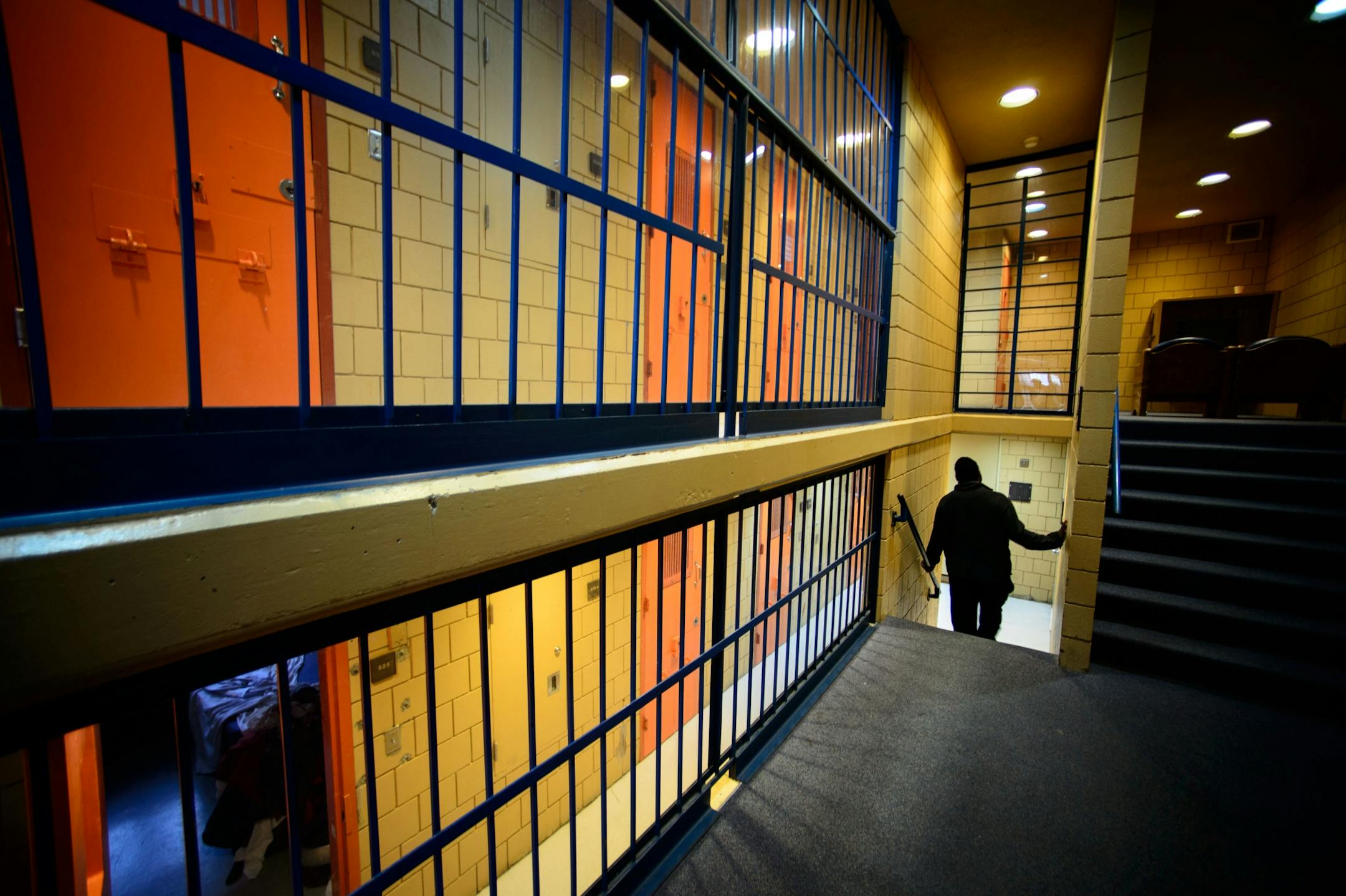
Bedrooms in the he mens admission and crisis wing of the Minnesota Security Hospital is the highest security portion of the hospital, MSH, in St. Peter. They are not called cells. This is not part of the sex offender program which is a separate facility. Monday, October 14, 2013.
Rooms in a wing of the Minnesota Security Hospital in St. Peter, shown in 2013. (Glen Stubbe/The Minnesota Star Tribune)

When Christine Amundson was told her son had been arrested for trying to kill someone, an unlikely feeling came over her.

“It was relief, in a way,” she said.

On July 27, her son, Logan Seitz, carried out a vicious stabbing in Willow Lane Park in Brooklyn Center. His mother was horrified for the victim — who somehow survived — but was not surprised that it happened.

Seitz, now 20, has been civilly committed in Minnesota three times in the past three years. Reams of court records show he made consistent threats about carrying out this kind of attack. In a previous criminal case, he followed a roommate at his group home, pulled his head back and stabbed him in the neck three times with a metal fork. In another, he threatened to carry out a mass shooting at a grocery store and slit the throat of his case worker.

Amundson, who lives in Brainerd, said Seitz’s mental health has been deteriorating since he was 13.
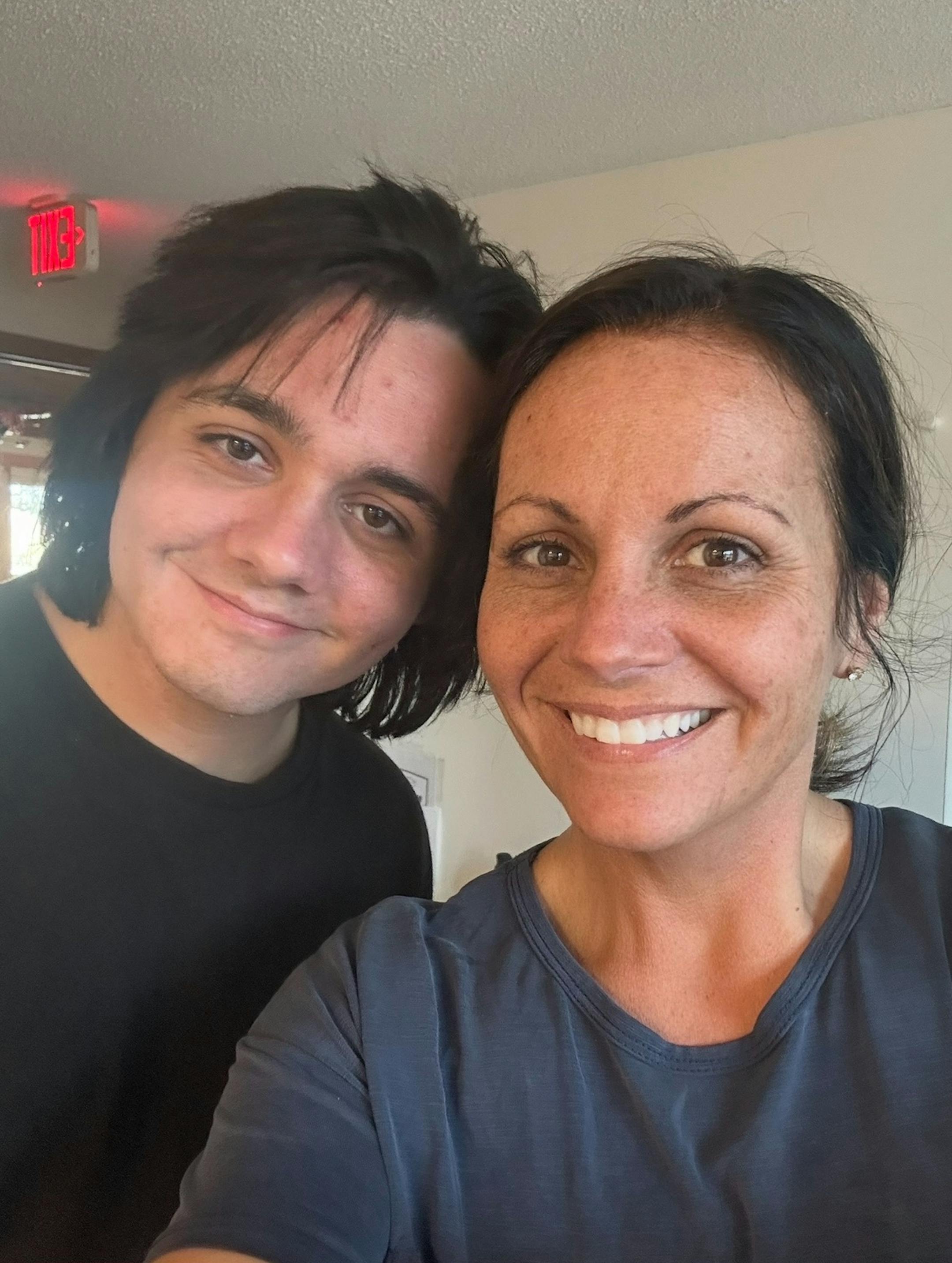
Logan Anthony Seitz and his mother, Christine Amundson (Provided by Christine Amundson)

For years, she told anyone who would listen that her son was dangerous and needed a higher level of state care. She went so far as to appoint a guardian, so her emotions wouldn’t undermine her son’s treatment. Case workers and doctors argued in court that Seitz needed to be placed at the forensic mental health program in St. Peter, Minnesota’s only facility for those found to be mentally ill and dangerous.

“This kid needed mental help,” Amundson said. “We fought and fought and fought with getting him into St. Peter.”

It never happened.

Instead, in a move indicative of Minnesota’s struggle to treat the mentally ill in appropriate facilities, the Attorney General’s Office and the Minnesota Court of Appeals denied a Crow Wing County judge’s order compelling St. Peter to admit Seitz, ruling it was not within the court’s jurisdiction. The state also didn’t have any available beds, and court records show that Seitz was not considered a priority candidate.

“We are sympathetic to the untenable position in which the posture of this case puts the district court,” Chief Judge Susan Segal wrote in her opinion.

Seitz’s disturbing behavior continued, and he was eventually moved from Crow Wing County to a Hennepin County group home with more lax restrictions. He snuck out of that home the night he tried to kill a woman at random.

After her son was arrested and charged with attempted first-degree murder, Amundson thought maybe now “someone is going to take this [issue] seriously.”

She recalled that moment in an interview with the Star Tribune, then paused and said, “Isn’t that sad?”

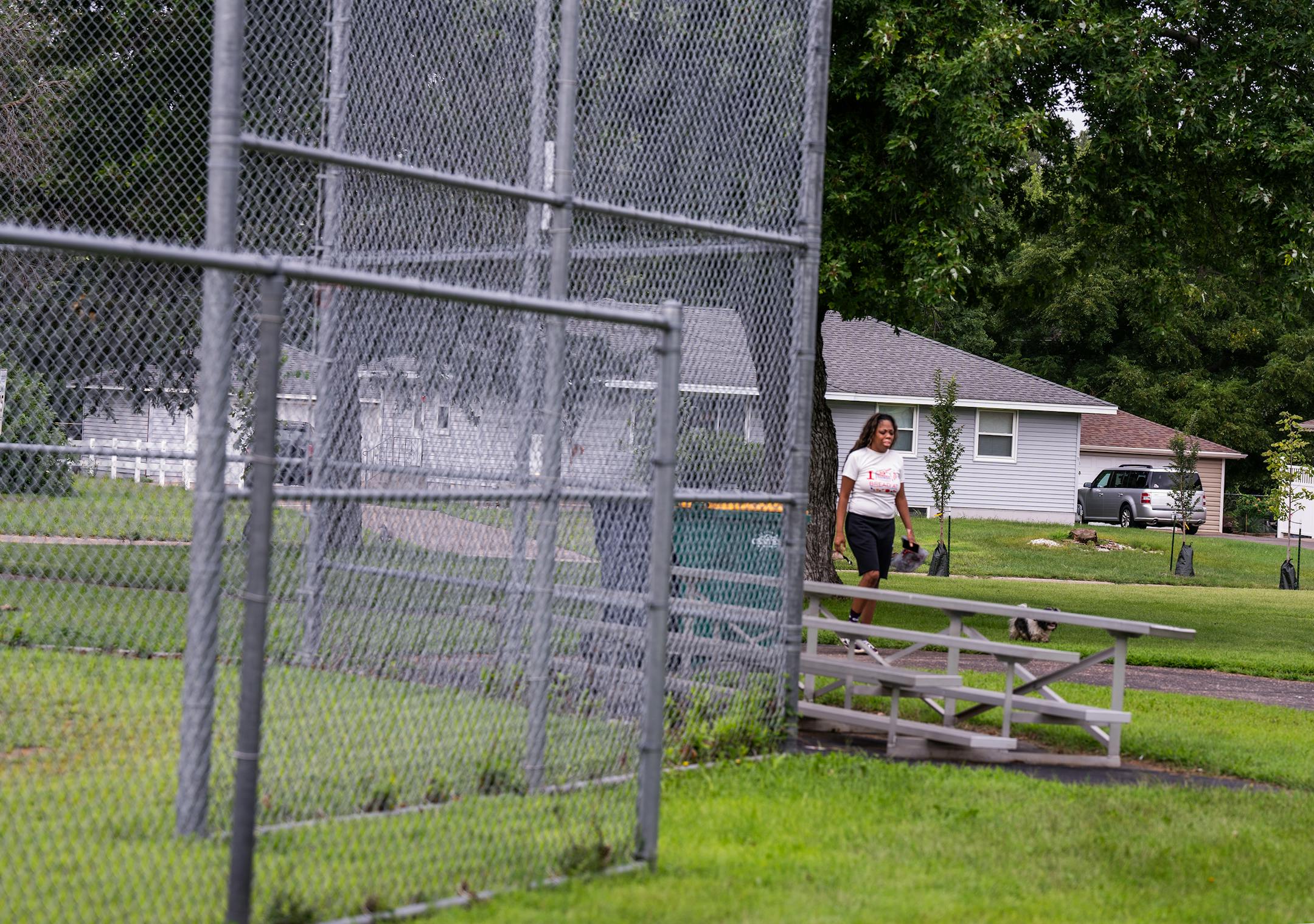
Walking through Willow Lane Park, Malika Palmer says she generally feels safe in her neighborhood in Brooklyn Center on Wednesday. On July 27, Logan Anthony Seitz was accused of stabbing a woman in the park. (Richard Tsong-Taatarii/The Minnesota Star Tribune)

Worst-case scenarios

Seitz was not the only mentally ill person to carry out a vicious stabbing July 27 in a Hennepin County park.

That evening, a Twin Cities man stabbed his mother more than 10 times at Arneson Acres Park in Edina and left her for dead. He told police he tried to kill her and stabbed himself to get away from hospitals. The man had a history of police interactions and erratic behavior. He had been committed as mentally ill four times in Hennepin County since 2015. He also is now charged with attempted first-degree murder.

The family declined to comment.

These crimes came three days after President Donald Trump issued an executive order titled “Ending Crime and Disorder on America’s Streets,” which emphasizes increased civil commitments of the mentally ill and homeless. With the takeover of the Washington, D.C., police by the federal government, Trump empowered Attorney General Pam Bondi to reverse federal or state judicial precedents if they hampered the ability to civilly commit the mentally ill “who pose risks to themselves or the public.”

Democratic lawmakers in Minnesota responded to the order, writing, “Involuntary civil commitment is not a compassionate or effective response to homelessness or mental illness. It will inflict trauma and cut people off from community-based care.”

In interviews, several state and Hennepin County employees said there is an undeniable conflict because of bed shortages and the need for increased placement of the mentally ill. But most argued that doesn’t mean the state should step away from the community-based treatment model it has used since several state security hospitals closed, including the Fergus Falls Regional Treatment Center in 2005.

The Fergus Falls state hospital closed in 2005. (David Joles/The Minnesota Star Tribune)

To declare someone mentally ill in Minnesota, a court must deem a defendant is a danger to themselves or others and has an “organic disorder of the brain or a substantial psychiatric disorder.” To declare someone mentally ill and dangerous, it must additionally be proven that the person has engaged in an “overt act” to harm others. There is no limit to how often a person can be committed or recommitted as mentally ill, and a client has to show rehabilitation to be discharged from supervision.

Attorneys Rachelle Stratton and Katie Hansel work with Adult Representation Services in Hennepin County, which provides legal counsel for defendants in civil commitment cases. They said thousands of employees across the state work tirelessly to help people improve their mental health through treatment and modern medicine.

“I’m always a little hesitant to take the worst-case scenarios and figure out what to [change],” Stratton said. “When you look at the cases on the whole, there are so many people that are complying with the orders and they are in the community. The people everyone is really afraid of are sitting in jail, waiting for beds.”

Asked what is keeping the system from working, they answered in unison: “Money.”

On July 1, the state department of Direct Care and Treatment (DCT) began operating as a behavioral health care system with a budget of $787 million. It serves more than 12,000 patients, nearly all of them civilly committed under six categories: mentally ill, developmentally disabled, chemically dependent, mentally ill and dangerous, sexual psychopathic personalities and sexually dangerous persons. Most civilly committed Minnesotans are ordered to outpatient or community-based programs.

For adults committed as mentally ill who require inpatient care, the state runs seven psychiatric hospitals and the forensic treatment center at St. Peter, providing a total of 568 beds. St. Peter alone has 376 licensed beds for treatment and operates at capacity at all times. In the second half of last year, its average wait time for the highest priority patients reached 528 days.

With a surging number of criminal defendants found incompetent to stand trial, the lack of beds has put pressure on other institutions.

The mentally ill are routinely housed in jails and hospitals — at times a violation of state law — and are treated by staff members not trained to address their complex needs. This leads judges, county attorneys, defense attorneys, county sheriffs and hospital administrators to look for the state to do more. When courts try to force the hand of the state, they are denied for overstepping their jurisdiction.

All of these elements were on display as Seitz was under civil commitment.

Rep. Paul Novotny, a Republican who co-chairs the Minnesota House’s Public Safety Finance and Policy Committee, said the labyrinth of mental health findings, judicial orders and court arguments didn’t stop an obvious threat to public safety.

“It’s a reflection of so many other things that are wrong with this state, that the people that are responsible aren’t held accountable,” Novotny said. “The Attorney General is responsible for it, but he says, ‘I don’t have money, I don’t have beds.’ Tough bounce, right? Or you get a judge that says, ‘Well I’d like to commit him but we don’t have any place to put him, so let him go.’ Whatever happens after that, they’re not responsible for.”

Novotny said the state has the money to address the problem, but it’s a matter of priorities.

After Dru Sjodin’s 2003 murder by a convicted sex offender, Minnesota strengthened state laws around its Sex Offender Program, which it started in 1995. That program now has 963 licensed beds. In the 30 years the program has been operating, it has fully released 33 clients back into society — far more have died in custody.

The state approved $75 million this year to add 50 beds to its largest psychiatric hospital in Anoka — but they will not be for the mentally ill and dangerous. A spokesman for Direct Care and Treatment said 16 additional beds for the mentally ill and dangerous will be opened at a satellite facility in St. Peter this summer after the Legislature approved the repurposing of a substance use disorder treatment facility in 2024.

Rep. Paul Novotny, R-Elk River, stood on the House floor with his wife before being sworn in at the start of the legislative session Tuesday. ] ANTHONY SOUFFLE • anthony.souffle@startribune.com The Minnesota State House and Senate both met for the first day of the legislative session Tuesday, Feb. 11, 2020 at the State Capitol in St. Paul, Minn.
Rep. Paul Novotny, R-Elk River, is shown in 2020 with his wife on the House floor. (Anthony Soufflé/The Minnesota Star Tribune)

A life that went sideways

Amundson described Seitz’s childhood as charmed and “vanilla.” Those memories, she said, bear no resemblance to who her son is now.

She recalls the moment in which she felt his life went sideways.

He was at a trampoline park in 2015 and watched his dad flip into a pile of foam blocks. His dad slightly over-rotated, landed on his head and suffered a severe spinal injury that left him permanently paralyzed. His dad sued the trampoline company and received a $3 million settlement — the case garnered widespread local attention.

While Amundson refused to say that situation led to her son’s mental illness and drug use, it was hard on him. She wondered if, as a child, he blamed himself for what happened to his father.

He began abusing cough medicine and overdosing. He would go into treatment but get sent home, against his parents wishes. He started exhibiting dangerous and threatening behavior that grew more and more worrisome.

Amundson said that in Minnesota’s juvenile courts, you can be treated for chemical dependency or mental illness, but not both at the same time. She said the two treatment courts passed him back and forth.

“You think it’s bad on the adult side,” Amundson said. “The adolescent world was like nothing I’ve experienced in my entire life.”

In February 2023, Seitz was committed as a person who is mentally ill and dangerous in Crow Wing County District Court. That gave the state far more leeway in civil commitment proceedings. Two months later, psychologist Stephanie Bruss reversed the finding and said Seitz was not mentally ill and dangerous because “he does not have a major mental illness” as defined by Minnesota law. Bruss still recommended that Seitz be confined in a supervised setting because he showed a high risk of future violence.

Amundsen couldn’t believe what was happening.

“This is a kid who has years of notebooks ... saying he is going to do these things,” she said. “He has documented situations where he wants to kill people.”

Seitz remained under civil commitment, bouncing between facilities in northern Minnesota.

In January, as he was approaching discharge from supervision, Seitz was charged with felony threats of violence and property damage after smashing a cellphone in the emergency room of the Lake Regions Hospital in Fergus Falls and saying he intended to carry out a mass killing and kill his case worker.

A court-appointed medical examiner recommended that Seitz be recommitted as mentally ill and chemically dependent. The order for recommitment, including all of these allegations, was signed in Crow Wing County on Jan. 28 and set to last one year.

Six months later, in Otter Tail County, Seitz pleaded guilty to property damage for breaking the phone and was placed on probation for five years. The threats of violence charge was dismissed. He was released from custody June 28.

Seitz was sent to the Twin Cities under his civil commitment. Amundson said his case manager and guardian warned the staff at his group home that Seitz needed strict rules and observation because he was dangerous. It didn’t seem to have an effect.

He snuck out of the facility and stalked a gas station in Brooklyn Center looking for someone to kill, but people kept coming in twos. He selected a woman at random and walked with her to Willow Lane Park to sit on a bench. They began talking until Seitz became upset and told the woman he was going to kill her. He stabbed her multiple times in the arms, torso, chest, hands, shoulders, and stomach. He called 911 and explained what he had done. Brooklyn Center police arrived to find the 20-year-old covered in blood. He told the police he enjoyed what he had done and became upset when they told him the woman might survive.

The Hennepin County Attorney’s Office is seeking an aggravated sentence against Seitz for his “exceptionally horrific conduct.”

The emotion of the last several years has drained his mother.

She shared photos with the Star Tribune. They begin with her son as a young boy with tousled black hair, smiling through life events with his family. Then as a teenager in distress, his hair long, dyed and draped over his thin shoulders. The most recent photos are from a few months ago. They show Seitz smiling, his arm around his mother.

Amundson said she has spent years crying, gone through years of therapy and come to hard-earned realizations.

“Everyone thinks I’m some trainwreck parent who should have had an abortion and what kind of house did he come from?” Amundson said. “I know he had a good home life. But the thing is, that piece aside, maybe somebody will listen to me now.”

Correction: A previous version of this story misstated the year Dru Sjodin was killed.
about the writer

about the writer

Jeff Day

Reporter

Jeff Day is a Hennepin County courts reporter. He previously worked as a sports reporter and editor.

See Moreicon

More from News & Politics

See More
card image
Carlos Gonzalez/The Minnesota Star Tribune

Road conditions continued to deteriorate Tuesday afternoon into the evening causing crashes and delays.

card image
card image