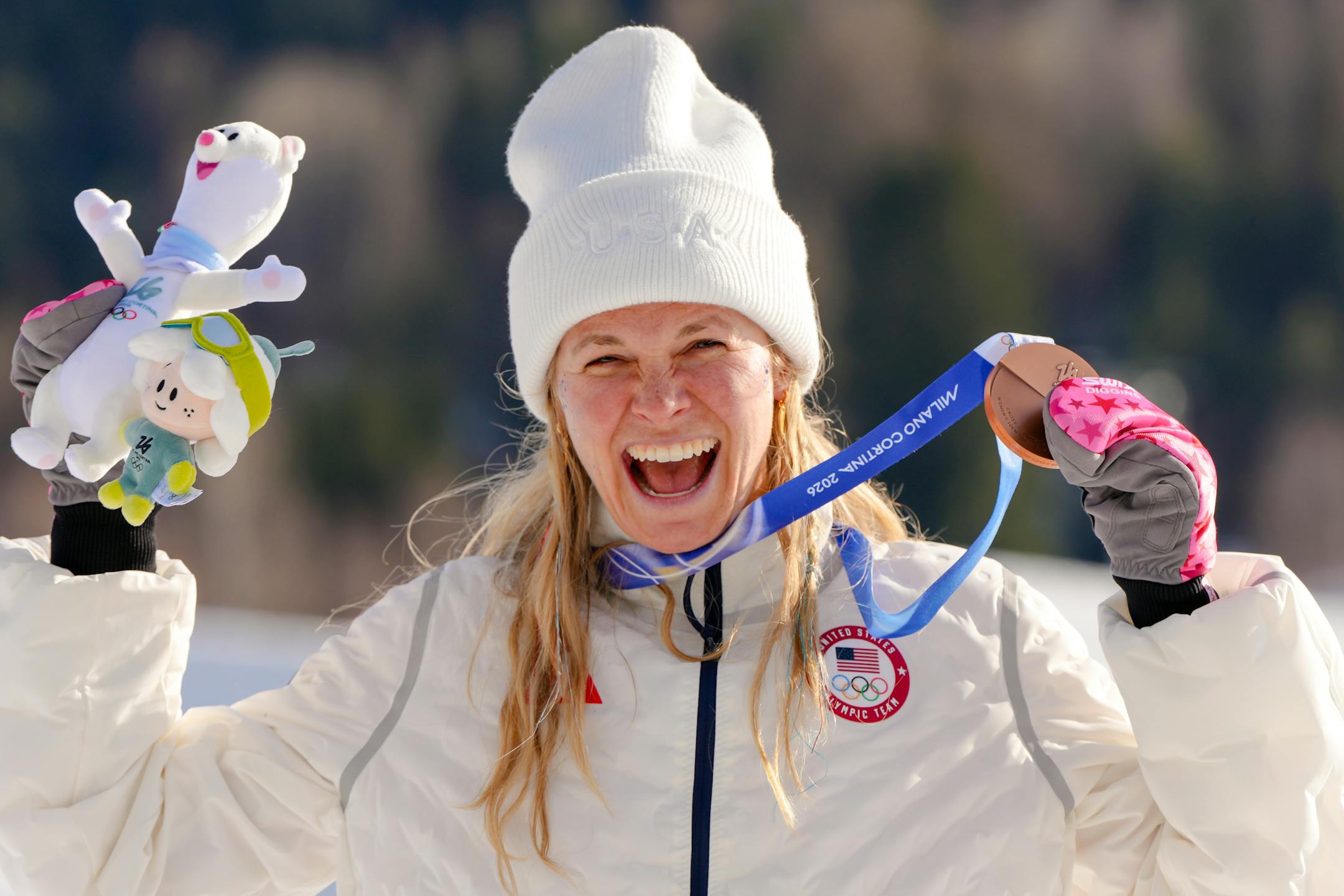
Four years ago, I stood among reporters in the mountains of Zhangjiakou, China, interviewing an exhausted Jessie Diggins, who had just skied the anchor leg of the 4x5km relay. It was the fourth of six races she was scheduled to participate in at the 2022 Olympics.
Diggins was asked about the workload, if she had two more races in her.
“I’m stoked,” she replied. “Bring it!”
She didn’t know at the time what would be required of her. Her final race was the 30km freestyle, the longest event on the program. The night before, Diggins came down with food poisoning, unable to keep anything down. Yet she eventually ate soup and oatmeal and willed herself to the starting line on a windy day with 5-degree temperatures. Then came cramps. Then Diggins got confused about what lap she was on and had to ask one of her coaches. Then her vision blurred.
Her body was telling her to give up. Her mind told her body to shut up.
She collapsed at the finish, with someone rushing over with a blanket — and a U.S. flag. Diggins had won a silver medal, tying the highest finish by an American in an individual cross-country skiing race.
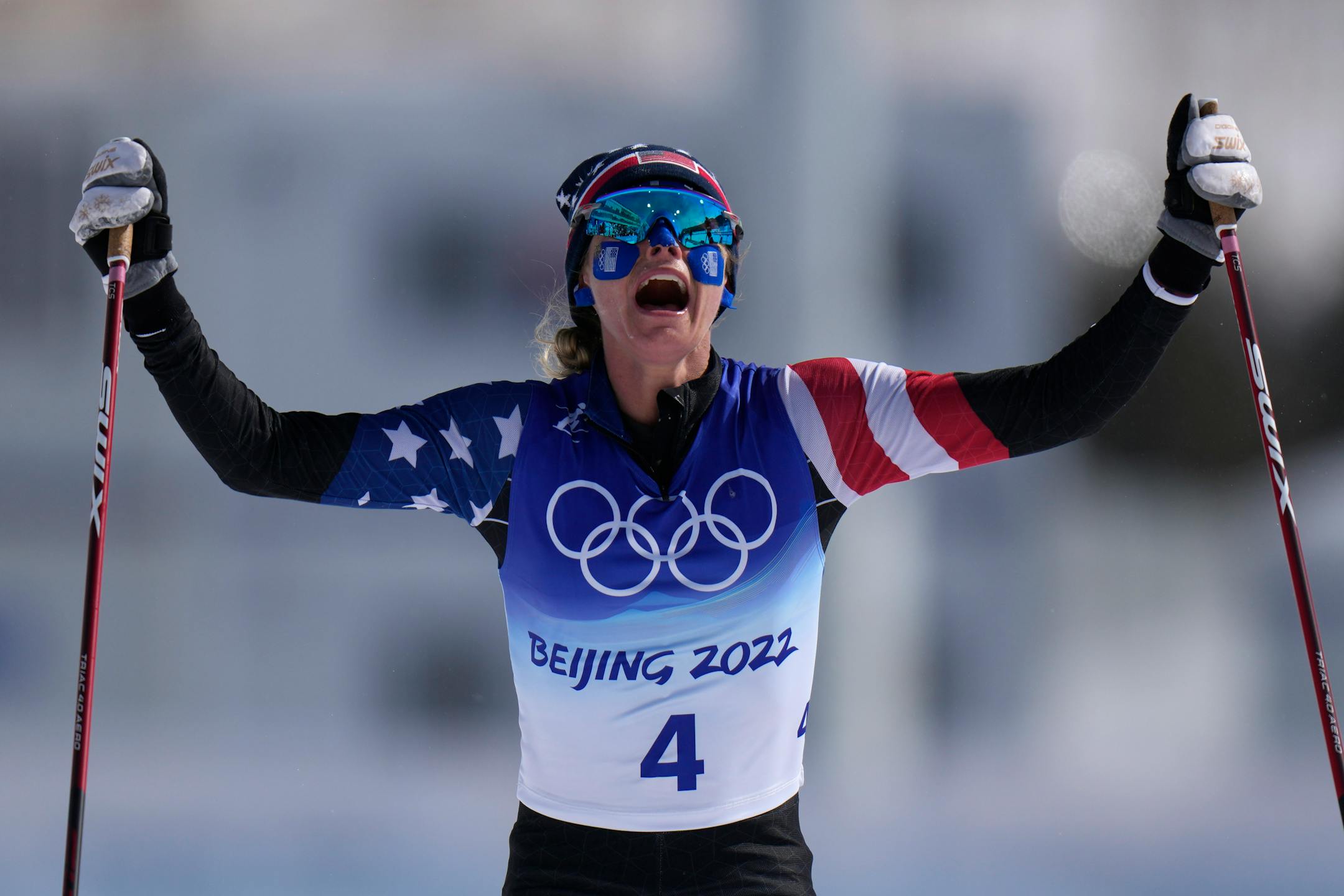
“That might have been the best race of my life,” she told reporters afterward. “I’m not going to lie. It also may be the hardest race of my entire life.”
Memories of those Beijing Olympics have been prevalent during the first week of the 2026 Winter Games because Diggins’ unwavering willpower is on display once again. Diggins, the woman with no discernible limits of what she’s prepared to endure to conquer courses around the globe, is topping the hardest race of her life in China with one of the hardest weeks of her life in Italy.