
Souhan: Lindsey Vonn risked her health, not her legacy, at the Winter Olympics

The skier’s crash in the women’s downhill in Cortina was a reminder of what it took for her to become great.

Columnist Icon
The Minnesota Star Tribune
February 9, 2026 at 7:30PM
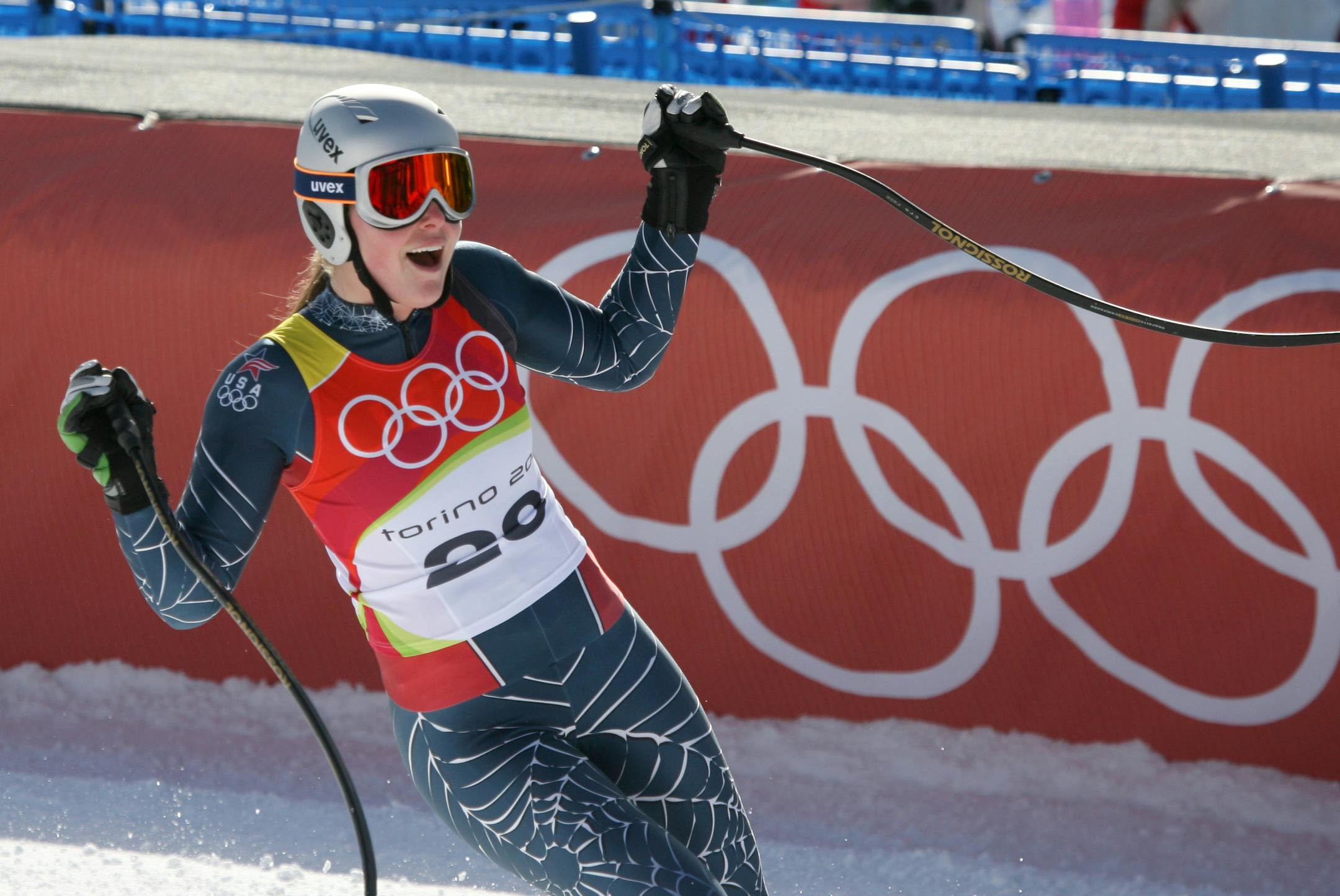
Lindsey Vonn after competing in the super-G at the Turin Olympics on Feb. 20, 2006. She placed eighth, then four years later won the gold medal at the 2010 Games in Canada. (Jeff Wheeler/The Minnesota Star Tribune)

One of my first profound Olympic moments:

Standing at the bottom of a ski run in the Alps in 2006, watching Lindsey Vonn throw herself off a mountain.

Sometimes, television — even modern televisions with massive screens — can’t capture the essence of a sport.

Hockey looks much faster in person. Top basketball players are even more awe-inspiring in person. And what downhill skiers do seems far more ridiculous.

They start in the clouds and launch themselves onto a sheet of ice that looks almost vertical. Finishing is an accomplishment, one that sometimes eluded Vonn.

On Feb. 8, Vonn attempted to compete in the Milan Cortina Olympics at the age of 41, with a ruptured ACL in her left knee. The Minnesota native injured that knee the week before the Olympics and tested it during two training runs.

In the downhill, she crashed early after hitting a gate with the right side of her body. She flailed and sprawled, and wound up in a heap on the side of the mountain, wailing.

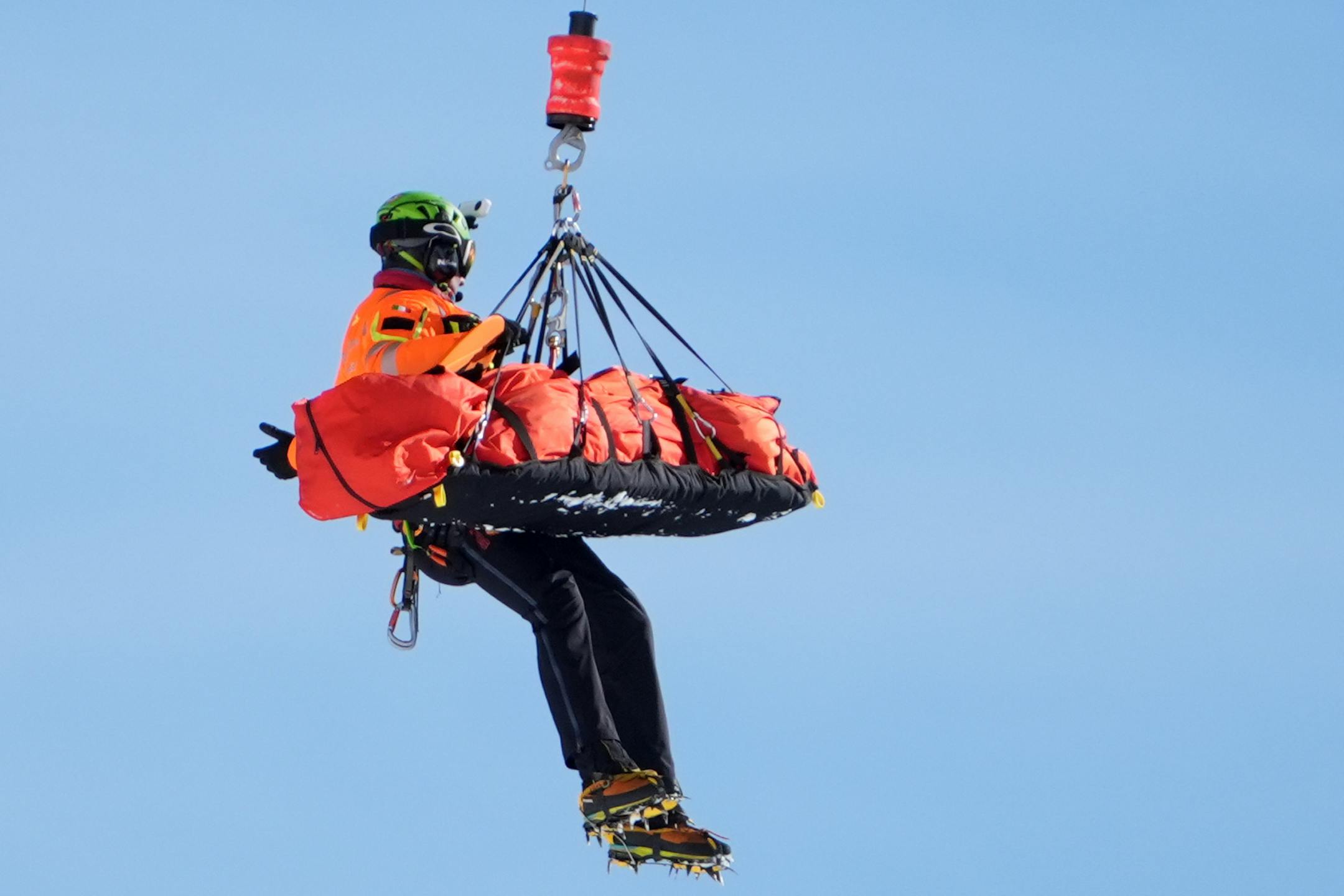
She was airlifted to a hospital and treated for a broken left leg. Her career may be over.
ADVERTISEMENT

If so, this ending was sad, but emblematic.

Lindsey Vonn is airlifted off the Winter Olympics women's downhill course after a crash Feb. 8 in Cortina d'Ampezzo, Italy. (Jacquelyn Martin/The Associated Press)

Vonn made it from Buck Hill to the world’s podiums by putting herself at risk, by sometimes winding up on the wrong side of her skis or as the star passenger in a helicopter ride.

At Turin in 2006, she was America’s rising star. She had the second-best time in the first round of training runs, then crashed in her second downhill training run at San Sicario, badly bruising her hip and legs. She was hospitalized overnight.

Two days later, she finished eighth. Her injuries kept her from her goals, but not from making a point.

Whenever she retires, Vonn will rank as one of the greatest American skiers of all time. Her crashes are the logical result of a powerful athlete pushing herself to the edge of her skis and the edge of safety.

I first met Vonn in Colorado in the run-up to the Turin Olympics. What struck me immediately was the width and thickness of her shoulders.

I’ve spent much of my life in NFL locker rooms. I’m accustomed to powerhouse athletes. For all of her polish, Vonn prompted the impression that if you needed a door broken down in an emergency, she’d take the lead.

There is such a thing as athletic bravery. It’s not the same as military bravery, but athletic bravery is risking limbs, if not necessarily life, in the pursuit of greatness. Vonn embodies athletic bravery.

Let’s explore the notion that she shouldn’t have competed. That’s silly. Too often, we push older athletes toward the exit because of our own emotional fragility. “I don’t want to see her take these risks” seems to be the sentiment.

I do want to see her taking those risks, not because I enjoy seeing her injured, but because I appreciate her willingness to risk injury in the pursuit of greatness. You don’t make it from Apple Valley to the Alps without taking chances.

As she was flown away from her latest crash, Vonn was said to have been cheering for teammate Breezy Johnson, who became the second American woman to win the Olympic downhill.

Vonn was the first.

“I don’t claim to know what she’s going through, but I do know what it is to be here, to be fighting for the Olympics and to have this course burn you and to watch those dreams die,” said Johnson, who missed the 2022 Olympics because of injury. “I can’t imagine the pain that she’s going through, and it’s not the physical pain, but the emotional pain is something else.”

Johan Eliasch, president of the International Ski Federation, told reporters in Italy that Vonn’s crash was “tragic, but it’s ski racing. I can only say thank you for what she has done for our sport, because this race has been the talk of the Games, and it’s put our sport in the best possible light.”

Tragic, but it’s ski racing. As if that’s redundant. For Vonn, sometimes it was.

about the writer

about the writer

Jim Souhan

Columnist

Jim Souhan is a sports columnist for the Minnesota Star Tribune. He has worked at the paper since 1990, previously covering the Twins and Vikings.

See Moreicon

More from Olympics

See More
card image
Hassan Ammar/The Associated Press

The Wild have eight players in Milan, second-most among NHL teams.

card image
card image