
Yuen: My parents thought we had made it. Now we carry papers.

Living under ICE’s crackdown has changed how some Minnesotans of color, including U.S. citizens, move through the world.

Columnist Icon
The Minnesota Star Tribune
January 26, 2026 at 12:00PM
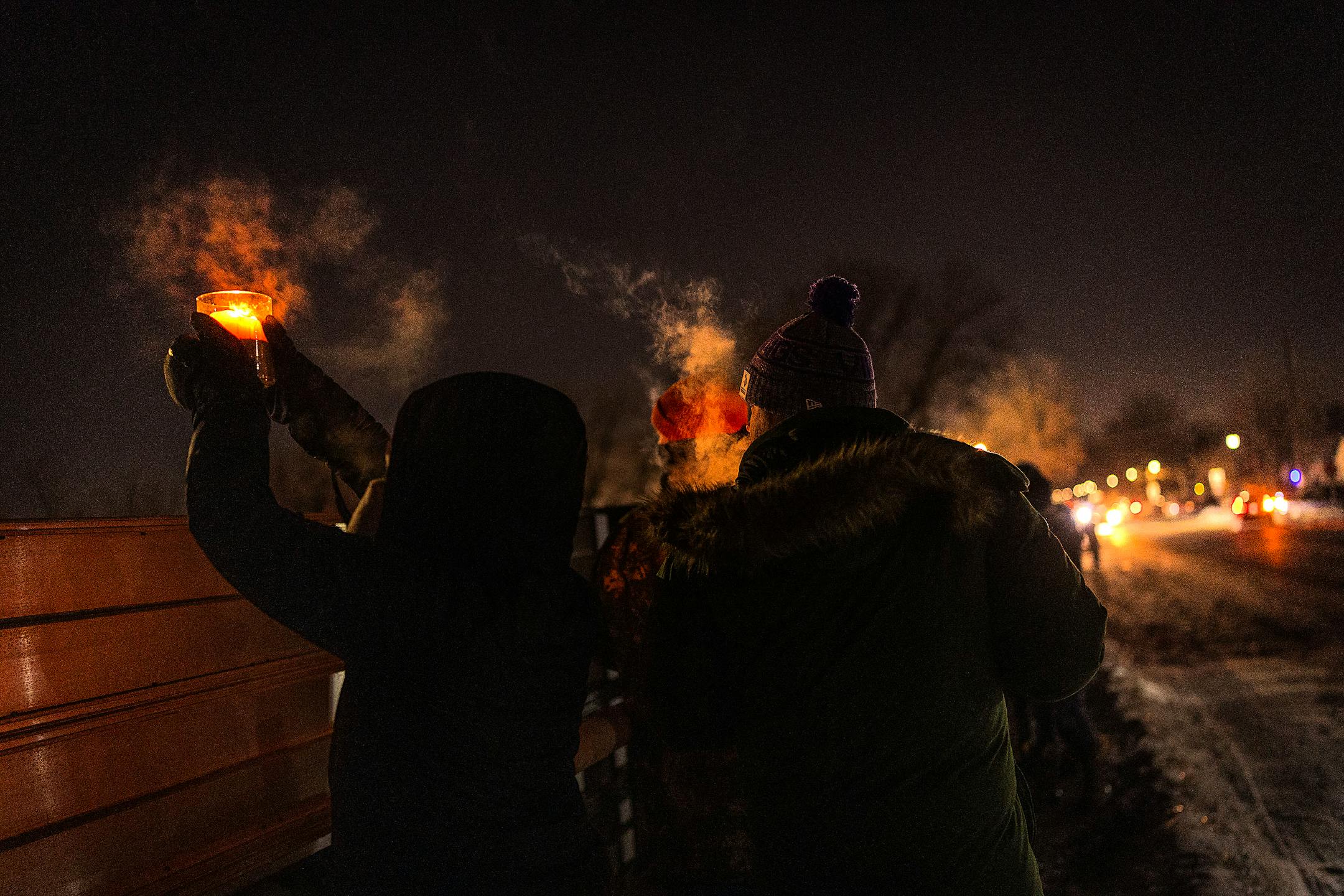
A candlelight vigil for Alex Jeffrey Pretti, 37, the man who federal agent shot Saturday morning in south Minneapolis, held along Minnehaha Parkway in Minneapolis, MN on Saturday, Jan. 24. (Elizabeth Flores/The Minnesota Star Tribune)

In recent weeks my 80-year-old Asian American parents have started to carry their passports each time they leave their suburban townhouse. Neighbors on their Ring doorbell app will alert users when ICE agents are spotted on nearby roads. My mom has canceled appointments after receiving such warnings. A practical woman, she says she’s in a game of “cat and mouse” with federal agents, and she’ll be damned if she gives them the upper hand.

This is something the headlines often miss when describing what it’s like to be living with ICE in Minnesota.

We know that federal agents shot and killed Renee Good and Alex Pretti. We’ve learned that agents have approached and detained residents who appear to be “foreign” at grocery stores and bus stops. We’ve seen the picture of 5-year-old Liam, with his Spider-Man backpack and animal snow hat, before he and his dad were taken by federal agents. We’ve watched the horrific videos of masked agents tackling, cuffing and dragging U.S. citizens through the street — or parading them into the arctic chill in their boxers — and later releasing them, without apology.

On Saturday morning, Pretti, an ICU nurse, was killed by a Border Patrol agent while holding his phone to record a chaotic scene. It shouldn’t be forgotten that Pretti lost his life on Eat Street, a corridor revived by immigrants. Believe the video that shows Pretti was a helper. He was helping a woman whom an agent violently shoved to the ground. He was helping document the actions by federal agents so that the truth could be preserved.

Maybe Pretti knew how difficult life was becoming for those around him. A quiet, pervasive fear that has taken root in the Twin Cities, forcing some people of color who are not even immigrants to change our behaviors. We take extra precautions. We carry the passport. And we question our belonging.

Federal agents have been recorded on video, acknowledging that they’re homing in on individuals who speak with foreign accents. In one encounter, a man named Ramon Menera had just returned home to Columbia Heights with his daughter after getting ice cream when he was approached by a Border Patrol agent.

“Now, talking to you, hearing that you have an accent, I have reason to believe you are not born of this country,” the agent says in the video.

In other videos, shot at my local Costco parking lot, agents are seen politely asking random shoppers unloading their carts if they are U.S. citizens.

These interactions with agents are almost as chilling as footage of their violent tactics. Such videos normalize unabashed racial profiling by our federal government. It’s clear that anyone who looks or sounds anything but “American” is now viewed with suspicion.

This comes at a heartbreaking cost. Last week a video of an Asian American boy from Iowa circulated widely on social media. He’s 12, his name is Max and he wears a soccer uniform and a tournament medal around his neck. But instead of celebrating his team’s victory, he breaks down crying, describing to his mom the jeers he heard from the other team’s goalie.

“These guys told me I’m an illegal immigrant, even though I was born in America,” he said. “He said Trump is gonna get me and send me back to where I used to live. I was born in America!”

View post on Instagram
 

He’s trying to apply logic here, but the math won’t math.

We’re living in a nightmare where a kid who should be elated over his team’s win is processing that some of his peers see him as a second-class citizen. He is feeling the humiliation and denigration that can come with being different, which is something all people of color have experienced. But this time the hate is powered by a schoolyard bully who happens to be the president of the United States.

Somali Americans in Minnesota, says Trump, should “go back to where they came from,” a slur that so many kids from immigrant families have heard. Only now, it is repeated by children who cite the leader of the free world.

What troubles me is how far we are regressing.

Asian Americans, in particular, have always struggled with being perceived as perpetual outsiders, no matter how long we’ve lived in the country. When immigrants of my parents’ generation started families here in the 1970s, many of them figured their children would fit in and thrive here, so long as they gave their children Western names and made sure they could speak perfect American English. I always felt they went overboard, that we didn’t have to whitewash ourselves to gain acceptance. A half-century later, I’m thinking maybe my parents were onto something.

In the initial weeks of the ICE surge in Minnesota, I refused to carry my passport, an act of defiance in a country I no longer recognize. I worried more about my mom, who has a master’s degree in English but speaks with a Taiwanese accent, and my dad, an Army veteran who grew up in the Midwest but has Alzheimer’s and struggles with his words.

But the other night, after hearing from Twin Cities police chiefs that their officers of color have been harassed by federal agents demanding paperwork, I uploaded my passport to my Apple Wallet, just to be safe. It felt like a compromise I could live with.

A document that once made me proud of all the places I’ve traveled is now a badge to prove I belong. It speaks volumes that a person like me is scared — somebody with so many privileges, including my perfect American English.

Aren’t you scared, too?

Sign up here to follow Laura’s columns by email.

about the writer

about the writer

Laura Yuen

Columnist

Laura Yuen writes opinion and reported pieces exploring culture, communities, who we are, and how we live.

See Moreicon

More from Culture

See More
card image
Elizabeth Flores/The Minnesota Star Tribune

Living under ICE’s crackdown has changed how some Minnesotans of color, including U.S. citizens, move through the world.

card image
card image